Sharing a Miramichi Road With Logging Trucks
Riding the stunning network of trails and woods roads in the Miramichi region offers some of the best ATV and UTV experiences in New Brunswick. However, these same roads are the lifeblood of the province's forestry industry, meaning recreational riders often find themselves sharing the path with massive, fast-moving logging trucks. This can be intimidating, even downright dangerous, if you're not prepared. This guide will help you understand the unique challenges of this shared environment and equip you with the knowledge and strategies to navigate these roads safely alongside industrial traffic.
The Reality of Sharing Roads in Miramichi
The Miramichi River Valley is synonymous with vast forests and a rich logging heritage. For ATV and UTV enthusiasts, this means access to an incredible network of trails, many of which are old logging roads or share sections with active haul routes. It’s a beautiful, rugged landscape that draws riders from all over, but it’s also a working landscape where timber harvesting is a constant presence. The peaceful hum of your machine can quickly be overshadowed by the roar of a loaded transport truck.
A Unique Landscape and Its Demands
Picture this: you're cruising along a scenic woods road, the sun dappling through the trees, the smell of pine in the air. It feels wild, remote, and perfectly yours for the adventure. This is the New Brunswick we love, and the Miramichi region delivers it in spades. However, many of these very same "trails" are not just recreational paths; they are vital arteries for the logging industry. Companies use these roads daily to transport timber from harvesting sites to mills, often with tight schedules and heavy loads. It creates a dynamic where leisure and industry intersect, sometimes in unexpected and potentially hazardous ways.
You might be out for a day of casual riding, enjoying the solitude, only to round a bend and come face-to-face with a behemoth of a truck. This isn't a rare occurrence; it's a fundamental part of riding in many areas of the Miramichi. Understanding that these roads serve a dual purpose – recreation for us, commerce for them – is the first step in ensuring a safe ride.
The Intersection of Recreation and Commerce
It's not always possible, or even desirable, to completely avoid these shared sections. Sometimes, the most direct route between two fantastic sections of [New Brunswick ATV Trails: The QuadNB Network] is via a woods road that sees regular truck traffic. You might need to use a short stretch to get to a gas station, a local diner, or simply to connect to another trail system. These roads are part of the broader infrastructure that makes our riding experiences possible, but they come with an inherent responsibility for every rider.
The truth is, while we might view these roads as part of our playground, to a logging company, they are their workplace. This means that while we're enjoying the scenery, they're focused on their jobs, often operating under pressure to meet delivery schedules. This difference in mindset is crucial to acknowledge. We, as recreational users, must be acutely aware of their operational needs and adapt our riding behaviour accordingly. It's about respecting the shared space and prioritizing safety over convenience or speed. For more general rules on shared roads, check out [New Brunswick ATV Road Rules Explained].
Why Logging Trucks Are a Different Beast
When we talk about sharing roads with vehicles, most people think of cars, pickup trucks, or even other recreational vehicles. Logging trucks are in an entirely different league. They are heavy, long, and operate with a momentum that makes them fundamentally different from anything else you'll encounter on a woods road. Understanding these differences isn't just academic; it's critical for your safety.
Mass, Momentum, and Braking Distance
Imagine your ATV, nimble and quick, capable of stopping or swerving almost instantly. Now, imagine a fully loaded logging truck, sometimes weighing tens of thousands of pounds, roaring down a gravel road. The physics are starkly different. These trucks carry immense momentum. This means they cannot stop on a dime, or even on a small dime. Their braking distances are significantly longer than a passenger vehicle, and on loose gravel, mud, or wet surfaces common on woods roads, that distance increases exponentially.
A logging truck driver's ability to react to a sudden obstacle – like an ATV rounding a blind corner – is severely limited by the sheer mass of their vehicle and its load. They need a lot of space, and a lot of time, to slow down or stop safely. What might be a minor inconvenience for an ATV rider could be an impossible challenge for a truck driver. Never assume a truck can stop as quickly as you can, because it simply can't. Giving these machines a wide berth and ample warning of your presence is not just polite; it's a survival strategy.
Blind Spots and Limited Visibility
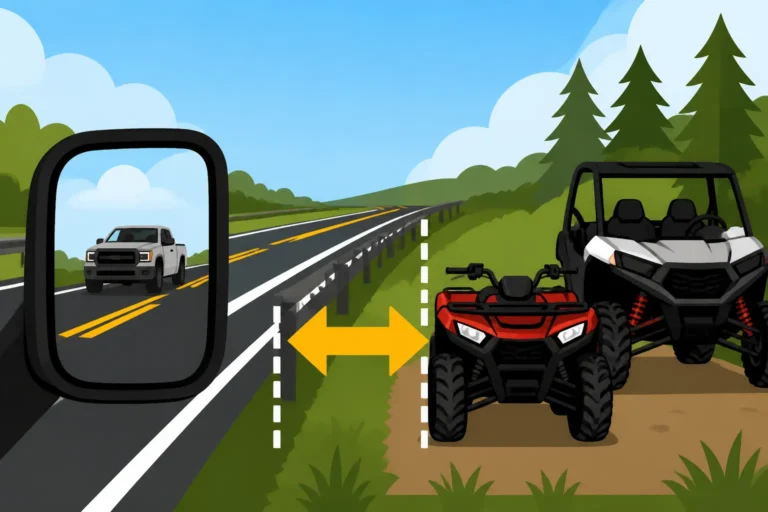
Logging trucks, with their towering cabs and long trailers, have extensive blind spots. These aren't just small patches; they're large areas around the front, sides, and especially the rear of the truck where the driver simply cannot see you. You might think you're visible, but if you can't see the truck driver in their mirrors, it's a pretty safe bet they can't see you. For a small ATV, it's incredibly easy to disappear into these zones.
When you're riding, imagine your machine as almost invisible to these huge trucks. This mindset forces you to be proactive in making yourself seen and staying out of danger zones. Approaching a truck from behind, especially when it's moving, is particularly risky. Always err on the side of caution and assume you are in a blind spot. A driver whose focus is primarily on the road ahead and the condition of their massive load might not even register a small ATV until it's too late. It’s why [New Brunswick Lighting Requirements at Night] are so important, but even in daylight, you can be surprisingly difficult to spot.
Driver Focus and Industry Pressures
Logging truck drivers are highly skilled professionals, often navigating challenging terrain and weather conditions. They are focused on their job: safely transporting timber. This often involves adherence to strict schedules, managing heavy equipment, and constantly assessing road conditions. Their primary concern is the safe operation of their truck and load, and while they are generally vigilant, their expectations for encountering recreational traffic on active haul roads might be different from what you'd find on a paved highway.
It's easy to forget that these roads are their workplace. They're not out for a leisurely drive; they're working. This doesn't mean they're indifferent to your safety, but it does mean that their priorities are necessarily different. They might not anticipate a group of ATVs around every corner, especially in more remote sections. Understanding this helps to frame your own behaviour – by being extra cautious and making your presence known well in advance, you're not just protecting yourself, but also helping them do their job safely.
Essential Safety Strategies for ATV Riders
Navigating woods roads shared with logging trucks requires a proactive and defensive riding approach. Your safety hinges on a combination of heightened awareness, smart positioning, and clear communication. Here are some indispensable strategies to keep you safe in the Miramichi's working forests.
Visibility is Your Lifeline
On a woods road, especially one that's dusty or winding, being seen is paramount. Don't assume that because it's daytime, you're automatically visible. Dust plumes from other vehicles, shadows, and the general clutter of the forest can all make your ATV blend in.
- Lights On, Always: Your ATV's headlights and taillights should be on at all times, even in broad daylight. This small action significantly increases your visibility to oncoming traffic and vehicles behind you.
- Bright Clothing: Wear high-visibility gear. Bright orange, fluorescent yellow, or even reflective stripes can make a huge difference. Think about the colours hunters wear – they're designed to stand out in the forest. Many brands, including SuperATV, offer gear with high-vis elements specifically for off-road safety.
- Helmet Awareness: Some riders add reflective tape to their helmets or opt for brightly coloured helmets. Every little bit helps to break up your silhouette and make you more noticeable.
- Dust Control: When riding in a group, maintain ample distance to reduce dust clouds. Dust is a major impediment to visibility for everyone on the road. If you’re coming up on another vehicle or a junction, slow down to reduce your own dust trail.
- Whip Flags: Consider a bright, tall whip flag, especially if you're riding in an area with rolling hills or deep cuts that limit sightlines. A flag, perhaps one from SuperATV that is designed for off-road use, can be seen over obstacles before your machine is.
Anticipate and Listen
The Miramichi's woods roads are often winding, hilly, and made of loose gravel, offering limited sightlines. Your ears can be your best safety tool in these environments.
- Listen Actively: The distinct deep rumble of a logging truck's diesel engine is often audible long before you can see the vehicle. Train yourself to listen for these sounds. If you hear it, assume a truck is nearby and proceed with extreme caution.
- Look for Clues: Keep an eye out for dust clouds in the distance, which can signal an approaching vehicle. Watch for fresh tire tracks that indicate recent heavy traffic.
- Slow Down at Blind Spots: Any blind corner, hill crest, or narrow section demands a significant reduction in speed. If you can't see what's coming, you need to be able to stop or react instantly. This applies especially on [New Brunswick Rules for Riding a Woods Road].
- Scan the Roadside: Before and after blind spots, quickly scan the ditches and shoulders for potential safe pull-off areas in case you need to yield quickly.
Yielding and Positioning
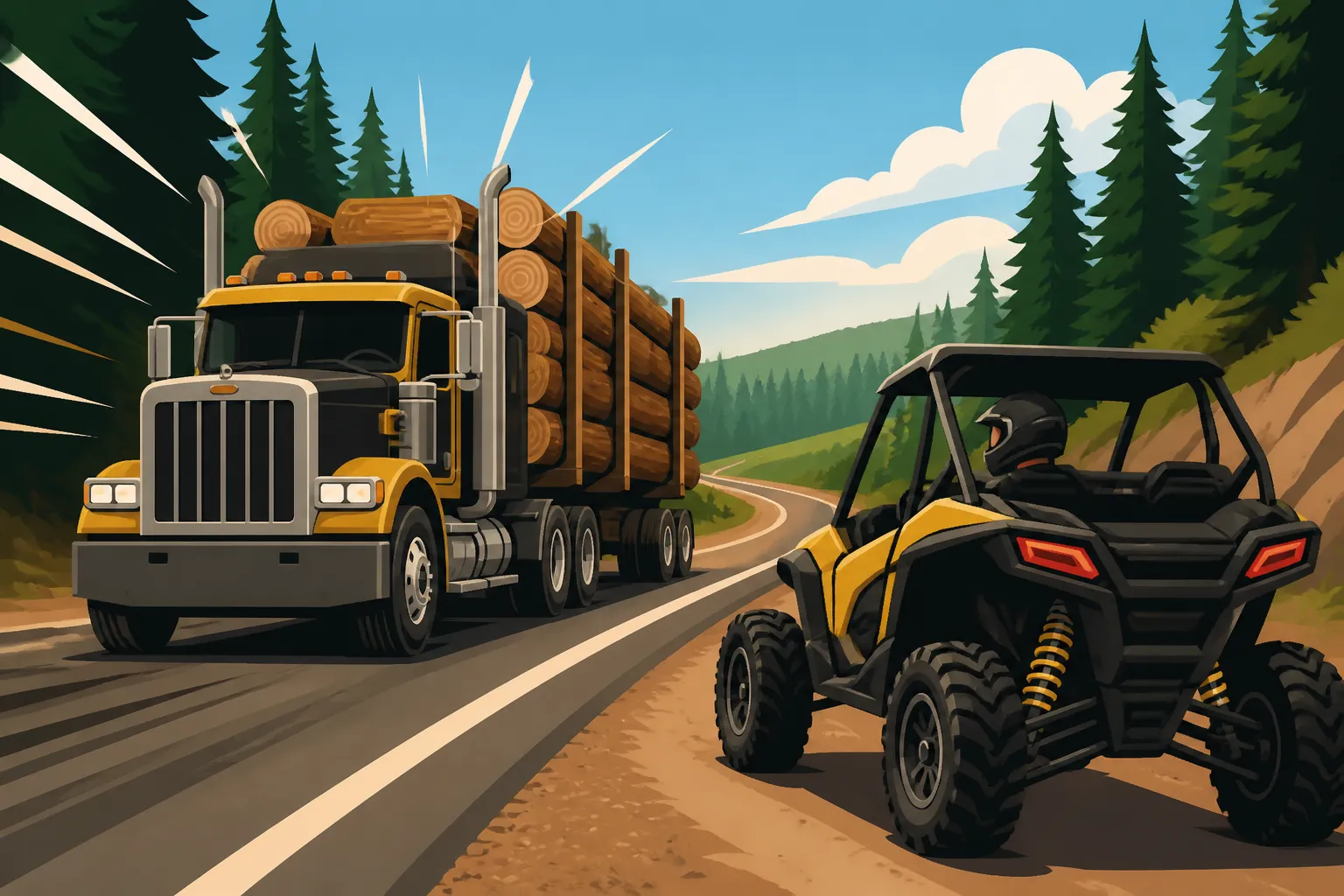
When you encounter a logging truck, your immediate and decisive action is crucial. There's no negotiation; the ATV always yields to the logging truck.
- Pull Over Immediately: As soon as you see or hear a logging truck, signal your intention to pull over. Move as far to the right side of the road as safely possible. Ideally, pull off the travelled portion of the road entirely, if there's a safe shoulder or ditch.
- Stop Completely: Don't just slow down; come to a complete stop. This makes your intentions clear and eliminates any ambiguity for the truck driver.
- Give Ample Space: Logging trucks are wide, and their loads can sometimes overhang. Provide them with as much room as you possibly can. Wait for the entire truck and any trailing dust to pass before re-entering the road.
- Head-On Encounters: If a truck is coming head-on, pull over and stop. If you’re passing a parked truck, slow down and be aware that personnel might be around the vehicle.
- Riding in Groups: When riding with others, the lead rider should communicate any approaching trucks to the rest of the group. Everyone in the group should then perform the same yielding maneuver in unison. A staggered formation can help ensure everyone in the group is seen, but collective yielding is key.
Communicating Your Presence
Sometimes, simply pulling over isn't enough, especially if dust is heavy or the truck is moving very fast.
- Eye Contact/Wave: Once you are safely pulled over and stopped, try to make eye contact with the truck driver (if possible) and give a clear, reassuring wave. This acknowledges their presence and your awareness, and often elicits a friendly horn blast in return.
- Avoid Sudden Movements: While communication is good, avoid any sudden movements that could be misinterpreted as unpredictable behaviour by the driver. Remain stopped and stationary until they have passed.
Legal Considerations and Your Responsibilities
While the focus here is on practical safety, it's always important to remember that when you're on any road, including woods roads that serve as public thoroughfares, you are bound by the law. Your responsibilities extend beyond personal safety to legal compliance, which can be critical in the unfortunate event of an incident.
The Off-Road Vehicle Act and Road Usage
New Brunswick has specific regulations governing the use of off-road vehicles. While our machines are designed for trails, there are designated sections of roads where ATVs and UTVs are permitted to operate, often to connect trails or access services. When you are on these sections, even if it feels like a remote woods road, you are operating your machine under the [What New Brunswick's Off-Road Vehicle Act Covers]. This means adhering to speed limits, which might be lower than you expect on a narrow, shared road. Check [New Brunswick Speed Limits on Designated Roads] for more details.
Your machine must be properly registered and insured. This isn't just a formality; it's a legal requirement that protects you and others. An unregistered machine, or one without proper insurance, can lead to significant fines and legal complications if you're involved in an accident. Always ensure you have your [New Brunswick ORV Registration Explained] and [New Brunswick Requires Insurance on Trails] up to date.
Duty of Care
Every operator of a vehicle, whether an ATV or a logging truck, has a "duty of care" to operate their machine safely and avoid causing harm to others. As an ATV rider, you are operating a smaller, more vulnerable vehicle. This places a higher onus on you to take all reasonable precautions to avoid a collision, especially with a much larger industrial vehicle.
This means being extra vigilant, anticipating hazards, and taking evasive action if necessary. In the event of an incident, even if the truck driver is ultimately found at fault, your personal responsibility for ensuring your own safety, and operating within the law, will be thoroughly examined. Carrying the correct [New Brunswick Documents You Must Carry] can make a difference in these situations.
Insurance and Registration
Let's not sugarcoat it: accidents happen. And when they involve a large commercial vehicle like a logging truck, the consequences can be severe, both physically and financially. Having your ATV or UTV properly insured is not just a legal requirement; it's a critical safety net. Imagine the cost of repairing your machine, covering medical bills, or worse, dealing with liability for damage to a logging truck, which can be astronomical.
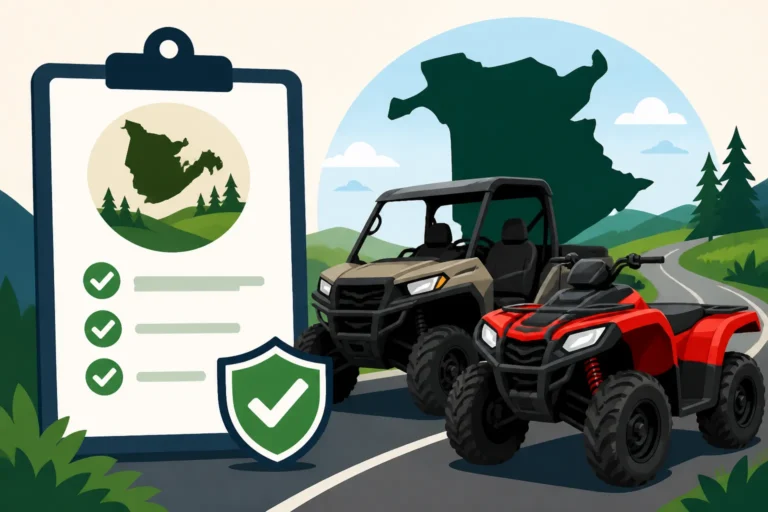
| Aspect | Requirement for ATV Riders in NB | Consequences of Non-Compliance |
|---|---|---|
| Registration | Mandatory for operation on public land, trails, and designated roads. | [New Brunswick No-Registration Fine of $172.50], machine impoundment. |
| Insurance | Mandatory for operation on public land, trails, and designated roads. | [New Brunswick Uninsured ATV Fine of $604.50], liability risks. |
| Valid Permit | Mandatory for use on designated club trails (QuadNB). | [New Brunswick Trail Permit Fines] |
| Proof of Ownership | Always carry a copy of your registration certificate. | Potential delays, difficulties proving ownership. |
| Road Rules | Adhere to provincial ORV Act and any municipal bylaws on shared roads. | [New Brunswick Fines for Riding Near a Road] and other penalties. |
Before every ride, double-check that your registration is current and your insurance policy is active. Make sure you carry proof of both with you, as an officer may ask to see them. This level of preparedness isn't just about avoiding fines; it’s about providing yourself and your loved ones with peace of mind in a challenging environment. Remember that a specific proximity rule often applies; familiarize yourself with [New Brunswick's 7.5 Metre Rule From a Highway].
Respect for Shared Infrastructure
Finally, remember that the woods roads you ride on are often private property, leased land, or Crown land that serves multiple purposes. Logging companies invest heavily in maintaining these roads to facilitate their operations. Our access as recreational users is often a privilege that comes with the responsibility of respecting their use of the land.
Damaging roads, leaving garbage, or interfering with logging operations can jeopardize future access for all ATV riders. Be a good ambassador for the sport. Ride responsibly, respect the working environment, and always prioritize safety over everything else. By doing so, we can ensure that these shared spaces remain available for both industry and recreation for years to come.
Disclaimer
This article is for general informational purposes only and does not constitute professional advice. Laws, prices and regulations vary by location and change over time. Consult a qualified professional for guidance on your specific situation.