New Brunswick’s 7.5 Metre Rule From a Highway
For many off-road vehicle enthusiasts in New Brunswick, the thought of traversing near highways can bring a mix of excitement for connecting trails and significant confusion, often overshadowed by a lingering worry about breaking the rules. One of the most common questions, and indeed a source of frustration, revolves around the seemingly ambiguous "7.5 metre rule" concerning how close your ATV or side-by-side can be to a highway. This comprehensive guide aims to strip away the guesswork, diving deep into what this rule means, why it exists, and how you can ride responsibly and legally across our beautiful province without fear of unexpected penalties.
Understanding the Foundation: New Brunswick's Off-Road Vehicle Act
Before we dissect the 7.5 metre rule, it's crucial to understand the overarching framework that governs off-road vehicle (ORV) use in New Brunswick: the Off-Road Vehicle Act. This piece of legislation is the backbone of all ORV regulations, designed to ensure safety, protect the environment, and provide a clear set of guidelines for riders. Without this foundation, the specific rules we discuss, like the 7.5 metre rule, would lack context and meaning. It's not just a collection of arbitrary restrictions; it's a carefully considered set of principles that keeps our trails open and our communities safe.
Why We Have These Rules in the First Place
The primary reason for rules governing ORVs, particularly near public roads, is multifaceted, but it boils down to safety, property protection, and minimizing conflict. Imagine a busy highway with vehicles travelling at high speeds, and then picture an ATV suddenly emerging from a treeline without warning. The potential for a serious accident is immediate and severe. These rules create necessary buffers, give drivers time to react, and guide ORV users on how to operate responsibly in proximity to high-traffic areas.
Beyond immediate safety concerns, there's also the matter of noise pollution and dust. An ATV operating directly alongside a highway can be a significant disturbance to both nearby residents and motorists. The 7.5 metre rule, in part, seeks to mitigate these impacts, providing a slight separation that can make a difference in reducing sound and airborne particulate matter. It's about being a good neighbour and respecting the shared spaces we all use. The spirit of the law isn't to restrict fun but to ensure that the enjoyment of our vast trail network doesn't come at the expense of public safety or peace.
Who Enforces These Regulations?
Knowing who might be checking for compliance can sometimes feel intimidating, but understanding the various authorities helps clarify the landscape. In New Brunswick, enforcement of the Off-Road Vehicle Act falls primarily to law enforcement agencies, including the Royal Canadian Mounted Police (RCMP), local municipal police forces in larger towns and cities, and sometimes even provincial conservation officers. These individuals are empowered to stop ORVs, request documentation, and issue tickets or warnings for infractions.
It's not uncommon for riders to encounter officers on designated trails or even on woods roads, especially in areas known for ORV activity. They are looking for everything from proper [New Brunswick ORV Registration Explained] and [New Brunswick Requires Insurance on Trails] to compliance with safety gear requirements and, yes, adherence to rules like the 7.5 metre highway buffer. Their presence is a reminder that ORV operation is a regulated activity, and responsible riders are those who are prepared to demonstrate compliance. Don't be surprised if an officer asks to see your papers while you're enjoying a ride; it's part of their job to ensure everyone is following the rules that keep our trails safe and accessible.
The Spirit of the Law: Balance and Access
The provincial government and organizations like QuadNB (the New Brunswick All-Terrain Vehicle Federation) constantly strive to strike a delicate balance between providing extensive access for riders and ensuring public safety and environmental protection. The Off-Road Vehicle Act, including rules like the 7.5 metre separation, is a reflection of this ongoing effort. It's not about prohibiting riding, but about guiding it in a way that allows for sustainable enjoyment of our province's natural beauty.
For instance, the massive [New Brunswick's 10,000 Kilometres of Trail] network is a testament to the commitment to ORV access. However, this access comes with the responsibility to respect all regulations, especially when those trails interact with other forms of infrastructure, such as highways. The aim is to integrate ORV use into the broader landscape in a harmonious way, minimizing conflicts with other road users, landowners, and residents. By understanding this underlying philosophy, riders can appreciate that these rules are not arbitrary roadblocks but essential components of a well-managed and shared recreational system.
Deciphering the 7.5 Metre Rule
Now, let's get down to the nitty-gritty of the 7.5 metre rule. This specific distance often causes the most head-scratching and misunderstanding among riders, leading to unintended violations. It's a critical regulation designed to create a safety margin between off-road vehicles and high-speed highway traffic, and getting it wrong can lead to significant penalties and, more importantly, put yourself and others at risk.
What "7.5 Metres From the Travelled Portion" Really Means
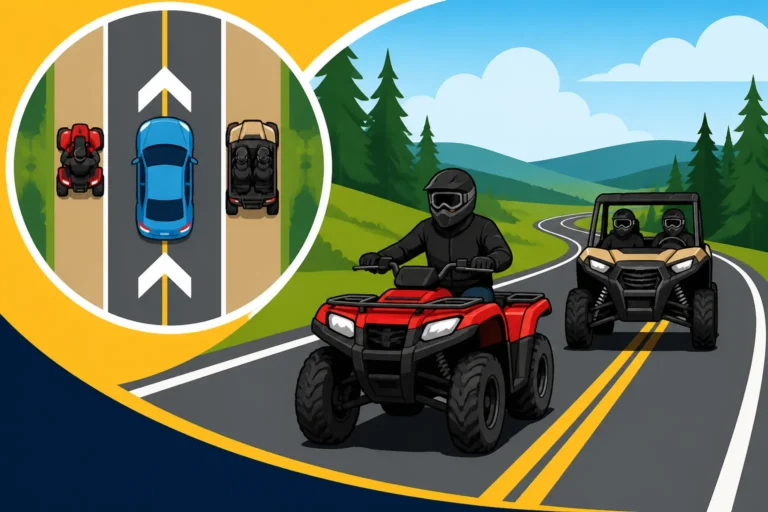
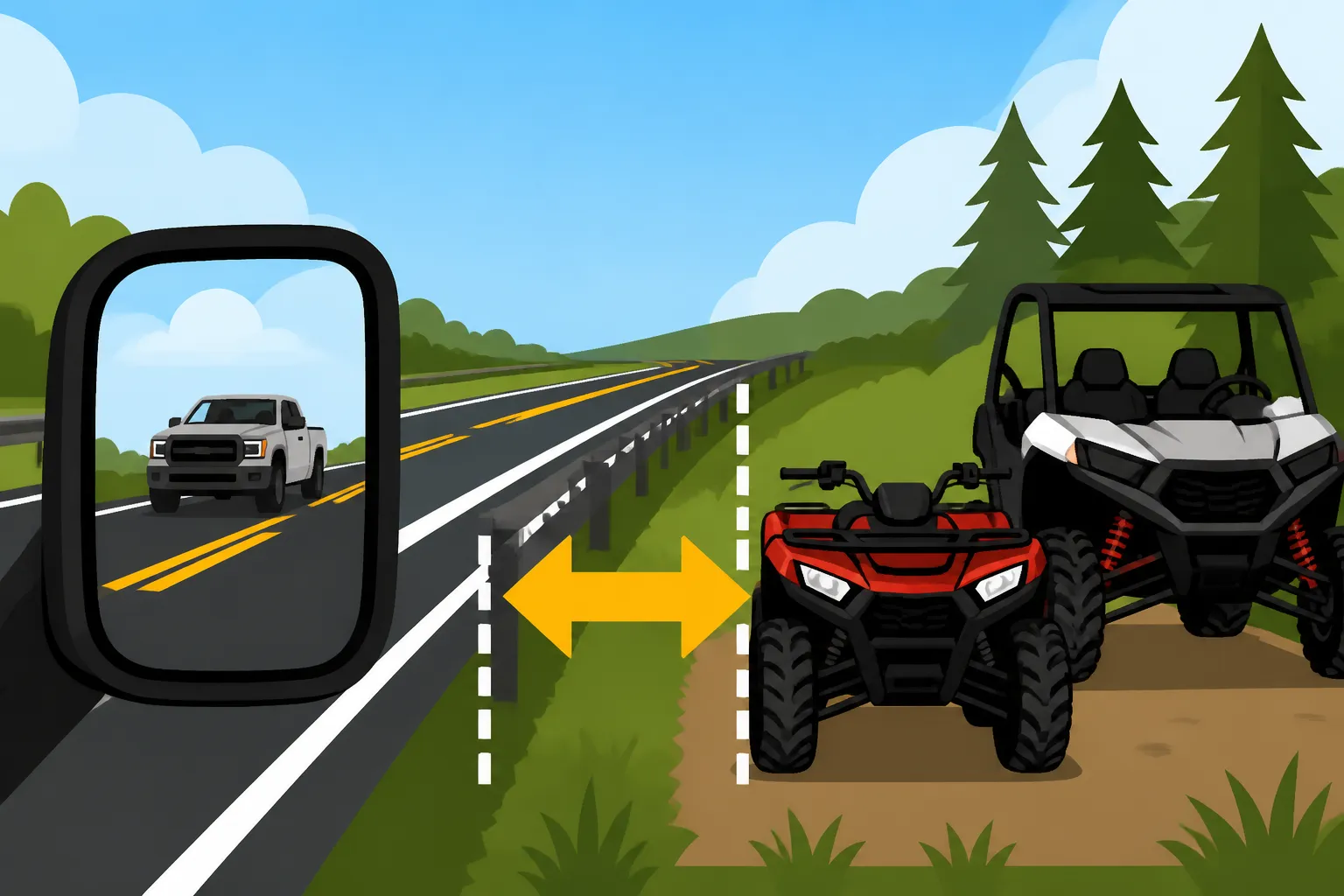
The phrase "7.5 metres from the travelled portion of a highway" is specific and important. It does not mean 7.5 metres from the ditch, 7.5 metres from the property line, or 7.5 metres from the road sign. It means 7.5 metres from the edge of the asphalt or gravel surface that vehicles actively drive on. So, if a highway has a paved surface, you measure 7.5 metres from the very edge of that pavement. If it's a gravel highway, you measure from the edge of the maintained gravel surface.
Consider a typical scenario: you're riding a trail that runs parallel to a provincial highway. Even if there's a wide shoulder or a deep ditch between the trail and the pavement, you still need to ensure your machine is at least 7.5 metres away from where cars and trucks are actually driving. This distance is a mandatory buffer, and officers are trained to measure it precisely. It's a common mistake for riders to assume the ditch provides enough separation, but legally, it often doesn't. Always err on the side of caution and ensure a clear, measured distance. Think of it as an invisible, mandatory "no-go" zone for your ORV alongside any highway.
The Rationale Behind This Specific Distance
Why 7.5 metres? It might seem like an arbitrary number, but this specific distance is generally established with a few key safety and operational considerations in mind. Firstly, it creates a reaction buffer. A vehicle traveling at highway speeds covers a lot of ground very quickly. If an ORV is too close, there's less time for drivers to react to dust, noise, or an unexpected movement, especially if the ORV briefly becomes visible.
Secondly, it helps to mitigate dust and debris. ORVs, especially on dry trails or dirt roads, can kick up a significant amount of dust. If this dust drifts onto a highway, it can severely impair the visibility for motorists, creating a dangerous situation. The 7.5 metre distance provides a space for dust to settle or dissipate before it affects highway traffic. Thirdly, it acts as a visual and auditory separation. Having ORVs further away reduces distraction for highway drivers and minimizes noise disturbance for both drivers and any nearby residences. This seemingly small distance is a calculated measure for public safety and comfort.
Common Misinterpretations and Costly Mistakes
One of the most frequent misinterpretations is confusing the shoulder or ditch with the "travelled portion." Riders often assume that as long as they are off the pavement and in the ditch, they are compliant. This is incorrect. The rule is explicitly about the travelled portion of the highway. Another common mistake is assuming that if the trail is technically on private land, the rule doesn't apply. However, if that private land runs immediately adjacent to a highway, the 7.5 metre rule still applies because it's about proximity to the highway, not necessarily land ownership boundaries.
These misunderstandings can lead to unexpected fines. Imagine you're riding a path that seems like a perfectly legitimate trail, but it hugs the highway too closely in one section. An officer, seeing your machine within that 7.5 metre zone, has every right to stop you and issue a ticket. This can be particularly frustrating when you feel you weren't intentionally breaking any rules. Always remember, ignorance of the law is not a defence. It is the rider's responsibility to know and abide by these regulations. Understanding [New Brunswick Penalties for Riding Near a Highway] is crucial here.
Navigating the Grey Areas: When Can You Get Closer?
While the 7.5 metre rule is generally quite strict, there are specific, legally defined circumstances where an off-road vehicle may operate closer to, or even on, a highway. These aren't loopholes but carefully considered exceptions designed to facilitate access, connect trails, or serve essential purposes. However, relying on these exceptions requires diligence and a clear understanding of what's permitted and what's not. Approaching a highway without explicit legal authorization is a risk you simply shouldn't take.
Designated Crossings: The Only Time to Approach a Highway
The most common and explicitly permitted instance to bring your ORV close to a highway is at a designated crossing point. These are specific intersections where ORV trails intersect with a public highway. At these locations, you are typically allowed to cross the highway to continue on a trail on the opposite side. However, this is not a free-for-all. You must obey all traffic laws, including stop signs, yield signs, and any traffic signals. You must also yield to all highway traffic.
Crucially, you are generally only permitted to cross the highway directly. You cannot ride along the shoulder of the highway to find a more convenient crossing point, nor can you use the crossing as an excuse to simply "ride near" the highway. These crossings are typically clearly marked with signage indicating ORV access. If there isn't clear signage, assume it's not a designated crossing. Safety is paramount here; treat these intersections with the same caution and respect you would if you were driving a car.
Ministerial Designations and Local Bylaws
In some very specific areas, the Minister of Transportation and Infrastructure may issue a "Ministerial Designation" that opens a particular stretch of highway or its shoulder for ORV use. These designations are rare and usually apply to very short sections where an alternate trail route is impossible, or to connect vital parts of the ORV network. Similarly, some local municipal councils may pass bylaws that allow ORVs to operate on specific local roads or road allowances within their jurisdiction. This is typically to allow riders to access services like gas stations, restaurants, or lodging, or to connect trails within a town.
These are not blanket permissions. A Ministerial Designation applies only to the exact section specified, and a local bylaw only applies within that specific municipality and on the roads it designates. Riders must actively seek out and confirm these designations and bylaws. You cannot assume a road is open just because you see other riders on it. Always check [New Brunswick Ministerial Designations] and [New Brunswick Local Bylaws That Open Roads] for specific details in the area you plan to ride. Riding on a highway or its shoulder without such an official designation or bylaw can result in a significant fine and potential impoundment of your machine.
Emergency Situations and Essential Services
There are extremely rare and specific circumstances where the 7.5 metre rule might be temporarily set aside due to an emergency or for essential services. This generally applies to authorized personnel, such as first responders, search and rescue teams, or perhaps utility workers using ORVs to access damaged infrastructure adjacent to a highway. In these situations, the operation is often under controlled conditions and is directly tied to the emergency response or essential service being provided.
For the average recreational rider, however, there are virtually no "emergency" situations that would permit you to operate within the 7.5 metre zone or on a highway. Breaking down near a highway does not give you permission to ride your machine on the road to get help; you would need to arrange for retrieval. Even landowners might only have limited exceptions for specific agricultural or forestry operations, and those are usually strictly defined and do not permit general transit on a highway. Always operate under the assumption that the 7.5 metre rule is in effect, unless you have explicit, documented permission for an approved exception.
The Ramifications of Non-Compliance: What's the Risk?
Ignoring the 7.5 metre rule isn't just a minor oversight; it carries serious risks, both legal and physical. The authorities in New Brunswick take these regulations seriously, primarily because they are directly tied to public safety. Understanding the potential consequences can serve as a powerful motivator to always ride within the legal parameters, ensuring you protect yourself, your machine, and your financial well-being. It's not just about avoiding a ticket; it's about being a responsible member of the ORV community.
Financial Penalties: The Cost of a Highway Infraction
The most immediate and common consequence of violating the 7.5 metre rule is a hefty financial penalty. New Brunswick has established set fines for various ORV infractions, and operating an off-road vehicle too close to a highway or on a highway without authorization falls under these categories. A ticket for being within the prohibited zone of a highway can easily set you back a significant amount, often several hundred dollars, plus associated court costs if you choose to dispute it and lose.
Consider [New Brunswick's $292.50 Highway Fine] – that's a substantial hit to your wallet for a mistake that could have been avoided with a bit more planning and awareness. These fines are designed to deter riders from taking risks near busy roads, and they are enforced. It's not uncommon for officers patrolling areas with known trail-highway proximity to specifically look for these types of infractions. That money could be better spent on trail permits, maintenance for your machine (perhaps some sturdy SuperATV accessories to improve durability!), or even a nice weekend riding trip, rather than going towards a penalty.
Machine Seizure and Other Consequences
While less common for a first-time, minor infraction of the 7.5 metre rule, repeated violations or particularly egregious actions could lead to more severe consequences, including the temporary or even permanent seizure of your machine. Impoundment fees alone can quickly add up, easily surpassing the initial fine. If your ORV is impounded, you'll be responsible for towing costs, storage fees, and potentially administrative release fees, all before you even get your machine back.
Beyond immediate financial and logistical headaches, continuous violations can also impact your standing with provincial authorities. It could potentially lead to complications with future ORV registrations or even affect your insurance rates. While these are usually reserved for more serious or repeated offenses, the possibility exists, serving as a stark reminder of the importance of adhering to the rules. The hassle and expense associated with a seized machine are far greater than simply staying the required distance from the highway.
Safety Implications for Riders and Other Road Users
Beyond the legal and financial ramifications, the most critical risk associated with violating the 7.5 metre rule is the potential for a serious accident. Highways are designed for high-speed motor vehicles, and the presence of an ORV too close can create a dangerous situation for everyone involved. An ORV could suddenly veer onto the pavement, kick up a stone or debris into a windshield, or distract a driver, leading to a collision.
For the ORV rider, the risk of injury or fatality in a collision with a highway vehicle is incredibly high. Even a minor collision can have devastating consequences due to the size and speed differential. For highway motorists, an unexpected ORV can cause them to swerve, brake suddenly, or lose control, potentially leading to multi-vehicle accidents. The 7.5 metre buffer isn't just an arbitrary line on a map; it's a critical safety zone designed to prevent tragic incidents. Responsible riding means prioritizing safety above all else, and that includes maintaining a respectful distance from our provincial highways.
Practical Tips for Responsible Riding Near Highways
Navigating the landscape of trails and highways in New Brunswick requires a proactive approach and a commitment to responsible riding. While the rules can seem complex, adopting a few key habits can significantly reduce your risk of encountering problems with the 7.5 metre rule or other highway-related regulations. It's all about preparation, awareness, and making smart choices before and during your ride.
Plan Your Route in Advance
The absolute best way to avoid unintentional infractions of the 7.5 metre rule is to meticulously plan your route before you even put your helmet on. Don't rely on guesswork or follow others blindly. Utilize up-to-date [New Brunswick ATV Trail Maps and the MapGear App], which clearly delineate official trails and often indicate highway crossings or sections where trails run parallel to roads. Look for specific information on [New Brunswick Roads Open to Quads Only in Season] or areas with local bylaws.
Pay close attention to where trails might narrow or veer unexpectedly close to a highway. If you're unsure about a particular section, choose an alternative route, even if it adds a few extra kilometres to your journey. Many clubs associated with [New Brunswick's 57 Member Clubs] also provide local knowledge and detailed maps that highlight these sensitive areas. Knowing exactly where you're going and what restrictions apply along the way is your first line of defence against fines and accidents. It’s better to spend an extra 15 minutes reviewing a map than to face a fine or, worse, a dangerous situation on the trail.
Equipment and Visibility for Roadside Riding
Even when you are legally riding near a highway – perhaps on an officially designated road section or preparing for a permitted crossing – enhancing your visibility is paramount. Unlike highway vehicles, ORVs are often smaller and can be harder for motorists to spot, especially in dusty conditions or at dusk. Ensure your machine's lighting system is fully functional and regularly checked. This includes headlights, tail lights, and brake lights. Consider adding auxiliary lights, especially if you anticipate riding in low-light conditions.
Beyond lights, think about reflective tape on your machine, or even upgrading some components to brighter, more visible colours. Wearing bright, high-visibility clothing is also a smart move, especially if you often ride near areas where trails meet roads. Some riders even add flags to their machines for increased vertical visibility, which can be particularly helpful for alerting drivers to your presence. While not always legally mandated for every situation, these enhancements significantly improve safety when your ORV is anywhere near the flow of highway traffic. Companies like SuperATV offer a range of lighting and visibility accessories that can make a real difference in keeping you safe.
Communication and Etiquette
When you're riding in areas where trails intersect with or run close to highways, how you conduct yourself significantly impacts safety and public perception. Always slow down considerably when approaching a highway crossing or a section running parallel to one. Reduce your speed, be prepared to stop, and make eye contact with any drivers you see. This visible caution signals your awareness and responsibility.
If you encounter other ORV riders in these sensitive areas, use clear hand signals to communicate your intentions, especially if you're riding in a group. Remember to be courteous and respectful to any residents living near these roadside trails; excessive noise or dust can quickly lead to complaints and potentially stricter regulations. A simple nod or wave to a passing motorist or a resident can go a long way in fostering a positive relationship between the ORV community and other road users. Being a good ambassador for the sport ensures continued access and helps prevent further restrictions from being imposed due to negative public perception.
Local Bylaws and Highway Usage Permits
While the provincial 7.5 metre rule is a consistent regulation, there are nuances introduced by local authorities that can permit ORV access in specific situations. Understanding how local bylaws and highway usage permits function is crucial for expanding your riding opportunities legally and safely. These are not universal permissions but rather localized exceptions that require riders to be particularly informed about the specific areas they plan to explore.
How a Local Council Bylaw Opens a Road
In New Brunswick, a municipal council has the authority to pass bylaws that designate certain municipal roads or portions of them for ORV use. This power is usually exercised to connect local trails, allow access to businesses (like gas stations, restaurants, or repair shops), or facilitate movement within a community where it's safe and practical. These bylaws are not arbitrary; they typically involve public consultation, safety assessments, and clear signage to inform both riders and motorists.
However, it's vital to understand that a municipal bylaw only applies within that municipality's boundaries and only to the specific roads it designates. You cannot assume that because one town has opened its roads, a neighbouring town has done the same. Always verify the current bylaws for any community you plan to ride through. Information can usually be found on the town or village's official website, or by contacting the municipal office directly. Without a valid bylaw, riding on municipal roads is generally prohibited, and you could face significant fines. The process of [How a Local Council Bylaw Opens a Road] highlights the importance of this local verification.
Applying for a Highway Usage Permit
Beyond local bylaws, the province offers a "Highway Usage Permit" for specific, pre-approved situations. This is generally not for casual recreational riding. Instead, these permits are typically granted for special events, community parades, or for commercial purposes where an ORV needs to briefly use a highway section that isn't otherwise designated for ORV access. Think of a local club organizing a charity ride that needs to cross a highway, or a forestry company needing to move a machine between two private woodlots via a short stretch of road.
The application process for a highway usage permit can be quite detailed, requiring specific routes, dates, times, and often proof of insurance. It's reviewed by the Department of Transportation and Infrastructure to ensure safety and minimize disruption to regular traffic. For the average recreational rider, obtaining an individual highway usage permit for personal travel is highly unlikely. These are truly for specific, justified circumstances. If your club is planning an event that requires highway access, they would typically be the ones to manage the application process for [New Brunswick Highway Usage Permits].
Staying Informed About Local Regulations
The landscape of local ORV regulations is not static. Bylaws can be introduced, amended, or repealed, and Ministerial Designations can change. Therefore, staying informed is an ongoing responsibility for every rider. Regularly checking municipal websites, following updates from QuadNB and your local ATV clubs, and even calling local town offices before a trip are all excellent strategies. Many clubs actively work with local governments to establish and promote these designated routes.
Relying solely on outdated information or "what everyone else does" is a recipe for trouble. An infraction that was once a warning could now be a substantial fine. Make it a habit to perform quick checks, especially when exploring new areas. Resources like [New Brunswick Bylaw Lookups Before You Ride] can be invaluable. By making a conscious effort to stay updated, you're not only protecting yourself but also contributing to the overall positive image of responsible ORV use in New Brunswick.
Here's a quick comparison of when you can and cannot be close to a highway:
| Situation | Proximity to Highway (Travelled Portion) | Legal Status | Notes |
|---|---|---|---|
| General Riding | Within 7.5 metres | Illegal | Fine: $292.50. Applies even if on shoulder, ditch, or private land immediately adjacent. Primarily for safety and preventing dust/noise interference with highway traffic. This is the 7.5 metre rule. |
| Designated ORV Crossing | Crossing the highway | Legal | Only at marked, official crossings. Must obey all traffic laws (stop signs, lights, yielding). Cannot ride along the highway to reach a crossing. |
| Ministerial Designation | On specific highway section or shoulder | Legal | Only if a specific, limited stretch of highway or its shoulder has been officially designated by the Minister of Transportation and Infrastructure. These are rare and very specific. Must be confirmed in advance. |
| Local Municipal Bylaw | On specific municipal roads | Legal | Only if a local city, town, or village council has passed a bylaw opening certain municipal roads or road allowances for ORV use within their jurisdiction. Does not apply to provincial highways. Must be confirmed with local authorities. |
| Emergency Services/Authorized Personnel | As required | Legal | Applies to first responders, search and rescue, utility workers, etc., during an emergency or for essential services. Not applicable to the general public. |
| Breakdown/Stuck | Within 7.5 metres (if on highway) | Illegal | A breakdown does not grant permission to ride on the highway to seek help. Machine must be retrieved. |
Remember, when in doubt, always maintain the 7.5 metre distance from the travelled portion of any highway to ensure you're riding legally and safely.
Disclaimer
This article is for general informational purposes only and does not constitute professional advice. Laws, prices and regulations vary by location and change over time. Consult a qualified professional for guidance on your specific situation.