Gates Across a Woods Road
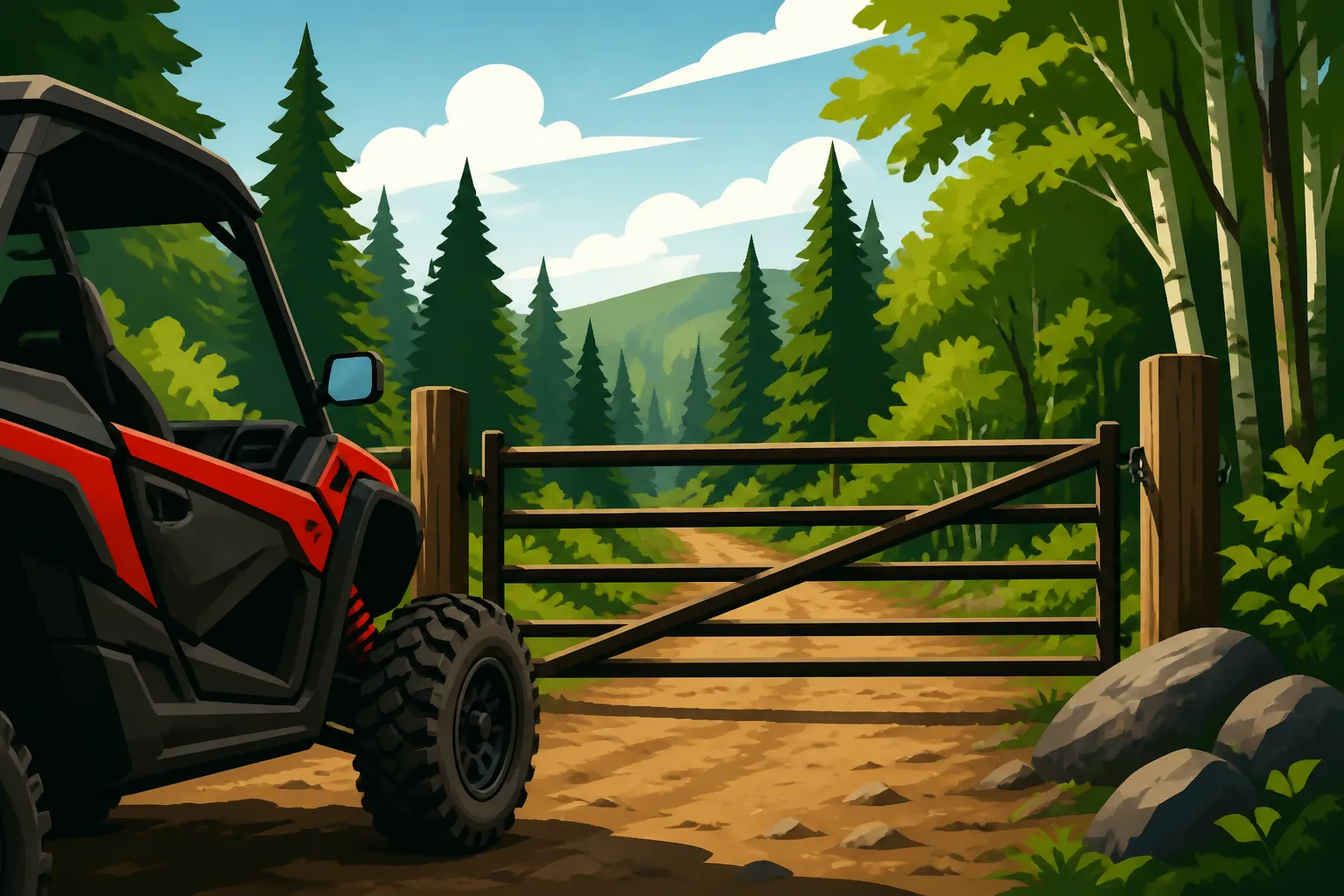
There's nothing quite like heading out on your ATV or side-by-side, exploring the vast network of woods roads and trails across New Brunswick. It’s a feeling of freedom that's hard to beat, until you round a corner and there it is: a gate. Suddenly, that sense of open possibility can quickly turn into confusion, frustration, or even worry. What does this gate mean? Can you go through it? This guide is here to help you understand the ins and outs of encountering gates on woods roads in our beautiful province.
Understanding Why Gates Are There in the First Place
Before we even think about what to do at a gate, it helps to understand why they exist. These aren't just random barriers; they're strategically placed for a variety of important reasons, often by landowners or companies trying to manage their resources and ensure safety. Ignoring them or making assumptions can lead to serious consequences, not just for you, but for the wider ATV and UTV community.
Protecting Private Property and Sensitive Areas
A significant portion of New Brunswick's landscape, particularly the vast wooded areas and coastal regions, is privately owned. Many of these landowners use gates to protect their property from unauthorized access, vandalism, or illegal dumping. Imagine owning a large tract of land, perhaps with a camp, a managed woodlot, or even just a serene piece of wilderness you cherish. Without a gate, it can be incredibly difficult to control who comes and goes, leading to damage or misuse of your property.
Beyond individual landowners, gates also protect sensitive ecosystems. Some areas might be vital habitats for wildlife, reforestation zones, or areas prone to erosion where vehicle traffic could cause irreversible harm. Gates act as a physical reminder that these areas require respect and, often, a specific permit or permission to enter. Riding through such areas without proper authorization not only risks environmental damage but also puts you in direct conflict with land stewardship efforts.
Managing Commercial Operations Like Logging
New Brunswick has a thriving forestry industry, and logging operations are a common sight in our woods. Timber companies own or lease vast tracts of land, and they use these woods roads extensively for heavy machinery like feller bunchers, skidders, and logging trucks. Gates on these roads are absolutely crucial for managing their operations safely and efficiently. A closed gate might indicate active harvesting, road construction, or recent blasting, making the area incredibly dangerous for recreational users.
These gates also help companies track access for their own employees and contractors, manage inventory, and prevent theft of equipment or harvested timber. Many of these roads are built and maintained at significant cost by the logging companies themselves, not by public funds. They aren't necessarily public trails, even if they look like inviting paths. When you encounter a gate on a logging road, it's a strong signal that you're entering an active industrial zone, and your recreational activities could pose a risk to yourself and the workers. A well-built side-by-side from a brand like SuperATV is capable of handling rough terrain, but even the toughest machine is no match for a logging truck.
Safety Concerns and Liability
Finally, gates are often a primary measure for safety and liability. Landowners, whether private individuals or large corporations, have a responsibility to manage risks on their property. An open, unmanaged road invites all sorts of activities, some of which could lead to accidents. If someone gets hurt on their property, especially if they entered an area clearly marked as restricted or gated, the liability can become a complex and costly issue.
This is especially true when roads are seasonal or in poor condition. During spring thaw, for instance, many woods roads become incredibly soft and prone to significant damage from vehicle traffic. [New Brunswick Trail Closures in Spring Thaw] are common, and gates help enforce these closures to protect the infrastructure and prevent riders from getting stuck or damaging culverts. Similarly, during fire season, gates might be closed to restrict access and reduce the risk of human-caused fires. They're not just about keeping you out; they're often about keeping you safe and protecting the land from damage that could take years to repair.
Navigating Gates Legally and Respectfully in New Brunswick
So, you're riding along, enjoying the scenery, and there's a gate. What's the protocol? It's not always as simple as "open or closed." Understanding the nuances is key to being a responsible and law-abiding rider in New Brunswick.
When a Gate Means "Do Not Enter"
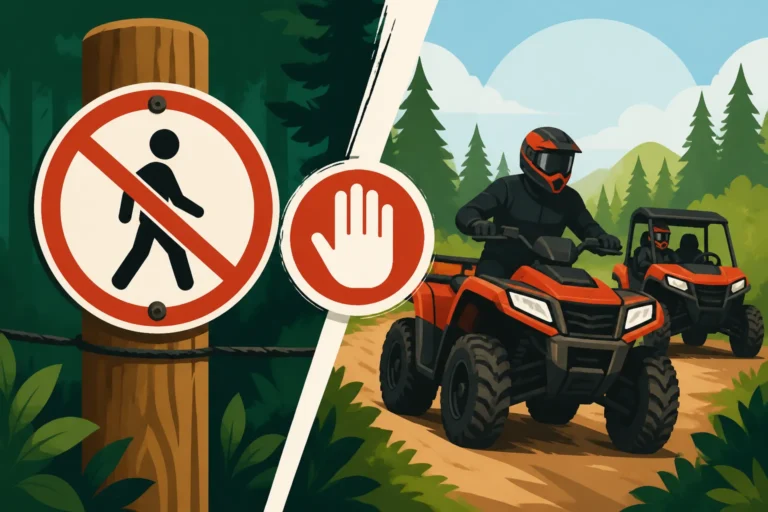
First and foremost, if a gate is closed and locked, or if it has prominent "No Trespassing" or "Private Property" signs, the message is crystal clear: do not enter. This applies regardless of whether you think you know the area, believe the land isn't actively used, or just feel like taking a shortcut. Disregarding these signs or forcing your way through a locked gate is trespassing, a serious offense with potentially significant consequences.
Imagine a farmer putting a gate across their access road to prevent damage to their crops or livestock. Or a private woodlot owner trying to manage their timber without interference. Their gate is their boundary. Even if it looks like a well-used trail beyond the gate, if it's private land and you don't have explicit permission, you should turn around. Climbing over a gate, attempting to cut a lock, or riding around the end of a gate (if physically possible) are all actions that fall under trespassing. This is where understanding [New Brunswick Trespass Law for Riders] becomes crucial.
What to Do When a Gate is Open or Unlocked
This is where things can get a little more ambiguous, and where responsible riding truly comes into play. If a gate is open, it doesn't automatically mean "come on in!" It could be open because workers are currently in the area, or perhaps it was simply left open by mistake. Always look for signage even if the gate is open. If you see "Private Road," "Active Logging," or "No Unauthorized Vehicles" signs, the gate being open doesn't negate those warnings.
If you proceed through an open or unlocked gate, consider yourself a guest, and act accordingly. Drive slowly, be extra vigilant for trucks or heavy equipment, and be prepared to turn back if you encounter active work or more explicit signage further down the road. If the gate was simply unlatched, and you decide to proceed, always close it behind you. This is a fundamental courtesy to the landowner. They put the gate there for a reason, and leaving it open could lead to livestock escaping, unauthorized vehicles entering, or other problems. Think of it like someone inviting you into their home but asking you to close the door—it's about respect.
Here's a quick guide for common gate scenarios:
| Gate Status | Signage Present | Recommended Action |
|---|---|---|
| Closed & Locked | "No Trespassing," "Private" | Do not enter. Turn around and find an alternative route. |
| Closed & Locked | No signage visible | Assume private or restricted access. Do not enter. |
| Closed & Unlocked | "Private Road," "No Access" | Do not enter. This is still a clear indicator of restricted access. |
| Closed & Unlocked | No signage visible | Assume private or restricted access. Do not enter. |
| Open & Unlocked | "Private Road," "No Access" | Do not enter. The signage overrides the open gate. |
| Open & Unlocked | No signage visible | Proceed with extreme caution. Be ready to turn back. If you enter, close the gate behind you. Look for further signs. |
| Open & Unlocked | "Public Access," "Trail Ahead" | Proceed as indicated, but still use caution. Close the gate if it's meant to be closed. |
The Importance of Permission on Private Land
The absolute best way to deal with gates on private land is to avoid any ambiguity by getting permission beforehand. This might sound like a lot of work, but a polite request can open up many more riding opportunities. If you know you want to ride a specific area that crosses private property, try to identify the landowner. Sometimes, local residents or ATV clubs might know who owns what. A simple knock on a door, a phone call, or an email, explaining who you are, what you want to do, and assuring them of your respect for their property, can go a long way.
Many landowners are quite reasonable, especially if you offer to close gates behind you, stay on designated paths, and generally show courtesy. Some might even grant specific access for hunting or other activities. [New Brunswick Private Woodlot Permission] is often a key to unlocking vast riding areas that are otherwise off-limits. Remember, if you get permission, make sure you understand the exact terms—where you can ride, when, and if you need to keep gates locked or open. This proactive approach not only keeps you legal but also fosters positive relationships between riders and landowners, which is vital for the future of ATVing in New Brunswick.
Practical Tips for Riders Encountering Gates
Even with the best intentions, encountering a gate can throw a wrench in your plans. Having some practical strategies and gear can make all the difference, helping you avoid frustrating dead ends and ensuring a smoother ride.
Planning Ahead and Researching Your Route
The old adage "an ounce of prevention is worth a pound of cure" certainly applies to gates. The best way to deal with an unexpected gate is to minimize the chances of encountering one that blocks your ride. This starts with thorough planning before you even hit the trail. Utilize maps – not just road maps, but also topographical maps, satellite imagery, and specific ATV trail maps. [New Brunswick ATV Trail Map Downloads] are often available from QuadNB or local clubs and are invaluable.
Look for signs of private land boundaries, designated trail systems, and areas known for logging activity. Sometimes, gates are visible on satellite images, giving you a heads-up. Talking to local riders or members of ATV clubs can also provide invaluable intel on specific gates, whether they're usually open, and who to ask for permission. If you're using a GPS device or a navigation app like MapGear, you can often pre-load routes and scout for potential gate locations. Knowing what's ahead means you can plan alternate routes, saving you time and frustration when you're deep in the woods.
Essential Gear for Gate Encounters
While we strongly advocate for respecting gates and never forcing entry, certain gear can be beneficial around gates or when you unexpectedly need to turn around. A reliable winch, for example, is critical if you have to backtrack on a difficult trail or turn around in a tight spot. Even if you don't breach a gate, a sudden need to change direction on a narrow, overgrown woods road can put you in a bind. Products from companies like SuperATV, known for their durable winches and recovery gear, can be a lifesaver if you find yourself needing to maneuver in tough conditions near a gate.
Beyond recovery gear, ensure you have robust communication tools. Cell service can be spotty in remote parts of New Brunswick, so a satellite messenger or a two-way radio might be essential, especially if you're exploring areas where gates are common. This allows you to call for help or coordinate with riding partners if you get separated or need to adjust plans due to an unexpected gate. Always carry a physical map and compass as a backup, regardless of your electronic devices. A good, sharp multi-tool or small saw can also be useful for clearing minor brush that might block a reroute path, though never for tampering with a gate itself.
Respecting Posted Signs and Property Owners
Ultimately, the most important "tool" you can carry is respect. Every sign you see, every gate you encounter, is a communication from a landowner or land manager. Whether it's a simple "Private Property" sign or a detailed notice about active logging, these are direct messages that must be heeded. Ignoring them is not just illegal; it’s disrespectful and damages the reputation of all ATV and UTV riders.
If you accidentally find yourself on private land without permission, or if you encounter a gate unexpectedly on a route you thought was public, turn around immediately and politely. Don't argue, don't try to justify your presence, and don't make the situation worse. Your actions directly impact how landowners view the entire riding community. A single instance of trespassing or damage can lead to an entire area being permanently closed to all riders. By demonstrating respect, you help preserve access for everyone and build goodwill that can lead to more opportunities in the future. [New Brunswick Trespass Law for Riders] isn't just a legal text; it's a call for good neighbourliness on the trails.
The Consequences of Ignoring Gates and Trespassing
It might seem like a minor offense to slip around an open gate or hop over a locked one, especially if you think no one is watching. However, the consequences of ignoring gates and trespassing in New Brunswick can be far more severe and wide-reaching than most riders realize.
Legal Fines and Machine Seizure
Let's not sugarcoat it: trespassing is illegal. Under New Brunswick law, specifically the Off-Road Vehicle Act and the New Brunswick Trespass Act, unauthorized entry onto private property can result in significant fines. These aren't just slaps on the wrist; they can quickly add up, and if you're caught damaging property in the process (like cutting a lock or driving through a fence), the penalties can escalate even further. You could be facing [New Brunswick Penalties for Riding Unregistered] if your machine isn't up to snuff, or even [New Brunswick Penalties for Riding Uninsured] if you're caught on an active trail and lack the necessary coverage.
In some cases, law enforcement has the authority to seize your ATV or UTV if it's involved in a serious trespass or a violation of land-use regulations. Imagine having your prized machine, perhaps outfitted with all your favourite SuperATV accessories, impounded. The cost of fines, impound fees, and legal counsel can quickly turn a fun day of riding into a financial nightmare. Furthermore, a conviction for trespassing can impact your record and potentially affect future travel or employment opportunities. It's simply not worth the risk.
Damaging Relationships with Landowners
Beyond the immediate legal ramifications, ignoring gates and trespassing chips away at the vital relationship between the riding community and landowners. Many of New Brunswick's trails and access points rely on the goodwill and permission of private property owners. When riders disrespect gates, leave them open, litter, or cause damage, it erodes trust. One bad experience for a landowner can lead them to revoke all access, not just for the offending individual, but for entire clubs or the general riding public.
Think of how much work ATV clubs do to negotiate access and maintain trails. When riders disregard gates, it makes that work infinitely harder, if not impossible. A negative reputation can spread quickly through rural communities, leading to more "No Trespassing" signs, more locked gates, and fewer opportunities for everyone to enjoy the trails. We all have a responsibility to be good stewards of the land and respectful neighbours.
Safety Risks and Trail Closures
Finally, ignoring gates poses significant safety risks. As mentioned earlier, gates are often placed for your own protection – keeping you out of active logging zones, dangerous terrain, or areas prone to seasonal hazards. By bypassing a gate, you could unknowingly put yourself in harm's way, encountering heavy machinery, unsafe bridges, or environmental dangers that are not apparent from the outside.
Furthermore, repeated issues with trespassing or misuse of gated areas can lead to permanent trail closures. Landowners might decide that the hassle and liability of allowing any access simply aren't worth it. This reduces the overall trail network for everyone, impacting tourism, local businesses that cater to riders, and the recreational opportunities for passionate enthusiasts. Every time you respect a gate, you're not just following the law; you're contributing to the sustainability and longevity of ATV and UTV riding in New Brunswick.
Disclaimer
This article is for general informational purposes only and does not constitute professional advice. Laws, prices and regulations vary by location and change over time. Consult a qualified professional for guidance on your specific situation.