Riding Home From a Trailhead
There's nothing quite like the feeling of wrapping up an incredible day on the trails, a mix of satisfaction and exhaustion, but then reality hits: how do you safely and legally get your ATV or side-by-side from that remote trailhead back to your truck, cottage, or even your front door? Many riders in New Brunswick face the dilemma of needing to use a short stretch of public road to connect trail systems or simply to reach their destination, and the rules around this can feel like a confusing maze. This guide is here to untangle those regulations, offering clear, actionable advice so you can make that final leg of your journey home without a hitch, or a fine.
Understanding New Brunswick's Road Rules for Off-Road Vehicles
Let's be honest, it's a common frustration. You've just spent hours navigating incredible backcountry trails, only to find yourself a mere kilometre or two from your home or parked truck, staring down a paved road you know you shouldn't be on. The idea of loading up your machine for such a short distance feels ridiculous, but the thought of a hefty fine for riding illegally is even worse. New Brunswick's Off-Road Vehicle Act is designed primarily to keep ORVs off main public highways, but it does have specific provisions and exceptions that many riders aren't fully aware of, which can be a lifesaver for those short connections.
Generally speaking, the provincial highway system is off-limits to ATVs and UTVs. This isn't just about safety; it's about the design and speed of these machines versus regular road traffic. However, the law understands that you can't always just magically teleport your machine over every road. There are key distinctions between a full-blown highway, a secondary road, and a municipal street, and these distinctions are crucial for understanding where you might be able to legally ride. It's not a blanket ban everywhere, which is where the nuance comes in and why getting informed is so important.
The General Prohibition and Its Rationale
The primary rule in New Brunswick is quite straightforward: you cannot operate an off-road vehicle on a highway. The definition of "highway" in the provincial acts is broad, encompassing most public roads designed for vehicle traffic. The reasoning behind this is multifaceted. Firstly, ATVs and UTVs are typically designed for off-pavement conditions; their tires, suspension, and steering systems aren't optimized for high-speed asphalt travel, which can compromise handling and braking. Secondly, these machines often lack the full suite of safety features found on road vehicles, like comprehensive lighting and turn signals, though many riders wisely add these. For example, some riders add aftermarket LED light bars or turn signal kits, perhaps from a brand like SuperATV, to enhance visibility, even if it's not always a full legal requirement for trail use.
Beyond safety, there's the issue of traffic flow and public perception. Integrating slow-moving ORVs onto fast-moving highways can create hazards for both ORV operators and other motorists. This core prohibition means that, for the most part, your grand tour of New Brunswick will be strictly on trails. But like many laws, there are vital exceptions and specific circumstances where you can interact with public roads, and knowing these details is what makes the difference between a legal journey and a costly ticket. For a deeper dive into what roads are generally off-limits, you might want to read [New Brunswick ATV Road Rules Explained].
Designated Roads and Ministerial Designations
While the highway is generally a no-go, there are specific instances where certain public roads are designated for ORV use. These designations don't happen by accident; they're usually the result of local municipal bylaws or specific "ministerial designations" from the provincial government. A local municipality might, for instance, pass a bylaw that opens certain village streets or secondary roads during specific hours or seasons to allow ORV access to local businesses, trailheads, or residential areas. This is a common practice in many smaller communities that embrace ATV tourism.
Ministerial designations, on the other hand, are typically made by the provincial Minister responsible for the Off-Road Vehicle Act. These are often for specific, limited stretches of road that are critical for connecting major trail systems or providing essential access where no other ORV trail exists. Think of a short bridge crossing over a river, or a specific cul-de-sac that allows riders to get from a trail to a gas station. These designated sections are usually clearly marked with signage, so it's not something you should guess about. Always look for official signs indicating that ORVs are permitted. If you're unsure about a particular stretch of road, checking with the local municipality or an ORV club in the area is always a smart move.
The Infamous 7.5 Metre Rule and Crossing Highways
One of the most talked-about and often misunderstood rules in New Brunswick for ORV operators is the "7.5 Metre Rule." It's the kind of regulation that can cause a lot of head-scratching around the campfire, leading to different interpretations and plenty of frustration for riders just trying to understand how to stay legal. This rule is designed to provide a buffer zone between off-road vehicles and high-speed highway traffic, but its practical application can sometimes feel a bit murky, especially in areas where shoulders are narrow or non-existent.
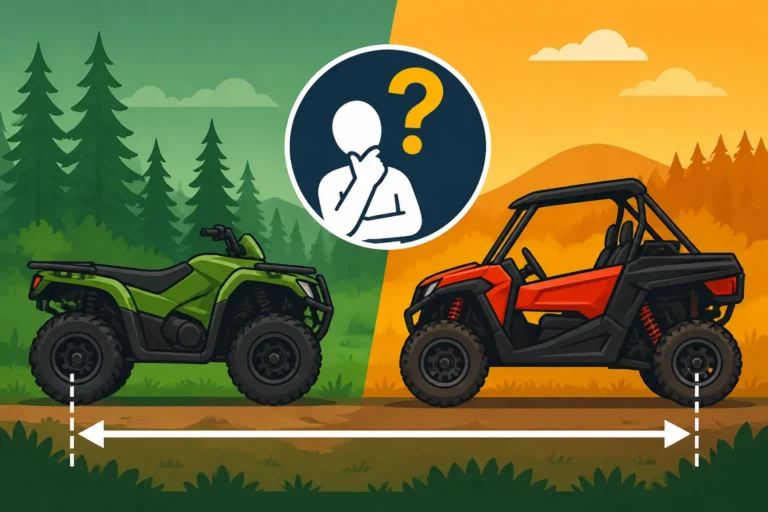
Imagine you're on a trail that runs parallel to a highway, separated only by a narrow strip of trees or a ditch. The 7.5 metre rule dictates that you must maintain a distance of at least 7.5 metres from the "travelled portion" of a highway when operating your ORV. This is essentially a safety buffer, preventing ORVs from running right alongside high-speed traffic. The key phrase here is "travelled portion," which refers to the part of the road where vehicles actually drive, not necessarily the very edge of the ditch or property line.
What Exactly is the "7.5 Metre Rule"?
The rule specifically states that no person shall operate an off-road vehicle within 7.5 metres of the travelled portion of a highway. This means if you're on a trail that skirts a highway, you need to ensure there's at least 7.5 metres of separation. This can be tricky in older areas where trails might have historically been closer to the road before this rule was in place. It also impacts how you approach road crossings. When you're nearing a highway crossing, you're expected to use the safest, most direct route across, minimizing your time on or near the "travelled portion." You cannot, for example, ride down the ditch beside a highway for any significant distance, even if you feel you're far enough away, unless that ditch area itself is explicitly designated as a trail or part of a legal connection.
Understanding [New Brunswick's 7.5 Metre Rule From a Highway] is crucial because violations can lead to fines. It's a rule that officers are often looking for, particularly in areas where ORVs and highway traffic are in close proximity. This rule also indirectly affects trail design and maintenance; clubs often work to ensure their trails adhere to this buffer zone, sometimes rerouting sections to keep riders compliant and safe.
Legal Highway Crossings
While riding on a highway is generally forbidden, crossing one is often a necessity. The law permits an ORV to cross a highway, but only under very specific conditions. You can't just zip across wherever you feel like it. The crossing must be done:
- At a right angle: This means approaching the road perpendicular to the flow of traffic, not at an oblique angle. It minimizes your time in the lanes and makes you more predictable to oncoming vehicles.
- After coming to a complete stop: Just like stopping at a stop sign, you must stop before entering the highway.
- Yielding to all highway traffic: This is non-negotiable. Highway traffic always has the right of way. You must wait until it is absolutely safe to proceed, with no approaching traffic or a sufficient gap to cross without impeding anyone.
- With adequate visibility: You must have a clear line of sight in both directions to ensure no hidden hazards or oncoming vehicles. If sightlines are poor, you should find an alternative, safer crossing point.
- Taking the most direct route: Once you've stopped and it's clear, cross directly to the other side without veering or riding along the shoulder.
It's important to remember that these crossings are for legitimate purposes, usually connecting one section of a trail to another. They are not an excuse to ride on the highway. For more on the specifics of safe crossings, you can consult [New Brunswick Rules for Crossing a Highway]. Always be hyper-vigilant when interacting with any public road, as the speed and mass of highway vehicles create a significant risk.
Legally Connecting Trail Sections or Reaching Home
The dream for many riders is to be able to ride right from their driveway to the trail, or to connect two fantastic trail sections without having to load their machine onto a trailer. In New Brunswick, this isn't always just a dream; in many areas, it's a reality, thanks to a combination of provincial allowances, municipal bylaws, and responsible trail management. However, it's never a given and always comes with strict conditions that demand your attention and compliance.
The key to legally using roads for these connections lies in understanding the specific exemptions and designations that exist. It's not about finding loopholes, but about operating within the framework the province has established to balance ORV access with public safety. For riders looking to navigate these waters, knowing your local laws and preparing your machine accordingly are paramount.
Utilizing Municipal Bylaws and Designated Shoulders
Many communities across New Brunswick have recognized the economic and recreational benefits of ORV tourism. As a result, numerous cities, towns, and villages have enacted municipal bylaws that open certain local streets or designated shoulders to ORV traffic. These bylaws are game-changers for riders, allowing them to access fuel, food, accommodations, or connect to trailheads. For example, a town might allow ORVs on certain secondary roads or residential streets from dawn till dusk, or specifically during certain seasons.
It's critical to remember that these bylaws are highly localized. What's legal in Miramichi might not be legal in Moncton or Fredericton. Before you plan to ride through any municipality, you absolutely must check their specific bylaws. The best way to do this is often by visiting the municipal website or contacting the town office. Local ATV clubs are also fantastic resources, as they're usually deeply involved in advocating for and understanding these local rules. These designated areas often come with their own speed limits, and you are expected to respect them, often much lower than regular road speeds to ensure safety for all.
In some cases, specific "highway usage permits" might be required for certain provincial road sections. These are generally for more unique circumstances, such as a major event or connecting critical infrastructure where no other path exists. These permits are not for everyday riding but exist for special situations. You can learn more about this by checking out [New Brunswick Highway Usage Permits].
Essential Safety Gear and Machine Preparation for Road Use
Even if you're only on a public road for a short, legal stretch, your machine and your riding habits need to adapt. This isn't the same as trail riding, and visibility, speed, and interaction with other vehicles become critical. Think about what a car driver expects to see from another vehicle on the road. Your ORV needs to meet some of those basic expectations.
Here's a checklist of what to consider:
- Registration and Insurance: This is non-negotiable for any ORV use in New Brunswick, whether on a trail or a designated road. Always carry your [New Brunswick Documents You Must Carry], including proof of registration and insurance. Riding without them, even for a short stretch, is asking for trouble.
- Lights: Ensure your headlights and taillights are fully functional, especially if you might be riding near dusk or dawn. For added visibility, consider adding aftermarket lights or reflective tape. Products from SuperATV, for instance, often include robust LED lighting kits that can significantly improve your presence on the road.
- Mirrors: While not universally mandated for all ORVs on all designated road sections, having a rearview mirror (or two) is a very smart addition. It allows you to monitor traffic behind you without constantly turning your head, which can be dangerous.
- Turn Signals: If you're using municipal streets where indicating your turns is expected, having functioning turn signals (either factory-installed or an aftermarket kit) is a huge advantage for communicating your intentions to other drivers.
- Helmet: A DOT-approved helmet is required anytime you're operating an ORV in New Brunswick, and this certainly applies to any road usage. Ensure your helmet meets recognized standards like CSA D230 or FMVSS 218. You can find more details on [New Brunswick Helmet Law for Every Occupant].
- Safe Speed and Awareness: Even on designated roads, maintain a cautious speed. The tires on most ORVs are not designed for quick stops or aggressive turns on pavement. Be highly aware of your surroundings, constantly checking for vehicles, pedestrians, and cyclists. Expect that car drivers might not be expecting an ORV on the road, so ride defensively.
- Hand Signals: If your machine doesn't have turn signals, or even if it does, knowing and using proper [New Brunswick Hand Signal Requirements] can enhance safety when making turns or slowing down.
| Requirement | Trail Riding (ORV Trails) | Road Riding (Designated Sections/Crossings) |
|---|---|---|
| Registration | Required | Required |
| Insurance | Required | Required |
| Helmet (DOT) | Required | Required |
| Headlights/Taillights | Required (especially night) | Required (always functional) |
| Mirrors | Recommended (for group awareness) | Highly Recommended (for traffic awareness) |
| Turn Signals | Optional (hand signals common) | Recommended (for clear communication) |
| Speed | Trail-appropriate | Posted road limits (often lower for ORVs) |
| Visibility | Important | Crucial (reflective gear helpful) |
| Yielding | To hikers, horses, other ORVs | To all highway traffic, pedestrians |
Remember, the goal is not just to be legal, but to be safe. Every time you merge onto a public road, even for a moment, you are entering a higher-risk environment than a secluded trail.
Staying Informed and Riding Responsibly
Navigating the rules for riding your ATV or UTV home from a trailhead in New Brunswick can feel like a lot to take in. There are provincial laws, specific ministerial designations, and a patchwork of local municipal bylaws that all come into play. It's enough to make your head spin after a long day of riding! But equipping yourself with this knowledge is not just about avoiding fines; it's about ensuring your safety and the longevity of ORV access in our beautiful province.
The collective reputation of riders depends on individual responsibility. When we ride legally and respectfully, we reinforce the positive image of our sport and help maintain the access we all cherish. Ignoring the rules, even for a short, seemingly harmless stretch, can lead to negative perceptions and, worse, jeopardize future opportunities for shared road access.
Resources for Local Rules and Updates
The ORV landscape isn't static. Laws can evolve, new bylaws can be enacted, and existing designations might be updated. Staying informed is an ongoing commitment for any responsible rider. Here are your best bets for current and accurate information:
- QuadNB (New Brunswick All-Terrain Vehicle Federation): This is your primary resource for all things ATV and UTV in New Brunswick. Their website, local clubs, and provincial office are invaluable. They often work directly with the province and municipalities on access issues and can provide up-to-date information on trail status, permits, and road-use agreements. Your [New Brunswick Trail Permits for 2026 and 2027] often includes membership to these clubs, providing direct access to this knowledge.
- Service New Brunswick: While primarily for registration and licensing, they can often provide general information or direct you to the right provincial department for specific legal queries. For instance, questions about [Registering an ATV With Service New Brunswick] or transfer of ownership are best addressed here.
- Municipal Websites and Offices: As mentioned, if you plan to ride through or interact with a specific town or city, check their official website for bylaws pertaining to ORVs. A quick phone call to their municipal office can also clarify any uncertainties. Looking up [New Brunswick Towns That Allow Quads] would be a great starting point.
- Local ATV Clubs: These clubs are the boots on the ground. They maintain trails, advocate for rider rights, and are usually the first to know about changes to local regulations or new access opportunities. Joining a local club and attending meetings is a fantastic way to stay connected and contribute to the sport.
- Fellow Riders: While anecdotal advice can be helpful, always cross-reference it with official sources. Don't rely solely on what you heard from a buddy at the gas station. Use their information as a starting point for your own research.
The Importance of Responsible Riding on Public Ways
Every time you pull onto a public road, even if it's legally designated for ORV use, you become an ambassador for the entire riding community. How you conduct yourself in those moments directly impacts public perception and political will to maintain or expand access.
- Respect Speed Limits: Designated road sections almost always have posted speed limits, often lower than typical car speeds for ORVs. Adhere to them strictly.
- Be Courteous: Yield to pedestrians, cyclists, and other vehicles. Be mindful of noise, especially in residential areas. A friendly wave goes a long way.
- Minimize Dust and Damage: If you're on a gravel road, control your speed to minimize dust for nearby residents. Avoid damaging shoulders or ditches.
- Signal Your Intentions: Use hand signals or turn signals clearly and well in advance.
- Stay on the Designated Path: Don't venture off the approved route onto private property or non-designated road sections.
- Carry Your Documentation: Always have your [New Brunswick Registration Paperwork Checklist] and proof of insurance readily available. An officer can ask to see these documents at any time, and not having them can lead to a [New Brunswick No-Registration Fine of $172.50].
Riding home from a trailhead doesn't have to be a source of anxiety. With a clear understanding of New Brunswick's specific rules, proper preparation, and a commitment to responsible riding, you can smoothly transition from the excitement of the trail to the comfort of your destination, ready to plan your next adventure. Enjoy the ride, and ride smart!
Disclaimer
This article is for general informational purposes only and does not constitute professional advice. Laws, prices and regulations vary by location and change over time. Consult a qualified professional for guidance on your specific situation.