A Class 9 Licence Explained
It can be incredibly confusing trying to figure out what licence your teenager needs to legally and safely ride an ATV or side-by-side on New Brunswick trails. The rules for young riders aren't always clear, and it’s easy to feel overwhelmed by the paperwork and requirements. This guide is here to break down exactly what a Class 9 Licence is, why it's so important, and what steps you and your young rider need to take to get them on the trails with confidence and legal standing.
What Exactly is a Class 9 Licence?
Let's cut through the jargon: a Class 9 Licence in New Brunswick is specifically designed for 14- and 15-year-olds who want to operate off-road vehicles (ORVs) like ATVs and side-by-sides. It's not a full driver's licence that lets them drive a car, truck, or even a full-sized tractor on a public road by themselves. Instead, it's a stepping stone, acknowledging that while these young people are keen to explore our beautiful trails, they still require a structured, legal framework that prioritizes their safety and the safety of others.
The frustration often stems from seeing the phrase "farm tractor" associated with the Class 9, leading parents and teens alike to scratch their heads. It seems so far removed from slinging mud on an ATV, doesn't it? But bear with me; there's a method to this regulatory madness. The Class 9 covers certain types of equipment, and thankfully for our off-road enthusiasts, this includes ATVs and UTVs under specific conditions.
Demystifying the "Farm Tractor" Designation
The provincial government's classification of a Class 9 Licence technically includes "farm tractors" alongside certain types of self-propelled implements and, crucially for us, off-road vehicles. This can be a major point of confusion for families just looking to get their teen on the trails. When you hear "farm tractor," you might picture a much slower, less adventurous piece of machinery, not a powerful ATV or side-by-side.
However, the key is understanding the scope of the Class 9. While it does encompass agricultural machinery, it has been adapted to address the unique needs of young ORV operators. The intent behind including ORVs under this designation is to provide a specific, age-restricted pathway for teens to gain legal operating privileges without granting them a full, unrestricted driving licence before they're ready for the complexities of public road driving. Think of it as a specialized permit, tailored for specific vehicles and environments, rather than a broad driving credential.
The Age Requirement: 14 and 15-Year-Old Riders
The Class 9 Licence is exclusively for those important transition years: 14 and 15. At 16, New Brunswick's rules shift, allowing a teen with a full Class 7 licence (a learner's permit for a car) to operate an ORV without needing a separate Class 9, provided they also hold a driver training certificate. This means the Class 9 is a temporary, yet vital, phase for younger riders.
For many parents, having a clear pathway for their 14 or 15-year-old to legally operate an ATV brings immense peace of mind. Without it, these youngsters are technically riding illegally, which can lead to hefty fines and insurance nightmares. It acknowledges their growing maturity and desire for independence while still keeping them under a structured system designed for their safety. It's about empowering them to ride responsibly within the established rules.
Why This Licence is Crucial for Young ATV Enthusiasts
Beyond just legality, having a Class 9 Licence is crucial for several practical and safety reasons. First, it ensures that young riders go through a formal process that emphasizes safety education. They don't just jump on a machine; they learn the rules of the road (or rather, the trail) and how to operate their ORV responsibly. This foundation is invaluable and reduces the risk of accidents.
Secondly, it helps validate that your young rider understands the serious responsibilities that come with operating an ORV. It's not just a toy; it's a powerful machine. The process of acquiring this licence helps instill that respect. Plus, having the proper documentation can prevent a lot of headaches if they're ever stopped by an officer on the trail. It shows they've done their due diligence and are taking their riding seriously. You can read more about [New Brunswick Adults Escorting Young Riders] to understand the full picture.
Requirements for Obtaining a Class 9 Licence
Getting a Class 9 Licence for your 14 or 15-year-old isn't as simple as just filling out a form. There are specific steps and certifications required, all designed to ensure that the young rider has a foundational understanding of safe ORV operation. It involves a combination of formal training, parental involvement, and a visit to Service New Brunswick.
It can feel like a bit of a hurdle, especially when all your teen wants to do is hit the trails. But trust me, these requirements are there for a reason. They provide a structured learning environment that sets your child up for a lifetime of safe and enjoyable riding. Think of it as investing in their safety and your peace of mind.
The Mandatory Driver Training Certificate
The cornerstone of acquiring a Class 9 Licence is the completion of a provincial driver training certificate program. This isn't just a quick online quiz; it's a comprehensive course designed to teach young operators everything from basic machine controls and maintenance to safe riding practices, environmental responsibility, and the laws governing ORV use in New Brunswick. Many clubs, part of the QuadNB network, offer these courses, sometimes even at a reduced rate for members.
These courses are usually a mix of classroom theory and hands-on practical training. Your teen will learn about proper turning techniques, how to handle different terrains, emergency braking, and even how to assess potential hazards on the trail. It’s an immersive experience that goes far beyond what a parent might teach in the backyard. You'll find details about [New Brunswick Driver Training Certificates] for teens in other resources. Remember, the goal is to make them competent and confident riders.
Parental Consent and Support
Because the Class 9 Licence is for minors, active parental or guardian consent is a non-negotiable part of the process. You, as the parent, will need to provide written permission for your child to undertake the driver training and apply for the licence. This isn't just a formality; it signifies your understanding and endorsement of your child's pursuit of ORV operation.
Your support extends beyond just signing a form. It often involves actively participating in the process, ensuring your child attends the training, helping them study, and perhaps even riding alongside them as they gain experience. You're the primary role model for responsible riding, and your involvement reinforces the importance of safety and adherence to rules. This partnership between the teen, the training provider, and the parent is crucial for success.
Applying at Service New Brunswick
Once the driver training certificate is successfully obtained, the next step is to head to a Service New Brunswick centre. This is where the actual Class 9 Licence will be issued. Your teen will need to bring their driver training certificate, proof of age and identity, and the signed parental consent form. It's a fairly straightforward administrative process once all the prerequisite steps are completed.
While at Service New Brunswick, ensure all paperwork is in order. It's a good idea to call ahead or check the Service New Brunswick website to confirm exactly what documents are needed to avoid a wasted trip. Once processed, your teen will receive their Class 9 Licence, granting them the legal authority to operate an ORV under the specific conditions defined by New Brunswick law. This is a big step towards independence for them, and a big step towards peace of mind for you. Information on [New Brunswick Service Centres That Register ORVs] can help you find a convenient location.
Where a Class 9 Licence Allows You to Ride
Possessing a Class 9 Licence doesn't mean your 14 or 15-year-old can ride just anywhere. There are very specific rules about where they can operate an ORV, reflecting the need for supervision and safety. Understanding these boundaries is critical for both the young rider and the accompanying adult. Ignoring these rules can lead to fines and potentially revoke the privileges the Class 9 offers.
This is often where the rubber meets the road, so to speak, for young riders. They have their licence, they're eager to explore, but the rules are still quite stringent. It's essential to set clear expectations and reiterate these boundaries to ensure they always ride within the legal parameters.
Designated Trails and Woods Roads
The primary areas where a Class 9 Licence holder can legally operate an ORV are on designated off-road trails and approved woods roads. This includes the extensive network of trails maintained by QuadNB and its member clubs. These trails are specifically designed for ORV use and are generally well-marked, providing a safer and more controlled environment for young riders.
However, even on these designated trails, a 14 or 15-year-old with a Class 9 Licence must always be accompanied by an adult who is at least 19 years old and also holds a valid driver's licence and driver training certificate. This adult must be riding on their own ORV and be in a position to supervise the young rider effectively. It's about shared responsibility and ensuring there's an experienced mentor present. [New Brunswick Ministerial Designations] often dictate which roads are open to ORVs.
Supervised Road Crossings
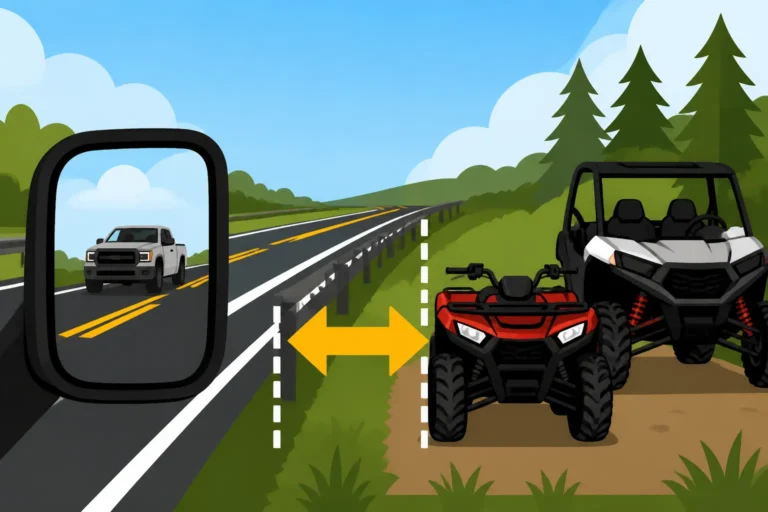
One of the most critical restrictions for young riders with a Class 9 Licence relates to road crossings. A 14 or 15-year-old cannot operate an ORV to cross any highway or public road on their own. Even with a Class 9 Licence, they must yield control of the machine to the accompanying adult for any road crossing. The adult then drives the ORV across the road, and the teen can resume operation on the other side.
This rule emphasizes the inherent dangers of mixing ORVs with conventional vehicle traffic, even for short crossings. It ensures that the most hazardous part of a trail ride, where ORVs interact with public roads, is handled by an experienced and fully licenced adult. It might seem like a small inconvenience, but it's a huge safety measure. You can learn more by checking [New Brunswick Under-16 Riders Cannot Cross a Road].
Limitations and "No-Go" Zones
Beyond road crossings, there are other significant limitations. A Class 9 Licence does not permit a 14 or 15-year-old to ride on the shoulder or travel portion of any highway, street, or public road, even if it's a low-traffic rural road, unless it's a provincially or municipally designated shared-use section that explicitly permits ORV traffic. Such designated sections are rare and always come with strict conditions like specific speed limits. [New Brunswick ATV Road Rules Explained] goes into more detail.
Furthermore, riding on private property without express permission, in provincial parks (unless specifically designated ORV trails exist), or in environmentally sensitive areas is generally prohibited, regardless of the licence. The Class 9 is for responsible trail use, not unrestricted access. It's essential for parents and teens to consult local bylaws and trail maps, like those offered by QuadNB, to fully understand where riding is permitted.
Beyond the Basics: Important Considerations for Young Riders
Getting the Class 9 Licence is just the beginning. For young riders and their parents, there are several other critical factors to consider to ensure safe, legal, and enjoyable off-road experiences in New Brunswick. These considerations cover everything from who needs to be present to what gear should be worn, and the potential consequences of not following the rules.
It's about creating a holistic approach to safe riding, where the licence is one piece of a larger puzzle that includes education, supervision, and common sense. A good off-road adventure starts long before the engine turns over.
The Role of the Escorting Adult
As mentioned, a 14 or 15-year-old with a Class 9 Licence must always be accompanied by an adult who is at least 19 years old and holds a valid driver's licence and a driver training certificate. This isn't just about presence; it's about active supervision and mentorship. The escorting adult is responsible for ensuring the young rider adheres to all safety rules, stays on designated trails, and handles situations appropriately. You can read more about [Who Can Escort a 14-Year-Old on a Trail].
The escorting adult should also set a good example by riding responsibly, wearing appropriate gear, and understanding the terrain. They are the first line of defence in case of an emergency and are expected to intervene if the young rider is engaging in unsafe behaviour. This supervision is a legal requirement and a moral obligation. Many families even invest in communications systems from brands like SuperATV to ensure clear and constant communication between the young rider and the escorting adult, especially on larger machines where they might not be riding side-by-side.
Machine Size and Safety Gear for Teens
While the Class 9 Licence dictates who can ride, it's also crucial to consider what they are riding and how they are protected. New Brunswick has specific engine size restrictions for young riders based on age, particularly for those under 12, but even for teens, it's vital that the machine they operate is appropriate for their size, skill level, and strength. A machine that is too large or powerful for a young rider can be incredibly dangerous.
Beyond the machine itself, comprehensive safety gear is non-negotiable. This includes an approved helmet (meeting standards like CSA, DOT, or Snell), eye protection (goggles or a face shield), sturdy over-the-ankle boots, gloves, long pants, and a long-sleeved shirt or jacket. This gear isn't just about compliance; it's about protecting them from impacts, scrapes, and flying debris on the trail. [New Brunswick Equipment a Rider Must Carry] details these necessities.
Penalties for Non-Compliance
Ignoring the rules and regulations surrounding the Class 9 Licence and ORV operation for young riders can lead to serious consequences. For instance, if a 14 or 15-year-old is caught riding without a Class 9 Licence, or if they are riding unsupervised, the fines can be substantial for both the rider and the adult responsible for them. There are specific [New Brunswick Penalties for No Safety Course] and other violations.
Furthermore, if an incident or accident occurs while a young rider is operating an ORV illegally, insurance coverage could be jeopardized, leading to significant out-of-pocket expenses for damages or injuries. Legal repercussions extend beyond fines, potentially involving court appearances and a permanent record. It's simply not worth the risk; adherence to the Class 9 requirements ensures a safer, more legal, and ultimately more enjoyable riding experience for everyone.
Common Misconceptions About the Class 9 Licence
The Class 9 Licence, due to its unique nature and the "farm tractor" designation, often comes with a host of misunderstandings. It's easy for parents and young riders to assume certain things that aren't actually true, which can lead to legal issues or unsafe practices. Let's clear up some of these common myths to ensure everyone has the correct information.
Navigating the nuances of ORV regulations can be tricky, and these misconceptions are precisely why a detailed guide like this is so important. By understanding what the Class 9 isn't, we can better appreciate what it is and how it serves its intended purpose.
It's Not a Full Driver's Licence
Perhaps the biggest misconception is that a Class 9 Licence is some form of junior driver's licence that opens the door to driving any vehicle. This is absolutely incorrect. The Class 9 is highly restricted and specific to certain types of off-road vehicles (and farm tractors) and only under specific conditions, namely the presence of a supervising adult. It does not allow a 14 or 15-year-old to drive a car, truck, or even a moped on public roads.
The skills learned in an ORV safety course are valuable, but they are not a substitute for the comprehensive training and testing required for a full Class 7 (learner's) or Class 5 (full car) licence. It's a specialized credential for a specialized purpose, not a general driving permit. Young riders and their families need to be very clear about this distinction to avoid serious legal trouble.
The Difference from a Full Driver's Licence for ATV Use at 16
Another area of confusion arises when teens turn 16. At this age, if a New Brunswick resident holds a valid Class 7 (learner's permit for a car) or Class 5 (full car licence) and has also completed an approved driver training certificate for ORVs, they no longer need the Class 9 Licence to operate an ATV or side-by-side. The Class 7 or Class 5, combined with the safety course certificate, supersedes the Class 9.
This means the Class 9 is truly a transitional licence. Once your teen hits 16 and begins the process of getting their full driver's licence, the Class 9 becomes redundant for ORV operation, provided they maintain their driver training certificate. It signifies a progression in their driving privileges and responsibilities. [Riding at 16 With a Full Driver's Licence] offers more insights into this transition.
Why It's More Than Just a Permit
While sometimes referred to informally as a "permit," the Class 9 is a legitimate provincial licence. It involves formal application, training, and documented authorization, which elevates it beyond a simple permit you might print off. The rigorous requirements, including the mandatory driver training, underscore its importance as a serious qualification for young ORV operators.
Treating it merely as a "piece of paper" undermines the significant safety and legal implications it carries. It is the official document that grants a 14 or 15-year-old the legal right to operate an ORV within New Brunswick, under specific conditions. Understanding its weight helps reinforce the importance of safe and compliant riding practices. The documentation requirements are significant; for example, riders must be [Carrying Four Documents at Once] on the trail.
Here's a quick comparison of the Class 9 Licence versus a full Class 7/5 Licence for ORV operation:
| Feature | Class 9 Licence (14-15 Years Old) | Class 7/5 Licence (16+ Years Old) |
|---|---|---|
| Age Requirement | 14 and 15 years old | 16 years old and above |
| Core Purpose | Allows operation of ORVs (and farm tractors) under supervision. | General driving licence; also permits ORV operation with training. |
| Supervision Required | Always requires an accompanying adult (19+, with licence & training certificate). | No mandatory adult supervision for ORV operation (though wise for new riders). |
| Road Crossings | Cannot cross public roads/highways; adult must operate machine. | Can cross public roads/highways according to ORV laws. |
| Driver Training | Mandatory ORV Driver Training Certificate. | Mandatory ORV Driver Training Certificate. |
| Other Vehicles | Does NOT permit driving cars, trucks, etc., on public roads. | Permits driving cars/trucks on public roads (Class 7 with conditions, Class 5 unrestricted). |
| Duration | Transitional; generally superseded by Class 7/5 at age 16. | Continues as main driving licence for ORV operation. |
Disclaimer
This article is for general informational purposes only and does not constitute professional advice. Laws, prices and regulations vary by location and change over time. Consult a qualified professional for guidance on your specific situation.