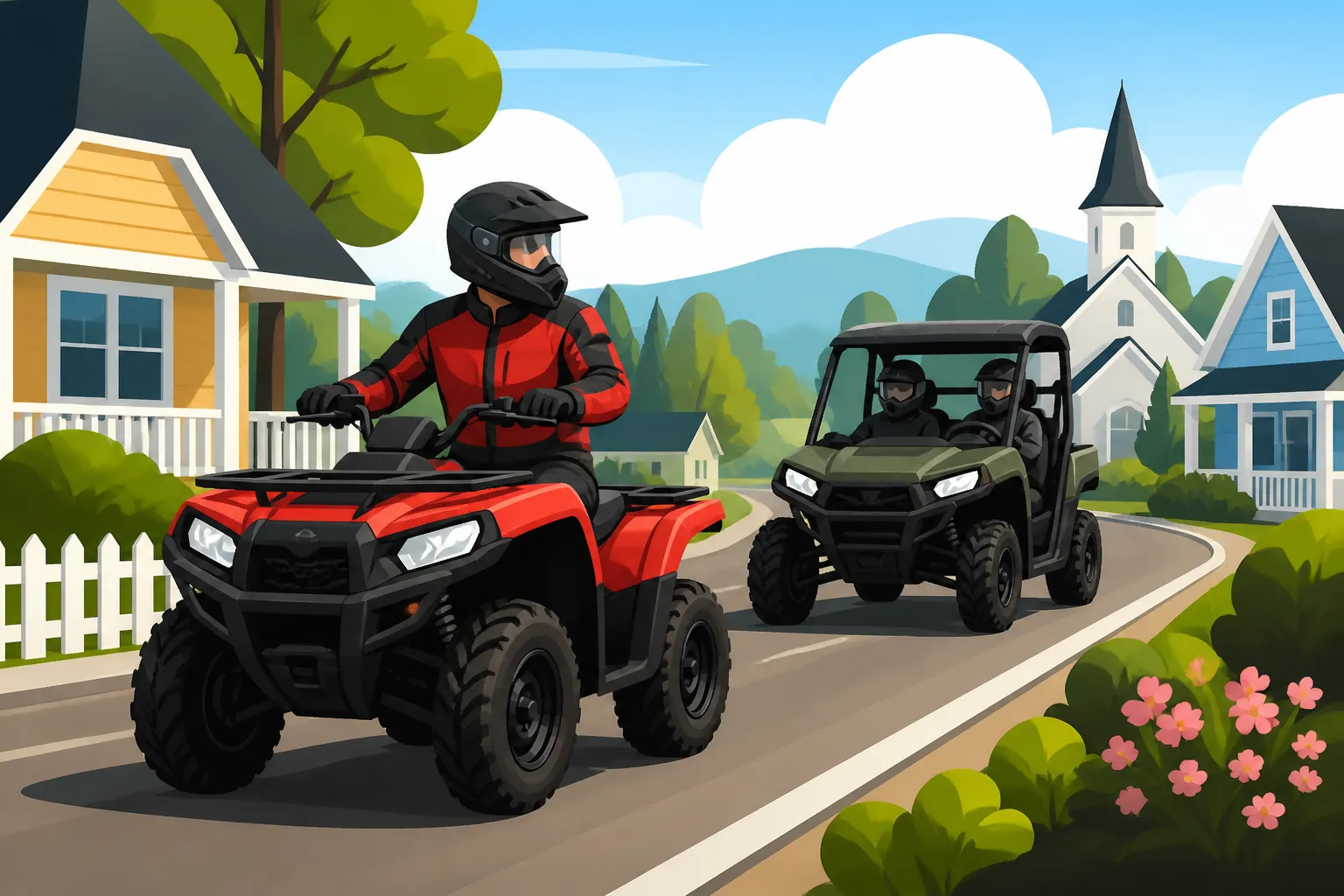
Riding Through a Village Safely
It’s a common scenario for us riders in New Brunswick: you’re out enjoying the fantastic trails, maybe on a long weekend ride, and suddenly, you need to pass through a village or town to get gas, grab a bite, or connect to the next section of trail. The big question always looms: can I even be here? This guide is all about demystifying the rules and giving you the confidence to navigate village streets safely and legally, ensuring your ride is smooth and trouble-free, not a magnet for fines or disgruntled looks.
The Legal Landscape of Village Riding in New Brunswick
Riding your ATV or side-by-side through a village in New Brunswick can feel like tiptoeing through a minefield of regulations. It's not as simple as just rolling down the main street, and honestly, that’s where a lot of riders get into trouble. The rules are a mix of provincial legislation and local bylaws, which can be confusing because what's allowed in one community might be strictly forbidden in the next. It’s enough to make you scratch your head and wonder if it’s even worth the hassle.
Understanding New Brunswick's Off-Road Vehicle Act and Local Bylaws
At its core, New Brunswick has the Off-Road Vehicle Act, which sets the broad strokes for where and how we can operate our machines. This provincial act generally restricts ORVs from public roads and highways, but it also provides a framework for exceptions. The real "gotcha" for many riders is that local municipalities – cities, towns, and villages – have the power to create their own bylaws that can either open up certain streets to ORVs or keep them closed. This means your research can’t stop at the provincial level; you absolutely need to dig into what the specific village you plan to visit allows.
Imagine you're planning a ride through two different villages on your route. You might find that Village A has actively passed a bylaw to open certain streets, perhaps even signing them clearly for ORV use. This is fantastic! But then you might get to Village B, just a few kilometres down the road, and they haven't passed any such bylaw, meaning the general provincial restrictions still apply – effectively closing their streets to you. This inconsistency is a source of frustration, but it's the reality we operate in. Knowing that the onus is on you to check these local rules is the first step in riding legally and avoiding a [New Brunswick Highway Usage Permits] headache or an unexpected fine.
When a Village Street is Open to ORVs
So, how does a village street become "open" for us to ride on? It usually happens in one of two ways: through a ministerial designation or, more commonly, through a local council bylaw. A ministerial designation is when the Minister of Natural Resources and Energy Development officially designates a certain road or section of a road for ORV use. This is less common for entire village streets but can happen for specific connecting routes.
The much more frequent method is when a local town or village council decides to pass a bylaw. These bylaws are crucial because they override the general provincial prohibition for specific roads. When a council passes such a bylaw, they usually specify which streets are open, under what conditions (e.g., speed limits, times of day), and often require specific signage to indicate these open routes. For instance, a village might open its main street or certain side roads to connect riders from one trail section to another, or to allow access to local businesses. It's truly a game-changer when a community embraces ORV tourism, as it makes everyone's experience much smoother. Remember, just because you see another rider on a street doesn't mean it's legal – they might be riding illegally, or they might know something you don't. Always make sure you've done your own homework by looking up [New Brunswick Municipal Bylaws That Open Roads] or calling the local municipal office.
The "7.5 Metre Rule" and Highway Crossings
Even when you're legally riding on an open village street, you're still not entirely free of provincial road rules, especially concerning highways. New Brunswick has a provincial rule known as the "7.5 metre rule," which dictates that an ORV must generally stay 7.5 metres from the travelled portion of a highway. This rule is designed to keep us safely separated from high-speed traffic. However, there are exceptions for crossing a highway.
If you absolutely must cross a highway within a village, and it's permitted by a local bylaw, you have to do it as safely and directly as possible. You need to cross at a right angle, yielding to all other traffic, and without impeding the flow of vehicles. This isn't a casual stroll across the road; it's a quick, decisive maneuver. Imagine you're at an intersection where a village street crosses a provincial highway. Even if the village street itself is open to ORVs, the crossing of the highway still falls under strict provincial guidelines. You certainly cannot ride along a highway, even for a short stretch, unless that specific section has been explicitly designated for ORV use – and those are rare. Understanding [New Brunswick's 7.5 Metre Rule From a Highway] and how it impacts your ability to [New Brunswick Rules for Crossing a Road] is vital for staying on the right side of the law and keeping yourself safe.
Essential Safety Practices for Urban Environments
Riding your ATV or UTV on a designated trail out in the woods is one thing; navigating through a bustling village or town is a completely different ballgame. The change in environment demands a shift in your mindset and riding habits. It’s no longer about dodging fallen trees or splashing through mud pudders; it’s about sharing the road with cars, pedestrians, and cyclists, all of whom might not be expecting to see an off-road vehicle. This is where patience, awareness, and responsible riding really shine through.
Slowing Down and Being Predictable
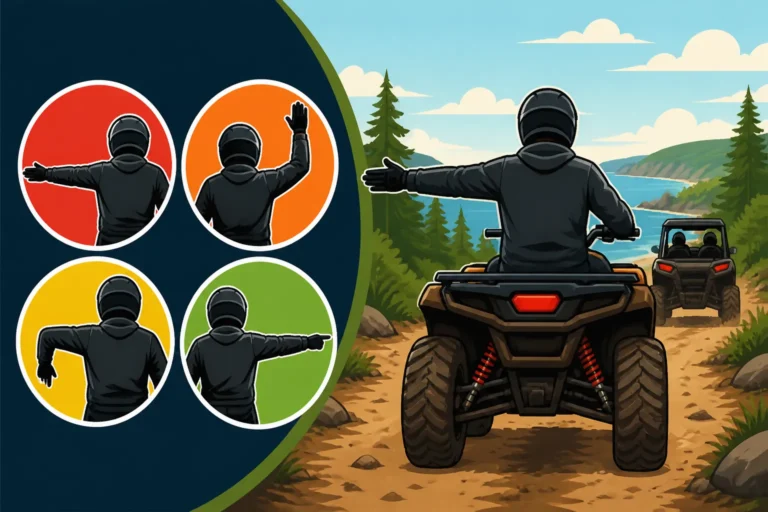
The single most important thing you can do when riding through a village is to slow down. Way down. The maximum speed limit for ORVs on a designated trail might be one thing, but on a village street, you need to match the flow of traffic, which is often significantly slower. Moreover, in many instances, specific bylaws will stipulate a much lower speed limit for ORVs on these open roads, sometimes as low as 20 km/h. It’s not about how fast your machine can go, but how safely it should go in this environment. Be predictable in your movements: use your hand signals or turn indicators well in advance if you're turning, stopping, or changing lanes. Don't weave in and out of traffic. Hold your line.
Think about it from a motorist's perspective. They're typically not looking for an ATV to pull out from a side street. Your machine is louder, often wider, and behaves differently than a car. Being predictable means you're less likely to surprise them. It means you're giving them clear cues about your intentions. This isn't the time for showing off; it's the time for respectful, defensive riding. Plus, a lower speed gives you more time to react to unexpected situations, like a child darting out from between parked cars or a vehicle suddenly pulling into your path. Always keep an eye out for [New Brunswick Speed Limits on Designated Roads] signage, as these can change rapidly from one section of a village to another.
Gear, Visibility, and Machine Readiness
Your personal safety gear and the condition of your machine become even more critical when you're sharing the road with cars. First and foremost, a properly fitted, approved helmet is non-negotiable. This is a provincial law, even on trails, but especially so on village streets where the risk of interaction with larger vehicles is higher. Always wear a helmet that meets recognized standards like CSA D230, FMVSS 218, or ANSI. This isn't just a suggestion; it’s the law and good sense. You can't compromise on [New Brunswick ATV Helmet Law].
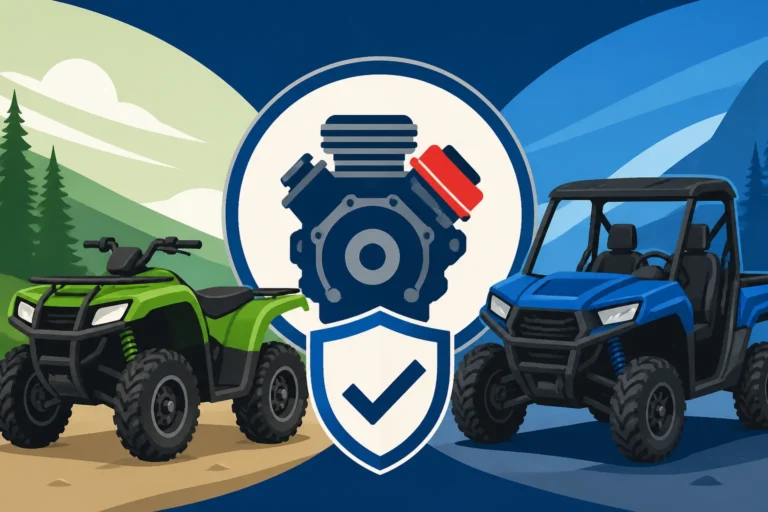
Beyond your helmet, consider your visibility. Many ORVs aren't designed with urban driving in mind. Ensure your headlights, taillights, and brake lights are all functioning perfectly. If your machine doesn't have factory turn signals, you must use clear and concise [New Brunswick Hand Signals Without Lights] to communicate your intentions. You might also consider adding aftermarket accessories like brighter LED lights or reflective tape to your machine or riding gear, especially if you anticipate riding near dusk or in low light. Brands like SuperATV offer a range of lighting upgrades and accessory mirrors that can significantly improve your visibility to others and your awareness of your surroundings. Having mirrors on your machine is a huge advantage, allowing you to see traffic approaching from behind without constantly turning your head. Additionally, make sure your tires are properly inflated for road use (as opposed to lower pressures for off-road traction) and that your brakes are in excellent working order. Your machine should be in tip-top shape for road duty.
Navigating Pedestrians, Cyclists, and Parked Cars
Village streets are rarely just about vehicle-to-vehicle traffic. You'll encounter pedestrians strolling on sidewalks, cyclists sharing the road, and plenty of parked cars. Each of these presents unique challenges. When you see pedestrians, reduce your speed even further. Be aware that they might not hear your machine approaching, especially if you're moving slowly. Give them a wide berth and be prepared to stop if someone steps unexpectedly into the street. Children are particularly unpredictable, so extra caution is paramount around residential areas or parks.
Cyclists, like ORVs, are often vulnerable road users. Treat them with the same respect and caution you'd expect from a car driver. Give them ample space when passing, and remember that they might swerve to avoid potholes or debris. Parked cars are another hazard. Drivers might suddenly open a door, or pedestrians might emerge from between them. Always anticipate these scenarios and keep a safe distance. This proactive approach to scanning your environment and anticipating potential dangers is key to safely [Riding Through a Village Safely].
The Paperwork You Need to Carry (and Why It Matters)
Ah, the dreaded paperwork! Nobody loves rummaging through their saddlebag for documents, especially when you're just trying to enjoy a ride. But when you venture onto public streets, even those opened by a local bylaw, showing proof of your legitimacy as a responsible rider becomes incredibly important. You might encounter law enforcement, and having everything in order can be the difference between a friendly wave and a hefty fine or even having your ride cut short. It’s not just about obeying the law; it’s about demonstrating you’re a responsible member of the riding community.
Registration, Insurance, and Safety Certificates
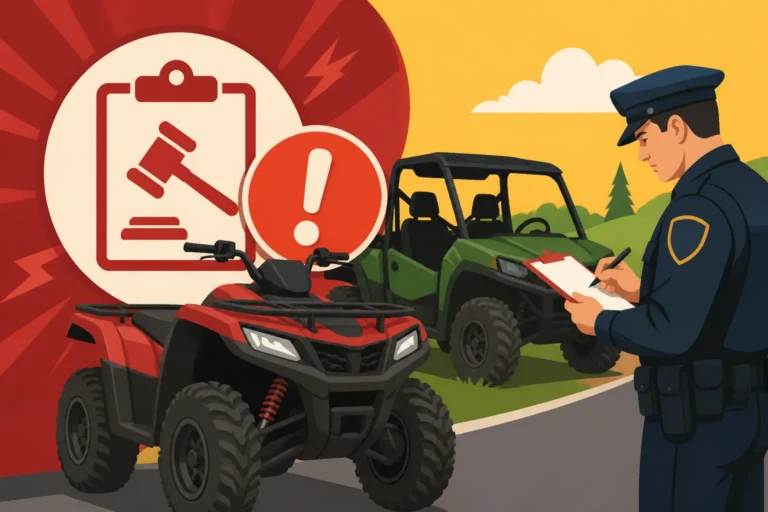
First things first: your machine needs to be properly registered with Service New Brunswick. This isn't just for trail riding; it applies to any public road or designated area. Riding an unregistered machine on a village street is a surefire way to get a ticket for [New Brunswick No-Registration Fine of $172.50]. You need to carry your valid certificate of registration with you at all times.
Next up, insurance. New Brunswick law [New Brunswick Requires Insurance on Trails], and this requirement extends to any public area where you're operating your ORV, including legally designated village streets. This isn't just for your protection; it's for everyone else's. If you're involved in an accident, even a minor one, having proof of insurance can prevent a massive headache. Without it, you could face significant penalties, including a [New Brunswick Uninsured ATV Fine of $604.50]. Remember, the officer wants to see proof that you're covered, so make sure you have it accessible.
Finally, a valid safety course certificate is often required, particularly for younger riders or those operating on designated public roads. While the primary purpose of these courses is to teach safe riding techniques, carrying proof of completion demonstrates your commitment to safety and adherence to provincial guidelines. Even for adults, having completed a recognized ORV safety course is always a good idea and can sometimes lead to insurance discounts. Check the specific requirements for your age group and the areas you plan to ride. In essence, you need to be prepared to present [Carrying Four Documents at Once]: your registration, proof of insurance, your driver's licence (if applicable), and your safety training certificate.
Trail Permits and When They Apply
This is where things can get a little tricky. A New Brunswick trail permit, purchased through QuadNB or one of its member clubs, is your golden ticket to the vast network of managed trails across the province. However, a trail permit doesn't automatically grant you access to all village streets. It explicitly allows you to ride on the designated trails that often connect through villages. When a village opens its streets, it’s usually to facilitate this connection between trail sections or to allow access to local services for permit-holding riders.
So, while the trail permit itself doesn't grant universal road access, it's an essential piece of the puzzle if you're using village streets as part of a longer trail ride. Think of it as part of your overall ORV "licence to operate" responsibly in New Brunswick. You're riding as part of a system, and that system includes both trails and specific road allowances. Always have your current [New Brunswick Trail Permit Cost in 2026] sticker properly affixed to your machine and carry your physical permit card. If you're using a village street to access a trail, an officer may well ask to see both your registration and your trail permit.
Avoiding Fines and Hassles
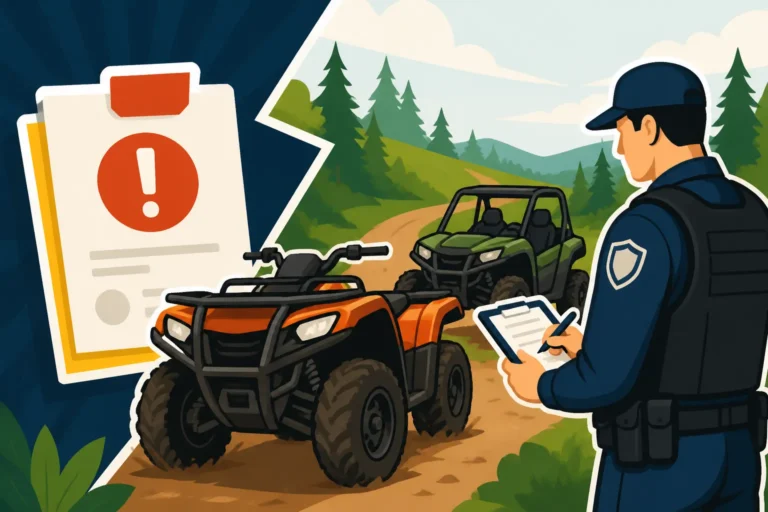
The simplest way to avoid fines and unpleasant interactions with law enforcement is to be prepared. Before you head out, especially if you're planning a route that takes you through unfamiliar villages, make a quick checklist. Do I have my registration? Is my insurance card current? Is my safety course certificate with me? Is my trail permit valid and visible? Taking a few minutes to ensure you have all your ducks in a row can save you hundreds of dollars and a lot of frustration.
Beyond having the physical documents, it’s also about understanding the rules. Ignorance of the law is rarely an excuse. If you're unsure about the bylaws in a particular village, it's far better to err on the side of caution or, better yet, make a phone call to the municipal office beforehand. Officers are generally reasonable, but they have a job to do. If you're caught riding an unregistered or uninsured machine, or on a street that isn't designated for ORVs, you can expect a citation. Being polite and cooperative, even if you’ve made a mistake, often goes a long way, but nothing beats being fully compliant from the start. This proactive approach to [New Brunswick Equipment Checks by Officers] will make your ride more enjoyable and worry-free.
Common Pitfalls and How to Avoid Them
Even with the best intentions, it's easy to fall into some common traps when riding your ORV through a village. Many of these pitfalls stem from assumptions, a lack of local knowledge, or simply forgetting that a village environment is very different from a remote trail. Being aware of these common mistakes and actively working to avoid them will not only keep you out of trouble but also help maintain a positive image for the entire ATV/UTV community. We want to be welcomed, not seen as a nuisance!
Assuming All Roads are Open
This is perhaps the biggest and most frequent mistake riders make. You've heard that some towns in New Brunswick allow ORVs on their streets, so you might assume that if one village has an open-road policy, they all do. This is simply not true. As we discussed, each municipality makes its own decisions through local bylaws or specific designations. A local council might decide to open only certain roads, or perhaps no roads at all.
This assumption can lead to an abrupt and unwelcome encounter with local law enforcement, or worse, an accident. It's crucial to remember that [New Brunswick Rules for Riding a Village Street] vary widely. Before you plan your route, especially through an unfamiliar area, take the time to check the specific bylaws for each village or town. Many communities post this information on their municipal websites. If you can't find it, a quick phone call to the town office can save you a lot of hassle. Think of it like this: you wouldn't assume all trails are open just because one is. The same caution applies to village streets.
The Temptation to "Just Zip Through"
Let's be honest, there's a certain thrill to riding an ATV or UTV. But that thrill needs to be tempered with extreme caution and respect when you're in an urban or semi-urban setting. The temptation to "just zip through" a village, especially if you're trying to make good time to the next trail section, can be strong. However, this is incredibly dangerous and highly illegal. Speed limits on designated village streets for ORVs are often much lower than for cars, and for good reason.
When you speed, you drastically reduce your reaction time and increase the severity of any potential accident. Imagine a child running out from behind a parked car, or a driver pulling out without seeing you. At higher speeds, stopping in time becomes impossible. Not only are you putting yourself and others at risk, but you're also inviting negative attention from residents and law enforcement. Speeding, aggressive riding, or performing stunts on village streets are quick ways to get a hefty fine, have your machine impounded, and damage the reputation of all responsible riders. It’s also one of the easiest ways to violate [New Brunswick Rules for a Machine Without Signals] if you're not properly communicating your movements. Slow down, be visible, and prioritize safety over speed.
Dealing with Public Perception and Complaints
This is an aspect many riders don't often consider, but it's vital for the long-term health of our sport. When you ride through a village, you're not just an individual; you're an ambassador for all ORV enthusiasts. Loud pipes, excessive speed, dust, or riding on undesignated streets can quickly generate complaints from residents. These complaints, in turn, can lead to stricter bylaws, increased police patrols, and even the closure of routes that were once open to ORVs.
We have a collective responsibility to be good neighbours. This means keeping noise to a minimum (especially if you have aftermarket exhaust), controlling dust on dry roads, and adhering strictly to designated routes and speed limits. If you see others riding irresponsibly, consider having a polite word with them, or at least setting a good example yourself. Remember, many villagers might not understand our sport, and their perception is often shaped by the few bad apples. By demonstrating responsible and courteous behaviour, we help foster a positive relationship between the ORV community and the villages that welcome us. Every time we ride through a village, we’re showing them what [New Brunswick Trail Etiquette Locals Expect] really means.
Here’s a quick overview of some differences between trail and street riding in New Brunswick:
| Feature | Designated ORV Trail | Open Village Street (by bylaw) |
|---|---|---|
| Speed Limit | Varies; often higher (e.g., 50 km/h) | Significantly lower; often 20-30 km/h, check bylaws |
| Traffic Type | Primarily other ORVs, some walkers/cyclists | Cars, pedestrians, cyclists, delivery vehicles |
| Documents | Registration, Proof of Insurance, Trail Permit, Safety Cert (youth) | Registration, Proof of Insurance, Driver's Licence, Safety Cert (youth) |
| Visibility | Less critical during daylight; lights needed at night | Crucial at all times; reflective gear, working lights, signals |
| Right-of-Way | Yield to others, common trail courtesy | Yield to all motor vehicles, pedestrians, cyclists |
| Bylaw Check | Check trail club closures/conditions | Absolutely required for specific street access |
| Expected Noise | Higher tolerance for engine noise | Lower tolerance; aim for minimal disturbance |
| Crossing Hwy | May have designated crossings | Strict 7.5m rule applies, direct crossing only |
This article is for general informational purposes only and does not constitute professional advice. Laws, prices and regulations vary by location and change over time. Consult a qualified professional for guidance on your specific situation.