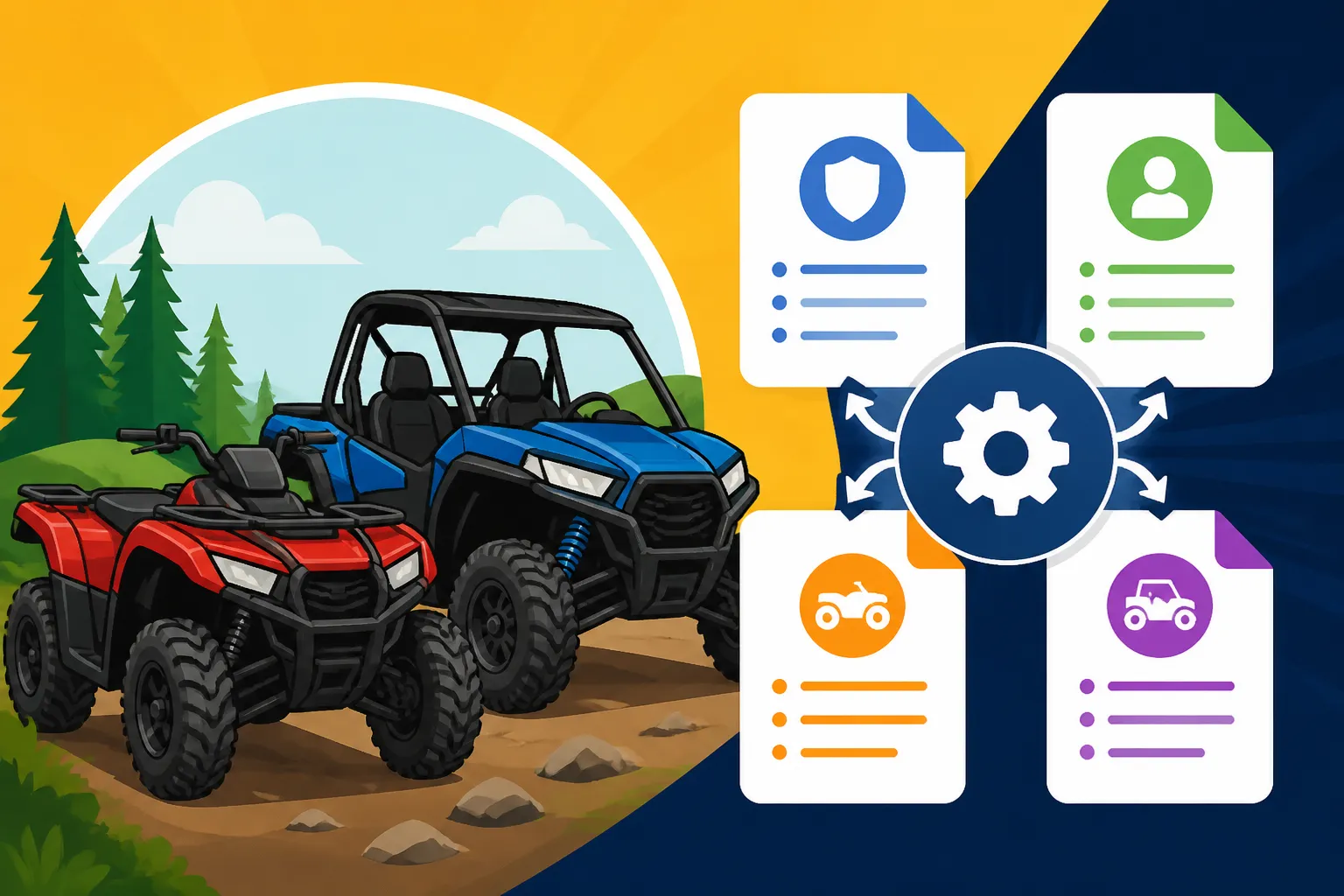
Producing Four Documents at Once
There's nothing quite like the feeling of hitting the trails on your ATV or side-by-side in New Brunswick – the fresh air, the scenic routes, the camaraderie. But that feeling can turn to dread if you're stopped by an officer or game warden and realize you're scrambling to find your essential paperwork. It’s a common frustration, and honestly, it’s easy to forget what exactly you need to have on hand. This guide is here to simplify things, walking you through the four crucial documents every ORV rider in New Brunswick must be able to produce on demand, explaining why they're required, and offering practical advice on keeping them safe and accessible.
The Four Non-Negotiable Documents You Need to Carry
When you're out exploring the vast network of trails in New Brunswick, whether it's an old rail bed or a dedicated club trail, there are specific pieces of paper – and one vital sticker – that law enforcement expects you to have readily available. Think of these as your ORV passport; without them, your adventure could be cut short.
Your Valid Driver's Licence or Safety Certificate
This is your personal identification and proof that you're authorized to operate a motor vehicle. For most adult riders, this means your standard New Brunswick driver's licence. However, if you're a younger rider, or if you're operating an ORV under specific circumstances, this might look a little different. For instance, New Brunswick has specific rules for riders aged 14 and 15, who require a Class 9 licence and an approved driver training certificate. It’s crucial to understand [New Brunswick ATV Age Requirements] and ensure you meet them. Without this personal credential, you're essentially riding without being properly identified as a qualified operator, which can lead to serious fines. An officer needs to confirm that the person operating the machine is legally allowed to do so, for everyone's safety on the trails.
The Vehicle Registration Certificate
Just like your car, your ATV or UTV needs to be officially registered with the province. This certificate proves ownership and that your machine is legally allowed on New Brunswick trails and designated roads. You'll receive this from Service New Brunswick when you register your ORV for the first time or renew its registration. It details your machine's make, model, VIN, and your name as the owner. Losing this document or forgetting it at home can be a real headache. It's often overlooked, but carrying this original document is a must. If you've recently purchased your machine, make sure you've completed the [New Brunswick Transfer of Ownership Explained] process properly, so the registration is in your name. This piece of paper is the cornerstone of legal ORV operation.
Proof of Insurance
Riding on designated trails and shared road sections in New Brunswick requires you to have adequate insurance coverage for your off-road vehicle. This isn't just a suggestion; it's a legal requirement designed to protect you and others in the event of an accident. The proof of insurance card or document from your provider confirms that you have the necessary liability coverage. Many riders underestimate the importance of this, but collisions can happen, and having proof of insurance can save you from significant financial and legal woes. [New Brunswick Requires Insurance on Trails] for a reason, and if you're stopped and can't produce this, you could face hefty fines. Always carry the physical proof, not just assume your policy is active.
Your Current Trail Permit Sticker (and Receipt)
This is perhaps the most visible and often discussed document. The New Brunswick trail permit sticker, issued by QuadNB (the New Brunswick All-Terrain Vehicle Federation), is your literal pass to ride on the vast network of managed trails. While the sticker itself must be affixed to the left front fender of your machine, it's a very good practice to carry the physical receipt you received when you purchased it. This is especially true if your sticker is brand new and perhaps hasn't been applied yet, or if it has been damaged or obscured. [New Brunswick Trail Permits for 2026 and 2027] outlines the different types of permits available. This permit helps fund the maintenance, grooming, and development of the provincial trail system, ensuring there are fantastic places for us to ride. An officer will not only check for the sticker but may also ask to see the corresponding receipt.
Summary of Documents Required
| Document | Purpose | Display/Carried On | Notes |
|---|---|---|---|
| Driver's Licence | Proof of legal authorization to operate an ORV. | Rider's person | Class 9 for teens (14-15) requires training certificate. Must be valid. |
| Registration Cert. | Proof of legal ownership and provincial registration of the ORV. | Machine (waterproof pouch) | Original document required. Ensure it's in your name. |
| Proof of Insurance | Confirmation of valid liability coverage for the ORV. | Machine (waterproof pouch) | Specific requirement for trail use. Fines for riding uninsured. |
| Trail Permit Sticker | Permission to use managed trails (sticker on machine); receipt verifies purchase. | Sticker on left front fender, receipt with papers | Supports trail network. Carry receipt in case sticker is new, damaged, or obscured. |
The Rationale: Why These Documents Are So Important
It might feel like a lot of paperwork to juggle, but each of these documents serves a vital role in ensuring safe, responsible, and sustainable ORV riding in New Brunswick. They're not just bureaucratic hurdles; they're the foundation of legal trail access and rider accountability.
Ensuring Legal and Safe Operation for Everyone
Every document serves to confirm that you, your machine, and your activity are all above board. Your driver's licence or safety certificate ensures that you have met the minimum requirements to safely operate an ORV, reflecting a level of training or experience. The registration certificate proves the machine isn't stolen and is legally on the books in New Brunswick. This traceability is crucial for law enforcement. [New Brunswick Penalties for Riding Unregistered] can be quite steep, highlighting the importance the province places on this. These checks are designed to protect not just you, but also other riders, landowners, and the general public, by ensuring only qualified individuals on properly registered machines are on the trails.
Supporting Our Incredible Trail Infrastructure
The trail permit is a direct investment in the very network you're enjoying. The funds generated from these permits go directly back into trail maintenance, bridge repairs, signage, and the administrative efforts that keep the entire system running. Without these permits, our extensive 10,000 kilometres of trails wouldn't be possible. When an officer asks to see your permit, they're not just checking for compliance; they're ensuring that everyone is contributing their fair share to a resource we all cherish. It's a system of collective responsibility that ensures the trails remain open and enjoyable for generations of riders.
Accountability and Protection in Case of Incidents
Accidents happen, even to the most careful riders. Having your proof of insurance ensures that if something goes wrong – whether it’s a minor fender-bender on a trail or a more serious incident – there's a mechanism in place to cover damages and injuries. This protects you from potentially ruinous out-of-pocket expenses and ensures that victims receive proper compensation. Similarly, the registration and your personal identification provide crucial information for accident reporting and investigation. [New Brunswick Accident Reporting Rules] are clear, and having your documents ready streamlines this process, allowing emergency services and law enforcement to act efficiently. It removes ambiguity and ensures accountability.
Practical Strategies for Carrying Your Documents
Okay, so we know what to carry and why. Now, let's talk about the how. Fumbling through pockets or digging deep into a backpack when an officer stops you is never ideal. The goal is easy access and protection from the elements.
Invest in Quality Waterproof Storage
New Brunswick weather is famously unpredictable. A beautiful sunny morning can quickly turn into a torrential downpour, and creek crossings are a regular part of many rides. Paper documents and water do not mix. Investing in a truly waterproof case or pouch is perhaps the single best piece of advice for carrying your documents. Many riders opt for robust storage bags, perhaps even a hard case from a brand like SuperATV, designed specifically for ORV use, to ensure their documents are safe from the elements. Look for something that can be securely mounted to your machine or fits snugly into a dedicated storage compartment. A zippered, heavy-duty plastic bag inside a tougher pouch works wonders. You'll want something that can withstand mud, dust, and full immersion, not just a light sprinkle.
Keep Them Accessible, Yet Secure
Your documents need to be easy to get to, but also safe from being lost or falling out during a bumpy ride. Many ATVs and side-by-sides have small glove compartments or storage bins. A compact, waterproof pouch tucked into one of these is ideal. Some riders prefer a pouch worn on their person, perhaps in a zippered chest pocket or a secure fanny pack, especially for their driver's licence. The key is to find a spot that’s quick to reach but won't let them bounce out when you hit a series of washouts. Always practice retrieving them quickly before you head out on your first ride of the season. [Carrying Four Documents at Once] means thinking about placement for optimal convenience and safety.
Consider Digital Backups (with a caveat)
While an officer will typically ask for physical documents, having digital copies on your phone can be a helpful backup, especially for things like your registration or insurance. Take clear photos of all your documents and save them in a dedicated folder on your phone, or even better, in a cloud storage service you can access offline.
The Caveat: Do not rely solely on digital copies. As mentioned, physical documents are often required. Your phone battery might die, you might be in an area with no cell service (which happens a lot in New Brunswick's backcountry!), or your phone might get damaged. Always carry the original hard copies as your primary method of proof. The digital copies are a useful redundancy, not a replacement.
What Happens If You Cannot Produce the Documents?
The moment an officer asks for your documents is not the time to realize they're not where they should be. The consequences of not being able to produce the required paperwork can range from minor inconveniences to significant fines and even having your ride impounded. It’s a situation no one wants to be in.
Immediate On-Trail Consequences
If you're stopped and cannot produce one or more of the required documents, the immediate outcome can vary depending on the officer's discretion and the severity of the missing document.
- Fines: The most common consequence is a fine. For example, [New Brunswick No-Registration Fine of $172.50] or [New Brunswick Uninsured ATV Fine of $604.50] are serious penalties. These set fines are designed to ensure compliance.
- Orders to Cease Riding: An officer may order you to stop riding immediately and transport your machine off the trail. This can ruin your day and leave you stranded far from home if you don't have a way to pick up your ORV.
- Impoundment: In more severe cases, especially for repeat offenders or if the machine is found to be unregistered and uninsured, your ATV or UTV could be impounded. Getting it back involves paying impound fees, fines, and proving you've rectified the missing documentation.
- Wasted Time: Even if you avoid a fine, an officer will spend time verifying your information, potentially holding up your ride and that of your entire group. It's an unnecessary delay that can be easily avoided.
Longer-Term Repercussions
Beyond the immediate fines and inconvenience, failing to carry your documents can have longer-lasting impacts. Repeated infractions could affect your driving record or insurance rates. If you're involved in an accident and cannot provide proof of insurance at the scene, you could face immense personal liability for damages and injuries. This is where the protection offered by your insurance becomes paramount, and without proof, that protection is harder to assert. It's always better to be prepared. Think of it as a small effort upfront that saves you a world of trouble down the line. To make things easier, consider a quality document holder from a brand like SuperATV that ensures everything is together and protected for every ride.
Disclaimer
This article is for general informational purposes only and does not constitute professional advice. Laws, prices and regulations vary by location and change over time. Consult a qualified professional for guidance on your specific situation.