New Brunswick Riders Aged 14 and 15
It's an exciting time when your teenager reaches those pivotal years, especially in New Brunswick, where the call of the wild on an ATV or side-by-side is so strong. However, for 14 and 15-year-old riders, the thrill of hitting the trails often comes with a bit of a headache for parents trying to sort out the specific rules. It’s not simply a matter of hopping on and going; there’s a distinct set of regulations that apply to this age group, different from younger kids and fully licensed adults. This guide is here to untangle those complexities, providing you with a clear roadmap to ensure your 14 or 15-year-old rider enjoys the incredible New Brunswick outdoors safely and, most importantly, legally.
Understanding the Legal Landscape for Young Riders
When your teen wants to ride an ATV or UTV in New Brunswick, it’s not just about getting them a machine and some gear. Our province takes off-road vehicle safety seriously, and for good reason. The rules are designed to protect everyone, from the rider themselves to other trail users and even the environment we all love to explore. For 14 and 15-year-olds, there's a specific set of guidelines that acknowledges their developing skills and judgment while providing a pathway to responsible riding.
The Importance of the Off-Road Vehicle Act
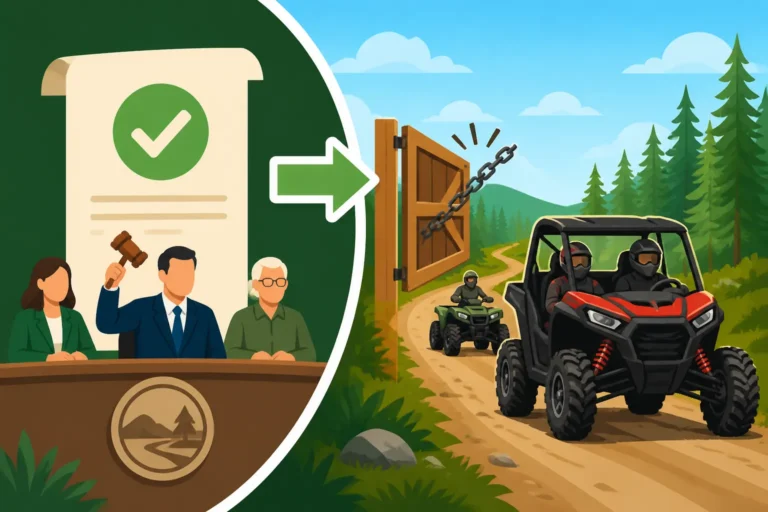
At the heart of all ATV and UTV rules in New Brunswick is the Off-Road Vehicle Act. This piece of legislation dictates everything from registration and insurance requirements to where you can ride and, crucially, who can ride. It's not some abstract government manual; it's the very foundation that keeps our trails organized and safer for everyone. For young riders, the Act is particularly important because it sets out the framework for their eligibility to operate a machine, emphasizing safety and supervised progression. Ignoring this Act isn't just a slap on the wrist; it can lead to significant fines and even loss of riding privileges. [What New Brunswick's Off-Road Vehicle Act Covers] is essential reading for any family involved in the sport.
Age-Specific Regulations
The New Brunswick Off-Road Vehicle Act carves out a unique category for 14 and 15-year-olds. They aren't treated like young children who are restricted to closed courses and smaller machines, nor are they given the full privileges of an adult rider aged 16 or over who might hold a full driver’s license. Instead, this age group falls into a "supervised independence" zone. They are old enough to demonstrate a degree of skill and responsibility but still require the structure of specific licensing, training, and adult supervision. This balance aims to foster safe riding habits early on, recognizing that these teens are at a critical developmental stage where they can learn advanced skills and judgment with proper guidance. It's a stepping stone, preparing them for future solo adventures.
Permitted Riding Areas
For 14 and 15-year-old riders, where they can legally operate an ORV is crucial. Generally, they can ride on designated off-road trails, such as those maintained by QuadNB member clubs, and on private land with the owner's permission. New Brunswick boasts an incredible network of trails, and these are often the best and safest places for young riders to gain experience. [New Brunswick ATV Trails: The QuadNB Network] offers vast opportunities. However, it's vital to understand that riding on public roads or highways, even briefly, is highly restricted and usually prohibited for this age group, unless explicitly opened by a municipal bylaw or ministerial designation, which is rare for ATVs and UTVs. Even then, an adult escort and appropriate licensing are still required. Always check local regulations and trail maps, like those available through the MapGear app, to ensure you're on a permitted path.
The Class 9 Licence: Your Gateway to Responsibility
For a 14 or 15-year-old to legally operate an off-road vehicle on public trails or any area regulated by the ORV Act, they absolutely need a Class 9 licence. This isn't just a formality; it's a foundational requirement that signifies they've taken the initial steps toward responsible riding. Without it, even with an adult escort, they could face significant penalties.
What a Class 9 Licence Entails
The Class 9 licence in New Brunswick is specifically designed for off-road vehicles. It is not a full driver's licence that allows them to drive a car on public roads, but rather an endorsement that grants them the privilege to operate an ORV on designated trails and approved areas, under specific conditions. It serves as official recognition that the rider has met the minimum age and training requirements set forth by the province. [A Class 9 Licence Explained] goes into more detail about what this means. This licence is a tangible step towards independence for young riders, giving them a sense of ownership over their riding journey while ensuring they understand the legal framework they operate within. It empowers them to be part of the riding community, knowing they are doing so legitimately.
How to Obtain a Class 9 Licence
Obtaining a Class 9 licence is a relatively straightforward process, but it requires careful attention to detail and parental involvement. First, the 14 or 15-year-old must successfully complete an approved ATV safety course. This course is a mandatory prerequisite, emphasizing both theoretical knowledge and practical riding skills. Once the safety course certificate is in hand, you'll need to visit a Service New Brunswick centre. The application will require proof of age, such as a birth certificate, and the completed safety course certificate. A parent or legal guardian must accompany the minor to provide consent and sign necessary paperwork. This hands-on process at Service New Brunswick ensures all conditions are met, reinforcing the seriousness of ORV operation. They will process the application, and upon approval, the Class 9 licence will be issued.
Keeping Your Class 9 Licence Valid
Like any official document, the Class 9 licence has an expiry date, typically coinciding with the rider's 16th birthday, at which point a different set of rules and potentially a different licence might apply. It’s crucial to keep track of this expiry. If the licence expires, the rider is no longer legally permitted to operate an ORV under the Class 9 provisions. Additionally, the licence can be suspended or revoked if the rider commits serious infractions, such as reckless driving, riding in prohibited areas, or failing to adhere to other aspects of the Off-Road Vehicle Act. Education and consistent reinforcement of safe and legal riding practices are key to maintaining the validity of the licence. Parents and guardians play a vital role in ensuring their young rider understands these responsibilities, not just for compliance but for their ongoing safety and enjoyment of the sport.
Driver Training Certificates: More Than Just a Class
While the Class 9 licence is the official permission slip, the driver training certificate is the proof that your 14 or 15-year-old has acquired the fundamental knowledge and skills to ride safely. It's a critical component of responsible ORV operation, moving beyond just legal compliance to focus on actual hazard awareness and control.
Mandatory Safety Training
For 14 and 15-year-old riders, successfully completing an approved ATV safety course and holding the resulting driver training certificate isn't just recommended; it's absolutely mandatory. This requirement is in place because formal training drastically reduces the risk of accidents and injuries. It's not about being able to simply start the machine and go; it’s about understanding the mechanics, the physics of riding, environmental factors, and how to react to unexpected situations. The course instills a deep respect for the machine and the trails. [New Brunswick Safety Course Explained] details the importance of this training. Without this certificate, your teen cannot obtain a Class 9 licence, nor can they legally ride on designated trails, even with an escort. It's truly a non-negotiable step on their journey to becoming a responsible rider.
What the Course Covers
These approved ATV safety courses are comprehensive, covering both theoretical knowledge and practical, hands-on riding skills. In the classroom, students learn about the New Brunswick Off-Road Vehicle Act, trail etiquette, environmental protection, basic machine maintenance, and how to assess risks. They'll study topics like proper turning techniques, climbing and descending hills, traversing obstacles, and emergency braking. The practical component, usually conducted on a closed course, allows them to put this theory into practice under the watchful eye of certified instructors. They learn how to control the machine in various conditions, building confidence and competence. Many courses also emphasize the importance of proper safety gear and pre-ride inspections. This structured learning environment provides a solid foundation for safe riding, equipping young riders with the skills they need to anticipate and respond to challenges on the trail.
Finding an Approved Course and Certification
Finding an approved ATV safety course in New Brunswick is relatively easy, as they are offered by various certified instructors and organizations, often in partnership with QuadNB. You can typically find schedules and registration information on the QuadNB website or by contacting your local ATV club. The course usually takes a full day or two half-days, with both classroom and practical components. [New Brunswick Safety Course Schedule] provides an idea of when and where these courses are offered. Upon successful completion of the course, riders receive a driver training certificate, which is the document you will need to present at Service New Brunswick when applying for the Class 9 licence. It's vital to keep this certificate safe, as it serves as proof of their training. Make sure your teen carries a copy of it, or at least the Class 9 licence, whenever they ride, as officers can ask to see it. [Producing Your Safety Certificate When an Officer Asks] covers this essential requirement.
Escorting Young Riders: The Adult Responsibility
One of the most critical aspects of 14 and 15-year-old riders hitting the trails in New Brunswick is the mandatory requirement for an adult escort. This isn't just about having another person along for the ride; it's a specific legal obligation that places significant responsibility on the accompanying adult.
Who Qualifies as an Escort
For a 14 or 15-year-old to legally ride an ORV, they must be accompanied by an adult who meets specific criteria. This escort must be at least 19 years of age and hold a valid driver's license (any class, including a full car licence). Crucially, the escort must also have successfully completed an approved ATV safety course, just like the young rider they are supervising. This ensures the adult escort possesses the same foundational knowledge of safe operation and provincial regulations. [New Brunswick Adults Escorting Young Riders] clarifies these requirements. This isn't a casual buddy system; it's about having an experienced, trained adult directly overseeing the young rider's actions and ensuring compliance with all safety protocols.
Role and Responsibilities of the Escort
The adult escort's role extends far beyond simply being present. They are legally responsible for the actions of the 14 or 15-year-old rider they are accompanying. This means they must maintain direct supervision, remaining in immediate proximity to the young rider at all times on the trail. They are expected to teach and reinforce safe riding practices, intervene if the young rider is engaging in unsafe behaviour, and ensure that all rules of the Off-Road Vehicle Act are followed. This includes making sure the young rider is wearing all mandatory safety gear, observing speed limits, staying on marked trails, and properly navigating road crossings. Essentially, the escort is the first line of defence, responsible for both the safety of the young rider and for setting a good example of responsible ORV operation. It's a role that demands attentiveness and a solid understanding of all ORV regulations.
Escort Requirements on Different Terrain
The requirement for an adult escort generally applies universally wherever the New Brunswick Off-Road Vehicle Act governs riding. This means whether your 14 or 15-year-old is on a managed club trail, Crown land, or even crossing a short section of a designated road, the adult escort must be present and meet all the necessary qualifications. The only real exception would be if they are riding exclusively on private land owned by the family, where the ORV Act may not apply in the same way, depending on specific circumstances and property usage. However, even in such cases, having an experienced adult supervise is always recommended for safety. The rules are designed to create a consistent safety standard across most riding environments, reinforcing the idea that vigilance and supervision are paramount for this age group, regardless of the specific terrain.
Machine Restrictions and Safety Gear
While 14 and 15-year-old riders have more freedom than their younger counterparts, there are still crucial considerations regarding the machines they operate and the gear they wear. Safety isn't just about knowledge; it's about being properly equipped.
Appropriate Machine Sizes for 14 and 15-Year-Olds
Unlike younger children who face strict engine size caps (like the 70cc limit for 6-year-olds or 90cc for 12-year-olds), New Brunswick's Off-Road Vehicle Act does not impose a specific engine displacement limit for 14 and 15-year-old riders. This might seem surprising, but the emphasis shifts to the machine being "appropriate for the rider's size and skill level." This means a parent or guardian must use their best judgment to ensure the ATV or UTV is not too large, too powerful, or too heavy for the young rider to control safely. A machine that is too big can be difficult to manoeuvre, especially in emergency situations, and can lead to fatigue. Consider factors like seat height, handlebar reach, and overall weight. Sometimes, a quality aftermarket suspension upgrade, perhaps from a reputable brand like SuperATV, can actually help fine-tune a machine's handling and feel, making it more manageable and comfortable for a developing rider, though it doesn't change the fundamental size. The goal is confident, controlled operation, not just raw power.
Mandatory Safety Equipment
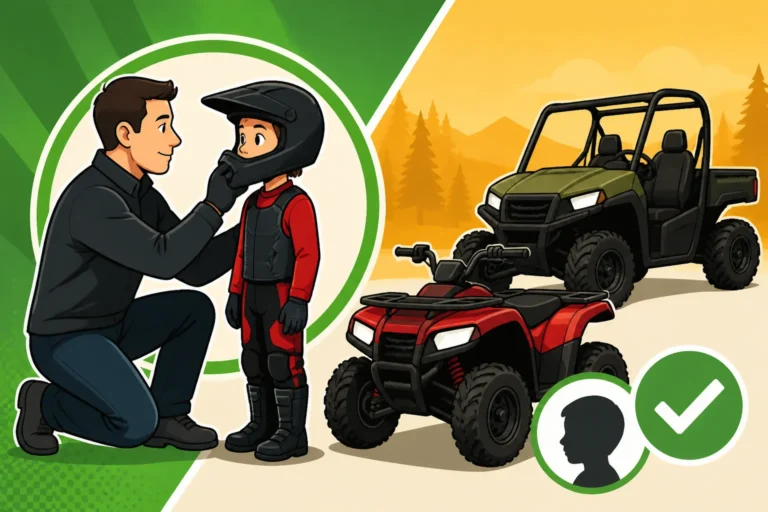
No matter the age, safety gear is non-negotiable for ORV riders in New Brunswick, and this is especially true for young riders. A properly fitting helmet is paramount; it must meet recognized safety standards such as DOT, Snell, or CSA D230. [New Brunswick ATV Helmet Law] outlines these requirements clearly. Beyond the helmet, riders must wear eye protection (goggles or a face shield), sturdy over-the-ankle boots, gloves, long pants, and a long-sleeved shirt or jacket. This full coverage protects against abrasions, impacts, and debris on the trail. Layering clothing is often a good idea, as conditions can change quickly. This isn't about looking cool; it's about protecting vital areas of the body from the inherent risks of off-road riding. Investing in good quality, properly fitting gear is one of the best safety decisions you can make.
Vehicle Equipment Requirements
It’s not just the rider that needs to be properly equipped; the ATV or UTV itself has requirements under New Brunswick law. The machine must be registered with Service New Brunswick and have valid insurance, especially if riding on club trails or Crown land. [New Brunswick Requires Insurance on Trails] explains this in detail. It needs working headlights, taillights, brake lights, and a functional muffler. The brakes must be in good working order. Additionally, all required paperwork – including the machine's registration certificate and proof of insurance – must be carried on the machine or by the operator while riding. A sturdy storage box can be useful for keeping these documents safe and dry. For added safety and utility, especially when riding with younger, less experienced operators, considering accessories like a reliable winch from SuperATV can be a smart move, providing peace of mind for unexpected situations like getting stuck or needing to clear trail debris. These functional additions enhance safety and preparedness for all riders.
Navigating Roads and Crossings
One of the most common areas of confusion and potential infractions for ORV riders, particularly youth, involves interacting with public roads. New Brunswick has very strict rules regarding when and how ATVs and UTVs can be on or cross highways, and for 14 and 15-year-olds, these rules are even more stringent.
Rules for Crossing a Public Highway
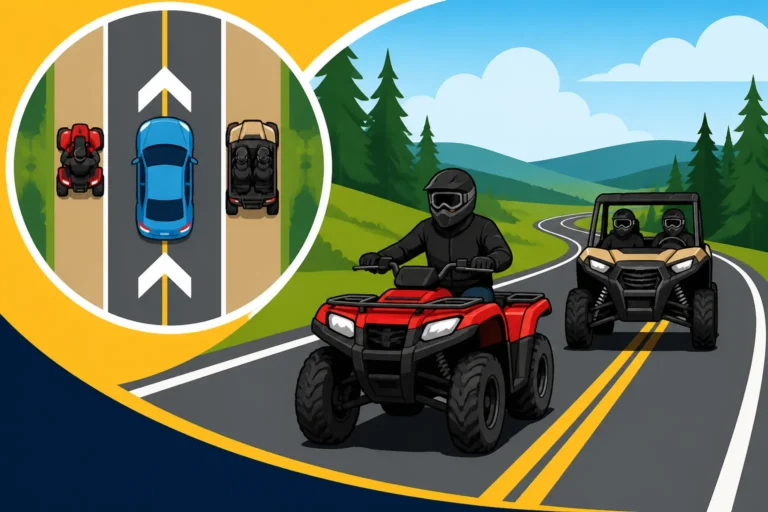
For 14 and 15-year-old riders, crossing a public highway is one of the few instances where they may legally interact with a paved road. However, it is governed by very strict rules. The crossing must be made as directly as possible, at a 90-degree angle to the road. Before crossing, the rider must come to a complete stop, look both ways, and yield to all vehicular traffic. The crossing must be quick and efficient, getting the ORV from one side of the trail to the other without delay. They are absolutely prohibited from riding along the shoulder or travelled portion of the highway, even for a short distance, unless it's a very specific, designated area (which is rare). [New Brunswick Rules for Crossing a Road] provides the full breakdown. Any deviation from these precise rules can result in significant fines and jeopardize the young rider's licence.
Riding on Designated Public Roads
While the idea of riding an ATV or UTV on a public road might be appealing for convenience, it is highly restricted in New Brunswick, especially for 14 and 15-year-olds. The default rule is that ORVs are not permitted on public roads. The only exceptions are specific sections of roads that have been explicitly designated for ORV use by a municipal bylaw or a ministerial order. These designated sections are typically short connectors between trail systems or access points. Even then, when riding on such a designated section, the 14 or 15-year-old must still be accompanied by a qualified adult escort and adhere to all road traffic laws, including speed limits. It's crucial not to assume any road is open; always verify designations with local authorities or updated QuadNB maps. [New Brunswick Municipal Bylaws That Open Roads] can offer more information.
Strict Prohibition on Highway Riding
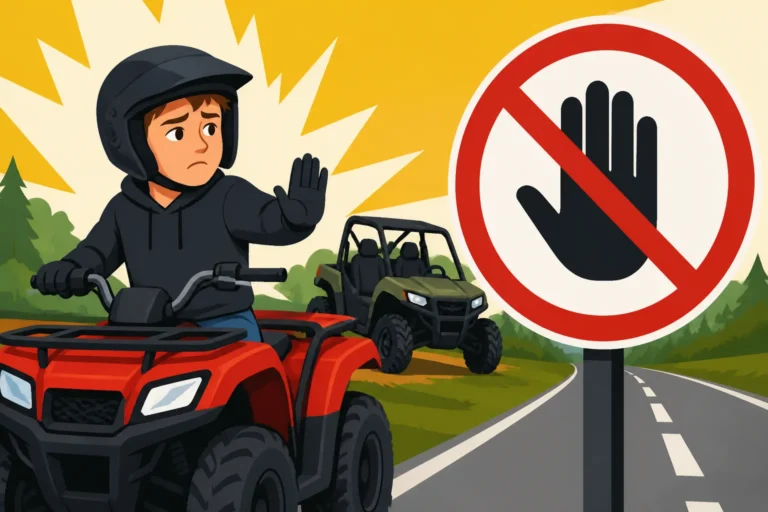
Let's be unequivocally clear: under no circumstances are 14 and 15-year-old riders, or any ORV riders for that matter, permitted to operate an ATV or UTV on the travelled portion of a public highway in New Brunswick. This includes major provincial highways, secondary roads, and their shoulders, except for direct, 90-degree crossings. The only time an ORV might share a highway is if it's a specific, very short designated section, typically a gravel or secondary road, and even then, signage will clearly indicate it. Attempting to ride along a highway, even for what seems like a short hop, is incredibly dangerous due to the speed and volume of traffic. It's also illegal and carries severe penalties, including hefty fines. [New Brunswick Fines for Riding Near a Highway] are substantial for a reason. Educate your young rider thoroughly on this rule, as it’s for their safety and the safety of others.
Penalties and Avoiding Trouble
Breaking the rules when riding an off-road vehicle in New Brunswick can lead to more than just a stern talking-to. For 14 and 15-year-old riders and their parents, the consequences can be significant, ranging from financial penalties to the loss of riding privileges. Understanding these potential repercussions is a strong motivator for adherence to the law.
Fines for Non-Compliance
New Brunswick has a clear schedule of set fines for various infractions of the Off-Road Vehicle Act. For 14 and 15-year-old riders, these fines can be issued for a range of violations. Operating an ORV without a valid Class 9 licence or without having completed the mandatory safety training can lead to substantial penalties. Similarly, riding without a proper adult escort, failing to stop and yield before crossing a public road, or riding in prohibited areas can all result in fines. These aren't minor tickets; they can quickly add up and create a serious financial burden. [New Brunswick Penalty for No Safety Course] and [New Brunswick No-Registration Fine of $172.50] are just a couple of examples of the costs involved. The goal isn't to punish, but to deter unsafe and illegal behaviour, reinforcing the importance of compliance for everyone's safety.
Consequences for Parents/Guardians
It’s crucial for parents and guardians to understand that their responsibility doesn’t end with getting their teen a licence and a machine. Under the Off-Road Vehicle Act, parents or legal guardians can be held financially and legally responsible for infractions committed by their 14 or 15-year-old rider. This means if your teen is fined for riding without an escort or for an unsafe manoeuvre, you, as the parent, could also be on the hook for that fine. In more serious cases, the off-road vehicle itself could be impounded, leading to additional costs for towing and storage. [New Brunswick Parent Responsibility for Passengers] highlights this adult accountability. This legal framework reinforces the fact that supervising a young rider is a serious commitment, requiring constant vigilance and proactive education about the rules of the trail and the road.
The Importance of Responsible Riding
Beyond avoiding fines and legal troubles, fostering a sense of responsible riding in your 14 or 15-year-old is paramount. This means teaching them to respect private property, stay on marked trails, control their speed, and minimize environmental impact. It’s about being courteous to other trail users – hikers, cyclists, or even equestrians – and contributing positively to the overall riding community. Responsible riding helps maintain access to trails, prevents conflicts, and builds a good reputation for off-road enthusiasts. Encouraging them to perform pre-ride checks and basic maintenance, perhaps even installing durable components like SuperATV skid plates for machine protection, not only teaches them responsibility for their vehicle but also helps prevent breakdowns that could lead to trail damage or unsafe situations. Instilling these values early on will ensure they grow into conscientious and respected riders for years to come.
Tips for a Safe and Enjoyable Ride
Making sure your 14 or 15-year-old has a safe and enjoyable riding experience in New Brunswick goes beyond just legal compliance. It involves preparation, awareness, and a continuous commitment to safety. These practical tips will help ensure every outing is a positive one.
Pre-Ride Checks and Maintenance
Before every ride, teach your young rider the importance of conducting a thorough pre-ride check. This isn't just for adults; it’s a critical habit to develop early. Check tire pressure, inspect the brakes for proper function, ensure all lights (headlights, taillights, brake lights) are working, and check fluid levels. Look for any loose nuts, bolts, or damaged components. A quick walk-around can often catch small issues before they become big problems on the trail. Regular maintenance, like oil changes and filter cleaning, also plays a huge role in the machine's reliability and safety. By involving your teen in these checks, you teach them self-reliance and how to understand their machine better. This proactive approach minimizes breakdowns and ensures the ATV or UTV is always in peak operating condition.
Planning Your Route
Spontaneity is fun, but when it comes to off-road riding, especially with young riders, a little planning goes a long way. Always plan your route in advance, utilizing current trail maps from QuadNB or the MapGear app. This ensures you're riding on approved trails, avoiding private property without permission, and are aware of any closures or challenging sections. Know your destination and an estimated return time. Inform someone reliable of your plans, especially if you're venturing into more remote areas. Consider the length of the ride, the terrain, and how it aligns with your teen's skill level and endurance. [New Brunswick ATV Trail Map Downloads] can be invaluable here. Thorough route planning prevents getting lost, ensures you don’t trespass, and allows you to make informed decisions for a safer, more predictable ride.
Emergency Preparedness
Even with the best planning, unexpected situations can arise on the trail. Being prepared for emergencies is crucial, particularly when riding with younger individuals. Always carry a well-stocked first aid kit, essential tools for minor repairs, and a reliable communication device (a fully charged cell phone, though remember [New Brunswick Cellular Reception Maps] can show dead zones, so consider a satellite messenger for remote areas). Pack plenty of water, snacks, and extra layers of clothing for changing weather conditions. A tow strap or small shovel can also be incredibly useful. Teach your teen basic emergency procedures, like what to do if they get separated from the group or if someone gets injured. The goal is to be self-sufficient and capable of handling minor incidents, allowing you to enjoy the ride with greater peace of mind.
Respecting Other Trail Users and the Environment
Part of being a responsible rider, especially for youth, is understanding that we share our beautiful outdoors with many others. This means practicing good trail etiquette: slowing down and yielding to hikers, cyclists, or horseback riders, and being mindful of noise levels, especially near residential areas. Always "pack it in, pack it out" – leave no trace of your visit and consider picking up any litter you encounter. Staying on marked trails protects sensitive ecosystems and prevents erosion. Educate your teen about respecting wildlife and natural habitats. By adhering to these principles, your 14 or 15-year-old will not only contribute to a positive image for ORV enthusiasts but will also help preserve New Brunswick's stunning natural landscapes for everyone to enjoy for years to come.
Disclaimer
This article is for general informational purposes only and does not constitute professional advice. Laws, prices and regulations vary by location and change over time. Consult a qualified professional for guidance on your specific situation.