New Brunswick Under-16 Riders Cannot Cross a Road
It's a question that keeps many New Brunswick parents up at night: where can your child legally and safely ride their ATV or UTV, especially when it comes to roads? The confusion is real, and the potential for serious fines – or worse, accidents – makes understanding the rules paramount. This guide is here to untangle the specific regulations surrounding under-16 riders and road crossings in New Brunswick, ensuring you have the clearest picture possible for safe and lawful off-road adventures with your family.
The Absolute Rule: Why Under-16 Riders Cannot Cross a Road
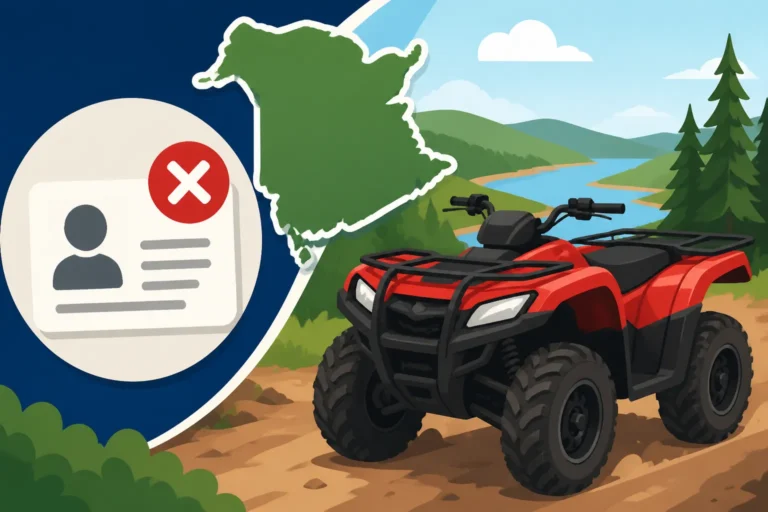
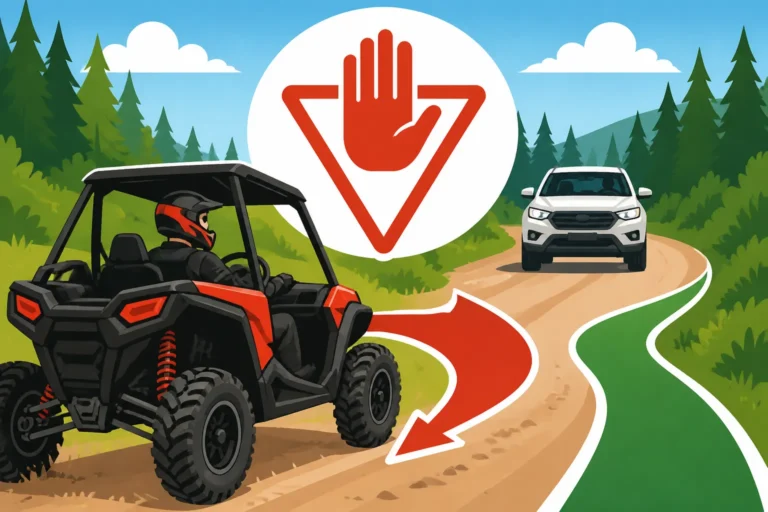
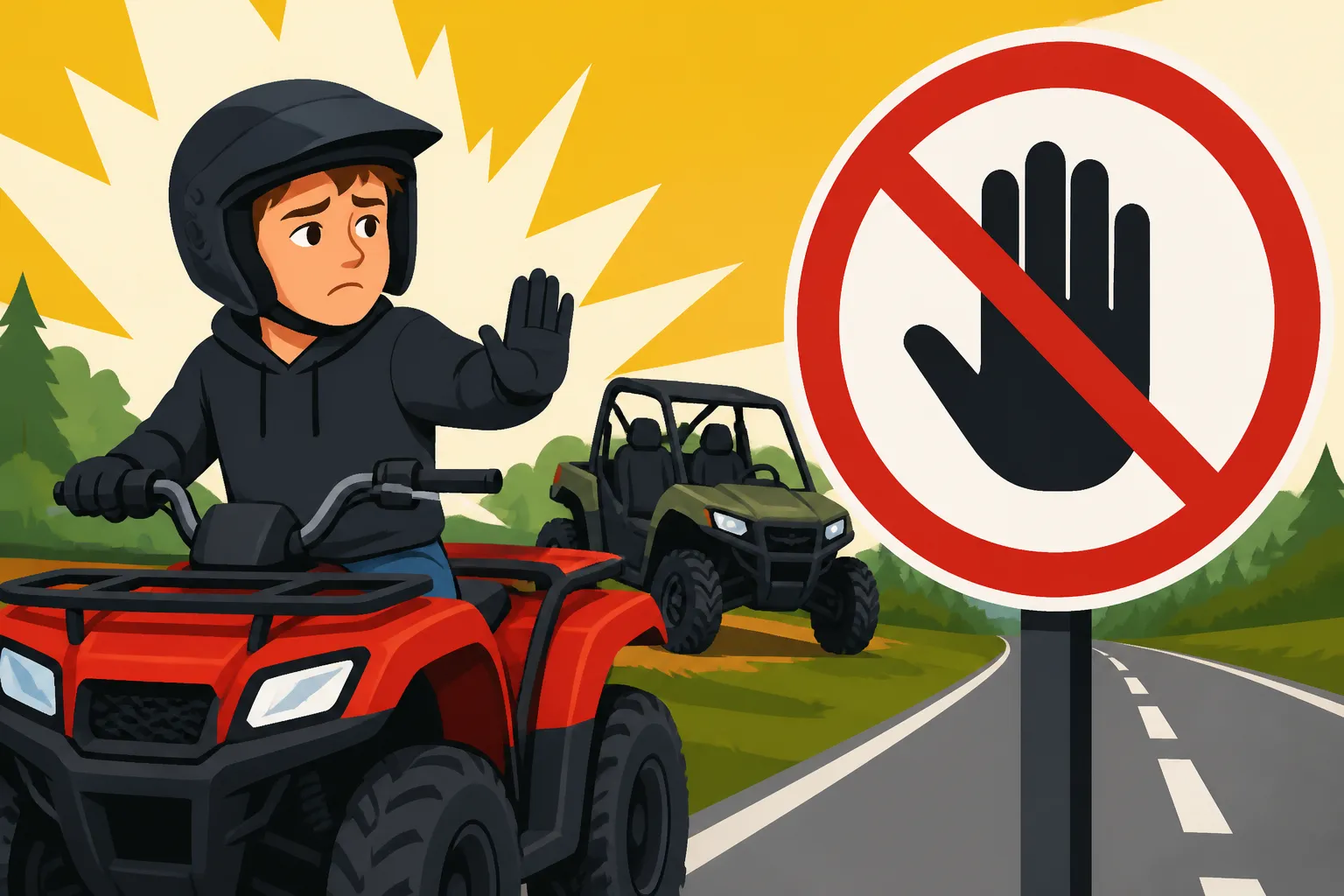
Let's cut right to the chase because this is the most critical piece of information for any parent or guardian of a young off-road vehicle (ORV) enthusiast in New Brunswick: if your child is under the age of 16, they are legally prohibited from crossing a road with their ATV or UTV. This isn't a suggestion or a guideline; it's a strict rule enshrined in New Brunswick law, designed purely for their safety and the safety of others on the road.
Understanding the "Under-16" Restriction
The legislation is unambiguous: an individual must be at least 16 years old to operate an ORV on, or across, any highway (which includes most public roads, paved or unpaved, in New Brunswick). This blanket restriction recognizes that younger riders, despite their enthusiasm and potential skill on the trails, simply do not possess the same level of judgment, experience, or understanding of traffic dynamics that are crucial for safely interacting with public roadways. It's not about whether they can physically ride across; it's about the inherent risks involved when an ORV, particularly one operated by a minor, encounters vehicle traffic. The intent is to prevent situations where a quick decision or a momentary lapse in attention could lead to a tragic outcome.
The term "highway" in this context is broad and includes what many might consider minor public roads. It's not limited to multi-lane highways but extends to virtually any public thoroughfare where vehicles typically travel. This means even quiet gravel roads or residential streets are off-limits for young riders attempting to cross from one trail section to another, or from their yard to a neighbour's property if it involves any public road. The law makes no distinction based on the type or volume of traffic; the prohibition is absolute based on age. Parents often grapple with this, especially if they live in rural areas where "crossing the road" seems innocuous, but the law holds firm.
The Dangers of Highway Intersections for Young Riders
The rationale behind this strict rule becomes starkly clear when you consider the dangers inherent in road crossings. ATVs and UTVs are designed for off-road use, not for sharing lanes with cars, trucks, and other road vehicles. While some ORVs have lights, they often lack the full suite of signals and road-specific safety features found on conventional vehicles. For a young rider, navigating even a seemingly quiet road presents a multitude of challenges. Their smaller stature on the machine can make them less visible to drivers, particularly in larger vehicles or at intersections. Furthermore, the speed and momentum of oncoming traffic can be difficult for a young mind to accurately judge, leading to miscalculations about safe crossing times.
Imagine a scenario: a 14-year-old rider, full of youthful confidence, approaches a road crossing point. They might check for traffic, but their perception of speed and distance, combined with the often-unexpected behaviour of road drivers, can be profoundly different from an adult's. A car traveling at 80 km/h covers a lot of ground in a very short time. The sudden stop-and-go nature of a road crossing, the need to quickly accelerate or brake, and the intense focus required to monitor multiple directions of traffic are advanced skills. These are skills that minors, by legal definition and developmental stage, are not deemed ready to consistently handle. The goal of the law is to eliminate these high-risk situations entirely for the most vulnerable group of riders.
Exceptions and Misconceptions
When it comes to under-16 riders and crossing roads, it's important to understand there are virtually no exceptions. This isn't like other rules where a guardian's presence might make an activity permissible. The age restriction for road crossing is non-negotiable. One common misconception is that if an adult is escorting the young rider, perhaps on their own ATV, then the child can cross. This is incorrect. While adult supervision is mandatory for younger riders on trails, it does not supersede the age restriction for road crossings. An escort cannot legally enable a minor to perform an act that is explicitly forbidden by law.
Another area of confusion can arise from the difference between crossing a road and riding along a road. Even for adults, riding along designated sections of a highway is heavily restricted and requires specific permits. For under-16 riders, neither crossing nor riding along a road is permitted. The rule focuses on any interaction with the "travelled portion" of a highway. This clear boundary exists to prevent any ambiguity that could compromise safety. The only "exception" would be if the ORV is not being operated by the minor, for instance, if it's being pushed by an adult, but the spirit of the law intends to keep young riders off public roads entirely while in control of their machines.
New Brunswick's ATV Age Requirements and Licenses
The restrictions on road crossing for under-16 riders are part of a broader framework of age-specific regulations for ORV operation in New Brunswick. These rules are designed to progressively introduce riders to the sport as they mature, ensuring they gain the necessary skills and understanding at each stage. Understanding these foundational age requirements is key to comprehending why the road crossing rule is so absolute.
Minimum Age for Operation and Training
In New Brunswick, the journey into ORV riding begins quite young, but under strict conditions. Children as young as six can operate an ATV, but only on a closed course and under direct adult supervision. There are also engine size limitations that step up with age, such as a 70cc limit for 6-11 year olds and a 90cc limit for 12-13 year olds. For riders aged 12 to 15, things become a bit more structured. They are required to complete an approved [New Brunswick Safety Course Explained] and possess a safety training certificate. This course covers essential topics like machine operation, safety gear, trail etiquette, and understanding the rules of the road (even if they can't cross them yet!). It's a foundational step, providing critical knowledge before they venture onto the province's extensive trail network.
This mandatory safety training ensures that even if a young rider isn't yet old enough for a full driver's license or to cross a road, they are learning responsible riding practices from an early age. The emphasis is on building a solid understanding of safety protocols and respect for the rules, which will serve them well as they get older and gain more privileges. Parents play a crucial role here, not only in ensuring their child completes the course but also in reinforcing these lessons on every ride. For more details on the specific age brackets and their respective rules, you can refer to [New Brunswick ATV Age Requirements].
The Class 9 Licence and Its Limitations
When a rider turns 14, they have the option to obtain a Class 9 ORV driver's license. This is a special license designed specifically for off-road vehicles and comes with its own set of privileges and, importantly, limitations. While holding a Class 9 licence means a 14 or 15-year-old can operate an ORV on designated trails without the constant direct visual supervision required for younger riders, it does not grant them the authority to operate an ORV on or across a public highway. This is a critical distinction that often causes confusion. The Class 9 licence acknowledges a level of competency suitable for trail riding, but it explicitly does not extend to the complexities and inherent risks of public road interaction.
So, even if your 14-year-old has completed their safety course and proudly holds their [A Class 9 Licence Explained], they are still legally restricted from crossing a road. The intent of the Class 9 licence is to facilitate responsible trail use for teens, allowing them to experience more independence within the designated ORV network. It's not a stepping stone to operating on public roads with an ORV. This strict separation helps maintain the safety of both the young rider and other road users, ensuring that the legal threshold for road interaction remains at the age of 16, when a driver can begin to acquire a full, graduated driver's license for on-road vehicles.
Adult Supervision and Escort Rules
While the road crossing rule for minors is absolute, understanding the general supervision requirements for young riders on trails is equally important for safety and compliance. For children aged 6 to 13, direct adult supervision is mandatory when operating an ORV. This means the supervising adult must be within visual sight and able to intervene immediately if needed. For riders aged 14 and 15, even with their Class 9 license, there are still rules about escorting. They must be accompanied by an adult who is at least 19 years old, holds a valid driver's licence, and has also completed an approved ORV safety course. This adult acts as an escort, riding with the young person, even if not directly supervising every moment.
This escort requirement emphasizes the ongoing need for experienced guidance for younger riders. The escort is not only there to offer help but also to model safe and responsible riding behaviour. They are often the first point of contact for an officer checking for compliance, and they share responsibility for the safety of the young rider. The rules around [New Brunswick Adults Escorting Young Riders] are detailed, outlining the qualifications and responsibilities of the accompanying adult. It's a system designed to incrementally grant freedom to young riders while keeping a safety net in place, recognizing that while they are gaining independence, they still benefit immensely from the presence of a seasoned, legally qualified adult.
Navigating Roads: What IS Allowed for Other Riders?
While under-16 riders face an absolute prohibition on road crossings, it's helpful to understand what is permitted for adult riders (16 and over) in New Brunswick to highlight the contrast and the specific challenges that led to the youth restrictions. The rules for adults are still stringent, demonstrating that road interaction for any ORV operator is treated with seriousness.
Designated Highway Sections and Usage Permits
For adult riders (16 and older), there are very specific and limited circumstances under which an ORV may be operated on a public road, and even then, usually only for short distances or to connect trail sections. This is not a free pass to ride on roads; rather, it’s a controlled allowance. Some municipalities, through specific bylaws, or the Minister of Natural Resources and Energy Development, can designate certain sections of highways or public roads for ORV use. These are usually clearly marked sections, often connecting parts of the [New Brunswick ATV Trails: The QuadNB Network] network. To use these sections, adult riders must also possess a valid driver's licence and often a special [New Brunswick Highway Usage Permits].
These permits and designated sections are a testament to the fact that even for experienced adult riders, mixing ORVs with regular road traffic requires careful planning and strict adherence to rules. The idea is to bridge gaps in the trail system, not to allow full road travel. For a family, this means that even if a part of the trail is designated for adult ORV road use, the under-16 rule still applies. A young rider simply cannot be on that road, regardless of designation or permit, or the presence of an adult escort. This distinction underscores the unique and stringent protection afforded to minors in the Off-Road Vehicle Act.
Crossing Roads for Adult Riders
For riders aged 16 and over, with a valid driver's license and proper ORV registration and insurance, crossing a highway is permissible, but it comes with a strict set of protocols. This isn't like crossing in a car; an ORV operator must exercise extreme caution. The law dictates that a rider must come to a complete stop, look both ways, and yield to all oncoming traffic before proceeding. The crossing must be done as directly and quickly as possible, at a right angle to the road. This minimizes the time the ORV is exposed to road traffic and reduces potential hazards.
Furthermore, adult riders must ensure their machine is properly lit if crossing after dark, and always wear a helmet meeting the prescribed standards (e.g., CSA, DOT, Snell). The expectation is that the ORV operator assumes full responsibility for the safety of the manoeuvre, understanding that they are operating a machine not primarily designed for road use in an environment dominated by conventional vehicles. Even for adults, the risk is real, which is why [New Brunswick Rules for Crossing a Highway] are so specific, and the under-16 prohibition is in place as a protective measure, removing that risk entirely from young, less experienced operators.
Local Bylaws and Open Roads
It's worth noting that while the provincial Off-Road Vehicle Act sets the fundamental rules, local municipal bylaws can sometimes add another layer of complexity, though usually not to loosen restrictions for minors. [New Brunswick Municipal Bylaws That Open Roads] can, in some cases, designate certain local roads or streets for ORV use by licensed adults. These bylaws are often enacted in smaller communities that wish to allow residents to access local businesses or trailheads via ORV, but these designations are usually very specific, limited in scope, and still defer to the provincial age restrictions.
Before riding anywhere near a road, whether you're an adult or planning for a young rider, always check the local bylaws. However, even if a particular road is "open" to ORVs by local bylaw, it will almost certainly still be restricted by the provincial age limit of 16 for operation on or across a highway. This means that while an adult might use that designated road section, a 14-year-old on their own ATV would still be prohibited. These bylaws aim to enhance access for adult riders, not to provide loopholes for youth to bypass safety regulations.
Practical Implications for Families and Young Riders
Understanding the letter of the law is one thing; applying it practically to family adventures is another. Navigating New Brunswick's trails with young riders requires careful planning and a commitment to safety that goes beyond just the legal minimums.
Planning Routes to Avoid Road Crossings
The absolute prohibition on under-16 riders crossing roads means that route planning becomes paramount when riding with children. Families should meticulously use up-to-date trail maps and digital resources like the MapGear app to identify routes that entirely avoid public road crossings. The QuadNB trail network is extensive, offering thousands of kilometres of designated trails, many of which are designed to keep riders off public roads. It might mean longer routes, or choosing different access points, but the safety of your child is non-negotiable. [New Brunswick ATV Trail Maps and the MapGear App] are invaluable tools for this purpose, often showing not just trails but also potential road intersections.
Consider hypothetical scenarios: you're planning a weekend ride from your camp near Fundy National Park. Your 13-year-old wants to join. If your intended route requires crossing even a quiet secondary road to connect two trail sections, that route is immediately out for your child. You'll need to find an alternative, perhaps a longer loop that stays entirely on the trail system, or find a different starting point on the other side of the road. This might involve trailering the ORV to a new location. It takes effort, but it's a necessary step to comply with the law and, more importantly, to ensure your child's safety. When examining maps, look for continuous green lines (designating trails) and avoid areas where these lines abruptly end or are broken by roadways without clear, ORV-specific underpasses or bridges.
Teaching Safe Riding Habits Beyond Road Rules
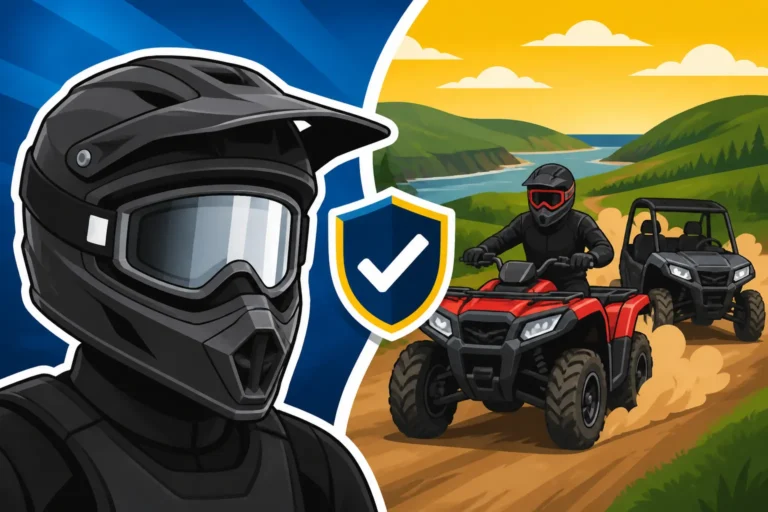
While road crossing is a specific legal point, it's part of a larger picture of responsible ORV operation. As parents, instilling comprehensive safe riding habits in young riders is crucial. This includes wearing proper safety gear at all times – a helmet meeting certified standards, eye protection, sturdy boots, gloves, and long-sleeved clothing. Even something as seemingly minor as wearing appropriate gear can reduce injury severity. Beyond gear, teaching respect for the trails, other riders, and wildlife is essential. This means sticking to marked trails, maintaining appropriate speeds for conditions, giving way to slower riders, and being environmentally conscious.
Regular machine maintenance is also key for safety. Before every ride, a quick check of tires, brakes, lights, and fluid levels can prevent breakdowns or unsafe conditions. Many riders choose to equip their machines with aftermarket protection and utility accessories to enhance safety and durability on the trails. Companies like SuperATV offer a range of products, from skid plates and bumpers to winches and lighting upgrades, that can improve a machine's capability and robustness for serious trail riding. While these accessories don't make road crossing legal for minors, they contribute to a safer overall riding experience on the trails for everyone, ensuring machines are robust enough to handle the varied terrain New Brunswick offers. Focusing on these broader aspects of safety ensures that young riders develop into responsible and skilled operators as they grow.
Fines and Penalties for Violations
The New Brunswick Off-Road Vehicle Act carries significant penalties for non-compliance, and these apply directly to violations involving minors, with parents or guardians often bearing the brunt. If an under-16 rider is caught operating an ORV on or across a highway, the fines can be substantial. For example, [New Brunswick Fines for Riding Near a Road] can be steep, and this would certainly apply to a minor caught crossing. Beyond the direct fine for the specific infraction, there can be other penalties depending on the circumstances, such as fines for not having a safety certificate, lacking proper supervision, or for the ORV not being registered or insured (if applicable).
It's not just about the monetary cost; there's also the educational aspect. Such an incident can be a traumatic experience for a young rider and a significant stressor for parents. Law enforcement officials in New Brunswick, including RCMP and local police, are trained to enforce these ORV laws with an emphasis on safety. Their priority is to prevent accidents and ensure compliance. While they might offer warnings for minor infractions, serious breaches like underage road crossing are typically met with fines. Understanding these penalties should serve as a strong deterrent, reinforcing the need for strict adherence to the age-related road crossing prohibition.
Frequently Asked Questions About Youth and Roads
It's natural for specific situations to spark questions, especially when dealing with nuanced legal restrictions. Let's tackle some common questions parents often have about their young riders and roads in New Brunswick.
"Can my 15-year-old just push their ATV across the road?"
This is a clever question, but unfortunately, the answer is typically no, at least in the spirit of the law. While physically pushing a non-operating ATV across a road might technically circumvent the "operating" an ORV definition, the intent of the law is to keep young people from controlling these machines in traffic environments. If the machine is being guided or steered by the minor while being pushed, it could still be interpreted as "operating" or "controlling" it in a manner that the law intends to prohibit.
Furthermore, even if an adult is doing the pushing, moving a heavy, bulky ATV across a road, especially one with traffic, presents its own safety hazards. It's not a practical or safe solution to bridge trail gaps. The safest and most compliant approach is to transport the ATV across the road on a trailer or in the back of a truck, allowing the young rider to only get on the machine once it is safely on the designated trail system.
"What if it's a dirt road, not paved?"
Many rural areas in New Brunswick have extensive networks of gravel or dirt roads that might seem less "dangerous" than paved highways. However, the legal definition of "highway" in the Off-Road Vehicle Act is broad and typically includes any public road, regardless of its surface material. This means that if it's a road maintained by the municipality or province and open for public vehicular traffic, it's considered a highway.
Therefore, the same prohibition applies: an under-16 rider cannot operate an ORV on or across a dirt road that is a public thoroughfare. The risks, while perhaps different in nature (e.g., dust visibility, rougher surface), are still present, and the legal standard remains the same. Always assume any public road, paved or unpaved, is off-limits for young riders. This is a common point of misunderstanding, particularly for those accustomed to vast private woodlot road networks that sometimes intersect public access roads.
"My child is almost 16, does that count?"
The law is very clear and precise when it comes to age requirements: "under 16" means anyone who has not yet celebrated their 16th birthday. There's no "almost 16" clause, no grace period, and no exception for being "just a few days shy." The age is a hard cutoff, and enforcement officials will adhere to it strictly.
This means that a 15-year-old and 364-day-old rider is legally in the same category as a 12-year-old when it comes to road crossing. While they might feel more mature or skilled, the law makes no such distinction based on proximity to the age threshold. It's a black and white rule to ensure clarity and avoid any ambiguity that could compromise safety. Until that 16th birthday arrives, the prohibition stands firm. It's important for parents to reinforce this strict adherence to the law to their children, setting a clear example of responsibility.
| Age Group | Operation on Trail (with conditions) | ORV Safety Course Required | Class 9 Licence Option | Road Crossing Allowed |
|---|---|---|---|---|
| 6-11 years old | Yes (closed course, direct supervision, 70cc limit) | No (but recommended) | No | No |
| 12-13 years old | Yes (direct supervision, 90cc limit) | Yes | No | No |
| 14-15 years old | Yes (escort required if off-private land) | Yes | Yes | No |
| 16 years and older | Yes (with valid driver's licence) | No (but recommended) | N/A | Yes (with strict rules) |
Disclaimer
This article is for general informational purposes only and does not constitute professional advice. Laws, prices and regulations vary by location and change over time. Consult a qualified professional for guidance on your specific situation.