Judging Whether a Child Fits the Machine
It’s a natural thing for parents and grandparents in New Brunswick to want to share the incredible experience of off-road riding with their children. There’s nothing quite like hitting the trails with your little ones, teaching them the ropes, and watching them develop a love for the outdoors. But before you even think about firing up the engine, there’s one absolutely crucial question that often keeps folks up at night: does my child actually fit the machine they’re going to ride? This guide is here to walk you through exactly how to judge whether a quad or side-by-side is the right size and type for your young rider, ensuring their safety and enjoyment on our beautiful New Brunswick trails.
Why Machine Fit Matters So Much for Young Riders
When it comes to off-road vehicles, size isn't just a number on a spec sheet; it's a fundamental aspect of safety, control, and ultimately, enjoyment. For an adult, a machine that's a bit too big or small might just be uncomfortable. For a child, it can be downright dangerous. We all want our kids to have fun, but not at the expense of their well-being.
The Dangers of an Ill-Fitting Machine
Imagine trying to drive a car where you can barely reach the pedals or see over the dashboard. That's precisely the challenge a child faces on an ATV or UTV that's too large for them. When a child can't comfortably reach the handlebars, their ability to steer effectively is severely compromised. They might struggle to make sharp turns or recover from a slight wobble, leading to loss of control. Moreover, if their feet can't firmly rest on the footrests, they lose a crucial point of balance and stability, especially when navigating uneven terrain. This isn't just about comfort; it’s about having the leverage needed to absorb bumps and shift their weight correctly.
Perhaps even more critically, an ill-fitting machine directly impacts a child's ability to operate vital controls. Can they squeeze the brake levers with enough force to stop quickly? Can they fully depress a foot brake? Is the throttle within easy reach, allowing for smooth, controlled acceleration rather than jerky movements? If a child has to stretch or contort their body to reach these controls, their reaction time in an emergency is significantly delayed. And let's not forget the simple act of standing up over bumps, a key technique for experienced riders. If the handlebars are too high or low, or the footrests too narrow, they can't effectively use their body weight to absorb impacts, leading to rapid fatigue and a higher risk of being thrown from the machine.
New Brunswick's Focus on Rider Safety
Our province takes the safety of off-road riders, especially our youth, very seriously, and for good reason. Accidents involving improperly sized machines can lead to serious injuries, and nobody wants that. The regulations and guidelines in New Brunswick aren't there to restrict fun, but to ensure that every rider, particularly those still developing their skills and strength, has the best possible chance of a safe experience. This commitment to safety is woven into everything from mandatory safety courses to age and engine size restrictions.
The spirit behind these rules acknowledges that a child's physical and cognitive development plays a huge role in their ability to handle an off-road vehicle safely. It’s not just about their height and weight; it’s also about their coordination, strength, and judgment. A machine that’s too powerful or too cumbersome for a child to manage effectively goes against the very principle of responsible riding. Think of it as building a strong foundation: before you can teach advanced riding techniques, you need to ensure the basic interaction between rider and machine is solid. By adhering to proper fit guidelines, we're not just following rules; we're actively participating in a culture of safety that benefits everyone on the trails. It's about empowering our young riders with confidence and control, rather than putting them in a position where they're constantly struggling.
Key Factors in Judging Machine Fit for Kids
When you’re trying to figure out if a quad or UTV is the right match for a young rider, it goes beyond just hopping on and saying, “Looks good!” There are several specific areas you need to meticulously check to ensure a safe and controlled ride. These factors cover everything from physical reach to the actual power of the machine, all critical in the dynamic environment of a New Brunswick trail.
Physical Reach and Control Operation
This is often the first and most obvious thing to check, but it requires a thorough assessment. First, have your child sit on the machine as they would when riding. Can they comfortably reach the handlebars without leaning too far forward or having their arms locked straight? Their elbows should have a slight bend, allowing for agile steering and absorbing shocks. Next, check their grip on the handlebars. Are their hands large enough to fully wrap around the grips, or are they just barely holding on with their fingertips? Small hands on oversized grips can lead to fatigue and poor control, especially when trying to maintain speed over rough terrain.
Now, move on to the controls themselves. Can your child operate both front and rear brake levers (on an ATV) with one or two fingers while maintaining a firm grip on the handlebars? They should be able to fully engage the brakes without stretching or losing their balance. If there's a foot brake, can their foot reach and depress the pedal firmly while keeping their heel planted on the footrest? The throttle is equally critical; ensure they can operate it smoothly from idle to full throttle without strain, and that their thumb or wrist isn't in an awkward position that could lead to accidental over-acceleration. Finally, check the footrests. Their feet should be able to sit flat on the footrests, providing a stable platform. If their legs dangle or their knees are excessively bent, they won't have the leverage to shift their weight effectively. Some aftermarket options, like those from SuperATV, might offer smaller or adjustable footpeg solutions, but always consult with a professional before modifying critical control points.
Weight and Maneuverability Considerations
It’s not just about reaching the controls; it’s also about how the child’s body weight interacts with the machine’s mass. A child needs to have sufficient body weight and strength to influence the ATV or UTV’s movement, especially when cornering or navigating obstacles. If the machine is too heavy relative to the child, they won't be able to effectively use "body english" – leaning into turns, shifting weight to maintain balance on sidehills, or counter-steering when a wheel dips. This can make the machine feel unwieldy and prone to tipping.
Consider a scenario where the machine starts to slide or lean unexpectedly. A rider needs to be able to quickly shift their weight to correct the balance. If the machine's weight overwhelms the child's ability to react, they become a passenger rather than a pilot. This is particularly true for ATVs, which rely heavily on active rider input for stability. For a side-by-side, while rider input is different, the child still needs to be able to comfortably reach and operate the steering wheel and pedals, and not feel dwarfed by the vehicle's interior. A good rule of thumb is that the child should be able to comfortably move their body around on the machine and feel like they are in control of its mass, not being controlled by it.
Age and Engine Size Regulations
New Brunswick has specific regulations concerning the age of riders and the corresponding engine size of their off-road vehicles. These rules are in place precisely to mitigate the risks associated with children riding machines beyond their capabilities. For instance, you’ll find that [The 70cc Limit on a 6-Year-Old's Machine] is a hard and fast rule, ensuring that the youngest riders are on machines that are appropriately powered for their developing skills. This isn't just about top speed; it's about controllable acceleration and overall machine responsiveness.
As children grow and gain more experience, the allowable engine size increases. For example, [The 90cc Step Up at Age 12] permits a slightly more powerful machine, but still within a range considered safe for that age group. It’s crucial to understand that these are minimum age requirements; a child might be 12, but if they haven't developed the necessary skills or strength, a 90cc machine might still be too much for them. The spirit of these regulations is to guide parents toward suitable choices, but ultimately, an individual assessment of the child's readiness is paramount. Don't forget that these rules also extend to engine caps for young riders in general, so understanding [Which Machines Fall Under the 70cc Cap] and higher limits is essential for compliance and safety.
Here's a quick reference for New Brunswick's age and engine size guidelines for ATVs (check current regulations for UTVs and snowmobiles, as they may differ):
| Age of Rider | Maximum Engine Size (ATV) | Key Fit Considerations |
|---|---|---|
| 6-11 years old | 70cc | Reach to controls, standing clearance, weight distribution, proper safety gear. |
| 12-15 years old | 90cc | Hand grip strength, full brake engagement, comfortable foot placement, body English ability. |
| 16 years and older | No CC Limit (with license) | Full control operation, physical strength for maneuvering, experience level, proper license. |
Note: These are general guidelines for ATVs. Always refer to the most current New Brunswick Off-Road Vehicle Act and regulations for precise details, especially for UTVs and different types of ORVs.
Practical Steps for Assessing Machine Fit
So, you’ve got a potential machine, and you’ve got your eager young rider. How do you go about making a definitive judgment on whether it’s a good match? It’s not just about a quick glance. You need to perform a series of practical checks that simulate real-world riding conditions, looking closely at how your child interacts with every critical component of the vehicle. This hands-on assessment is truly the best way to ensure safety.
The "Stand-Up and Reach" Test
This test is absolutely vital, particularly for ATV riders who spend a significant amount of time standing over rough terrain. First, have your child stand on the footrests of the ATV. Their feet should be planted flat and securely, not dangling or slipping. Their knees should be slightly bent, allowing for shock absorption. Now, have them reach for the handlebars. Their arms should have a comfortable bend at the elbows, roughly 90 to 120 degrees, allowing them to steer through a full range of motion without locking their elbows or overextending. They should be able to comfortably reach the grips with their entire hand, not just their fingertips.
Next, while standing, instruct them to turn the handlebars fully to the left and then fully to the right. As they do this, observe if their body twists awkwardly or if they lose balance. They should be able to execute these turns smoothly without straining or losing their grip. Crucially, while standing and gripping the handlebars, can they still operate the brake levers with their fingers? If they have to sit down or lean excessively to engage the brakes, the machine is not a safe fit. Remember, on a trail, standing up helps absorb impacts and maintain control, so if they can't do this comfortably and effectively, it's a significant red flag. You might even find certain aftermarket handlebar risers or adjustable footpegs from a brand like SuperATV could improve fit, but these modifications should be chosen carefully and installed professionally.
The Seated Control Check
While standing is important, much of the riding will still be done seated, especially on smoother sections or when cruising. Have your child sit squarely on the seat, in a natural riding position. Their feet should again be flat on the footrests, providing a stable base. If their legs are too short and their feet dangle, they won't have the leverage to shift their weight, or even to move their feet quickly to the ground in a precarious situation. If their legs are too long and severely bent, it can lead to discomfort and limited mobility.
From this seated position, have them practice operating all the controls. Can they comfortably reach and fully depress the foot brake pedal? Can they reach the shift lever (if applicable) and engage all gears without looking down or stretching awkwardly? The throttle control should be easy to manipulate with their thumb or wrist, allowing for fine adjustments in speed rather than an "on-off" sensation. Pay close attention to their posture. Are they hunched over or leaning too far back? A neutral, relaxed posture indicates a better fit, allowing them to ride longer without fatigue and react more quickly to changing trail conditions. This check ties directly into the broader concept of [New Brunswick ATV Age Requirements] because control operation is inherently linked to physical development.
Considering Gear and Protection
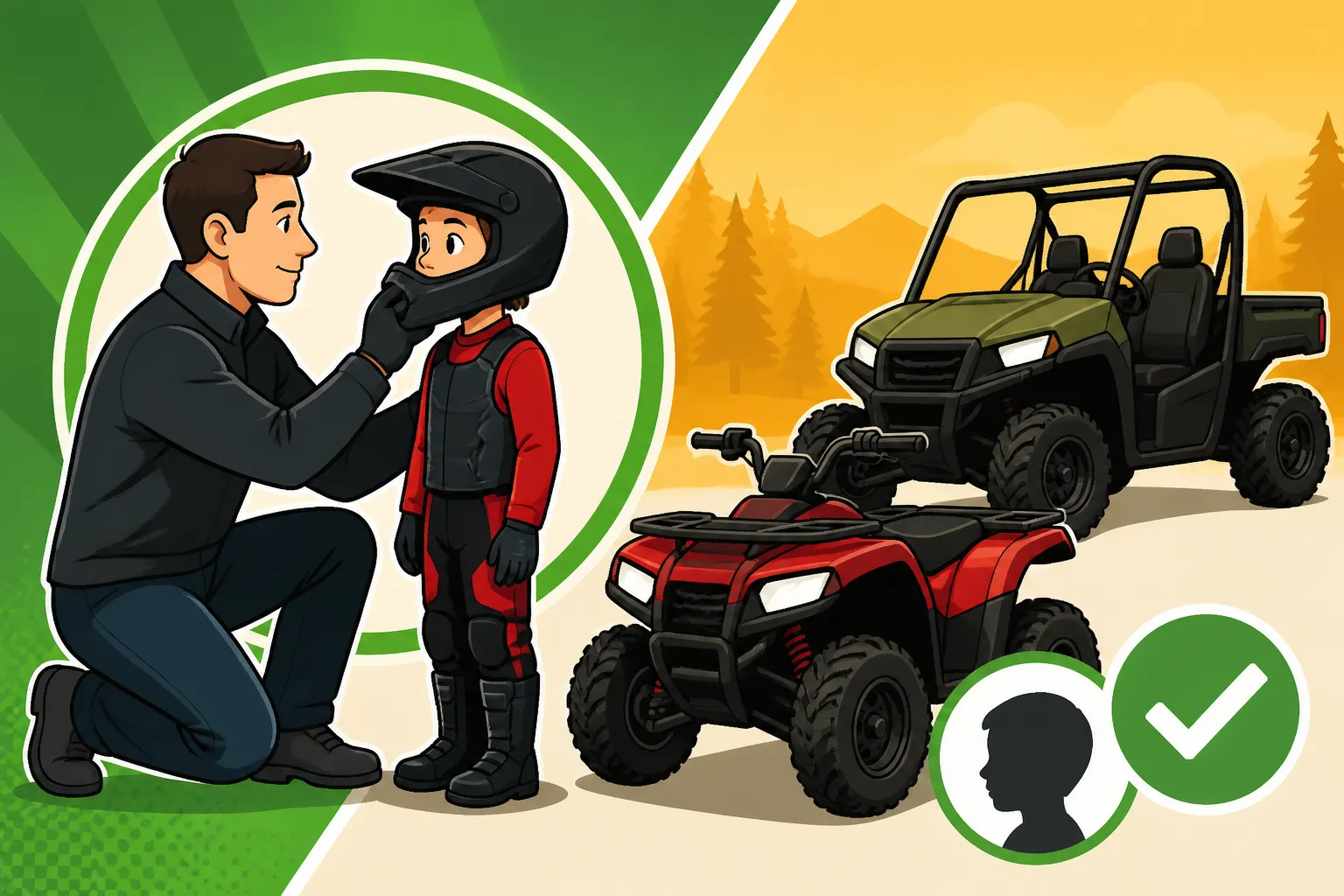
It's easy to focus solely on the machine, but your child's safety gear plays a critical role in overall fit and protection. A helmet, for instance, must fit snugly and securely, but it also adds a bit of bulk around the head. Ensure that even with a helmet on, your child can still comfortably turn their head to check surroundings and see clearly without the helmet bumping into handlebars or the seat back (especially in a UTV). [New Brunswick Helmet Law for Every Occupant] mandates approved helmets, and a poorly fitting helmet, even if approved, can be a major hazard.
Beyond the helmet, think about other protective gear. Do their riding boots allow their feet to fit properly on the footrests and operate the brake pedal without being too cumbersome? Are their gloves thick enough for protection but thin enough to allow good grip and feel for the controls? A chest protector, elbow pads, and knee pads will add bulk. Have your child try on all their planned riding gear before doing the fit checks. Sometimes, gear can subtly alter reach or flexibility, making a machine that seemed to fit perfectly now feel a bit off. [Gear Sized for a Young Rider] isn’t just about looking cool; it’s about providing maximum protection without hindering their ability to control the machine.
What to Do If the Machine Doesn't Fit
After performing all your checks, you might find that the machine you have in mind simply isn't a good match for your child. This can be disappointing, especially if it's a hand-me-down or a great deal you found, but prioritizing safety over convenience is paramount. There are a few paths you can explore, but some come with significant caveats.
Adjustments and Modifications (with caution)
Sometimes, minor adjustments can make a world of difference. For example, if the handlebars are just a touch too low or high, risers can be installed to bring them to a more suitable height. You can also find aftermarket grips that are smaller in diameter, making it easier for tiny hands to grasp firmly. Adjustable throttles allow you to control how much the throttle can open, which can be a valuable safety feature for less experienced riders, letting them gradually build confidence before accessing full power. You might even find that some brands, like SuperATV, offer specific youth-oriented accessories or adjustable components that could bridge a small fit gap.
However, you must approach modifications with extreme caution. Any changes to critical components like steering, braking, or suspension should only be done by a qualified mechanic using parts designed for the specific machine. Never compromise the structural integrity or safety features of the vehicle. For instance, putting oversized risers on handlebars can alter the steering geometry or put undue stress on cables and brake lines, potentially leading to catastrophic failure. It's often safer to accept that a machine doesn't fit than to dangerously modify it beyond its intended design. Remember, these are not toys; they are powerful vehicles, and improper modifications can lead to serious accidents.
The Right Machine for the Right Age
The most straightforward and often safest solution if a machine doesn't fit is to get an appropriately sized one. The market for youth ATVs and UTVs has expanded dramatically, offering a wide range of models designed specifically for different age groups and skill levels. These machines are engineered with lighter weight, lower seat heights, smaller handlebars, and engine sizes that comply with regulations like [The 70cc Limit on a 6-Year-Old's Machine] or [The 90cc Step Up at Age 12].
Waiting until a child naturally grows into a larger machine is another responsible approach. Patience is a virtue when it comes to riding safety. Sometimes, that older, larger quad sitting in the garage will be perfect in a couple of years, but not today. In the meantime, consider a smaller, entry-level youth model that perfectly matches your child’s current size and skill set. Many dealerships offer youth models, and they are specifically designed to provide a safe and positive learning experience for new riders. Always keep in mind that [New Brunswick Rules for a 12-Year-Old Rider] (or any age-specific rule) are there to guide you, but personal assessment of your child's readiness should always take precedence. The goal is a lifetime of safe and enjoyable riding, and that starts with the right machine.
Disclaimer
This article is for general informational purposes only and does not constitute professional advice. Laws, prices and regulations vary by location and change over time. Consult a qualified professional for guidance on your specific situation.