New Brunswick Lighting Requirements at Night
Riding your ATV or UTV in New Brunswick after the sun dips below the horizon can be an incredible experience – the quiet hum of the engine, the stars overhead, the world feeling vast and wild. But it also brings a critical responsibility: ensuring your machine is properly lit and visible. Many riders, especially newer ones, worry about what exactly is required to stay safe and legal when the darkness sets in, and nobody wants to be caught off guard by an officer or, worse, by another machine they couldn't see. This guide is here to demystify New Brunswick's lighting requirements for nighttime ATV and UTV riding, helping you illuminate your path and stay out of trouble.
The Essential Glow: Headlights, Taillights, and Brake Lights
When you're out on the trails or designated roads in New Brunswick, your ATV or UTV isn't just a toy; it's a vehicle, and like any other vehicle, it needs to be seen, especially at night. The foundational rules are all about visibility – making sure you can see where you're going and, crucially, that everyone else can see you. Without proper lighting, you're not only risking a fine but, more importantly, your own safety and the safety of others.
Illuminating Your Path Forward: Headlights Are Non-Negotiable
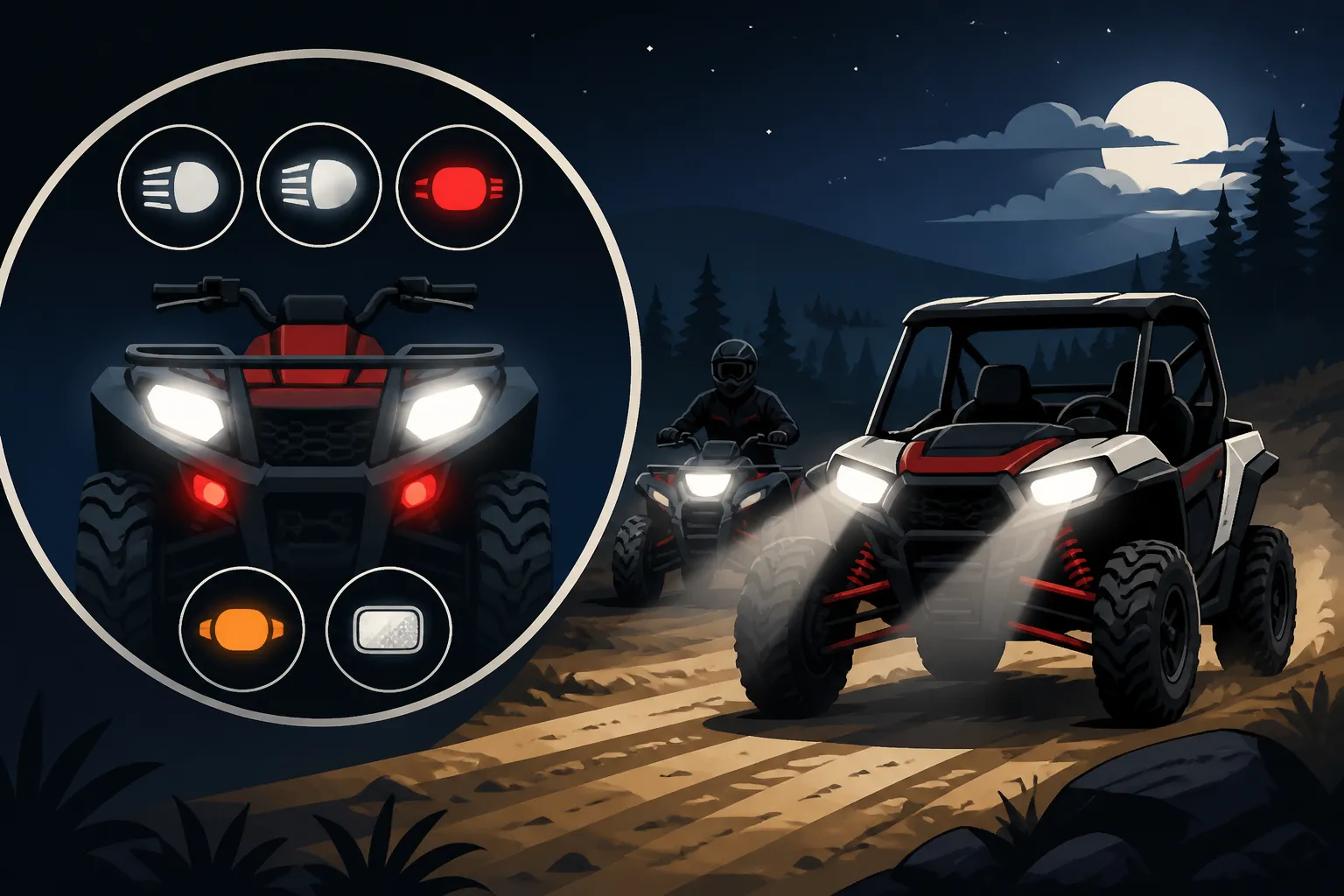
Your headlight system is your primary tool for navigating in low light or darkness. The New Brunswick Off-Road Vehicle Act is quite clear: if you're operating an ORV between half an hour after sunset and half an hour before sunrise, or at any other time visibility is reduced due to weather like fog or heavy rain, you must have at least one headlight on. This isn't just a suggestion; it's a critical safety feature. Think about those winding woods roads or sudden dips in the trail – without adequate light, you're flying blind.
A good headlight doesn't just show you what's directly in front of your tires; it casts a beam far enough ahead to give you time to react to obstacles, wildlife, or changes in the terrain. Many stock headlights are perfectly adequate for basic trail riding, but for those who find themselves frequently out after dark, or venturing into truly rugged, unlit areas, an upgrade can make a world of difference. Aftermarket options, like those from a reputable brand such as SuperATV, offer brighter LED technology with broader and deeper beam patterns, transforming your nighttime vision. Ensuring your headlight is clean, properly aimed, and fully functional before you even think about hitting the trail after dusk is paramount. It’s a simple check that can prevent a lot of grief.
Making Your Presence Known: Taillights and Brake Lights
Just as important as seeing where you're going is ensuring you're seen from behind. This is where your taillights and brake lights come into play. New Brunswick regulations require every ORV to have at least one taillight that illuminates when the headlight is on, projecting a red light visible from at least 150 metres to the rear. Additionally, you must have a brake light, also visible from the rear, that activates whenever you apply the brakes. These lights are your silent communication system with anyone behind you.
Imagine you’re cresting a hill on a trail, and another rider is following a little too closely. If your taillight is out, they might not realize you’re there until it’s too late. When you hit your brakes to navigate a tricky section, that brake light is what tells the rider behind you to slow down immediately. Without it, you're creating a hazardous situation. It’s not uncommon for wires to get jostled, bulbs to burn out, or lenses to get caked with mud, reducing their effectiveness. A quick visual check before each ride, especially when planning to be out after dark, can literally save you from a collision. It’s also wise to check your connections periodically, as vibrations on rough trails can loosen them, leading to intermittent failures.
Beyond the Bulbs: Why These Rules Matter and What 'Night' Really Means
Understanding the specific types of lights required is one thing, but truly grasping why these rules are in place helps reinforce their importance. It’s not just about avoiding a ticket; it’s about a comprehensive approach to safety when operating an ORV in New Brunswick. Moreover, knowing exactly when those lights need to be switched on can save you from an unexpected encounter with an enforcement officer.
Safety First: The Real Reason for the Regulations
At their core, New Brunswick's lighting regulations are designed to prevent accidents. Riding an ATV or UTV, particularly in natural environments like those found across our province, comes with inherent risks. Adding darkness or reduced visibility into the mix amplifies those risks dramatically. Without adequate lighting, you could collide with wildlife, other machines, fallen trees, or even simply misjudge the terrain and have a rollover. Riders often link to [New Brunswick ATV Road Rules Explained] to grasp the full scope of safety guidelines.
Consider a scenario on a winding path near the Tobique River, where deer are a common sight, especially at dusk. A strong headlight gives you precious seconds to spot movement and react. From another perspective, if you're on a shared rail bed, like those near Alma, where other riders, hikers, or even local farm vehicles might be present, your taillights and brake lights are crucial signals. They prevent rear-end collisions and allow others to gauge your speed and intent. These lights are essentially extensions of your own awareness, projecting your presence into the environment around you, making you predictable and therefore safer. This isn't just about protecting yourself, but everyone else who might be sharing the trail or crossing your path.
Defining Darkness: When You Need Those Lights On
One common point of confusion for riders is what exactly "night" or "darkness" means in the eyes of the law. The New Brunswick Off-Road Vehicle Act simplifies this by defining the period during which lights are mandatory: "between half an hour after sunset and half an hour before sunrise." This precise definition removes any guesswork. It's not when you feel it's too dark, or when the stars come out, but a fixed window tied to the sun's position.
This means that even if there’s still some ambient light lingering in the sky just after sunset, or if the moon is particularly bright, your lights still need to be on if you're within that half-hour window. This rule accounts for the rapid drop in visibility that can occur, especially in forested areas where the canopy quickly blocks out the last rays of daylight. Think about riding through a dense section of woods in the Miramichi area – that half-hour after sunset can feel like an instant plunge into darkness. It's always better to err on the side of caution and switch your lights on early rather than risk being caught without them. For more on navigating these times, check out [New Brunswick Rules for Riding After Dark].
Staying Compliant and Avoiding Headaches: Inspections and Upgrades
Understanding the rules and the reasons behind them is a great start. Now, let's talk about the practical side of staying compliant, minimizing problems, and even enhancing your riding experience after dark. This involves routine checks, knowing your options for better illumination, and being aware of the potential consequences of neglecting your lighting system.
Before Every Ride: Your Pre-Flight Checklist for Lights
Making a quick check of your lighting system part of your routine before every ride is one of the simplest and most effective safety habits you can adopt. It only takes a minute, but it can save you a lot of trouble. Here’s a quick checklist to run through:
- Headlights: Turn on your machine and switch on your headlights. Stand in front and confirm they're both working (if your machine has two). Check the brightness – is one dimmer than the other? Is the beam pattern even?
- Taillight: Walk to the back of your ORV and confirm your taillight is illuminated. It should be a steady red glow.
- Brake Light: Squeeze your brake lever(s) or press your foot pedal. Does the brake light illuminate brightly? Have a friend stand behind you, or use a wall reflection, to confirm.
- Signal Lights (if equipped): If your machine has turn signals, check these too. While not universally required for off-road use, they are crucial on shared road sections with [New Brunswick Highway Usage Permits].
- Lenses: Are all lenses clean and free of mud, dust, or scratches? A dirty lens can drastically reduce light output.
This quick once-over will catch most issues before you even leave your driveway in Perth-Andover or your camp near Fundy National Park. If you find a problem, address it before you ride. A burnt-out bulb is a simple fix that prevents a potential fine or, worse, an accident.
Considering Upgrades: Brighter is Often Better
While stock lighting meets the minimum legal requirements, many riders find themselves wanting more, especially for serious nighttime excursions. Aftermarket lighting options offer significant improvements in brightness, beam spread, and durability. LED technology, in particular, has revolutionized ORV lighting, offering lower power draw, longer lifespan, and vastly superior illumination compared to older halogen bulbs.
For those frequently exploring remote areas or engaging in adventurous night rides, adding an LED light bar or auxiliary floodlights can dramatically improve visibility. These aren't always replacements for your main headlights, but rather powerful supplements. For example, a quality light bar from a brand like SuperATV can turn night into day, allowing you to spot trail hazards much earlier and react confidently. Remember, however, that while more light is generally better for seeing, extremely bright auxiliary lights should be used courteously, especially when encountering other riders or vehicles. Always dim or turn off accessory lights when approaching others head-on to avoid blinding them. Investing in good lighting is an investment in your safety and enjoyment of riding.
The Cost of Non-Compliance: Fines and Frustration
Ignoring New Brunswick's lighting requirements isn't just a matter of convenience; it carries real consequences. Operating an ORV without the required lights during the specified hours can result in a fine. While the specific amount can vary, these aren't trivial tickets. Beyond the financial hit, there's the frustration of being stopped by enforcement officers – whether from the local RCMP, a municipal police force, or even game wardens – interrupting your ride.
Furthermore, being found with inadequate lighting could potentially affect insurance claims if you were involved in an accident. An insurance provider might view a lack of proper lighting as negligence, which could complicate your claim. The hassle of dealing with fines, potential court appearances, and insurance disputes far outweighs the minor inconvenience of performing a quick light check or investing in necessary repairs or upgrades. It's a fundamental aspect of responsible riding that falls under the broader umbrella of [New Brunswick Equipment Checks by Officers]. Don't give them a reason to pull you over.
Other Essential Visibility Boosters and Maintenance Tips
Beyond the mandated headlights, taillights, and brake lights, there are other ways to enhance your visibility and ensure your lighting system remains reliable. Thinking holistically about how you're seen and how well your lights perform will contribute significantly to safer riding experiences throughout New Brunswick's varied terrain.
Beyond Electric: Reflective Gear and Machine Markings
While your electrical system provides active illumination, reflective materials offer passive visibility. This means they don't generate their own light, but rather reflect light from other sources, like another machine's headlights or a flashlight. Integrating reflective elements into your riding gear and onto your machine is a smart, low-cost way to boost safety, particularly if your electrical lights were to fail.
Consider wearing a reflective vest or jacket, especially if you dismount your ORV at night. Many helmets also come with reflective decals, or you can add them. Applying reflective tape to the front, sides, and rear of your ATV or UTV itself can make a significant difference. Even small strips can make your machine much more noticeable to others, whether they are riders on the trail, or even a hunter or logger in a remote area. This extra layer of visibility is a safety net, especially on trails shared with others or when traversing sections of private land with [New Brunswick Trails That Cross Private Woodlots].
Keeping Your Lights Shining: Maintenance Matters
Just like any other component on your ATV or UTV, your lighting system requires a bit of TLC to keep it in top working order. Regular maintenance can prevent unexpected failures and prolong the life of your bulbs and wiring.
Here are a few tips:
- Clean Lenses Regularly: Mud, dust, and grime can drastically reduce light output. Keep your headlight, taillight, and brake light lenses clean with a soft cloth and mild soap. Avoid abrasive cleaners that can scratch plastic.
- Check Wiring and Connections: Vibration from riding can loosen electrical connections or cause wires to fray. Periodically inspect all visible wiring leading to your lights. Look for corrosion, especially on terminals, and ensure connections are snug. A little dielectric grease can protect against moisture and corrosion.
- Carry Spares: It’s always a good idea to carry spare bulbs and fuses that are appropriate for your machine. A small toolkit with a few basic hand tools can help you make a roadside repair if a bulb blows or a fuse pops. Many riders even include this as part of their [New Brunswick Equipment a Rider Must Carry] checklist.
- Battery Health: Your lighting system relies on a healthy electrical system. Ensure your battery is charged and in good condition, and that your charging system (stator and regulator/rectifier) is functioning correctly. A weak battery can lead to dim lights or intermittent failures.
By taking these proactive steps, you significantly reduce the chances of being caught in the dark, literally and figuratively. Enjoying New Brunswick's beautiful trails at night is a unique experience, and doing so safely and legally makes it all the more rewarding.
New Brunswick ATV Nighttime Lighting Checklist
To help you ensure your machine is ready for safe and legal nighttime operation, here's a quick checklist of the primary lighting requirements:
| Item | New Brunswick Requirement | Check Status |
|---|---|---|
| Headlight(s) | At least one white headlight, illuminated between half an hour after sunset and half an hour before sunrise (or in reduced visibility). Must illuminate the path ahead for a reasonable distance. | ☐ |
| Taillight(s) | At least one red taillight, illuminated when the headlight is on, visible from at least 150 metres to the rear. | ☐ |
| Brake Light(s) | At least one red brake light, illuminating when the brakes are applied, visible from the rear. | ☐ |
| Reflectors | (Highly Recommended) While not explicitly listed as a lighting requirement for all ORVs, reflective materials enhance visibility, especially from the side, and are a good safety practice. Many machines come with stock reflectors, but additional reflective tape is always a plus. | ☐ |
| Clean Lenses | All light lenses (headlight, taillight, brake light) are clean and free of mud/debris to maximize light output. | ☐ |
| Proper Aim | Headlights are aimed correctly to illuminate the trail without blinding oncoming riders. | ☐ |
This table serves as a handy reminder for your pre-ride checks, especially before embarking on any adventure that might extend into the evening hours. Always ensure all your lights are functioning correctly before heading out.
Disclaimer
This article is for general informational purposes only and does not constitute professional advice. Laws, prices and regulations vary by location and change over time. Consult a qualified professional for guidance on your specific situation.