New Brunswick ATV Helmet Law
It’s a beautiful day for a ride in New Brunswick, and you’re geared up, machine purring, ready to hit the trails or that favourite woodlot. But as you pull on your helmet, a little voice in the back of your head pipes up: "Is this helmet actually legal? Am I covered? What if a warden pulls me over?" The uncertainty about helmet requirements can be a real buzzkill, and nobody wants a fine or, worse, an injury because they didn't understand the rules. This guide is here to clear up all that confusion, breaking down the New Brunswick ATV helmet law so you can ride with confidence and, most importantly, safely.
The Absolute Requirement for Helmets on New Brunswick Trails and Roads
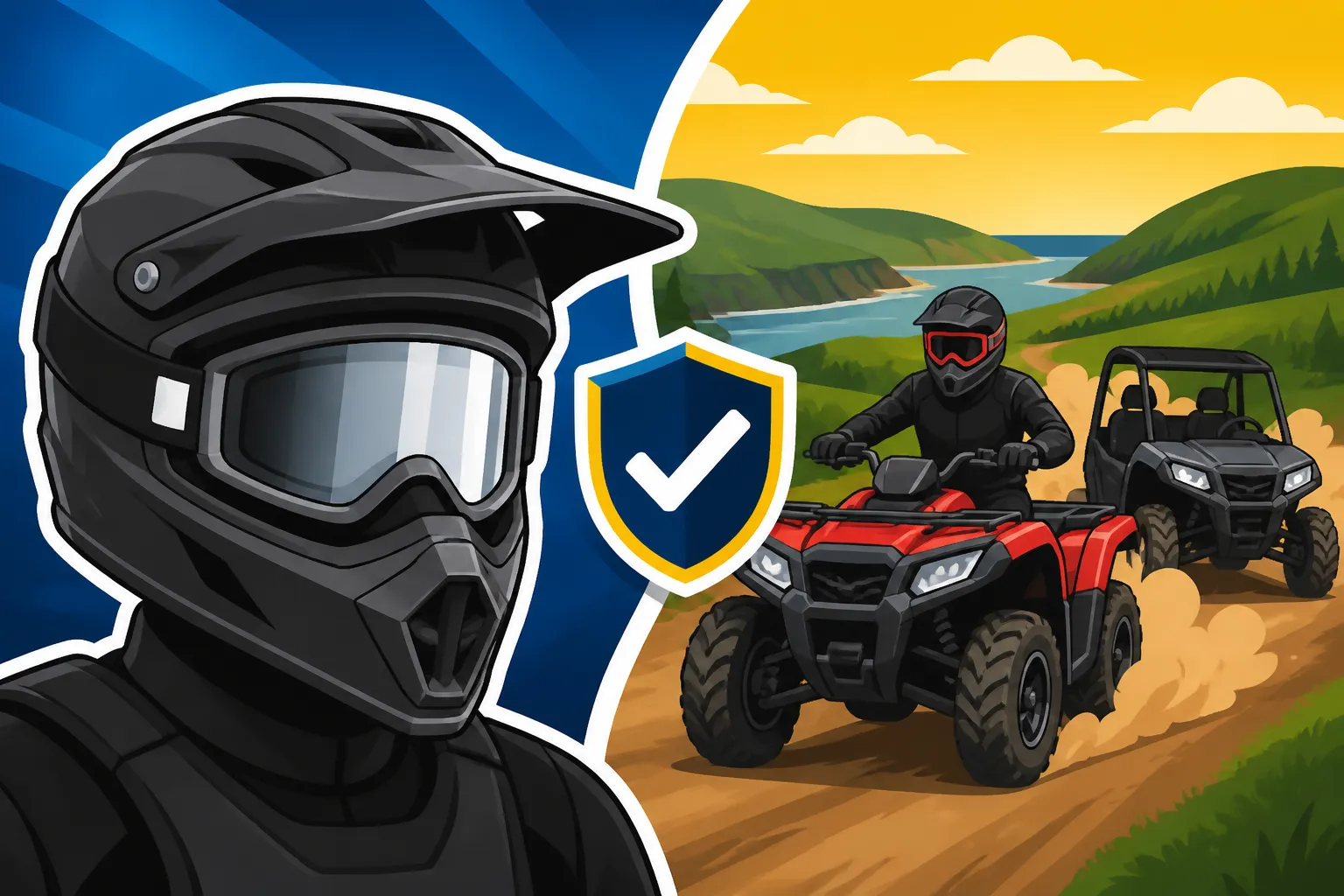
Let's not beat around the bush here: in New Brunswick, if you're operating or riding as a passenger on an all-terrain vehicle (ATV) or a side-by-side (UTV) off your own private land, you need a helmet. This isn't just a suggestion; it's the law, enshrined in the Off-Road Vehicle Act. This law is designed to protect everyone, from the most seasoned riders to the newest enthusiasts, from serious head injuries that can happen even in minor incidents.
The reality is that trails can be unpredictable. A sudden dip, a hidden root, an unexpected encounter with wildlife, or even just a momentary lapse in concentration can lead to a spill. A helmet is your first line of defense in these situations, absorbing impact and preventing direct trauma to your skull. It’s an investment in your safety and, frankly, in your peace of mind. Without it, you're not just risking a ticket; you're putting your life on the line.
We've all seen riders pushing the limits, or maybe even ourselves. But when it comes to head protection, there’s no room for shortcuts. The legislation is very clear, covering all terrains and types of use outside of your own property. So, whether you're heading to your camp, exploring the vast [New Brunswick ATV Trails: The QuadNB Network], or just crossing a public road, that helmet needs to be securely fastened.
Who Must Wear a Helmet? Everyone!
The law in New Brunswick is wonderfully straightforward: every single person on an ATV or UTV, whether they're driving it or riding as a passenger, must wear a helmet that meets the prescribed safety standards. There are no exceptions for age, experience level, or how short your ride might be. This means if you're taking your child for a quick spin down the camp road, they need a properly fitted, certified helmet just as much as you do.
Think of it like seatbelts in a car – they're mandatory for everyone, regardless of where you're going. The same principle applies here. The reason is simple: an accident involving an ATV or UTV can throw occupants from the machine with considerable force, and anyone's head can strike the ground, a tree, or even the machine itself. The law doesn't differentiate between the driver and a passenger because the risk of head injury is universal.
It’s about collective responsibility. As the operator of the machine, you are also responsible for ensuring your passengers are compliant. If you allow someone to ride without a helmet, you could face consequences yourself. This puts the onus on the rider to not only protect themselves but to ensure anyone they're riding with is also safely equipped. It’s a good conversation to have before you even leave the driveway.
Where the Rule Applies: Trails, Roads, and Beyond
The New Brunswick ATV helmet law casts a wide net, ensuring protection across almost all riding environments. This isn't just about designated club trails; it extends to roads, Crown land, and even private property that isn't your own. Essentially, if you're on public land or land where public access is permitted (like many of our vast multi-use trails), the helmet rule applies.
Consider a scenario where you're just trying to get from your cottage to the nearest gas station, which involves a short stint on a municipal road. Even if that road is open to ATVs through a local bylaw, your helmet is absolutely required. The same goes for riding through a woodlot that's not your personal property, even if you have permission from the owner. The moment you leave your own deeded land, you fall under the provincial regulations.
The only real "exemption" is when you are operating your ATV exclusively on your own private land. Even then, from a safety perspective, wearing a helmet is always the smartest choice. Accidents don't discriminate between public and private property. But legally speaking, the requirement kicks in the moment you venture onto trails, Crown land, or designated road sections. This is a crucial distinction and one that many riders sometimes overlook.
What Makes a Helmet Legal: Standards and Certifications
Knowing you need a helmet is one thing, but understanding what kind of helmet meets the legal standard in New Brunswick is just as important. It’s not enough to simply wear any helmet you might have lying around; it needs to be certified by recognized safety bodies. These certifications indicate that the helmet has undergone rigorous testing to ensure it can actually protect your head in an impact.
The regulations specify particular standards that helmets must meet, and these are typically identified by a sticker inside the helmet. This isn't just bureaucratic red tape; it's about making sure the helmet is designed and constructed to withstand the forces it might experience in a crash. A helmet that doesn't meet these standards offers a false sense of security and won't be considered legal by enforcement officers.
When you're shopping for a new helmet, always look for these labels. Don't be shy about asking questions at your local powersports dealer. They can guide you through the options and ensure you're getting a helmet that is not only comfortable and fits well but also fully compliant with New Brunswick law. It's a critical step in preparing for a safe ride.
Understanding Certification Labels: CSA, DOT, Snell, ANSI
In New Brunswick, the law accepts several internationally recognized safety standards for ATV helmets. The most common you'll see are:
- CSA D230: This is the Canadian Standards Association standard for motorcycle and ATV helmets. It's a comprehensive standard specifically designed for the conditions and types of impacts associated with these vehicles. [A Helmet Meeting CSA D230] is a clear indicator of compliance.
- FMVSS 218: This refers to the Federal Motor Vehicle Safety Standard No. 218, also known as the "DOT" standard, established by the U.S. Department of Transportation. Helmets meeting [A Helmet Meeting FMVSS 218] are widely accepted and sold.
- Snell M2010 or M2015/M2020: The Snell Memorial Foundation is a private, non-profit organization that develops standards and tests helmets. Snell certification is often considered one of the highest levels of safety, and [Finding the Snell Sticker Inside a Helmet Shell] indicates a very protective helmet.
- ANSI Z90.1: This is an older American National Standards Institute standard. While perhaps less common on newer helmets, [Why an ANSI-Certified Helmet Is Accepted Too] is still recognized by New Brunswick law.
It's vital to check for one of these specific labels. A helmet that's simply labelled "motorcycle helmet" without one of these certifications might not be sufficient. These certifications aren't just about a sticker; they represent stringent testing for impact absorption, penetration resistance, and retention system strength. While the market is flooded with options, reputable brands and retailers understand these requirements. You might find accessories like durable helmet storage bags or even communication systems that integrate well, much like the kinds of specialized gear you’d explore from a company like SuperATV, known for their powersports accessories.
Fit and Condition: More Than Just the Sticker
While the certification sticker is non-negotiable, a legal helmet is only effective if it fits properly and is in good condition. A certified helmet that's too loose, too tight, or damaged offers significantly reduced protection. The fit should be snug but comfortable, without any pressure points. It shouldn't shift easily when you move your head side-to-side or up and down. A common test is to try and roll the helmet forward or backward on your head; if it moves more than an inch or two, it's likely too large.
Beyond the initial purchase, keeping your helmet in top condition is crucial. This means proper storage, cleaning, and regular inspection for damage. Look for cracks in the shell, frayed straps, or any signs of impact, even if you don't remember a specific fall. A helmet that has sustained a significant impact, even if it looks fine on the outside, should be replaced immediately. The internal foam designed to absorb impact can be compromised without visible exterior damage. For instance, storing your helmet safely in a dedicated bag can prevent accidental knocks, and you can often find robust storage solutions, even specialized ones for larger helmets, from places like SuperATV, ensuring your investment is protected.
The lifespan of a helmet is also a consideration. Manufacturers generally recommend replacing helmets every 3 to 5 years, regardless of visible damage, because materials can degrade over time due to UV exposure, sweat, and general wear and tear. Always check the manufacturing date, which is usually found under the comfort liner. A perfectly legal and certified helmet will do you no good if it's too old or doesn't fit correctly.
Specific Scenarios: Passengers, Youth, and Different Machine Types
The New Brunswick ATV helmet law applies broadly, but let's dive into some specific scenarios that often raise questions. It's common for riders to wonder if the rules change for passengers, or for young riders, or even for different types of off-road vehicles. The consistent message from the law is clear: safety first, and helmets for all. However, understanding the nuances can help avoid common misconceptions and ensure everyone in your riding group is compliant and safe.
This comprehensive approach reflects the understanding that the risk of head injury is present for anyone on an ORV, regardless of their role or age. It’s about creating a culture of safety where everyone understands their part in minimizing risks. Don't assume an exemption applies just because the situation feels different; always err on the side of caution and compliance.
By clarifying these common situations, we hope to empower riders to make informed decisions and foster a safer riding environment for everyone enjoying the New Brunswick wilderness. Remember, ignorance of the law is never a valid excuse, especially when safety is at stake.
Passengers Are Not Exempt
This is a point worth reiterating because it's so frequently misunderstood: if you're a passenger on an ATV or UTV in New Brunswick, you must wear a certified helmet. There is no distinction made in the law between the driver and any passengers when it comes to head protection. [Passengers Need a Helmet as Much as Drivers], and this applies whether it's an adult riding pillion on a quad or a child in a side-by-side.
The rationale is straightforward: in the event of an accident, a passenger is just as vulnerable to head injuries as the operator. In some cases, passengers might even be at greater risk if they are unprepared for sudden movements or impacts. As the operator, you have a direct responsibility to ensure that any passenger you carry is properly equipped, including wearing an approved helmet. Failing to do so could result in fines for both you and potentially the passenger, if they are of age.
Always make sure that the helmet worn by a passenger fits them correctly. A helmet that's too big can become a hazard itself, obstructing vision or coming off in an accident. Take the time to ensure they're snug, comfortable, and properly fastened before heading out. It's part of the pre-ride checklist that should be second nature for any responsible rider.
Youth and Helmet Requirements
When it comes to young riders, the helmet law is even more critical, and thankfully, it's just as clear: children and youth must wear an approved helmet. [New Brunswick ATV Age Requirements] also factor in specific machine sizes and supervision, but the helmet rule is universal for all ages on the machine. Whether a 6-year-old is on a youth-sized machine on a closed course or a 14-year-old is operating a larger ATV under supervision, a certified helmet is mandatory.
Parents and guardians play a vital role here. Not only must you ensure your child has a helmet that meets the required standards, but it must also fit them perfectly. Children grow quickly, and a helmet that fit last year might be too small this year. Always re-check the fit at the start of each riding season. A poorly fitting helmet can be uncomfortable, reduce visibility, and most importantly, not provide adequate protection in an accident.
For parents concerned about their [New Brunswick Rules for a Child Passenger], the helmet rule is non-negotiable. Furthermore, proper safety training, such as the [New Brunswick Safety Course Explained], is highly recommended for young riders to learn safe operating practices in addition to helmet use. It’s about instilling good habits from a young age that will serve them throughout their riding lives.
Side-by-Sides and Helmet Usage
Many side-by-sides (SxS or UTVs) come equipped with roll cages and seatbelts, leading some riders to mistakenly believe that helmets aren't necessary. However, under New Brunswick law, helmets are absolutely required for all occupants of a side-by-side when operating on public trails, roads, or any land where the ORV Act applies. The presence of a roll cage and seatbelts is an added layer of protection, but it does not negate the need for a helmet.
While roll cages offer protection in a rollover, direct head impacts with the ground, trees, or even components inside the vehicle are still a significant risk. The forces involved in a side-by-side accident can be substantial, and a helmet is crucial for mitigating head injuries. Imagine hitting a sudden bump or obstacle; your head could easily strike the cage or another hard surface.
So, if you're driving a four-seater UTV with your family or friends, every single person buckled into that machine needs to be wearing a properly certified helmet. There are no "car-like" exceptions for side-by-sides in New Brunswick. It’s a key piece of [New Brunswick Equipment a Rider Must Carry] on every outing. Make sure everyone understands this before you set off, reinforcing that the rules are there for their safety.
Consequences of Not Wearing a Helmet
Ignoring New Brunswick's ATV helmet law carries significant consequences, impacting both your wallet and, more importantly, your physical well-being. It's easy to think "it won't happen to me" or to rationalize skipping the helmet for a short ride, but the risks are far too great. Enforcement officers on the trails take helmet compliance very seriously, and the penalties reflect the gravity of the safety concern. Beyond legal ramifications, the potential for life-altering injury is the most sobering consequence of all.
We've heard the stories: a rider takes a tumble, and if they weren't wearing a helmet, the outcome could be devastating. It's not just about avoiding a fine; it's about protecting yourself from irreversible harm. Understanding these consequences might just be the push someone needs to always don their helmet before turning the key.
The Financial Penalty: What a Fine Looks Like
Let's talk brass tacks: if you are caught operating or riding as a passenger on an ATV or UTV without a properly certified helmet where one is required, you're looking at a pretty hefty fine. The specific amount can vary, but generally, [New Brunswick's $172.50 Helmet Fine] is the standard set fine you can expect. This isn't just a slap on the wrist; it's a significant financial hit for what is a completely avoidable infraction.
Consider the cost of a good quality, certified helmet versus this fine. In most cases, a decent helmet can be purchased for less than the cost of a single ticket. It's a one-time investment in safety that pays dividends, not only in protection but also in preventing these avoidable penalties. And remember, these fines can add up quickly if multiple people on your machine are non-compliant, or if you're caught on multiple occasions.
Furthermore, a ticket for a helmet infraction goes on your record. While it might not affect your road driving record in the same way a traffic ticket would, it signifies a breach of off-road vehicle regulations. [Who Enforces Quad Rules on a New Brunswick Trail] includes peace officers, RCMP, and conservation officers, all of whom have the authority to issue these fines. They are out there to ensure safety, not just to collect revenue.
The Real Cost: Safety and Liability
Beyond the financial hit of a fine, the real, and far more devastating, cost of not wearing a helmet is the risk of serious injury or death. Head injuries can range from concussions to traumatic brain injuries (TBIs), which can have permanent effects on cognitive function, motor skills, and even personality. These aren't just statistics; these are real people whose lives are forever changed.
In an accident without a helmet, your skull has virtually no protection against impact. The ground, rocks, trees, or even parts of your own machine become incredibly dangerous. The best helmet in the world can't guarantee you'll walk away unscathed from every accident, but it dramatically increases your chances of surviving and recovering from a serious incident. It's the difference between a minor bump and a life-altering injury.
There's also the aspect of liability and insurance. While [New Brunswick Requires Insurance on Trails], being found negligent by not wearing a helmet could potentially impact any claims you might make. An insurance company could argue that your injuries were exacerbated by your failure to comply with safety regulations, potentially reducing your compensation or even denying parts of a claim. It's a gamble with stakes that are simply too high. Investing in all your safety gear, including a quality helmet, is the responsible choice for every rider.
Disclaimer
This article is for general informational purposes only and does not constitute professional advice. Laws, prices and regulations vary by location and change over time. Consult a qualified professional for guidance on your specific situation.