New Brunswick Rules for Riding a Woodlot
There’s nothing quite like the freedom of hopping on your ATV or UTV and heading out into your own backyard, especially if that backyard happens to be a beautiful New Brunswick woodlot. Many of us picture endless days of peace and quiet, navigating familiar paths. However, the reality is that even on your own private land, there are rules and considerations you absolutely need to be aware of. This guide will walk you through the specific regulations and best practices for riding your off-road vehicle on a woodlot in New Brunswick, ensuring you stay safe, legal, and respectful of your surroundings.
Understanding the Basics of Private Land Versus Public Trails
It's easy to assume that if you own the land, you can do anything you want on it. While that sentiment holds true for many things, when it comes to off-road vehicles, New Brunswick has specific nuances that are often misunderstood. Thinking you're in the clear can lead to unnecessary fines or, worse, serious incidents.
The Concept of "Private Land" for ORVs
When we talk about "private land" in the context of off-road vehicles, we're generally referring to property that is legally owned by you, a family member, or someone who has given you explicit permission to ride. This could be your residential lot, a cottage property, a hunting camp, or, of course, a woodlot. The key here is the exclusivity of access. If the land is truly private and you're the owner (or have direct permission), some of the regulations that apply to public trails don't always kick in.
However, it's crucial to understand that "private land" isn't a blanket term that covers all non-public areas. It's different from, say, Crown land, which is publicly owned but might require specific permits or permissions for certain activities, or might have areas where ORV use is restricted or prohibited. It's also distinctly different from the vast network of managed trails maintained by clubs under the QuadNB federation, which require trail permits and adhere to a different set of rules entirely. The lines can get blurry where private land meets public access points, and that's where many riders get into trouble.
Why Woodlots Are Unique
Woodlots, in particular, present a unique scenario for ATV and UTV riders. They are often private property, purchased for timber, recreation, or investment. Yet, their very nature – remote, often bordering other private properties, Crown land, or even public roads – means they're not always as isolated as a typical residential yard. Many woodlots have pre-existing access roads, old logging trails, or even easements that might be used by others. You might also find yourself riding on a woodlot that has an active logging operation, which brings heavy equipment and different safety concerns into play.
The fact that woodlots can be quite expansive also means that riders might unintentionally stray onto a neighbour's property or even briefly cross a small section of Crown land without realizing it. This highlights the importance of knowing your property boundaries, having up-to-date maps, and understanding the legal implications of accidentally (or intentionally) crossing onto land you don't own or have permission for. This is where the concept of [New Brunswick Private Woodlot Permission] becomes incredibly important. Even if you ride with the best intentions, a lack of clear understanding can lead to disputes or legal issues with neighbouring landowners or enforcement officers.
Registration, Insurance, and Safety on Your Own Woodlot
Even though you're on private land, there are still some fundamental legal requirements and best practices for operating your ATV or UTV in New Brunswick. Skipping these steps, even on your own property, can put you and others at risk, and in some cases, still land you in hot water.
Is Registration Always Required?
This is one of the most common questions riders have, and for good reason! It can be confusing. In New Brunswick, the Off-Road Vehicle Act does provide an exemption for machines operated exclusively on private land by the owner or someone with the owner's permission. This is specifically outlined in the [New Brunswick Owner-Only Private Land Exemption]. So, if your ATV or UTV literally never leaves your woodlot, and you are the owner or have explicit permission from the owner, you technically might not need to register it.
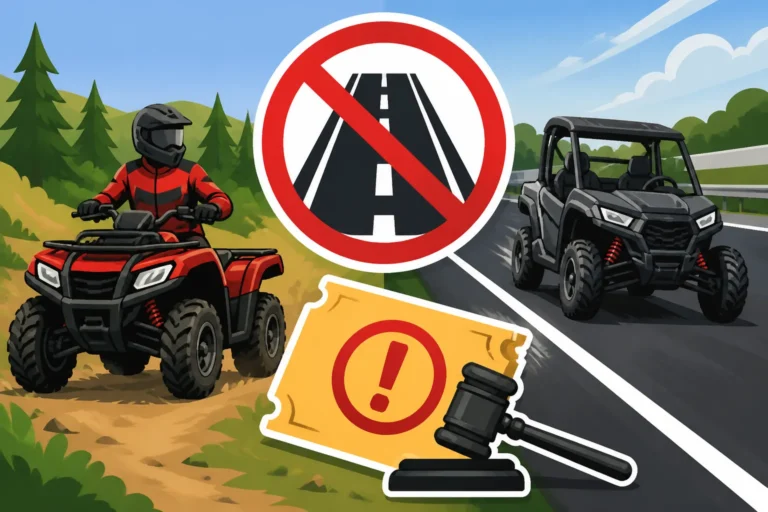
However, and this is a big "however," the moment your machine touches a public road, crosses a highway, or even rolls onto a designated off-road vehicle trail, that exemption flies right out the window. Many woodlots are accessed via or border public roads, or might connect to the wider trail network. If you need to move your machine for maintenance, or even just drive it a few feet across a ditch to get to another section of your property, you've likely just put yourself in a situation where registration becomes mandatory. The inconvenience of not being able to legally move your machine often outweighs the minor cost of registration. It's worth considering what this means for you, especially since [New Brunswick Penalties for Riding Unregistered] can be quite substantial. The peace of mind that comes with knowing your machine is properly registered allows for far more flexibility.
Insurance for Peace of Mind (and the Law)
Just like registration, insurance rules also have a specific carve-out for private land use, but it's vital to understand the limits. The law clearly states that if you operate an off-road vehicle on a designated ORV trail or any public land where ORVs are permitted, you must carry liability insurance. [New Brunswick Requires Insurance on Trails] is a non-negotiable fact for anyone venturing beyond their private property.
Even if you vow to stay strictly on your own woodlot, having insurance is still incredibly wise. Accidents happen. What if a friend or family member is riding on your property and an incident occurs? What if you accidentally damage someone else's property, even if they're trespassing? Your homeowner's insurance policy might offer some limited coverage for recreational vehicles, but it's often minimal and might not cover off-road use specifically. A dedicated ORV insurance policy provides robust liability coverage, protecting you financially in case of an accident, injury, or property damage. It’s an investment in your peace of mind, ensuring that a fun day on the woodlot doesn't turn into a financial nightmare. You should verify what coverage you have and consider a specific ORV policy if you plan to spend significant time riding.
Safety Gear and Practices
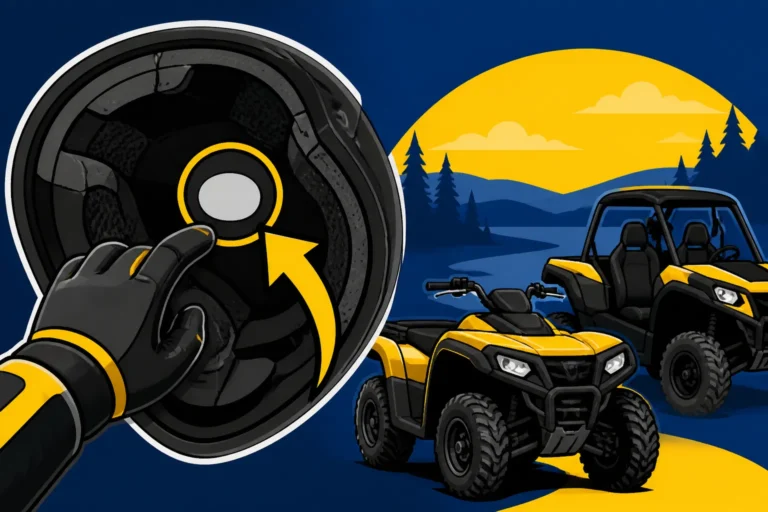
Regardless of whether you're on a public trail or deep in your own woodlot, safety should always be your top priority. New Brunswick law mandates that every operator and passenger on an off-road vehicle must wear an approved helmet. This isn't just for public trails; [New Brunswick ATV Helmet Law] applies across the board. Skipping your helmet on your woodlot, even if it feels private and safe, is not only illegal but incredibly reckless. A fall on uneven terrain, hitting a hidden stump, or even a simple tip-over can result in severe head injuries.
Beyond the helmet, consider other essential safety gear:
- Eye Protection: Goggles or a full-face helmet visor will protect your eyes from branches, dust, and debris.
- Gloves: Protect your hands from blisters, cuts, and provide a better grip.
- Sturdy Footwear: Boots that cover your ankles are crucial for protecting your feet from impacts and keeping them on the footrests.
- Long Pants and Sleeves: Even in warm weather, these protect against scrapes, bug bites, and sun exposure.
Woodlots present their own unique hazards. Uneven terrain, hidden rocks, stumps, fallen trees, and muddy patches can all catch you off guard. Always ride within your skill level, inspect your machine before each ride, and never ride impaired. Consider carrying a small first-aid kit, a map of your property, and a way to communicate in case of an emergency, especially since cell service can be spotty in remote woodlot areas.
| Feature | On Your Private Woodlot (Owner/Permitted) | On Public Trails/Roads |
|---|---|---|
| Registration | Optional (if never leaves private land) | Required |
| Insurance | Highly Recommended (for liability) | Required |
| Helmet Use | Required | Required |
| Trail Permit | Not Required | Required |
| Driver's Licence | Not Required (adults only) | Required (certain ages) |
| Safety Course | Not Required (Highly Recommended) | Required (under 16) |
| Speed Limits | No official limit (ride responsibly) | Posted limits apply |
What Documents You Should Carry (Even on Private Land)
While you might not need a trail permit on your own woodlot, it's still a good idea to carry certain documents, especially if there's any chance you might approach a public road or trail. Having proof of ownership, your driver's license (if you have one), and your insurance pink card readily available can save you a lot of hassle if you encounter a conservation officer or police. Officers have the authority to ask for proof of registration and insurance if they believe you are operating on land where these are required. Carrying [New Brunswick Documents You Must Carry] is a habit that serves you well everywhere.
Navigating Access and Boundaries
The true challenge and potential pitfalls of riding on woodlots often revolve around boundaries and permission. New Brunswick's landscape is a patchwork of private land, Crown land, and various rights-of-way, making it essential to be vigilant.
The Critical Role of Permission
If you're riding on a woodlot that isn't yours, obtaining explicit permission from the landowner is not just good manners, it's a legal imperative. Trespassing, even accidentally, can lead to fines and legal action. Always secure permission, preferably in writing, before you venture onto someone else's property. This written permission should ideally state who can ride, what machines they can use, and for what duration. A verbal agreement can be hard to prove if there's a dispute, so taking the extra step provides protection for both you and the landowner.
The consequences of trespassing can be severe. In New Brunswick, [New Brunswick Trespass Law for Riders] means that landowners can pursue charges against those who enter their property without permission. This isn't just about financial penalties; it can damage relationships with neighbours, lead to property access restrictions, and generally sour the reputation of off-road enthusiasts. Always err on the side of caution. If you're unsure if a piece of land is private or Crown, or if you're allowed to be there, do not proceed until you've clarified the situation.
When Your Woodlot Borders Public Roads or Trails
This is where things often get tricky. Many private woodlots are located in rural areas, and it's common for them to be adjacent to or even have an access point directly from a public road or highway. New Brunswick has a strict rule about operating off-road vehicles near highways: you cannot operate an ORV within 7.5 metres (approximately 25 feet) of the travelled portion of a highway. This is known as the [7.5 Metres From the Travelled Portion] rule. If your woodlot entrance is directly off a main road, you need to be extremely careful not to violate this.
If you need to cross a public road to get from one part of your woodlot to another, or to access your woodlot from a main road, there are specific regulations. [New Brunswick Rules for Crossing a Road] state that you must:
- Come to a complete stop before crossing.
- Yield to all vehicular traffic.
- Cross at a right angle to the road.
- Have your headlights on.
- Proceed only when safe to do so.
You cannot ride along the shoulder of a public road to get to your woodlot, even for a short distance, unless that section of road has been specifically designated for ORV use by a municipal bylaw or ministerial order. It's vital to know if your local area has any such designations. If you're outfitting your machine for better woodlot navigation, perhaps with some heavy-duty tires or a winch for those muddy sections, keep in mind that products from companies like SuperATV are excellent for enhancing capability, but they don't exempt you from these road-crossing rules. Always ensure your machine, even with upgrades, still complies with all provincial regulations for operation if you plan to ever touch public access points.
Responsible Riding on Woodlots
Operating an ATV or UTV on a woodlot comes with a responsibility not just to the law, but to the land itself and to your neighbours.
- Environmental Impact: Woodlots are living ecosystems. Avoid riding through sensitive areas like wetlands, streams, or young tree plantations. Stick to established trails or clearings. Mudding can be fun, but excessive disruption can lead to erosion, damage to water quality, and harm to delicate habitats. Be mindful of your impact and practice "Leave No Trace" principles.
- Noise Considerations: While the sounds of nature are usually what you hear on a woodlot, the noise from an off-road vehicle can travel surprisingly far, especially in quiet rural settings. Be considerate of neighbours, particularly early mornings or late evenings. Unnecessary noise can lead to complaints, and local authorities do respond to [New Brunswick Noise Complaints About Quads]. Maintain your exhaust system properly to ensure it's not excessively loud.
- Fire Safety: Especially in dry seasons, a hot exhaust can ignite dry grass or leaves. Carry a small fire extinguisher, avoid parking in tall, dry vegetation, and be aware of any burn bans in effect. Never discard cigarette butts or other flammable materials.
- Respecting Other Users: Your woodlot might be used by others for walking, hunting, or other recreational activities. Be aware of hunting seasons and wear high-visibility clothing if you're out riding during these times. Always be prepared to yield to others and share the space respectfully. The more responsibly we ride, the better the reputation of the entire ORV community.
By understanding and adhering to these guidelines, you can ensure that your time riding on your New Brunswick woodlot remains a source of enjoyment, rather than a cause for concern or legal trouble. Knowledge is power, and in this case, it's also your ticket to worry-free riding.
Disclaimer
This article is for general informational purposes only and does not constitute professional advice. Laws, prices and regulations vary by location and change over time. Consult a qualified professional for guidance on your specific situation.