New Brunswick Driver Training Certificates
Navigating the world of ATVs and UTVs in New Brunswick can sometimes feel like trying to untangle a ball of fishing line, especially when it comes to understanding all the rules and regulations. One area that often causes a fair bit of head-scratching is the requirement for driver training certificates. It's not always clear who needs one, what the course entails, or why it’s so important. This guide is here to cut through the confusion, explaining exactly what New Brunswick driver training certificates are, why they matter, and how you can ensure you and your family are fully compliant and safe on the trails.
Understanding New Brunswick Driver Training Certificates
When we talk about driver training certificates for off-road vehicles (ORVs) in New Brunswick, we're not just talking about another piece of paper to tuck into your glovebox. These certificates represent a foundational step towards responsible and safe riding, particularly for newer and younger operators. The province recognizes that operating an ATV or UTV isn't just a simple matter of pushing a throttle; it requires skill, judgment, and an understanding of specific risks.
The Core Purpose of the Training
At its heart, the New Brunswick driver training certificate program is all about safety. The trails we love to ride can be unpredictable, from changing terrain and hidden obstacles to encounters with wildlife or other riders. Without proper instruction, even seemingly minor incidents can escalate quickly. This training is designed to equip riders with the knowledge and practical skills needed to anticipate hazards, react appropriately in emergencies, and operate their machines with confidence and control. It moves beyond just the mechanical aspects of riding, delving into crucial topics like environmental responsibility, trail etiquette, and the importance of always being prepared. For many, it's the first formal introduction to the real risks and rewards of off-road adventuring, setting a baseline for a lifetime of safer riding experiences.
What the Course Typically Covers
These courses are far from just sitting in a classroom listening to lectures; they’re hands-on and immersive. Participants usually learn about the specific components of an ATV or UTV, how to perform basic pre-ride inspections, and understanding the controls. A significant portion focuses on practical riding techniques: how to properly mount and dismount, starting and stopping smoothly, turning, climbing hills, descending hills, and navigating various types of terrain safely. But it's not all about technique. Equally important are the discussions around risk assessment, responsible riding practices, the effects of alcohol or drugs, and what to do in case of an accident. The training aims to instill a strong sense of awareness and personal responsibility, ensuring riders don't just know how to operate the machine, but also when and where it's safe and appropriate to do so. The goal is to make these critical responses second nature, turning new riders into more skilled and conscientious ones.
Different Types of Certificates
While the core principles of safety remain consistent, the New Brunswick system primarily differentiates based on age. There isn't a vastly complex array of certificate types, but rather a focus on ensuring younger riders meet specific requirements. For instance, there's a particular emphasis on the [New Brunswick Safety Course for a 14-Year-Old] and 15-year-old riders, as this age group requires the certificate to operate an ORV. Adults, while strongly encouraged to take a safety course for their own benefit and to set a good example, are not legally mandated to carry a certificate solely for the act of operating an ORV. However, if an adult is escorting a younger rider who requires an escort, that adult must also hold a valid driver training certificate. This ensures that the supervising adult is also competent and knowledgeable in ORV safety, reinforcing the protective measures for young riders. This dual requirement for younger riders and their escorts underscores the province's commitment to youth safety on our trails.
Who Needs a Driver Training Certificate?
This is where many riders, especially parents, start to feel a bit lost in the weeds. The rules around who specifically needs a driver training certificate in New Brunswick can seem a bit convoluted at first glance, but once you understand the age requirements, it becomes much clearer. The short answer: it primarily impacts our younger riders and the adults who accompany them.
Age Requirements and Exemptions
The Province of New Brunswick has set clear age limits for operating off-road vehicles. Generally, you need to be at least 16 years old to operate an ORV on designated trails and lands. However, there are provisions for younger riders under certain conditions, and this is where the driver training certificate comes into play. For instance, riders aged 14 and 15 are permitted to operate an ORV if they possess a valid Class 9 driver's licence and a driver training certificate, and are under the direct supervision of an adult who also holds a valid driver training certificate. If you're a seasoned adult rider over 16, while taking a safety course is highly recommended for everyone – seriously, you can always learn something new – it's not a mandatory requirement for you to legally operate your own machine. It's about protecting the most vulnerable riders and ensuring a baseline of knowledge across the board. Exemptions might exist for certain private land usage, but generally, if you're hitting the public trails, these are the rules of the road, or rather, the trail. For a full breakdown, checking the [New Brunswick ATV Age Requirements] is always a good idea.
The Importance for Young Riders
For those adventurous 14 and 15-year-olds, the driver training certificate isn't just a hurdle; it's a vital stepping stone. At these ages, riders are developing both their physical coordination and their decision-making skills. The structured environment of a safety course provides them with the essential tools to handle an ORV responsibly. It teaches them about the unique dynamics of an ATV or UTV, how to properly shift their weight, maintain balance, and react to changing conditions – skills that aren't intuitive and can't always be learned safely through trial and error in the backyard. Beyond the mechanics, the course also instills a respect for the environment, for other trail users, and for the regulations designed to keep everyone safe. It empowers these young riders to be independent and responsible, rather than just passengers. The [New Brunswick Class 9 Licence for Teens] is another crucial component for this age group, working in tandem with the training certificate to ensure a comprehensive approach to safety and legal operation.
Adult Escort Requirements
It’s not just the young riders who need to be certified. If you're an adult (16 or older) escorting a 14- or 15-year-old who is operating an ORV, then you also need to hold a valid driver training certificate. This might seem like an extra step, but think about it: if you're responsible for the safety of a younger, less experienced rider, you should be fully versed in the best safety practices yourself. You need to be able to model proper riding behaviour, recognize potential hazards, and provide effective guidance and support. The province doesn't want an inexperienced adult supervising an inexperienced teen. This requirement ensures that the person in charge has demonstrated a foundational understanding of safe ORV operation. It creates a robust safety net, where both the young operator and their supervisor are equipped with the knowledge to handle the challenges of trail riding. It’s a key part of the [New Brunswick Adults Escorting Young Riders] regulations, reinforcing shared responsibility.
How to Obtain a New Brunswick Driver Training Certificate
So, you understand why these certificates are important and who needs them. Now for the practical part: how do you actually get one? The process is fairly straightforward, designed to be accessible while ensuring the quality of instruction. It's an investment in safety that pays dividends every time you hit the trail.
Finding an Approved Course Provider
The first step is to locate an approved provider for the ATV/UTV safety course. In New Brunswick, these courses are typically offered by various organizations, often in partnership with government agencies or through certified instructors. Your local ATV club is often an excellent resource, as many clubs host or can direct you to upcoming courses. You might also find information through government websites or by contacting agencies responsible for recreational vehicle safety. It's crucial to ensure that any course you choose is indeed approved, as only recognized certificates will satisfy the provincial requirements. Don't just pick any random course; make sure it meets New Brunswick's specific standards. When you're looking for an approved course, you'll want to check the dates and locations that work for you, and inquire about availability. The [New Brunswick Safety Course Schedule] can be found through provincial channels, or often through individual club websites that list their upcoming training dates.
What to Expect During the Course
Once you've found a course, what does it actually involve? Most New Brunswick ATV/UTV safety courses are a combination of classroom theory and practical, hands-on riding. The classroom portion covers the fundamental rules of the road (or trail), safety equipment, environmental considerations, and basic machine mechanics. You’ll learn about the risks associated with different types of terrain, how to interpret trail signage, and the importance of things like proper riding posture and weight distribution. Then comes the fun part: the practical session. This usually takes place in a controlled, off-road environment where you'll get to apply the theoretical knowledge under the watchful eye of an experienced instructor. You'll practice turns, stops, obstacle avoidance, hill climbs, and descents. The instructor will provide immediate feedback, helping you refine your skills and correct any unsafe habits. For young riders, especially, this practical experience is invaluable for building confidence and competence. The [New Brunswick Safety Course Length] can vary, but generally, you're looking at a commitment that combines classroom learning with a significant portion of practical application. Many courses also offer [New Brunswick Course Machine Rentals] if you don't have your own machine to use for the practical portion, which is a huge help for those just starting out.
Certification and Record Keeping
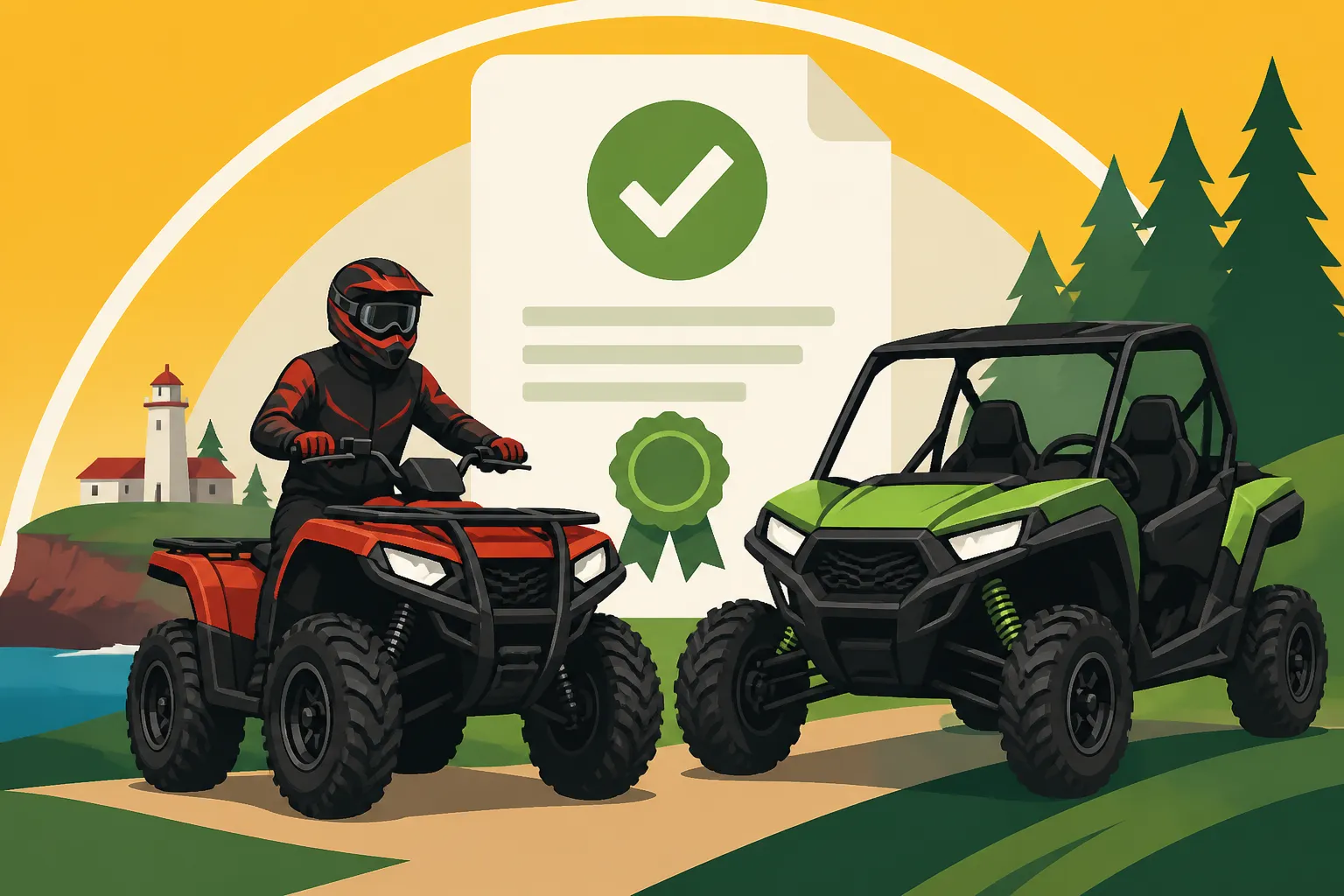
Upon successful completion of both the theoretical and practical components of the course, you'll be issued a driver training certificate. This certificate is your official proof that you've completed the required training and possess a foundational understanding of safe ORV operation. It’s important to keep this document safe and accessible, as you may be required to produce it if asked by an enforcement officer on the trail. Just like with your vehicle registration and insurance, this certificate is one of the [New Brunswick Documents You Must Carry] when riding. It’s not just for showing; it's a testament to your commitment to safety. You might also find that clubs or other organizations keep a record of your certification, but the primary responsibility for holding onto your physical certificate falls on you. If you ever lose your certificate, there are processes in place for [Replacing a Quad Safety Certificate You Lost], but it's always better to keep the original in a secure location. This certificate is not just a piece of paper; it's your proof of being a responsible and trained rider in New Brunswick.
Beyond the Certificate: Essential Riding Skills & Gear
While obtaining a driver training certificate is a crucial step towards safe riding, it's really just the beginning of your journey. The certificate provides the foundational knowledge and basic skills, but becoming a truly proficient and safe rider requires continuous practice, a commitment to proper gear, and ongoing attention to your machine.
Practicing Safe Riding Techniques
Think of your driver training certificate as your driver's permit. You wouldn't hit the highway after just getting your permit without more practice, right? The same goes for ATV and UTV riding. The skills learned in the course need to be regularly practiced and refined in various conditions. Start slow, on familiar terrain, and gradually challenge yourself as your confidence and skill grow. Always ride within your limits and the limits of your machine. Practice smooth throttle control, proper braking techniques, and active body positioning. Hill climbing and descending are particularly important to practice until they become second nature. Remember that every trail is different, and conditions can change rapidly. Continuously observe your surroundings, anticipate potential hazards, and adapt your riding style accordingly. There’s always something new to learn, whether it’s navigating a particularly muddy section or safely crossing a small stream. The goal is to make every movement deliberate and controlled, minimizing the chance of an unexpected incident.
Essential Safety Gear and Accessories
A safety course will emphasize the importance of proper gear, and for good reason. Your gear is your first line of defense against injury. A well-fitting helmet that meets recognized safety standards (like CSA, DOT, or Snell) is absolutely non-negotiable – it's the law in New Brunswick and for good reason. [New Brunswick ATV Helmet Law] is in place to save lives. Beyond the helmet, eye protection (goggles or a face shield), sturdy over-the-ankle boots, long pants, a long-sleeved shirt, and gloves are essential. This protective clothing helps guard against abrasions, impacts, and environmental elements.
But safety extends beyond personal protective equipment. Your machine itself can be equipped with accessories that enhance safety and utility. For instance, robust skid plates can protect vital components from impacts, a wise investment for rougher trails. Enhanced lighting, such as LED light bars, can dramatically improve visibility, especially if you're riding in low-light conditions or after dusk. A winch, especially from a reputable brand like SuperATV, can be a lifesaver if you get stuck in mud or need to clear an obstacle. Carry a small first-aid kit, a basic tool kit for minor repairs, and a communication device (even if it's just your cell phone, understanding that service can be spotty in remote areas). A strong tow strap is also highly recommended. These items aren't just for convenience; they are crucial for self-sufficiency and safety on the trail. Upgrading elements like tires for better traction on specific New Brunswick terrain or adding a quality brush guard to protect your machine's front end are also practical considerations.
Pre-Ride Checks and Machine Maintenance
Before every ride, make it a habit to perform a quick, thorough pre-ride inspection of your ATV or UTV. This includes checking tire pressure, oil levels, coolant, brake fluid, and ensuring all lights (headlights, taillights, brake lights) are functioning. Inspect your brakes for proper operation and any signs of wear. Check the throttle for smooth operation and ensure it returns to idle freely. Look over your chassis for any loose bolts, damaged components, or leaks. Pay attention to your chain or drive belt for proper tension and wear. Regularly scheduled maintenance, as outlined in your machine's owner's manual, is also paramount. This includes oil changes, air filter cleaning, spark plug checks, and general lubrication. A well-maintained machine is not only more reliable but also significantly safer to operate. Neglecting maintenance can lead to unexpected breakdowns, which can leave you stranded in remote areas, or worse, mechanical failures that could cause an accident. Taking care of your machine is taking care of yourself and your fellow riders.
Common Misconceptions and FAQs
Despite the clear guidelines, there are always questions and common misunderstandings that pop up regarding driver training certificates. Let's tackle some of these head-on, because clarity helps everyone stay safe and legal.
Out-of-Province Certificates
A common question we hear is, "If I took a safety course in Nova Scotia or Quebec, does that count in New Brunswick?" This is a tricky one, and the answer isn't a simple yes or no for all situations. Generally, New Brunswick aims for reciprocity with other jurisdictions when possible, especially within the Atlantic provinces, but it's not always guaranteed or universal. The safest approach is to consult directly with Service New Brunswick or the provincial authority overseeing ORV regulations. While some out-of-province certificates might be recognized if they meet equivalent standards, you cannot assume they are. This is particularly relevant for youth riders where the certificate is a mandatory requirement. It’s always best to verify the validity of an out-of-province certificate before you or your young rider hit the trails, rather than finding out the hard way during an enforcement check. The information might not be immediately obvious, but a quick call or email can save a lot of headaches later. This is precisely why the question [Does New Brunswick Accept an Out-of-Province Safety Course?] is so frequently asked.
What if You Already Have a Driver's License?
Another frequent query, especially from parents of 14 and 15-year-olds, is, "My child already has a regular driver's license (Class 9 for teens), so why do they need an ATV safety certificate too?" It's a valid point, as a driver's license demonstrates competence in operating a motor vehicle. However, operating an ORV, particularly an ATV, presents a unique set of challenges and demands a different skill set than driving a car or truck on paved roads. ATVs and UTVs have different handling characteristics, weight distribution, and are designed for varied, often unpredictable, off-road terrain. The maneuvers required – such as shifting body weight, navigating obstacles, and managing traction on loose surfaces – are distinct from those taught in a standard driver's education course. The ORV safety course specifically addresses these unique aspects, ensuring riders understand the specific risks and techniques associated with off-road environments. So, while a Class 9 licence is a necessary component for teen riders, it doesn't replace the specialized training required for ORVs. [Why Both the Teen and the Escort Need Training] highlights this multi-faceted approach to rider safety.
Consequences of Not Having a Certificate
Ignoring the driver training certificate requirements, especially for those aged 14 and 15, can lead to serious consequences. It's not just a recommendation; it's a legal mandate. If a young rider is found operating an ORV without the required certificate (and adult supervision, where applicable), they, and potentially the supervising adult, could face fines. These penalties aren't trivial and are designed to reinforce the importance of compliance. Beyond the monetary fines, there's the much more significant risk of an accident. An untrained rider is statistically more prone to making errors that lead to injuries, not just to themselves but potentially to others. Think about the peace of mind that comes from knowing you or your child has been properly trained versus the stress and potential legal fallout of riding without it. The [New Brunswick Penalties for No Safety Course] are in place for a reason – to protect riders and maintain order on our shared trails. Officers on patrol, especially those who [Producing Your Safety Certificate When an Officer Asks], are serious about enforcement, and it’s always better to be prepared.
Staying Legal and Safe on New Brunswick Trails
Ultimately, having a driver training certificate is one piece of a larger puzzle that contributes to a safe and enjoyable off-road experience in New Brunswick. It’s about building a culture of responsibility, where every rider understands their role in protecting themselves, their fellow enthusiasts, and the beautiful natural environment we get to explore.
The Role of Enforcement Officers
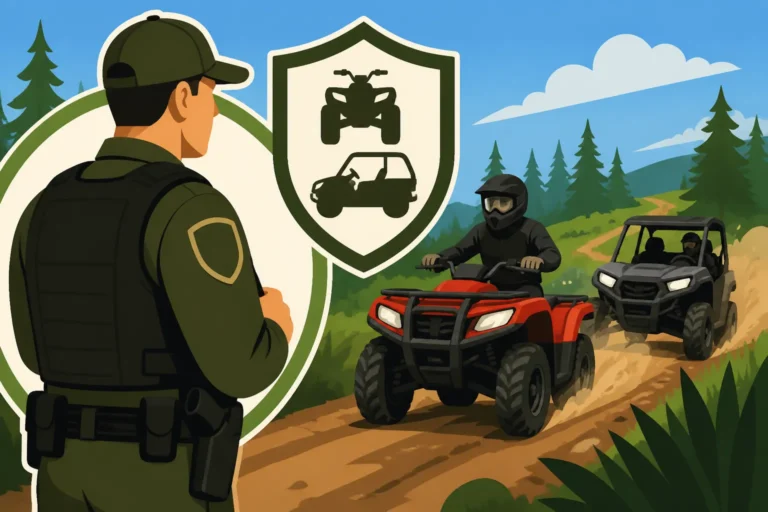
When you're out on the trails, you might encounter enforcement officers. Their presence isn't meant to spoil your fun; it's to ensure everyone is adhering to the rules and keeping the trails safe for all. They have the authority to check for proper registration, insurance, trail permits, and, of course, driver training certificates, particularly for younger riders. Being able to readily produce all your required documents, including your certificate, shows you're a responsible rider and makes the interaction smooth and quick. An officer stopping you to check paperwork is a routine part of maintaining order and safety on our extensive trail network. Don't view it as an inconvenience; see it as part of the system that keeps our trails open and enjoyable.
Combining Training with Other Requirements
The driver training certificate doesn't stand alone. It's one of several important requirements for legal ORV operation in New Brunswick. To ride on designated trails, you also need to ensure your machine is properly [New Brunswick ORV Registration Explained], you carry appropriate [New Brunswick Requires Insurance on Trails], and you possess a valid trail permit, often obtained through QuadNB. Each of these elements plays a vital role: registration identifies your machine, insurance protects you and others in case of an incident, and the trail permit supports the maintenance and development of the trails themselves. Your driver training certificate, therefore, complements these by ensuring you have the skills to operate your legally compliant and insured machine safely. It's a comprehensive approach to off-road recreation, ensuring that all bases are covered.
Continuous Learning and Community Involvement
Even after you've earned your certificate, the learning shouldn't stop. The world of ORVs is constantly evolving, with new technologies, techniques, and types of machines emerging. Staying informed, perhaps by joining a local ATV or UTV club, allows you to benefit from the experience of other riders, learn about local trail conditions, and stay updated on any changes to regulations. Clubs often organize group rides, safety refreshers, and workshops, providing excellent opportunities for continuous learning and skill development. Volunteering for trail maintenance days, for instance, also offers invaluable insight into the challenges of keeping our trails safe and accessible. Being an active member of the ORV community not only enhances your own riding experience but also contributes to the sustainability and positive reputation of the sport for everyone.
Disclaimer
This article is for general informational purposes only and does not constitute professional advice. Laws, prices and regulations vary by location and change over time. Consult a qualified professional for guidance on your specific situation.