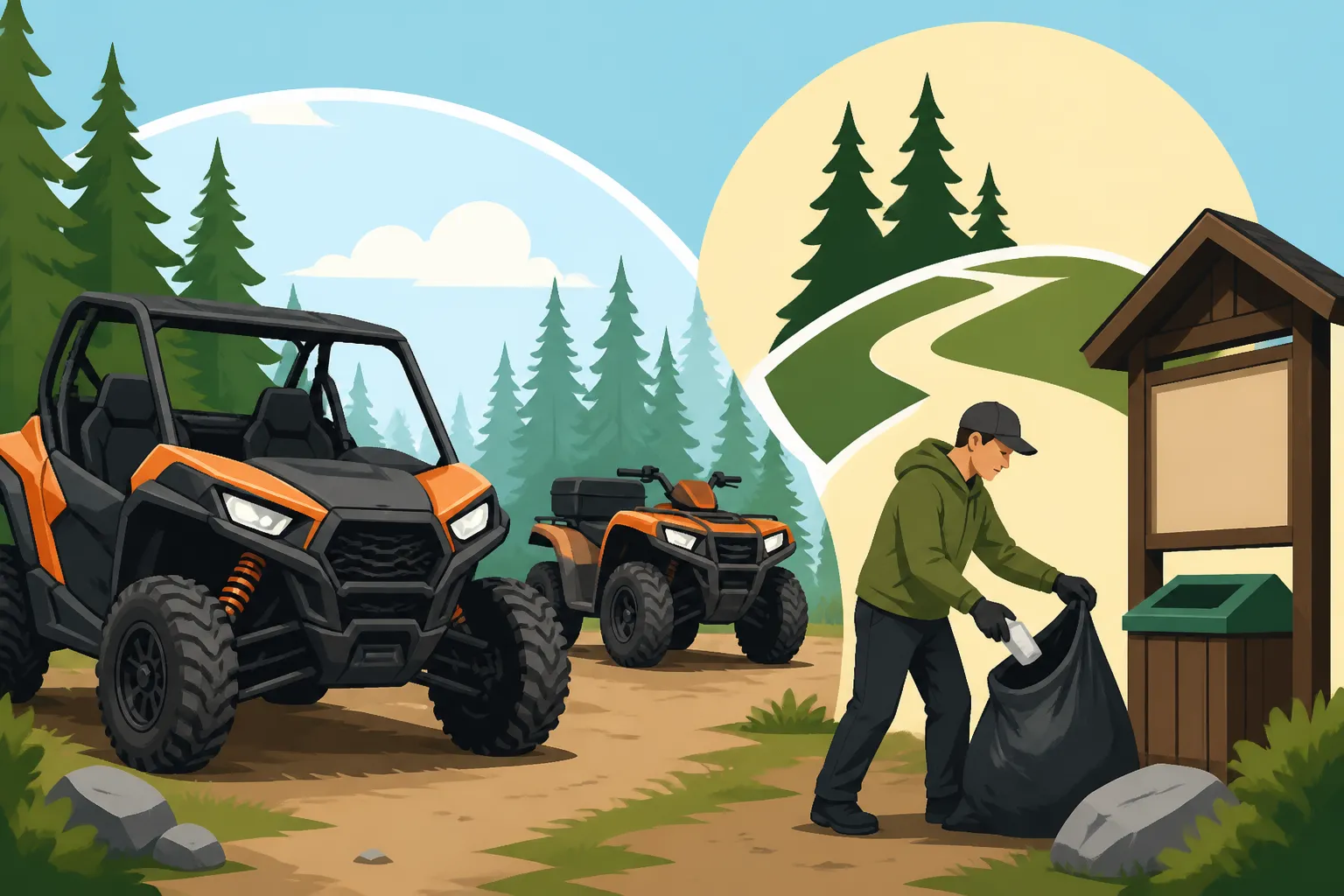
Leaving a New Brunswick Trailhead Tidy
Arriving at a New Brunswick trailhead with muddy gear, a full truck bed, and nowhere obvious to put your rubbish can make the end of a ride feel harder than it should. A little preparation helps you leave the parking area clean, keep access welcoming for the next rider, and avoid common problems around vehicles, gates, and trail entrances.
Why a tidy trailhead matters
Trailheads are shared spaces
A trailhead may be a small gravel pull-off, a marked parking area, or a busy place where riders unload machines and sort out their gear. It is not just a convenient start and finish point: it may also sit near a road, a home, a business, or land used for other purposes. When riders leave garbage, block access, or make a mess, the effects can fall on people who are not out for a ride.
Think about the difference between two groups leaving the same lot. One group loads up, picks up a dropped drink container, and leaves room for another vehicle. The other leaves food wrappers behind, parks across the entrance, and lets machines idle while everyone gets organized. Even if neither group means to be inconsiderate, the second scene can make a trailhead feel neglected or difficult to use.
That is why trail etiquette matters beyond the trail itself. The habits described in New Brunswick Trail Etiquette Locals Expect apply when you arrive, while you are gearing up, and when you leave. Being easy to share space with helps protect good relationships between riders, local residents, landowners, clubs, and other trail users.
Clean access helps keep riding areas usable
A trailhead that stays clean and orderly is easier for people to use and maintain. A club volunteer or landowner should not have to spend time picking up cans, food containers, or broken equipment left by riders. Nor should the next group have to work around a vehicle parked in a way that blocks a turnaround or access route.
Maintenance takes work, and it is often done by people who volunteer their time. New Brunswick Clubs and What They Maintain offers useful context for the behind-the-scenes effort that can keep riding areas accessible. A tidy departure is a small contribution, but it avoids adding an unnecessary cleanup task to that work.
It also helps to check trail information before setting out. Conditions can change, and an entrance or parking area that was easy to use on your last visit may be affected by weather, maintenance, or a closure. Consult New Brunswick Trail Conditions Before You Go and follow any signs or directions at the site rather than assuming the route is unchanged.
Prepare before you reach the trailhead
Pack for the ride and the return trip
A bit of planning makes it much easier to take everything home with you. Bring a sturdy rubbish bag for wrappers, food scraps, drink containers, and other waste. If you are carrying muddy boots, wet gloves, or small tools, a separate tote or storage bin can keep the truck or trailer organized without leaving loose items behind.
It helps to decide where rubbish will go before the ride begins. For example, keep one bag in the cab for clean packaging and another sealed container for items that may be wet or dirty. If your group brings snacks, remind everyone that packaging goes back with them. Do not assume a trailhead has a bin, and do not leave garbage beside an overflowing one.
A full-day ride can create more small bits of waste than people expect: a broken zip tie, an empty water bottle, a used wipe, or packaging from a quick snack. A quick gear check at the end catches those easy-to-miss items. The checklist in Packing for a Full Day in the Woods can help you plan what to bring, including the supplies that make cleanup easier.
Check parking and route details in advance
Before driving out, confirm where riders are expected to park, whether the access point has room for your truck and trailer, and whether any local directions apply. Do not assume that a wide shoulder or an open patch of ground is an approved parking area. A vehicle that seems harmlessly parked to one rider can block a gate, driveway, turning area, or route for another user.
Mapping tools can help you plan the approach and understand how the ride fits together. For example, you might use onX Offroad to review a route or save information for reference, then compare your plan with local trail guidance and the signs you see on the ground. Treat any app as a planning aid, not permission to ride somewhere or park wherever it appears possible. A mapped line does not necessarily confirm that a trail is open or that a parking spot is authorized.
If you are going with a group, agree on the parking plan before anyone arrives. Decide where trailers will go, how vehicles will turn around, and who will check that the lot is clear at the end. New Brunswick Group Ride Planning has more ideas for keeping a group outing coordinated, which can prevent the familiar scramble of several trucks arriving at once without a shared plan.
| Before you leave home | Why it helps |
|---|---|
| Bring rubbish bags and a container for dirty gear | Keeps waste and muddy items contained |
| Confirm the intended parking area | Helps prevent blocked entrances and unsafe parking |
| Check trail notices and conditions | Avoids relying on an outdated route plan |
| Agree on a meeting and loading plan | Reduces congestion when several riders arrive together |
| Save useful route information for offline reference | Helps when phone service is limited, without replacing signs or local guidance |
Leave the parking area clean and accessible
Pick up more than the obvious rubbish
Before loading, look around your parking space and the area where the group gathered. Pick up your own waste, and notice small items that may have fallen while unloading: a glove liner, a snack wrapper, a strap, or a piece of packaging. Check beneath the truck or trailer too, especially if gear was moved around in a hurry.
Keep waste contained during the drive home. A loose bag can tip over in the back of a truck or trailer, scattering rubbish along the road. Secure it, and take it to an appropriate disposal point. Do not leave refuse on the ground beside a bin, and do not burn rubbish at a trailhead or roadside.
The same principle applies to machine-related waste. If a repair or adjustment leaves behind packaging, a broken part, or a used item, take it with you. Do not drain fluids or wash a machine in a way that lets dirt, oil, or other contaminants run into nearby ground or water. For a machine that has a leak or a mechanical problem, deal with it safely and clean up any spill rather than leaving the site for someone else to discover.
Keep gates, roads, and turnaround areas clear
Leave enough room for other vehicles to enter, park, and turn around. A truck and trailer can take up more space than expected, particularly when several groups meet at a small access point. If you are unsure whether a spot is intended for parking, look for signs, marked areas, and clear local instructions. Do not block a gate, even if it is open when you arrive.
If you pass through a gate as part of an authorized route, follow the posted directions and leave it as you found it. That may mean closing it, but do not guess if signs or instructions say otherwise. Leaving a Gate the Way You Found It covers why this simple habit matters. A gate may be there to manage access, protect property, or keep animals contained.
Stay on the marked corridor and do not create an informal shortcut from the parking area. Riding around a barrier or across a nearby field because it seems faster can cause damage and create confusion about where the route goes. Staying on a Marked New Brunswick Corridor is a good reminder that following the designated route is part of responsible trail use, not merely a navigation preference.
Make a responsible departure part of the ride
Load without creating extra noise or congestion
The end of a ride can be tiring, and that is when small courtesies are easy to forget. Keep loading organized: have straps and gear ready, move vehicles only when there is room, and avoid spreading equipment across the whole parking area. If another group is waiting, make space as soon as you can do so safely.
Be mindful of noise, particularly near homes or businesses and during quieter hours. There is a practical difference between securing a machine and leaving it running while everyone chats, searches for gear, and loads the truck. Turn off machines when they are not needed, and keep conversations and equipment handling considerate of people nearby.
If someone in your group is still getting organized, one person can check the parking area while another secures the load. This simple division of tasks helps avoid the common situation where everyone assumes somebody else has picked up the last wrapper or moved the trailer out of the way.
Check the trailhead before driving away
A final two-minute check can prevent most avoidable messes. Walk around the parking spot, look beneath the truck and trailer, and check that no gear has been left behind. Make sure straps are secured, rubbish is contained, and the vehicle is not blocking another user’s path.
If the trailhead is busy, leave carefully and watch for people moving between vehicles. Do not rush out because another group has arrived; a clear, patient departure is safer than squeezing through a tight space. If you used a navigation app such as onX Offroad, you can also check that your route recording or notes are saved before leaving, but do that after you are parked safely and not while driving.
When you notice a damaged sign, an obstruction, or a maintenance issue, report it through an appropriate local club or land manager rather than trying to fix something beyond your ability. Trail organizations depend on useful, specific reports. New Brunswick Club Trail Maintenance explains the work involved in keeping corridors in shape, and New Brunswick Trailhead With Parking can help riders think through how access and parking fit into a trail outing.
A clean departure is not complicated: take your rubbish, keep access clear, respect signs and gates, and leave the area ready for the next person. Those habits make trailheads more pleasant for riders and help preserve the goodwill that shared riding areas depend on.
Disclaimer
This article is for general informational purposes only and does not constitute professional advice. Laws, prices and regulations vary by location and change over time. Consult a qualified professional for guidance on your specific situation.