Packing for a Full Day in the Woods
A full day on a New Brunswick trail can turn into a long one when weather shifts, a route takes more fuel than expected, or cell service disappears in the woods. Packing well is less about bringing everything and more about having the essentials when you need them. This guide covers what to carry, how to organize it, and what to check before setting out.
Start with the ride, not the gear pile
Check the route and conditions before packing
A quiet afternoon loop close to home calls for a different load than a remote ride with several hours between convenient stops. Before packing, look at your planned route, its distance, likely riding time, fuel options, and the kind of terrain you expect. In New Brunswick, conditions can vary between regions and change along the route, so check New Brunswick Trail Conditions Before You Go and confirm that the trails you plan to use are open.
Give yourself a route plan that someone else can understand. Note your intended trailhead, direction of travel, planned turnarounds, and approximate return time. A simple written note or message to a trusted person is useful if your phone battery dies or you lose service. If you change plans during the ride, let that person know when you can.
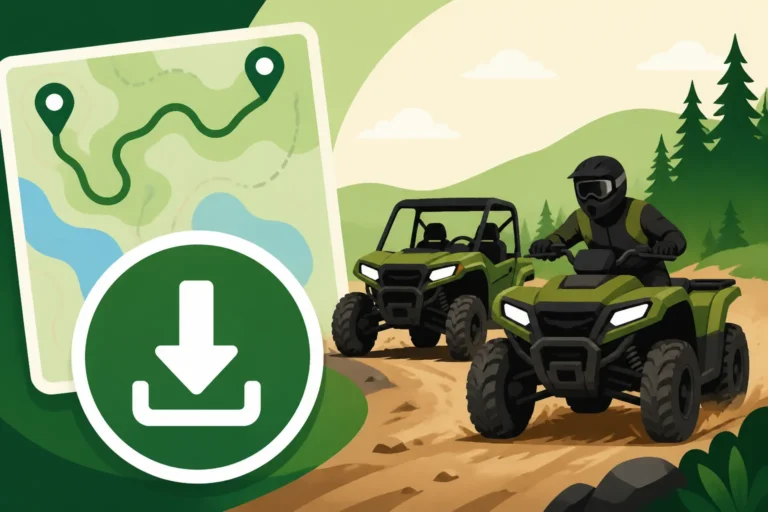
Download or save navigation information before leaving an area with reliable service. The New Brunswick Trail Maps and the MapGear App can help you prepare for club-trail navigation. Some riders also use onX Offroad as an additional mapping reference. Whichever tool you use, learn how to access your saved map before you head out, and don’t assume that a phone will have a signal everywhere on the route.
Match your gear to the season and forecast
A sunny forecast does not guarantee an easy day in the woods. A cool morning can become warm by midday, while cloud, wind, rain, or a long shaded stretch can make a rider cold again. Bring layers you can add or remove without unpacking half the machine. A moisture-wicking base layer, a warm mid-layer, and a weather-resistant outer layer are a practical starting point. The guide to Layers for a Cool Morning on the Trail can help you think through changing temperatures.
Consider what the weather means for your route, not just what it says in town. A light shower may be manageable on a short, familiar trail, but persistent rain can make exposed sections, water crossings, and muddy areas more demanding. In hot conditions, plan for extra drinking water and a way to keep it accessible. In cooler weather, pack spare gloves and dry socks; wet hands and feet can make a long ride uncomfortable fast.
Dress for the possibility that you will be stopped outside longer than expected. A breakdown, a blocked trail, or a slower-than-planned group can stretch a short pause into a cold wait. Pack clothing that still helps when you are no longer moving and generating warmth.
Decide what must stay with you
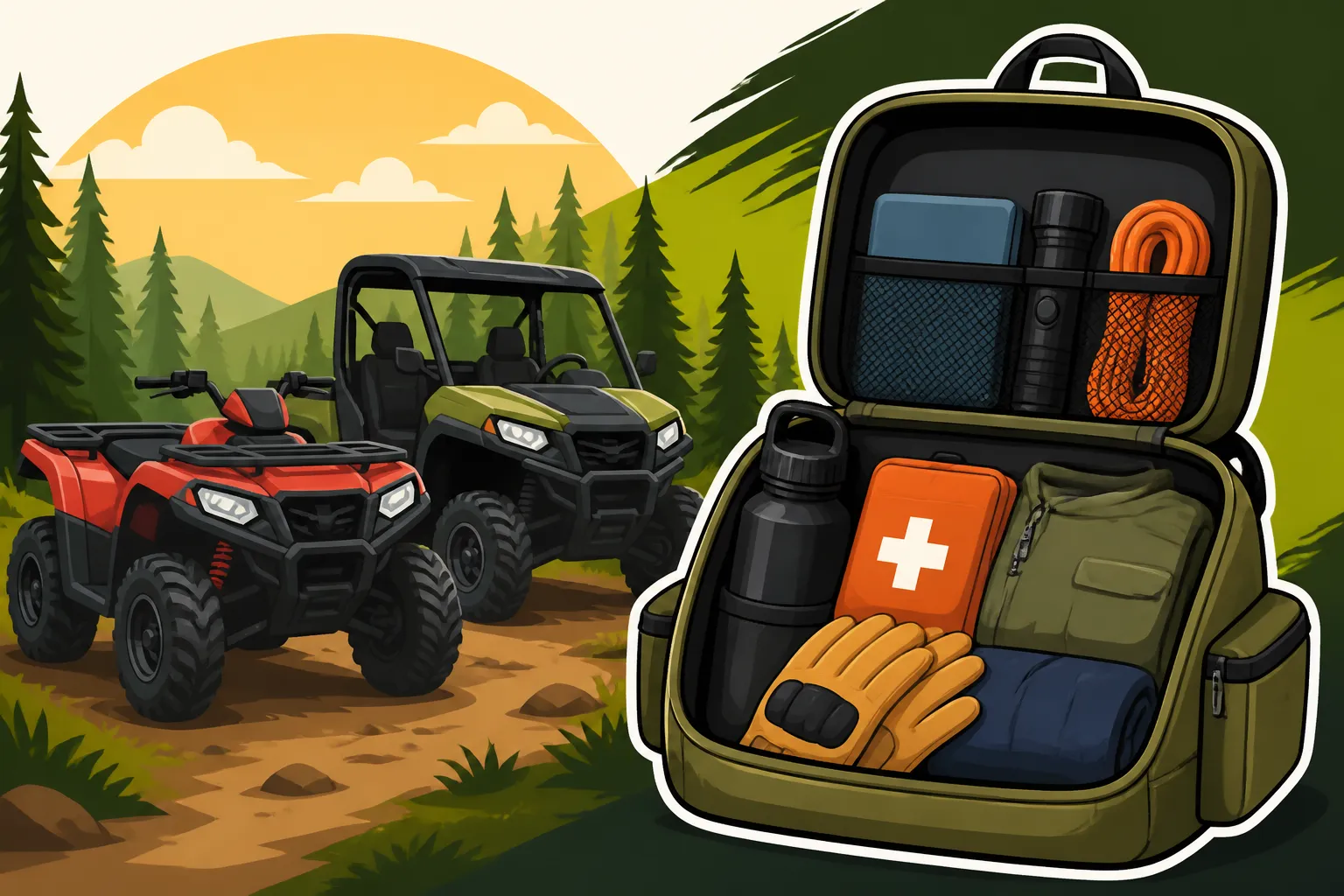
Some items are useful only if they are easy to reach. Keep your phone, map, water, first-aid supplies, and weather layer where you can get to them without unloading the machine. Tools and heavier items can be secured elsewhere, as long as they are protected from weather and won’t shift while riding.
Before you leave, check whether your planned ride requires specific documents or equipment. Registration, insurance, trail-permit, and safety requirements can depend on the machine and where you ride. Review New Brunswick Equipment a Rider Must Carry and Carrying Papers on a Long Trail Day rather than relying on memory at the trailhead.
A helpful rule is to separate “needed during a stop” from “needed in an emergency.” A snack might be convenient in a top pocket; a first-aid kit should be easy to find even if another rider is helping. If you ride as a group, agree on who carries shared supplies so you don’t discover halfway out that everyone assumed someone else packed them.
Pack the essentials for comfort and safety
Water, food, and personal basics
Bring more water than you expect to drink if the route is remote, the weather is warm, or the ride may run long. Store it where you can reach it during a stop. If you use a hydration pack, make sure it is clean, filled, and working before you leave. A bottle in a secured holder can provide a simple backup.
Pack food that can handle being carried on a machine. Sandwiches, bars, fruit, or other familiar snacks are often easier to manage than food that needs careful handling. Bring enough for the planned ride plus a little extra in case of a delay. A small amount of food won’t solve every problem, but riding hungry can make a long day feel even longer.
Include personal items that fit your needs: any required medication, sunscreen, insect repellent, tissues, and hand sanitizer. Keep medication in a protected, clearly identifiable container. If you have allergies or a health condition that could matter in an emergency, tell the people you’re riding with what they need to know and where to find relevant supplies.
First aid and emergency communication
A compact first-aid kit is more useful when you know what is inside it. Check that the contents are suitable for minor cuts, scrapes, blisters, and other basic problems, and replace anything used or damaged. Carry any personal medical items you may need. For a more remote route, review First Aid on a Remote Woods Loop and think about whether your group has the knowledge and supplies for the ride you’re planning.
A phone is useful for navigation and communication, but it is not a complete emergency plan. Charge it fully, save key numbers, and consider carrying a power bank with the right cable. Protect both from moisture and damage. If your route includes areas with limited service, tell someone your plan and expected return time before you go. Some riders also carry a satellite messenger on remote outings; learn how your chosen device works before relying on it.
Make an emergency plan with your group. Agree on what to do if someone gets separated, a machine becomes disabled, or the group needs to turn back. Keep the plan simple: where to regroup, who contacts the person at home, and what information to share if help is needed. On a long trail day, clear decisions matter more than a complicated plan that nobody remembers.
Navigation, visibility, and useful small items
Carry a navigation option that does not depend entirely on a live connection. Save maps for offline use where your chosen app supports it, and bring a paper route note or another backup if the ride is unfamiliar. onX Offroad can be one digital reference, but compare your planned route against the trail information available for the area and check access conditions before riding. An app map should not be treated as permission to use every road or track it displays.
A compass, headlamp, and spare batteries are small items that can be valuable if the ride runs late. A headlamp keeps your hands free during a stop and is useful even when you expect to be back before dark. Keep reflective or high-visibility gear accessible if a delay could put you near a road or trailhead in low light.
Other handy items include a whistle, a small roll of tape, a multi-tool, and a notepad with a pencil. Pack only what you understand how to use. A tool kit that rattles around unused is less helpful than a few tools matched to your machine and basic repair knowledge.
Prepare the machine and pack it securely
Fuel and basic machine checks
Estimate fuel needs using your own machine, riding conditions, and the planned route. Soft ground, steep sections, frequent stops, heavy loads, and a passenger can affect how much fuel a ride uses. Don’t plan to arrive at the next fuel stop with no margin. For a longer route, use Fuel Range on a Long Northern Leg as a reminder to plan for distance and uncertainty, not just the map’s straight-line measurements.
Do a brief pre-ride check before loading everything. Look over tires, brakes, lights, fluid levels, and visible parts that could be loose or damaged. Confirm that the machine starts and that any accessories you rely on—such as a charger or navigation mount—are working. If something seems wrong in the driveway, don’t count on the trail to make it better.
Carry only repair supplies you can use safely. Depending on the machine and your experience, that might include a tire repair kit, a pump, basic hand tools, a spare belt, or a tow strap. Secure loose equipment so it cannot fall onto the trail or interfere with controls. If you ride with a group, coordinate shared recovery gear rather than carrying several bulky duplicates.
Pack for balance and access
Put heavier items low and secure, and keep frequently used supplies within reach. Avoid stacking gear in a way that blocks lights, limits your view, or interferes with passengers or controls. Make sure bags, straps, and cargo boxes are closed and fastened before moving.
Use separate waterproof bags for dry clothing, electronics, and documents. A rain cover or dry bag can protect essentials when weather changes, but test the closure before the ride. A phone tucked into a loose pocket may be easy to reach but vulnerable to rain, dust, or a fall. Think through where each item will be during a rough section, not just when the machine is parked.
Here is a practical packing checklist you can adapt to your route:
| Category | Pack or check | Why it matters |
|---|---|---|
| Navigation | Saved map, route notes, charged phone, backup light | Helps you stay oriented if plans change or service drops |
| Water and food | Drinking water, extra water for a delay, durable snacks | Supports a longer day and unexpected stops |
| Clothing | Weather layer, spare gloves, dry socks | Makes changing temperatures and wet conditions easier to manage |
| Safety | First-aid kit, personal medication, emergency contact plan | Helps the group respond to common problems and delays |
| Machine | Fuel plan, basic tools, repair supplies, secure straps | Reduces the chance that a small issue ends the ride early |
| Documents | Required registration, insurance, permit, and safety paperwork | Helps you be prepared for checks and trail requirements |
| Small essentials | Headlamp, power bank, whistle, sunscreen, insect repellent | Useful for late returns, low battery, sun, or bugs |
Keep documents and valuables protected
Before setting out, confirm which documents apply to your machine and the route. Riders often forget paperwork when they switch machines, borrow a quad, or take a different trail than usual. Store documents in a waterproof pouch and keep them somewhere you can access without unpacking the entire machine. The checklist in Carrying Papers on a Long Trail Day is a useful companion when you’re building your own routine.
Keep keys, wallet, and phone secured so they cannot bounce out on rough ground. If you carry a spare key, store it separately from the main one. Consider placing a basic emergency contact card in your gear in case your phone is unavailable or locked.
Don’t overload the machine to the point that handling becomes awkward. A carefully packed ride is safer and more comfortable than a cargo pile that shifts every time you cross uneven ground. If you’re unsure whether a load is secure, stop in a safe place after a short distance and check the straps.
Make a plan for delays and leave the trail ready for others
Set a realistic return time
Choose a turnaround time as well as a destination. A route that looks short on a map may take longer when the group stops, encounters rough sections, or needs to reroute. Plan breaks and leave enough time to return before fading light. If your route includes uncertain conditions, be willing to shorten it rather than pushing on simply because it was the original plan.
Share your plan with someone who is not riding with you. Include the trailhead, the intended route or general area, your expected return, and what they should do if they do not hear from you. If plans change, update them when you have a reliable opportunity. For remote rides, this simple habit can make it easier for someone to know where to start looking if you fail to return as expected.
Use onX Offroad or another navigation tool as one part of your planning, not as a substitute for checking trail access, official information, or local conditions. Save the route before leaving coverage, and make sure another rider knows the basic plan too. A group should not depend on one person’s phone to understand where it is going.
Ride with room for the unexpected
A full-day pack should account for ordinary disruptions: a puncture, a slower rider, a weather change, a wrong turn, or a closed section. Keep enough food, water, warmth, and battery for a longer return than planned. If the group is separated, stop at the agreed regrouping point instead of having everyone improvise a different search route.
For longer or more remote rides, talk through who has the first-aid kit, recovery gear, and communication backup. If one person carries a shared item, make sure the group knows where it is. Keep the group together in unfamiliar areas, and make decisions early when someone is tired, cold, or uncomfortable.
Before leaving the trailhead, check the local trail information again and follow posted signs and closures. A packed machine cannot make a closed or unsuitable route safe to ride. Plan alternatives ahead of time so a closure does not turn into a rushed decision at a junction.
Leave the trailhead and route tidy
Pack out food wrappers, bottles, and anything else you brought in. Secure small rubbish before riding, because a loose wrapper can blow away before anyone notices. Leave gates, signs, and trail features as you found them, and avoid widening a muddy section by riding around the marked route. For more on responsible habits, see Leaving a New Brunswick Trailhead Tidy.
At the end of the ride, check the machine and gear for damage, loose straps, or items left behind. Refill or recharge supplies that were used, and note anything you wished you had packed. A quick review after each outing makes the next full-day ride easier to prepare for.
The best packing list is one you can actually follow. Start with the essentials, adjust for the route and season, and keep your gear organized so you can find it when a stop takes an unexpected turn. A little planning at home can make a long day in the New Brunswick woods calmer, safer, and more enjoyable.
Disclaimer
This article is for general informational purposes only and does not constitute professional advice. Laws, prices and regulations vary by location and change over time. Consult a qualified professional for guidance on your specific situation.