7.5 Metres Measured How
One of the most perplexing rules for off-road vehicle (ORV) riders in New Brunswick is the requirement to stay 7.5 metres from the "travelled portion" of a highway. This seemingly simple distance often causes confusion, leading riders to wonder exactly where they can ride, cross, or even park their ATV or side-by-side without risking a fine. This guide will meticulously break down what "7.5 metres" truly means in the eyes of the law, how to measure it, and how to navigate common scenarios to keep you riding safely and legally.
Understanding the "Travelled Portion" of a Highway
Before you can even begin to measure 7.5 metres, you need to understand what the province means by the "travelled portion" of a highway. This isn't just a casual term; it has a very specific legal definition that dictates where you can and cannot operate your machine. Many riders mistakenly believe it means the paved surface, or perhaps the center line, but it’s often broader than that.
What Constitutes the "Travelled Portion"?
The "travelled portion" refers to the part of the highway that is actually used by vehicles for travel. This might sound obvious, but it includes more than just the paved asphalt or gravel track. Think about the entire width vehicles might reasonably occupy during their normal course of driving, including any paved shoulders where cars might temporarily pull over or where bicycles might ride. It's not just the traffic lanes, but anything immediately adjacent that is designed and maintained for vehicular movement. This means the measurement starts at the absolute edge of where a vehicle could lawfully and reasonably operate, not just the lane stripe.
For instance, if you're on a provincial highway with a paved shoulder, that shoulder is generally considered part of the travelled portion. If it's a gravel road, the travelled portion extends to the furthest edges where vehicles regularly drive. It doesn't include the ditch, the unmaintained verge, or private property beyond the public right-of-way. This distinction is incredibly important because misinterpreting this starting point can throw off your entire 7.5-metre calculation. Often, riders assume the ditch acts as a buffer, but if the measurement starts before the ditch, you might find yourself too close to the actual highway.
Common Misconceptions About the Starting Point
A frequent misconception is that the 7.5-metre rule starts from the "right-of-way" or the property line of the highway. This isn't accurate. Highways have a designated right-of-way that can extend quite a distance from the actual road surface, encompassing ditches, utility poles, and sometimes even trees. The law specifically states "travelled portion," narrowing the focus significantly. Another common mistake is thinking it only applies to paved roads. The rule applies to any "highway," which in New Brunswick's Off-Road Vehicle Act covers any road or street for public use, whether it's paved, gravel, or even dirt. So, even if you're on a remote woods road that's technically a public highway, the 7.5-metre rule still applies.
It's also not measured from the center line of a two-lane road. The measurement is from the edge of the travelled portion on your side. So, if you're on the shoulder of an ORV trail that runs parallel to a highway, you need to ensure the outside edge of your machine is at least 7.5 metres from the closest edge of the highway's travelled surface. This can be tricky, especially on winding roads or in areas where the ORV trail is very close to the highway. Always err on the side of caution.
How to Accurately Measure 7.5 Metres in the Field
Knowing the definition is one thing, but actually applying it in a dynamic outdoor environment is another. It's not like you're going to carry a tape measure on your quad, so understanding practical ways to estimate this distance is crucial.
Visual Cues and Estimation Techniques
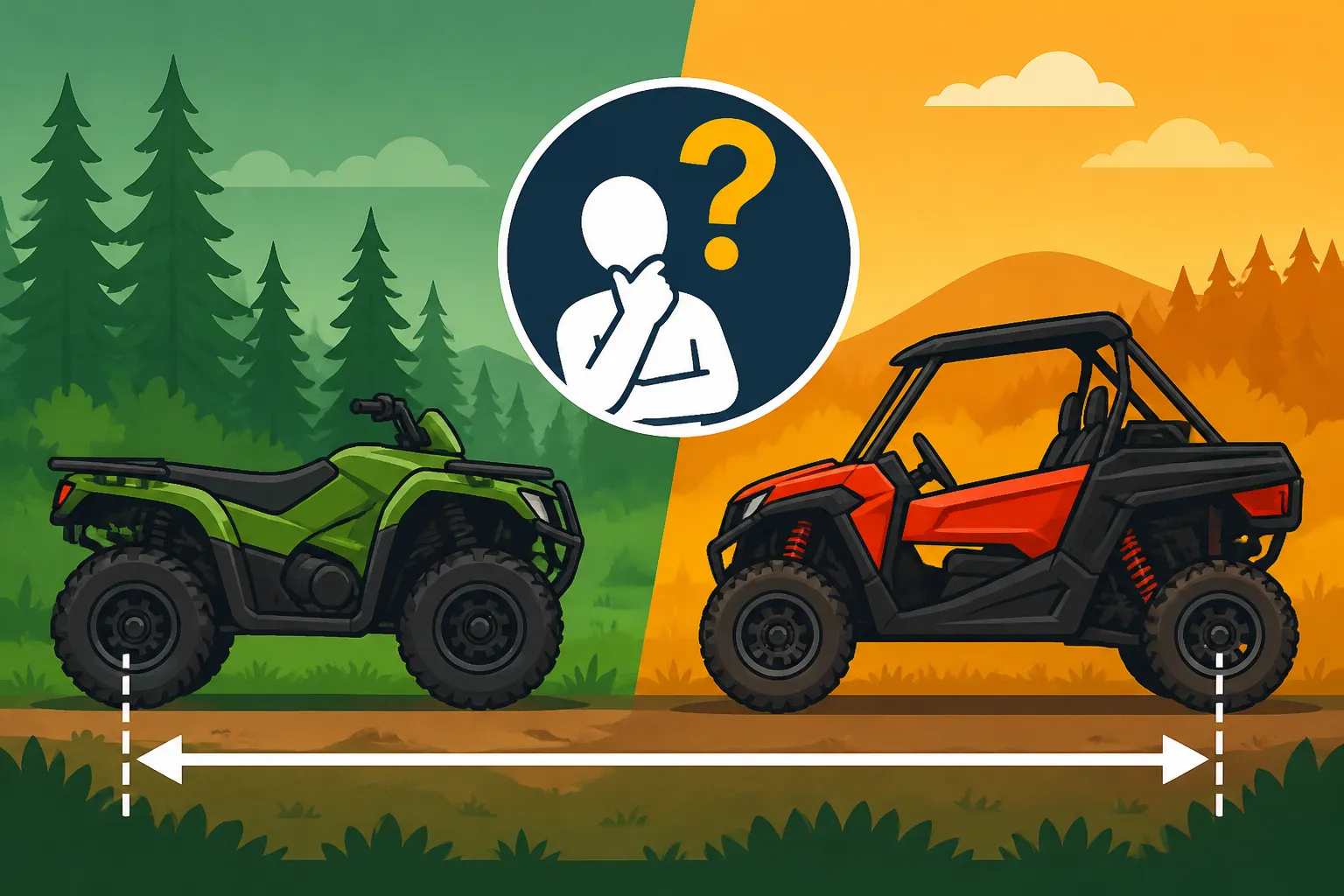
Since precise measurement isn't always practical, developing a good eye for distance is key. Seven and a half metres is roughly 24.6 feet. For most people, that's about two average car lengths, or perhaps the length of a large truck or bus. When you're out riding, try to visualize this distance. Look for landmarks: is there a fence post, a large rock, or a significant change in vegetation that you know is approximately that far from the road? Practice estimating distances in your everyday life to hone this skill.
One effective method is to compare it to objects you know the length of. Your ATV or side-by-side, for example, is a known length. How many of your machines would fit end-to-end to make 7.5 metres? Most full-size ATVs are around 2 metres long, so you'd be looking for a distance of about 3.5 to 4 ATV lengths. For side-by-sides, which can be longer, it might be 2.5 to 3 machine lengths. Keep in mind that different SuperATV models might vary in length, so know your machine. This kind of mental exercise can help you make a quick, reasonable judgment call when you're on the trail.
Using Technology to Aid Your Awareness
While not for precise measurement, GPS devices and apps on your smartphone can help you understand your proximity to roads, especially when combined with detailed topographical maps. Some ORV trail apps even show highway corridors. You can often see the main highway line on these maps and gauge if your current position on the trail is veering too close. While these tools won't give you an exact 7.5-metre warning, they can certainly help you maintain overall situational awareness and prevent you from unknowingly encroaching on the restricted zone.
For those serious about understanding the boundaries, you could even use a rangefinder (often used by hunters or golfers) to get a more accurate measurement if you're scouting a new area or frequently pass a particular tricky spot. This isn't something you'd do every minute of a ride, but it could be helpful for understanding the layout of common crossing or parallel-riding points. Also, being aware of signs indicating shared highway sections or designated crossing points can greatly assist in avoiding infractions. These signs are there for a reason, showing where the rules might temporarily change.
Scenarios Where the 7.5 Metre Rule Applies and How to Stay Legal
The 7.5-metre rule isn't just about riding alongside a highway; it also impacts how you cross highways, where you can stage your machine, and even where you pull over. Understanding these nuanced applications is vital.
Parallel Riding and Roadside Access
This is perhaps the most obvious application: you cannot ride your ORV parallel to a highway if any part of your machine is within 7.5 metres of the travelled portion. This means if a trail runs alongside a highway, it must maintain that buffer. If the trail itself doesn't provide that space, you're not permitted to use that section of the trail. This can be particularly frustrating in areas where designated ORV trails follow old railway lines or utility corridors that happen to run very close to highways for long stretches. You might see a beautiful, clear path, but if it's too close, it's off-limits.
Think about pulling off to the side of a woods road that briefly parallels a highway. Even if you're not actively riding on the highway, if your machine is parked or idling within that 7.5-metre zone, you could still be in violation. This also means you can't just pull off the highway onto what looks like a convenient dirt path if that path immediately runs too close to the main road. The intent is to keep ORVs safely separated from highway traffic, minimizing dust, noise, and the potential for accidents. Remember that [New Brunswick Fines for Riding Near a Highway] can be substantial, so it's always better to be overly cautious.
Highway Crossings and Staging Points
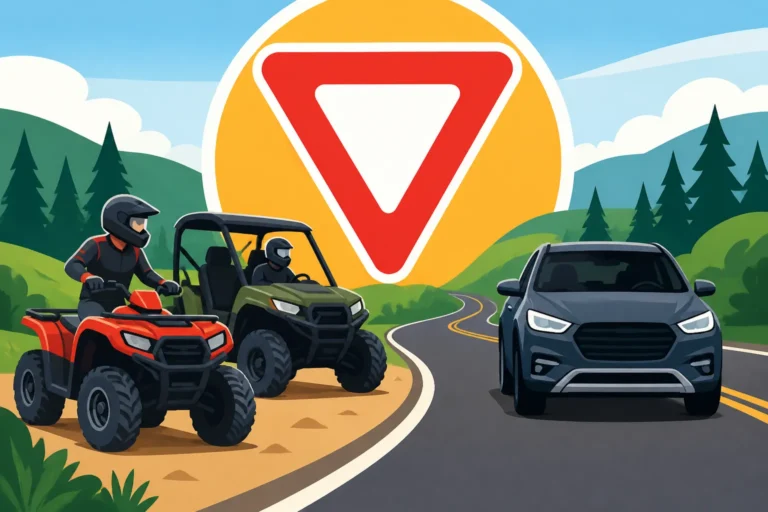
Crossing a highway is one of the few instances where you are permitted to enter the 7.5-metre zone, and even the travelled portion itself, but only under very specific conditions and for the shortest possible distance. [New Brunswick Rules for Crossing a Road] mandate that you must come to a complete stop, look both ways, and yield to all highway traffic. You must cross directly, at a right angle to the highway, and only when it is safe to do so. You cannot drive along the shoulder for any distance before or after crossing. The 7.5-metre rule essentially re-applies the moment you have completed your perpendicular crossing.
| Scenario | 7.5-Metre Rule Application | Notes |
|---|---|---|
| Riding Parallel | Strictly enforced; must maintain distance. | No part of ORV can be within 7.5m of travelled portion. |
| Highway Crossing | Temporarily overridden during direct, perpendicular crossing. | Must stop, yield, cross safely, and return to 7.5m distance immediately. |
| Parking/Staging Near Highway | Applies to parked/idling machines as well. | Ensure your ORV is 7.5m away even when stationary. |
| Roadside Diner/Gas Stop | Permitted only where highway usage permits apply or roads are designated. | Cannot just pull off a highway into a business if not on a designated route. |
| Shared Highway Sections | Temporarily overridden if the section is designated. | Only on clearly marked sections; strict speed/position rules apply. |
When you're staging your machine, say at a trailhead or a friend's house, ensure that your ATV or side-by-side isn't left within that 7.5-metre buffer zone. This applies even if it's just parked by the road, ready to go. The idea is to keep all ORV activity well clear of the public highway's operational area. This is also why many riders invest in robust storage solutions from companies like SuperATV to ensure their machines are securely stored and off-limits when not actively being ridden on designated trails.
Designated Highway Sections and Local Bylaws
There are rare exceptions where certain sections of provincial highways or local roads might be designated for shared use by ORVs. These are typically short stretches, often linking two trail systems or allowing access to services like gas stations or restaurants. These sections are always clearly marked with signage indicating that ORVs are permitted. In these specific designated areas, the 7.5-metre rule is temporarily suspended because the road is explicitly being shared. However, when you leave these designated sections, the 7.5-metre rule immediately comes back into effect. It's crucial to be vigilant for these signs and understand that their absence means the standard rules apply.
Furthermore, some municipal bylaws can open specific local roads to ORV traffic. While these aren't provincial highways, they are still considered "highways" under the Off-Road Vehicle Act. If your local town or village has passed a bylaw allowing ORVs on certain streets, those streets become designated shared-use areas, and the 7.5-metre rule effectively doesn't apply on those specific roads. However, this is distinct from provincial highways. Always check local bylaws, as [New Brunswick Municipal Bylaws That Open Roads] can vary wildly from one community to the next. Never assume a road is open unless you see clear signage or have verified it with local authorities. Ignorance of the law is not a defence, and an officer patrolling a rural road will expect you to know the rules.
Penalties and Enforcement of the 7.5 Metre Rule
Breaking the 7.5-metre rule is not a minor infraction. It's considered a serious safety violation under the Off-Road Vehicle Act, and law enforcement officers in New Brunswick are well aware of the common areas where riders might inadvertently (or intentionally) violate this rule.
The Cost of Non-Compliance
The fines for operating an ORV within the prohibited 7.5-metre zone can be quite steep. While specific amounts can change, you can expect a significant penalty, easily in the hundreds of dollars. This is not just a slap on the wrist; it's designed to deter dangerous riding practices that could endanger both ORV operators and highway users. Beyond the monetary fine, you could also face other consequences, such as your machine being impounded in extreme cases, especially if combined with other infractions like reckless driving or operating an unregistered machine.
Remember, an officer doesn't need to see you actively driving at high speed to issue a ticket. Simply having your machine parked or idling too close can be enough. The intent of the law is to maintain a safe separation zone, whether the vehicle is in motion or not. Being pulled over and ticketed can quickly sour a fun day of riding, and it's an expense that's entirely avoidable by simply knowing and respecting the rules. You can find more details on [New Brunswick's $292.50 Highway Fine] which specifically addresses this type of violation.
Who Enforces the Rule?
Enforcement of ORV laws in New Brunswick falls to several bodies. The RCMP (Royal Canadian Mounted Police) are the primary provincial law enforcement agency and regularly patrol rural areas where ORV use is common. Local police forces in towns and cities also enforce ORV rules within their jurisdictions, especially if municipal bylaws are in place. Additionally, conservation officers, who work for the Department of Natural Resources and Energy Development, have the authority to enforce the Off-Road Vehicle Act, particularly on Crown land and trails. These officers are often very knowledgeable about ORV trails and regulations, so don't assume they are only looking for fishing or hunting violations.
When you're stopped by an officer, they will typically ask to see your driver's license, ORV registration, proof of insurance, and trail permit. They'll also be checking for compliance with equipment rules (like helmets), age requirements, and, of course, adherence to separation distances from highways. Knowing [New Brunswick Documents You Must Carry] at all times can make these interactions much smoother. A quick check of your position relative to the highway is easy for an officer to perform, and they'll be looking for any signs of non-compliance.
Practical Advice for New Brunswick Riders
Navigating the 7.5-metre rule successfully comes down to a combination of knowledge, vigilance, and common sense. Here are some final tips to help you stay on the right side of the law and enjoy your rides.
Planning Your Routes and Being Aware
Always plan your route using official trail maps provided by organizations like QuadNB. These maps clearly show designated trails and often indicate where trails run close to highways or where crossings are necessary. Avoid venturing off marked trails, as this is where you're most likely to unintentionally stray into prohibited zones or onto private property. If you're using a GPS app, zoom in and pay attention to road details, not just the trail lines.
Before you head out, especially to a new riding area, take a few minutes to review the local regulations. What might be allowed in one county or parish could be prohibited in another. Use the [MapGear App] provided by QuadNB, as it's an excellent resource for understanding the official trail network and potential roadside proximity issues. Staying informed is your best defence against accidental violations.
When in Doubt, Re-route or Ask
If you ever find yourself on a trail that seems suspiciously close to a highway, or you're unsure if you're maintaining the 7.5-metre distance, the best advice is simple: pull over safely, check your map, and if necessary, re-route. It's far better to take a slight detour or turn back than to risk a fine or, more importantly, a dangerous encounter with highway traffic. You can also contact local ORV clubs or Service New Brunswick for clarification on specific areas or rules. They are often happy to help riders understand the regulations.
Remember, safety is paramount. The 7.5-metre rule isn't just about fines; it's about keeping ORV riders, and the public on highways, safe from potential collisions, dust, and distractions. Ride responsibly, know your rules, and enjoy the incredible trails New Brunswick has to offer!
Disclaimer
This article is for general informational purposes only and does not constitute professional advice. Laws, prices and regulations vary by location and change over time. Consult a qualified professional for guidance on your specific situation.