New Brunswick Trespass Law for Riders
One of the biggest anxieties for any ATV or UTV rider in New Brunswick, whether you're a seasoned local or just visiting, is the fear of unknowingly trespassing. It’s a gut-wrenching feeling to realize you might be on private property, potentially facing fines or upsetting a landowner. This guide is here to untangle the complexities of New Brunswick's trespass laws as they apply to off-road vehicle riders, helping you understand your responsibilities and ride with confidence, knowing you're always on legal ground.
Understanding Trespass Laws in New Brunswick
Trespassing, at its core, means entering or remaining on someone else's property without their permission. For ATV and UTV riders, this isn't just a polite suggestion; it's a legal obligation with real consequences. In New Brunswick, the law is pretty clear that unless a piece of land is public or you have explicit permission, you should assume it's private and off-limits. This applies to everything from sprawling farm fields and dense woodlots to abandoned gravel pits and even old logging roads that might look like public access.
The challenge for riders often comes down to identifying property lines in the vast, beautiful, and often unmarked wilderness of our province. Many rural areas lack clear fencing or "No Trespassing" signs on every boundary, leading to honest mistakes. However, the law generally places the onus on the rider to know where they are and to have permission. It's not enough to say, "I didn't know." That's why understanding the basic principles of trespass is so vital before you even put your key in the ignition.
The Basic Principle: Permission is Key
In New Brunswick, the fundamental rule regarding private land is straightforward: if it's not yours, you need permission to be on it. This principle isn't unique to ORV riding; it applies to hunting, fishing, hiking, and really, any activity on private property. For ATV and UTV riders, this means you can't just follow an enticing trail onto someone's woodlot because it looks like a shortcut or leads to a scenic view. That assumption could land you in serious trouble.
The permission doesn't always have to be a signed, formal document, though that's the safest bet. It can be verbal, or implied through established agreements, such as those with organized ATV clubs that have secured access rights for their members. However, relying on implied permission without a clear agreement is a risky game. It's always best to err on the side of caution and ensure you have a clear understanding with the landowner. Many clubs, like those under the QuadNB federation, work tirelessly to secure these permissions, offering riders legal access to thousands of kilometres of trails, but this access is specific to those designated trails and not a blanket permission for all private land.
Posted vs. Unposted Land: A Crucial Distinction
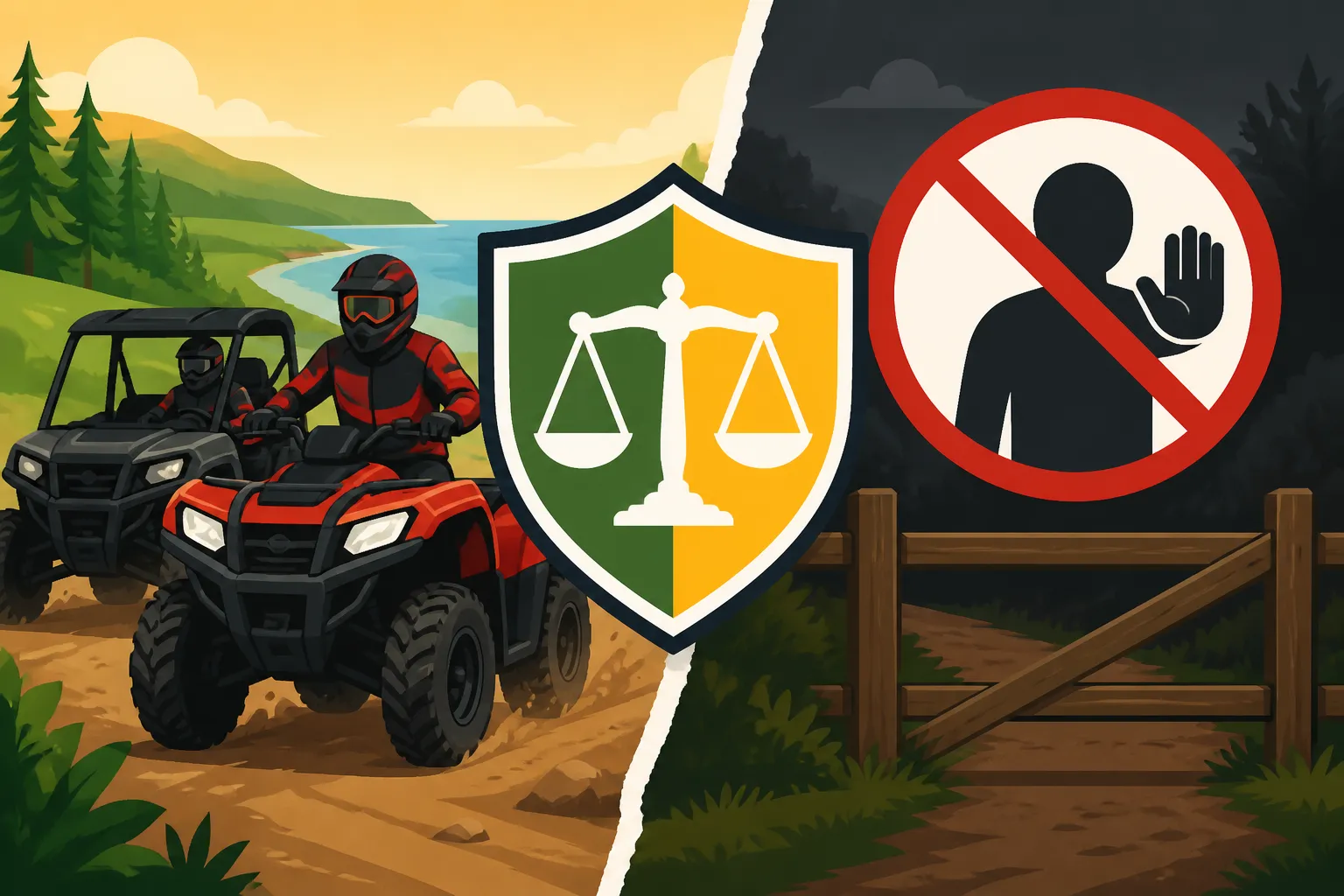
While it's a common misconception that you can ride on private land if there are no "No Trespassing" signs, this is simply not true in New Brunswick. The law doesn't require a landowner to post their property for it to be considered private. Whether land is posted with "No Trespassing" signs or not, it remains private property, and you still need permission to be there. The presence of signs merely serves as an extra layer of warning and can sometimes influence the severity of penalties, indicating a clear intent from the landowner to prohibit entry.
However, posted land does make it crystal clear. When you see those red and white signs, or even just purple paint marks on trees (another common way to denote private boundaries in some regions), it's an undeniable signal: stay out. Ignoring these explicit warnings is a deliberate act of trespass and will almost certainly lead to swifter, more severe consequences if you're caught. Even an old logging road that seems abandoned might be part of someone's private woodlot, and while it might not be posted at every turn, that doesn't make it fair game. It's up to us as riders to be respectful and responsible, which includes understanding that unmarked doesn't mean unowned.
How to Avoid Trespassing
Nobody wants to be a trespasser. Most riders genuinely want to enjoy the trails and backcountry responsibly. The key to avoiding trespass isn't just about knowing the law; it's about adopting proactive habits and leveraging the tools available to you. It's about respecting the land, the landowners, and the riding community as a whole. A little preparation before you head out can save you a lot of grief on the trail. Just as you'd check your tire pressure or fuel levels, you should check your route for potential land ownership issues.
Before heading out, consider what gear you might need. If you're tackling varied terrain, robust skid plates from a brand like SuperATV can protect your machine, but they won't protect you from a trespass charge! Always prioritize knowing your route.
Always Seek Explicit Permission
The safest and most respectful way to ensure you're not trespassing is to get explicit permission from the landowner. This might sound daunting, especially for large tracts of land, but it's often simpler than you think. If you want to ride a specific private woodlot or field, find out who owns it and ask. A friendly conversation, explaining your intentions and demonstrating respect for their property, can go a long way. Many landowners are reasonable and might grant permission, especially if you promise to stick to certain areas or times.
When asking for permission, be clear about what you intend to do, how many machines will be riding, and for how long. It's also a good idea to exchange contact information. If you're riding with a group, make sure everyone understands the boundaries and conditions of the permission. Remember, permission for one person doesn't automatically extend to their friends. For extended access, especially if you plan to return multiple times, consider getting the permission in writing. This protects both you and the landowner by creating a clear record of the agreement. For specific guidance on how to approach this, you might find valuable insights in [Permission From a Woodlot Owner].
Utilize Available Mapping Resources
New Brunswick has some excellent resources available that can help riders distinguish between private and public land, and identify official trails. Don't rely solely on memory or vague directions. Technology has made it much easier to be an informed rider.
Here's how to make the most of it:
- QuadNB Trail Maps: The QuadNB Federation maintains an extensive network of managed ATV trails across the province, spanning [New Brunswick's 10,000 Kilometres of Trail]. These trails are established on land where the clubs have secured legal access, often through agreements with private landowners or through Crown land leases. Using the official QuadNB MapGear app on your smartphone or a dedicated GPS unit is perhaps the single most effective way to ensure you're riding legally. It provides real-time tracking, showing you exactly where the designated trails are. This digital map clearly indicates authorized trails and helps you avoid veering off onto private property. You can learn more about this by checking out [New Brunswick Trail Maps and the MapGear App].
- Crown Land Maps: New Brunswick has vast tracts of Crown land. While generally open for recreational use, even Crown land has rules, and some areas might be leased or have specific restrictions. The provincial government offers online mapping tools that can show you Crown land boundaries. It’s a good practice to cross-reference your intended route with these maps. For more information on navigating these areas, see [New Brunswick Crown Land Riding Rules].
- Property Mapping Tools: There are also publicly accessible property mapping tools (often available through municipal or provincial government websites) that can show property boundaries and ownership information. While these can be a bit more complex to navigate, they are invaluable for identifying specific landowners if you need to seek permission for a particular piece of property.
Before every ride, especially if you're exploring a new area, take the time to plan your route using these tools. If your machine is equipped with storage boxes, consider bringing a printed map as a backup, especially if you’re using accessories from SuperATV that help you carry extra gear. A little research upfront can prevent a lot of headaches later on.
Respect All Barriers and Signage
This point might seem obvious, but it's critical and sometimes overlooked in the excitement of a ride. Any barrier – whether it's a gate, a chain, a rope, or even a strategically placed pile of logs – is a clear signal that the landowner does not want you to proceed. Do not move, open, or circumvent these barriers. If a gate is locked, that means it's locked to you. If it's closed but not locked, close it behind you as a courtesy, but only if you have prior permission to enter.
Similarly, "No Trespassing," "Private Property," or "Keep Out" signs, or even those purple paint markings on trees, are not suggestions; they are directives. Ignoring them isn't just disrespectful; it's a deliberate act of trespass that could lead to significant legal trouble. If you encounter such signage, turn around and find an alternative route, no matter how inconvenient it might seem. You might see discussions on rider forums about [New Brunswick Rules for Riding a Farm Field] or [New Brunswick Rules for Riding a Woodlot], and in all cases, the primary rule is respecting signs and barriers.
It's also important to recognize that land use can change. A path that was open last year might be closed this year due to new ownership, logging operations, or environmental concerns. Always pay attention to current conditions and signage. Your SuperATV machine might be built for rugged terrain, but it’s not built to break the law.
Consequences of Trespassing
Trespassing in New Brunswick isn't just a minor infraction; it carries tangible legal and social repercussions. It can impact your wallet, your reputation, and the broader riding community. Understanding these consequences is a strong motivator to ensure you're always riding within the bounds of the law and with permission. It's far better to prevent an issue than to deal with the fallout.
Monetary Penalties and Legal Ramifications
If you are caught trespassing on private land with your ATV or UTV in New Brunswick, you can face significant fines. The specific amounts can vary depending on the context, but penalties are set and can be substantial. Beyond a simple fine, repeat offenses or egregious acts of trespass could lead to more serious legal action, including being charged under provincial statutes related to off-road vehicles or even criminal trespass in certain situations. An officer on the trail can certainly ask to see your documentation, and if you're on private land without permission, they can also issue a trespass ticket. This is distinct from other fines like [New Brunswick Penalties for Riding Unregistered] or [New Brunswick Penalties for No Safety Course], but often comes with its own set of fines.
Furthermore, a landowner could pursue civil action against you for damages. For example, if your machine causes damage to crops, fences, or sensitive environmental areas, they could sue you to recover repair costs. This could quickly escalate beyond a simple fine into a lengthy and expensive legal battle. The peace of mind that comes from riding legally is truly priceless compared to the stress and financial burden of dealing with a trespass charge or civil suit.
Damaging Relationships and Community Trust
Beyond the legal and financial penalties, trespassing has a profound impact on the relationship between riders and landowners, and it can damage the reputation of the entire ATV/UTV riding community. When a rider trespasses, it erodes trust, making landowners less likely to grant permission for anyone to ride on their property in the future. This can lead to more closures of potential riding areas, stricter enforcement, and a general negative perception of all ORV enthusiasts.
Think about it from a landowner's perspective: they have invested their time, money, and effort into their property. When someone rides across it without permission, it feels like a violation, potentially putting their crops, livestock, or family at risk. This is why organizations like QuadNB emphasize responsible riding and [New Brunswick Club Trail Maintenance]. Their efforts are built on maintaining positive relationships with landowners to secure and keep access open. One rider's irresponsible actions can close trails for hundreds, if not thousands, of other riders. We are all ambassadors for the sport, and respecting private property is one of the most fundamental ways we can ensure continued access to the incredible riding opportunities New Brunswick offers.
Special Scenarios and Common Questions
The beauty of New Brunswick's landscape is its variety – from dense forests to open agricultural lands. This variety also brings unique situations and questions regarding trespass. It's important to address these specific scenarios to ensure you're always making informed decisions on the trail. Understanding the nuances can help you avoid awkward encounters and ensure you're always a welcome sight in the backcountry.
Navigating Specific Land Types
Certain types of land present recurring questions for riders regarding trespass:
- Farm Fields: It should be understood that cultivated farm fields are strictly off-limits unless you have direct, explicit permission from the farmer. Riding through a field can damage crops, compact soil, and create hazards for farm equipment. Even if it looks like an easy shortcut, stay out. The impact of even one machine can cost a farmer significant money. [New Brunswick Rules for Riding a Farm Field] covers this in more detail.
- Woodlots: Many woodlots in New Brunswick are privately owned, whether actively managed for timber or simply kept as personal property. Just like farm fields, you need permission to ride them. Don't assume that because there are no obvious "No Trespassing" signs, it's public access. Old logging roads within private woodlots are still private. If you're looking for information on this, check out [New Brunswick Rules for Riding a Woodlot].
- Gravel Pits: While some gravel pits are active commercial operations (and thus obviously off-limits due to safety and trespass concerns), others appear abandoned. However, many abandoned pits are still privately owned and used for various purposes, or simply fall under private property. Always assume a gravel pit is private unless you have explicit knowledge or signage indicating otherwise.
- Rail Beds: Many former rail beds have been converted into official recreational trails (like sections of the Trans Canada Trail or trails managed by QuadNB clubs). However, not all abandoned rail beds are public. Some may revert to adjacent private landowners. Always check your maps to confirm if a rail bed is part of an official trail system. [New Brunswick Rules for Riding a Rail Bed] provides additional guidance.
What to Do if You Accidentally Trespass
Despite your best efforts, sometimes you might inadvertently find yourself on private land. This could happen due to unclear boundaries, a navigational error, or an unmarked trail leading off course. What you do in that moment can significantly impact the outcome.
- Stop Immediately: As soon as you suspect you're on private property, stop your machine.
- Assess Your Location: Consult your GPS or map. Try to pinpoint where you are in relation to known public trails or property lines. Devices like those that hold a smartphone for GPS from SuperATV can be incredibly useful here.
- Turn Around Safely: The safest course of action is to retrace your steps and leave the property immediately the way you came in. Do not attempt to find a shortcut or continue across the property.
- If You Encounter a Landowner: If a landowner approaches you, be polite, apologize sincerely, and explain that it was an honest mistake. Do not argue or become defensive. Cooperate fully and follow their instructions to leave their property. Your attitude in this situation can make a huge difference in how the situation is resolved.
- Learn from the Experience: Once you're safely back on public land or an authorized trail, make a mental note (or mark it on your map) of where the boundary was unclear so you can avoid it in the future. Share this information with your riding group so they can also avoid the same mistake.
The most important thing is to show respect and a genuine desire to rectify the situation. While accidental trespass can still result in a fine, a respectful and cooperative attitude often leads to a more lenient outcome. Always prioritize prevention, but know how to react responsibly if an error occurs.
| Scenario | Permission Needed? | Key Action for Rider |
|---|---|---|
| Designated Club Trail | No (with valid permit) | Stay on marked trail, carry valid [New Brunswick Trail Permits for 2026 and 2027] |
| Unposted Private Woodlot | Yes | Identify owner, seek explicit permission |
| Posted Private Land | Yes | Absolutely need explicit permission; avoid otherwise |
| Farm Field (cultivated) | Yes | Strictly avoid unless explicit, prior permission |
| Crown Land (general access) | No | Follow [New Brunswick Crown Land Riding Rules], check for specific restrictions |
| Old Logging Road | Often Yes | Assume private unless verified public or part of official trail |
| Shared Highway Section | No | Follow all [New Brunswick ATV Road Rules Explained] |
| Accidental Trespass | N/A | Stop, apologize, turn around immediately |
Disclaimer
This article is for general informational purposes only and does not constitute professional advice. Laws, prices and regulations vary by location and change over time. Consult a qualified professional for guidance on your specific situation.