New Brunswick Rules for a Visiting PEI Rider
It's always exciting to plan an ATV or UTV adventure across provincial lines, and if you're a rider from Prince Edward Island eyeing the vast trail networks of New Brunswick, you're in for a treat! However, the rules and regulations can feel like a bit of a labyrinth, leaving many PEI riders wondering if their machine is truly ready for the New Brunswick wilderness or designated road sections. This guide is here to clear up that confusion, outlining exactly what a visiting PEI rider needs to know and do to ensure a smooth, legal, and enjoyable experience on New Brunswick's extensive trails and roads.
Getting Your PEI Machine Ready for New Brunswick Trails and Roads
Bringing your ATV or UTV from Prince Edward Island to New Brunswick isn't just about loading it on a trailer; it's about understanding and adhering to the local regulations. You want to spend your time exploring the beautiful landscapes, not dealing with avoidable fines or legal headaches. The good news is that New Brunswick generally welcomes visitors, but there are specific steps you need to take to ensure your PEI-registered machine is fully compliant.
Understanding Reciprocity for Registration and Permits
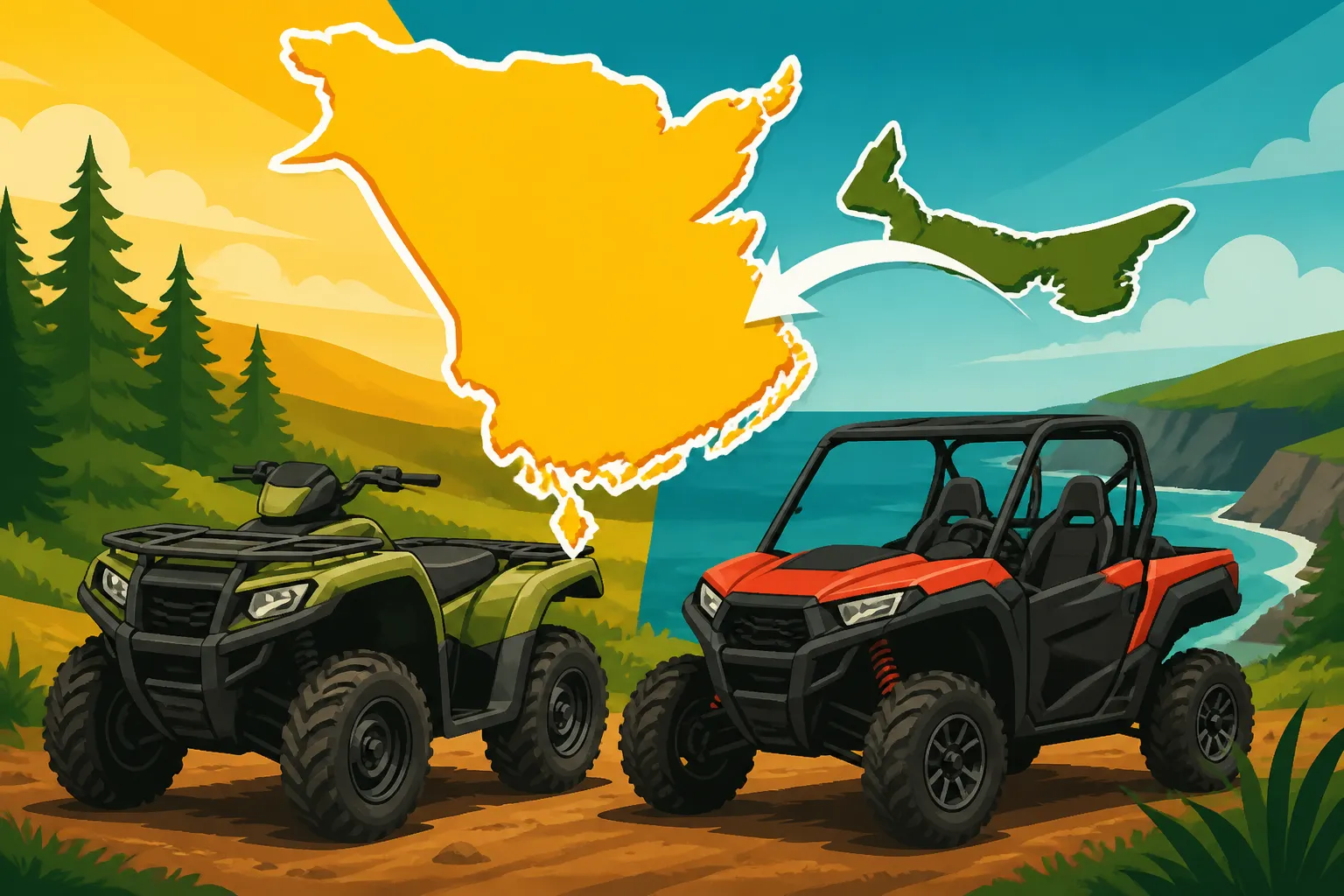
One of the first questions PEI riders often have is about their existing registration and whether they need a whole new permit for New Brunswick. Thankfully, there's some good news here. Your PEI ATV or UTV registration is generally recognized in New Brunswick, meaning you typically don't need to re-register your machine with Service New Brunswick for a temporary visit. This makes crossing the Confederation Bridge a bit simpler on the paperwork front.
However, when it comes to trail permits, things get a little more nuanced. New Brunswick's official trail network is managed by QuadNB, a federation of local clubs that maintain thousands of kilometres of trails across the province. To ride on these designated QuadNB trails, you are required to have a valid QuadNB trail permit. Now, here's where reciprocity comes into play: New Brunswick has reciprocal agreements with some other provinces, including Prince Edward Island. This means that if you have a valid PEI ATV Federation trail permit, it is generally honoured on New Brunswick's QuadNB trails. It's always a good idea to double-check the current reciprocity agreements before you travel, as these things can change. You can find up-to-date information on the QuadNB website or by contacting them directly. The goal is to ensure that your permit is recognized, allowing you access to the incredible network of trails without needing to purchase an additional New Brunswick permit. Remember, these permits contribute directly to trail maintenance, signage, and insurance, keeping the trails safe and enjoyable for everyone. For more details on the costs, you might want to read [New Brunswick Trail Permit Cost in 2026].
Essential Paperwork to Carry
Just because your PEI registration and permit might be recognized doesn't mean you can leave your documentation at home. When you're riding an ATV or UTV in New Brunswick, especially on designated trails or any public land, you absolutely must carry specific documents with you. Think of it like driving your car; you wouldn't leave home without your driver's licence and registration. The same principle applies here, but with a few extra items unique to off-road vehicles.
First and foremost, you need to carry proof of your vehicle's registration. This would be your valid PEI registration certificate. Next, and this is crucial, you must have proof of liability insurance. New Brunswick, like PEI, requires that all ATVs and UTVs operating on designated trails or public lands be insured. An officer might ask to see this at any time, and not having it can lead to significant fines. You might want to refer to [New Brunswick Requires Insurance on Trails] for more details on this. Your valid driver's licence or applicable off-road vehicle operator's permit from PEI is also mandatory. Finally, if you're relying on reciprocity for your trail access, you'll need your valid PEI ATV Federation trail permit sticker or certificate. It’s not enough to just have these documents; they must be readily accessible on your person or securely on your machine. I recommend keeping copies of everything in a waterproof bag in a secure storage compartment on your quad, in addition to carrying your wallet-sized versions on you. Having all your [New Brunswick Documents You Must Carry] in order means you can confidently enjoy your ride.
Safety First: Gear, Age, and Training for PEI Visitors
New Brunswick takes ATV and UTV safety seriously, and these rules apply equally to visiting riders as they do to residents. Don't assume that what's acceptable back home in PEI will automatically pass muster here. Understanding and complying with these safety regulations is paramount not just for avoiding fines, but for your own well-being and the safety of others on the trails.
Helmet Laws and Other Protective Gear
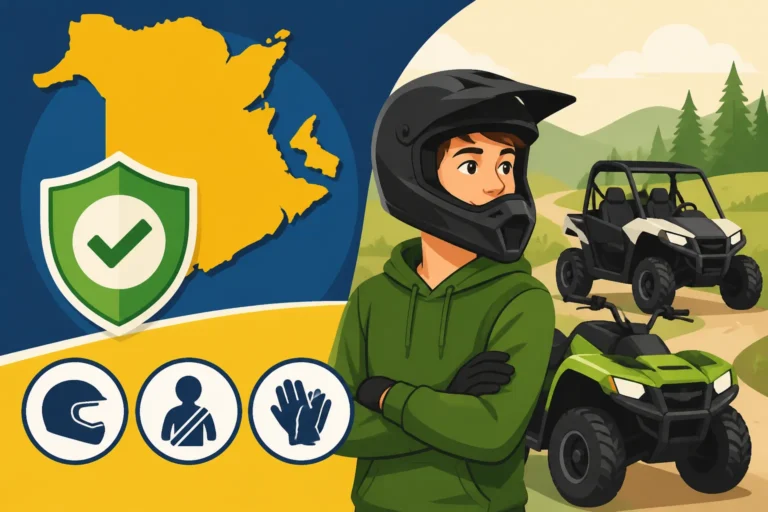
When it comes to head protection, New Brunswick's laws are clear and non-negotiable: every single person riding or being carried on an ATV or UTV in the province must wear an approved helmet. There are no exceptions for adults, experienced riders, or short trips. This isn't just a recommendation; it's a legal requirement designed to save lives and prevent serious injuries. The helmet must meet specific safety standards, which typically include certifications like CSA D230, DOT (FMVSS 218), Snell, or ANSI. Look for the sticker inside your helmet – if it has one of these certifications, you're good to go. For a deeper dive into the specifics, check out [New Brunswick ATV Helmet Law].
Beyond the helmet, while not always legally mandated, common sense and the varying terrain of New Brunswick strongly suggest additional protective gear. Think about the conditions: dust, branches, flying debris, and potential tumbles. Goggles are essential for eye protection. Sturdy, over-the-ankle boots protect your feet and ankles. Gloves can prevent blisters and offer crucial grip. Long pants and a long-sleeved shirt, preferably made from durable material, will protect you from scrapes and sun exposure. When riding, remember that visibility is key, not just for you but for other trail users. While optional, adding accessories like bright LED light bars or enhanced mirrors from a reputable brand like SuperATV can significantly improve your visibility, especially on dusty trails or during dawn/dusk rides. Being properly geared up isn't about looking the part; it's about being prepared for whatever the trail throws your way.
Age and Training Requirements for Riders
New Brunswick has specific age requirements for operating ATVs and UTVs, and these apply to visiting PEI riders just as they do to locals. Generally, you must be at least 16 years old to operate an ATV or UTV on a designated trail or off-road area. However, there are provisions for younger riders. For instance, individuals aged 14 or 15 can operate a machine if they hold a valid Class 9 Off-Road Vehicle licence and are accompanied by an adult (19+) who also holds a valid driver training certificate. Children under 14 have even stricter rules, generally restricted to closed courses under direct adult supervision and often with engine size limitations. It's vital to understand these nuances, especially if you're planning a family trip. [New Brunswick ATV Age Requirements] provides a comprehensive look at these age restrictions.
When it comes to safety training, New Brunswick's Off-Road Vehicle Act emphasizes education. While your PEI ATV safety course certificate might be recognized for the purposes of your PEI Class 9 licence (if applicable), it's always wise to be familiar with the specifics of New Brunswick's training requirements. Generally, anyone operating an ATV or UTV on public land, and certainly those aged 14-15, needs to have completed an approved safety course. If you’re planning on bringing a younger rider, it’s worth investigating whether their PEI training fulfills the New Brunswick requirements or if additional certification is needed for specific scenarios. For example, if you're bringing a 14-year-old, understanding the specifics outlined in [New Brunswick Safety Course for a 14-Year-Old] can save you a lot of grief. The emphasis is on safe, responsible riding, and that starts with proper training and understanding the rules of the road – or in this case, the rules of the trail.
Navigating New Brunswick Roads and Trails
New Brunswick boasts an incredible network of trails, but knowing where you can and cannot ride is paramount for any visitor. The rules regarding trail access, road crossings, and shared sections are designed to ensure safety and minimize conflicts with other users and traffic. As a PEI rider, you're used to your own province's unique landscape and regulations, so it's essential to reset your expectations for New Brunswick.
Where Can You Actually Ride Your ATV/UTV?
The heart of New Brunswick's ATV and UTV experience lies within the vast QuadNB network. This federation, composed of over fifty-seven clubs, maintains over 10,000 kilometres of managed trails specifically designated for off-road vehicle use. When you have your valid PEI trail permit (honoured through reciprocity), these are the trails you'll want to explore. These trails are generally well-marked, and many clubs offer maps, often through digital apps, to guide your way. You can delve deeper into the network's offerings at [New Brunswick ATV Trails: The QuadNB Network]. Riding on these trails supports the clubs that maintain them and ensures you're on legal, often insured, pathways.
Outside of the designated QuadNB trails, riding opportunities become far more restricted. Riding on private land requires explicit permission from the landowner. Trespassing is a serious offence and can lead to fines and even vehicle impoundment. There are some exceptions, such as the [New Brunswick Owner-Only Private Land Exemption], but this typically applies only to New Brunswick residents on their own property. Crown land access for ATVs and UTVs is also highly regulated and generally limited to marked roads or designated trails. It's crucial not to assume that just because a path looks like a trail, it's legal to ride. Stick to the known, marked QuadNB trails unless you have verified specific permission or designation for other areas. This often means planning your route carefully before you head out, perhaps by downloading maps or consulting with local QuadNB clubs.
Road Crossings and Shared Sections
This is perhaps one of the biggest differences many PEI riders will encounter: New Brunswick has very strict rules about ATVs and UTVs on public roads. Unlike some areas where off-road vehicles might have more permissive road access, New Brunswick's general rule is that ATVs and UTVs are not permitted to be operated on the travelled portion of a public highway. This means paved or gravel roads maintained by the province or municipalities are largely off-limits for general riding.
However, there are specific, limited exceptions. You are generally allowed to cross a public highway at a 90-degree angle, but only after coming to a complete stop and ensuring it's safe to proceed, yielding to all other traffic. This is for getting from one trail section to another, not for travelling along the road. For more details on safe crossings, refer to [New Brunswick Rules for Crossing a Highway]. Additionally, some municipal bylaws or ministerial designations might allow for specific, short sections of roads to be opened for ATV/UTV use, often to connect trail segments or provide access to services like fuel or food. These sections are typically clearly marked with signage indicating they are shared routes. Before you ride on any road section, make absolutely certain it is legally designated for ATV/UTV use. Getting a [New Brunswick Highway Usage Permits] is sometimes an option for specific, pre-approved routes, but these are not for casual touring. Speed limits apply rigorously on any shared road section, and you must always yield to conventional motor vehicles. Riding on undesignated road sections can quickly lead to a hefty fine and ruin your vacation. Many experienced riders will even invest in aftermarket mirrors, like those available from SuperATV, to ensure maximum visibility and compliance with any potential road-legal requirements on designated sections.
Avoiding Fines: Common Pitfalls for Visiting Riders
No one wants their fun trip to New Brunswick to end with a ticket or, worse, a vehicle impoundment. The enforcement of ATV and UTV regulations is active across the province, and officers are well-versed in identifying violations. Understanding what to expect and what pitfalls to avoid is key to a hassle-free visit.
Understanding New Brunswick's Enforcement
In New Brunswick, the enforcement of off-road vehicle laws falls under the jurisdiction of several authorities. The Royal Canadian Mounted Police (RCMP), local municipal police forces, and provincial conservation officers all have the authority to stop ATV and UTV riders and check for compliance. They conduct regular patrols on designated trails, forestry roads, and sometimes even in remote areas. These officers are often very knowledgeable about the Off-Road Vehicle Act and can quickly spot common infractions.
When an officer stops you, they will typically ask to see your mandatory documents: your PEI driver's licence/permit, your PEI registration certificate, proof of insurance, and your PEI ATV Federation trail permit (which, through reciprocity, acts as your New Brunswick trail permit). They'll also check your machine for basic safety equipment like proper lighting if you're riding after dark, and of course, they will verify that all occupants are wearing approved helmets. They may also check for excessive noise levels or if your machine has been modified in a way that makes it illegal for trail use. For a comprehensive list of what officers look for, you might find [New Brunswick Equipment Checks by Officers] useful. Being polite, cooperative, and having your paperwork in order goes a long way. They are there to ensure everyone's safety and the responsible use of the trails, not just to hand out tickets.
Penalties for Non-Compliance
The fines for violating New Brunswick's ATV and UTV regulations can be substantial, making it truly worthwhile to ensure you're compliant. Riding without a valid trail permit, even if you have a PEI permit that isn't recognized due to an expired reciprocity agreement, could result in a significant fine. For instance, [New Brunswick Permit Fines of $340.50] can quickly put a damper on your vacation budget. Even if you have a valid permit, not having it physically on your person or machine can lead to a ticket, so always remember to carry it.
Operating an uninsured ATV or UTV is another serious offence. The financial penalties for this can be quite steep, such as the [New Brunswick Uninsured ATV Fine of $604.50], and could even lead to your machine being impounded. This is why confirming your PEI insurance covers you for riding in New Brunswick is so critical. Helmet violations are also taken very seriously; riding without an approved helmet, or having a passenger without one, will almost certainly result in a fine. Beyond the direct financial cost, violations can also impact your driving record or future insurance rates, depending on the severity. It’s important to understand that these fines aren't just minor inconveniences; they're designed to deter unsafe and illegal riding practices. Making sure your machine is equipped correctly, perhaps with all the necessary legal accessories like proper lighting and mirrors, which you can often find from brands like SuperATV, is a small investment compared to the cost of a fine. Always err on the side of caution and ensure you're fully compliant with all New Brunswick regulations before you hit the trails.
To help you keep track of the key differences for your trip, here's a quick overview:
| Feature | What a PEI Rider Needs to Know for New Brunswick |
|---|---|
| Vehicle Registration | Your valid PEI registration is generally accepted. No NB re-registration needed. |
| Trail Permit | Your PEI ATV Federation permit is typically honoured through reciprocity on QuadNB trails. Always confirm current agreements. |
| Liability Insurance | Absolutely mandatory for riding on trails/public land. Ensure your PEI policy covers you in NB. |
| Approved Helmet | Required for ALL riders and passengers. Must meet CSA, DOT, Snell, or ANSI standards. |
| Minimum Operator Age | Generally 16+. Riders 14-15 need a Class 9 licence and an adult escort with training. |
| Road Usage | Very limited. Cross highways at 90 degrees only, after stopping. No general travel on public roads unless specifically marked. |
| Required Documents | Valid PEI Driver's Licence/Permit, PEI Registration, Proof of Insurance, PEI Trail Permit. |
| Enforcement | RCMP, local police, and conservation officers actively patrol. Expect checks. |
| Common Penalties | Fines for no permit, no insurance, no helmet, illegal road use. Can be substantial. |
Disclaimer
This article is for general informational purposes only and does not constitute professional advice. Laws, prices and regulations vary by location and change over time. Consult a qualified professional for guidance on your specific situation.