The 70cc Limit on a 6-Year-Old’s Machine
When you're a parent of a young, eager child who dreams of riding an ATV, the sheer excitement they feel is contagious. But let's be honest, that excitement often comes with a healthy dose of worry, especially when you start looking at all the rules and regulations in New Brunswick. One of the most common points of confusion and concern for parents is understanding the specific engine size limits for their little ones, particularly for those just starting out at six years old. This comprehensive guide is here to untangle the complexities of New Brunswick's rules, specifically addressing the 70cc limit for 6-year-old riders, so you can make informed decisions and ensure your child rides safely and legally.
Navigating New Brunswick's Age and Machine Size Regulations for Young Riders
The world of off-road vehicles (ORVs) in New Brunswick is incredibly popular, offering a fantastic way for families to explore our beautiful province. However, it's not a free-for-all. The government, through the Off-Road Vehicle Act, has put clear guidelines in place, particularly when it comes to youth riders. These regulations are designed to protect our youngest adventurers, acknowledging that a six-year-old simply doesn't have the same physical strength, coordination, or judgment as an adult, or even an older teenager. It's not about stifling fun; it's about ensuring safety from the very first spark of interest.
Parents often feel overwhelmed trying to decipher the various age groups and corresponding machine requirements. You might hear whispers about different cubic centimeter (cc) limits, training courses, and supervision rules, and it can quickly become a jumbled mess in your mind. The key is to break it down, starting with the youngest age group, which often presents the most specific restrictions.
The Specifics of the 6-Year-Old Rule
For a child aged 6, New Brunswick has a very particular rule in place: they are permitted to operate an ORV, but that machine must not exceed an engine displacement of 70 cubic centimetres (cc). This isn't just a suggestion; it's a hard and fast rule set in place to match the machine's power and size to the child's developmental stage. Think about it – a smaller engine means lower speeds and less aggressive acceleration, making it much easier for a young child to control. This 70cc limit is crucial because it directly impacts the forces and speeds a child can experience. An ORV within this range is typically lighter, has a lower seat height, and offers controls that are more accessible for smaller hands and feet.
Furthermore, this machine must be specifically designed by the manufacturer for riders aged 6 and older. This means it's not just about the engine size; it's also about the overall ergonomics, suspension, and safety features built into the machine. You can't just slap a smaller engine into a larger chassis and call it good. The entire package needs to be appropriate. This is also why we see features like throttle limiters on many youth models, which allow parents to further restrict the top speed as their child gains confidence and skill.
Differences from Other Age Groups
It's important to understand that the 70cc limit for six-year-olds is just one piece of a larger puzzle. As children grow, the permissible engine sizes and operating conditions change. For example, the rules for [New Brunswick Riders Aged 14 and 15] are quite different, involving larger machines and more responsibilities, including licensing requirements. A 14-year-old might be able to ride a machine up to 250cc, provided they hold a Class 9 driver's license and have completed the required safety training. This gradual increase in machine size and responsibility reflects the development of skills, judgment, and physical capabilities over time.
For children between the ages of 6 and 13, the rules generally stick to engine caps and mandatory supervision, often requiring them to ride on [New Brunswick Closed Courses for Ages 6 to 13] or under strict adult guidance in appropriate areas. There's a significant jump when a rider turns 16, as [New Brunswick's Minimum Age of 16] allows for operating full-sized machines with a valid driver's license. Understanding these distinctions helps parents plan for their child's progression in the sport, ensuring they're always on a machine that's suitable for their age and experience level.
Where These Rules Apply
A common misconception is that these rules only apply if you're riding on public trails or designated ORV parks. In New Brunswick, the Off-Road Vehicle Act generally applies to the operation of ORVs on any land that isn't primarily used for public highways, with some specific exceptions. This means that whether you're on a club trail, a managed woods road, or even private land that isn't exclusively owned and operated by your family (and even then, certain safety principles apply), these age and machine size regulations are in effect.
For instance, if you're taking your six-year-old to a friend's camp for a weekend ride, the 70cc limit still applies. It's not just about avoiding fines; it's about the safety standards the province deems necessary for young riders. There are some specific exemptions, such as those related to agricultural use or when riding exclusively on your own private land, but even in those cases, the spirit of the law around child safety should always be considered. The rules around [New Brunswick Owner-Only Private Land Exemption] are nuanced, but when it comes to young children, prioritizing an age-appropriate machine is always the wisest choice, regardless of location.
Why These Limits Exist: Prioritizing Safety for Young Riders
It might feel restrictive to have such specific rules about engine size, but these limits are not arbitrary. They are deeply rooted in child development principles, accident prevention research, and the physical realities of operating machinery. The goal isn't to discourage young people from enjoying the outdoors; it's to create an environment where they can learn and grow safely, fostering a lifelong love for off-roading rather than an early, potentially traumatic, experience.
Think of it like learning to ride a bicycle. You don't start a child on a full-sized mountain bike with complex gears and powerful disc brakes. You start them on a tricycle, then a balance bike, then a small pedal bike with training wheels, gradually increasing the complexity and speed as their skills and confidence develop. The same philosophy applies to ORVs.
Preventing Accidents and Injuries
The primary reason for the 70cc limit is straightforward: to prevent accidents and minimize the severity of injuries should an accident occur. A powerful machine can quickly get away from a child, leading to loss of control, rollovers, or collisions. A six-year-old's reaction time, hand-eye coordination, and ability to judge speed and distance are still developing. They might panic in an unexpected situation, or simply lack the physical strength to correct a skid or prevent a tip-over on an uneven trail.
Machines with larger engines are inherently heavier, faster, and require more strength to steer and stop. Imagine a child trying to emergency brake a 250cc machine. It’s a completely different task than bringing a smaller, lighter 70cc quad to a stop. Even a minor fall from a higher, faster machine can result in more serious injuries. The 70cc limit is a proactive measure, acknowledging the inherent risks of ORV riding and mitigating them significantly for our youngest participants.
Developmental Readiness of Young Children
Beyond just physical strength, there's the critical aspect of cognitive and emotional development. A six-year-old is still learning cause and effect, understanding consequences, and developing spatial awareness. They might not fully grasp the dangers of loose gravel, unexpected bumps, or the presence of other riders or wildlife on the trail. Their attention span might also be shorter, making it harder to maintain focus for extended periods, especially when facing new challenges.
The 70cc machine, with its more manageable speed and simpler controls, allows a child to focus on fundamental skills: steering, braking, and throttle control. It reduces the cognitive load, preventing them from being overwhelmed. This measured approach ensures that they build a strong foundation of skills and confidence before moving on to more challenging machines. It's about setting them up for success, not for struggle. Many youth-specific accessories, even from brands like SuperATV, focus on making the riding experience safer and more comfortable for developing riders, from specialized footrests to grab handles.
Manufacturer Guidelines and Recommendations
It's not just the government of New Brunswick setting these rules; reputable ORV manufacturers also adhere to strict age recommendations for their youth models. They design specific lines of ATVs and UTVs with features tailored for different age groups, often mirroring or even exceeding the regulatory requirements. These manufacturers invest heavily in research and development to understand the ergonomics, power delivery, and safety features most appropriate for young riders.
When you see a youth ATV advertised as "ages 6 and up," it means the manufacturer has designed that machine with the physical and developmental capabilities of a six-year-old in mind. This includes everything from the seat-to-pedal distance, handlebar reach, engine characteristics, and suspension tuning. Ignoring these guidelines, whether from the government or the manufacturer, not only puts your child at risk but can also void warranties and complicate insurance claims. Always check the manufacturer's recommendations printed directly on the machine or in the owner's manual – they're there for a reason.
Choosing the Right ATV for a 6-Year-Old
So, you're convinced about the 70cc limit and the importance of safety. Now comes the exciting part: choosing the right machine for your child. This isn't just about finding something that fits the engine cap; it's about selecting an ORV that provides the best learning experience, fits your child's individual build, and has the right safety features. It's an investment in their enjoyment and skill development.
Walking into a dealership, you'll see a range of youth models. It can be tempting to buy something "they'll grow into," but resist that urge. An oversized or overpowered machine is a recipe for trouble and can quickly turn a fun activity into a source of frustration or even injury.
Key Features to Look For
When you're looking for that perfect 70cc machine, there are several key features that can make a big difference in a young rider's experience and safety:
- Automatic Transmission: This is almost universal on youth ATVs and is non-negotiable for beginners. Shifting gears is a distraction that a six-year-old simply doesn't need when they're trying to master steering, throttle, and braking. An automatic transmission allows them to focus solely on riding.
- Throttle Limiter: Many youth ATVs come with an adjustable throttle limiter. This is a fantastic safety feature that allows you, the parent, to restrict the maximum speed of the machine. As your child gains confidence and skill, you can gradually increase the throttle as appropriate, giving them more power only when they're ready for it.
- Remote Shut-Off or Tether: Some advanced youth models offer a remote shut-off control or a safety tether. A remote allows you to instantly kill the engine from a distance if your child gets into trouble or loses control. A tether performs a similar function if the child falls off the machine. While not always standard on every 70cc model, these are excellent additions to consider for added peace of mind.
- Full Floorboards: Look for machines with full floorboards rather than footpegs. This provides a more secure and stable platform for their feet, preventing them from slipping off or getting caught in the tires.
- Ergonomics: Ensure the handlebars are within easy reach and the brake levers can be comfortably operated by small hands. Some models even have adjustable components to grow with the child, though this is less common on the smallest machines.
Sizing the Machine to the Rider
This is perhaps the most critical aspect after engine size. A child must be able to comfortably reach and operate all controls. They should be able to sit on the machine with both feet flat on the ground, or at least be able to touch the ground with the balls of their feet. This allows them to maintain balance and provides a stable base when stopping or maneuvering at low speeds.
To check for proper fit:
- Seat Height: Have your child sit on the machine. Can their feet touch the ground? If not, the machine is too tall.
- Handlebar Reach: Can they comfortably grip the handlebars without stretching or leaning too far forward? Their arms should have a slight bend at the elbows.
- Brake Levers: Can their fingers easily reach and squeeze the brake levers? Some youth models have adjustable levers, which is a bonus.
- Foot Position: Are their feet securely on the floorboards or footpegs?
Remember, a machine that is too large or too small will hinder their ability to learn and control the ATV effectively, increasing the risk of an accident. Even if the engine is the right size, an ill-fitting machine is a dangerous machine for a young rider.
New vs. Used Machines for Youth
Both new and used ATVs have their pros and cons for a 6-year-old's first machine.
New Machines:
- Pros: Come with warranties, the latest safety features, and a guarantee of being in top mechanical condition. You know its history. You might find models from popular brands like Polaris, Can-Am, or Yamaha specifically designed for youth.
- Cons: Higher initial cost. Children grow quickly, so you might be upgrading in a few years.
Used Machines:
- Pros: Significantly lower cost, which can be appealing for a machine your child will outgrow. You might find a great deal on a well-maintained entry-level machine.
- Cons: No warranty, and you need to be very diligent about inspecting its mechanical condition. Always check the brakes, tires, suspension, and engine for any signs of wear, damage, or neglect. Ask for service records. Consider getting a pre-purchase inspection from a qualified mechanic, especially if you're not mechanically inclined yourself. You also need to ensure it still meets the 70cc limit and all other New Brunswick regulations for youth. A thorough inspection is paramount, perhaps even asking about the history of any aftermarket parts – while SuperATV makes fantastic components for larger machines, ensure any modifications on a used youth machine don't compromise safety or regulatory compliance.
Regardless of whether you buy new or used, always ensure the machine is properly registered in New Brunswick. The process of [Registering an ATV With Service New Brunswick] is straightforward, but it's a legal requirement before your child hits any trail.
The Importance of Safety Training and Supervision
Having the right machine is only part of the equation. For a six-year-old, proper safety training and constant, vigilant supervision are absolutely non-negotiable. New Brunswick takes the safety of young riders very seriously, and the regulations reflect this by mandating certain courses and supervision requirements. This isn't about making it difficult; it's about instilling good habits and ensuring parents are equipped to guide their children responsibly.
Think of it as laying the groundwork for safe riding habits that will last a lifetime. Just like you wouldn't send a child to learn to swim without an instructor and a lifeguard, you shouldn't put them on an ORV without proper guidance.
Mandatory Safety Courses
In New Brunswick, any ORV operator under the age of 16 is required to hold a valid Off-Road Vehicle Driver Training Certificate. This directly impacts your six-year-old. While they may be excited to ride, this course is a critical step before they hit the trails. The [New Brunswick Safety Course Explained] covers essential topics like safe operating procedures, trail etiquette, understanding regulations, and basic machine maintenance. It's designed to provide young riders with the foundational knowledge and skills they need to operate an ORV responsibly.
For the youngest riders, these courses are often structured to be age-appropriate, focusing on practical skills and basic understanding rather than complex theory. It's not just the child who benefits; parents also gain valuable insights into how to properly supervise and mentor their young rider. In fact, for younger children, often a parent or guardian is required to attend alongside them, sometimes even taking the course themselves to understand what their child is learning. There might even be rebates available for youth safety courses, making them more accessible for families.
Parental/Guardian Supervision Requirements
For riders under the age of 16, New Brunswick law dictates specific supervision requirements. While the exact details can vary slightly by age group, for a six-year-old operating a 70cc machine, direct and close supervision by a qualified adult is absolutely essential. This isn't just about having an adult somewhere in the vicinity; it means the supervising adult must be capable of providing immediate assistance and intervention if needed.
The supervising adult must also understand the rules and be prepared to enforce them. They should be able to ride an ORV themselves, or at least be familiar enough with the operation to guide and correct the child. This constant, active supervision helps reinforce the lessons learned in the safety course and ensures the child is always operating the machine within their capabilities and the safety limits of the environment. Imagine a scenario where a child encounters an unexpected obstacle or loses balance; the supervising adult must be close enough to react immediately.
Riding on Closed Courses vs. Trails
For children aged 6 to 13, New Brunswick law often specifies that they must ride on [New Brunswick Closed Courses for Ages 6 to 13] or approved designated areas. These closed courses are designed environments with controlled conditions, free from public traffic, pedestrians, or complex trail hazards. They provide a safe space for young riders to practice and develop their skills without the added pressures of shared trails.
While some more experienced young riders (especially those closer to 13) might be permitted on certain club trails under strict supervision and with a valid trail permit, for a six-year-old, the focus should almost exclusively be on closed, controlled environments. This allows them to build fundamental skills like starting, stopping, turning, and maintaining balance without the added variables of varied terrain, other vehicles, or unexpected obstacles found on open trails. Always check local bylaws and trail rules, as specific clubs or municipalities might have additional restrictions on youth riders.
Penalties and Consequences of Non-Compliance
It's easy to think of these rules as guidelines, but they are, in fact, laws. Ignoring New Brunswick's regulations for youth ORV operation carries real, tangible consequences, not just in terms of fines but, more importantly, in terms of safety. Nobody wants to see their child hurt, or to face legal repercussions, simply because they weren't aware of or chose to disregard the rules.
Understanding the potential penalties isn't about fear-mongering; it's about being fully informed and making responsible choices. The system is designed to deter unsafe practices and ensure compliance with measures designed for protection.
Fines for Violating Age/Size Rules
Operating an ORV that exceeds the engine displacement limits for a child's age group, or allowing a child to ride without the required safety training certificate or supervision, can result in significant fines. These fines are often "set fines," meaning there's a predetermined amount for specific infractions. For example, [New Brunswick Penalties for No Safety Course] can be substantial, and these apply to youth riders who haven't completed the necessary training.
An officer encountering a six-year-old on a machine larger than 70cc, or riding without the appropriate certificate or supervision, could issue a ticket to the supervising adult or parent. These fines are not trivial and are designed to act as a deterrent. Beyond the immediate financial hit, receiving such a ticket means a documented infraction, which could have other implications. It's a clear signal from the province that these rules are serious and not to be ignored.
Insurance Implications
One often-overlooked consequence of non-compliance is the impact on your insurance coverage. Most ORV insurance policies have clauses that require operators to adhere to all provincial laws and regulations. If your child is involved in an accident while operating a machine that is not age-appropriate, or if they lack the mandatory safety training certificate, your insurance provider could deny coverage.
Imagine the scenario: your child is on an 80cc machine, just slightly over the 70cc limit, and has a minor accident. If the insurance company investigates and finds they were operating a machine not permitted for their age under New Brunswick law, you could be left to pay for damages to the machine, medical expenses, or even liability claims out of pocket. [New Brunswick Requires Insurance on Trails] for most ORVs, and this insurance is a safety net you don't want to compromise by failing to follow regulations. Always check your policy's terms and conditions regarding youth riders and compliance with provincial laws.
The Risk to Your Child's Safety
While fines and insurance issues are concerning, the most profound consequence of non-compliance is the increased risk to your child's safety and well-being. The 70cc limit and associated rules are in place precisely because research and experience have shown that larger, more powerful machines are significantly more dangerous for young, developing riders.
An injury to your child is far more devastating than any financial penalty. Beyond physical injuries, an accident can also have lasting psychological impacts, potentially instilling a fear of riding or even a general aversion to outdoor activities. Our aim as parents and enthusiasts is to foster a safe, positive introduction to the world of ORV riding. Adhering to the regulations is not just about avoiding trouble; it's about protecting your child and ensuring their riding journey is enjoyable, safe, and sustainable for years to come.
Beyond the 70cc Limit: What Comes Next
Riding an ORV is a journey, not a destination, especially for young people. The 70cc machine is a fantastic starting point, a safe stepping stone into the world of off-roading. But children grow, their skills develop, and their confidence soars. Understanding the progression of machine sizes and rules is crucial for keeping them challenged safely and legally. This foresight allows you to plan effectively for future upgrades and continued skill development.
As they master the basics on their 70cc quad, they'll naturally start looking ahead to what's next. This is where New Brunswick's tiered system for youth riders truly comes into play, guiding them through a structured and safe progression.
The 90cc Step Up at Age 12
Once your child reaches the age of 12, they become eligible to operate an ORV with a slightly larger engine displacement, specifically up to 90cc. This is a natural progression from the 70cc limit and acknowledges their increased physical size, strength, and improved coordination. The [The 90cc Step Up at Age 12] still places them firmly in the "youth" category, but it offers a bit more power and capability, allowing them to tackle slightly more challenging terrain or maintain speed a little better on longer rides.
However, it's not simply a matter of turning 12 and hopping on a 90cc machine. All the other rules regarding safety training and supervision still apply. They will still need their ORV Driver Training Certificate, and they will still require competent adult supervision. It's a gradual increase in machine capability, matched with a gradual increase in rider maturity and skill. Many parents choose to transition to a 90cc machine around this age, often looking for models that retain youth-friendly features like automatic transmissions and throttle limiters, perhaps with a bit more suspension travel for a smoother ride.
Graduating to Larger Machines and Trails
As your child continues to grow and gain experience, reaching ages 14 and 15 marks another significant milestone. At this stage, with the appropriate Class 9 driver's license and continued safety training, they can operate machines up to 250cc. This is a substantial leap from the 90cc limit and opens up a wider range of ORV options and trail opportunities. It means they're getting closer to operating full-sized machines, building skills that will directly translate to adult riding.
When they hit 16, and obtain a full driver's license, they can then operate any size ORV, subject to specific ORV registration and insurance requirements. This full transition means they are ready for the more robust and powerful machines from manufacturers like Polaris or Can-Am, and can confidently explore the extensive network of [New Brunswick ATV Trails: The QuadNB Network]. This progression ensures that by the time they are operating larger machines, they have years of accumulated experience and a solid understanding of safe riding practices. Consider accessories from SuperATV as they graduate to larger machines, as they offer a wide range of products for enhancing performance and utility.
Ongoing Education and Skill Development
The journey of an ORV rider doesn't stop once they've taken the mandatory safety course or reached a certain age. The best riders are always learning and refining their skills. Encouraging ongoing education and skill development is key to fostering a safe and enjoyable lifelong passion for off-roading. This can involve:
- Refresher Courses: Even adults benefit from refresher safety courses, especially if they haven't ridden in a while or are transitioning to a new type of machine.
- Advanced Riding Clinics: Some clubs or organizations offer advanced riding clinics that focus on specific skills like tackling challenging terrain, recovery techniques, or group riding etiquette.
- Mentorship: Experienced riders can be invaluable mentors, sharing their knowledge and tips with younger, less experienced riders. This informal learning can be just as important as formal training.
- Staying Informed: Laws and regulations can change. Staying up-to-date with New Brunswick's ORV Act, trail rules, and safety recommendations is always a good practice.
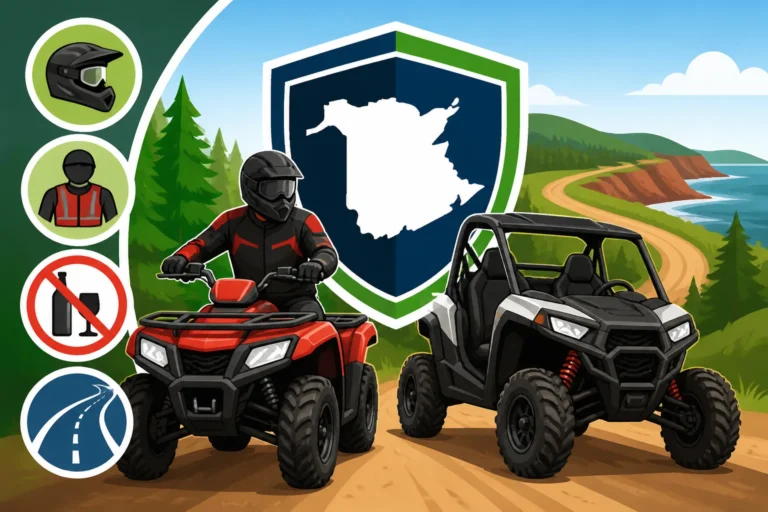
- Proper Gear: Always reinforce the importance of wearing appropriate safety gear, including a properly fitted helmet (meeting standards like CSA D230 or FMVSS 218), eye protection, gloves, long pants, a long-sleeved shirt, and sturdy over-the-ankle boots. [New Brunswick Helmet Law for Every Occupant] makes this a legal requirement for everyone, regardless of age.
By embracing this continuous learning mindset, you ensure that your child, from their first ride on a 70cc machine, develops into a responsible, skilled, and safe ORV enthusiast who respects the machines, the trails, and their fellow riders.
| Age Group (Years) | Max Engine Size (cc) | Required License/Certificate | Supervision Required | Primary Riding Environment |
|---|---|---|---|---|
| 6 – 11 | 70 | ORV Driver Training Cert. | Yes, direct & close | Closed course/Designated |
| 12 – 13 | 90 | ORV Driver Training Cert. | Yes, direct & close | Closed course/Designated |
| 14 – 15 | 250 | Class 9 Driver's Licence | Yes, by qualified adult | Approved trails/areas |
| 16+ | Unrestricted | Full Driver's Licence | No | Approved trails/roads |
This table provides a simplified overview. Always consult the official New Brunswick Off-Road Vehicle Act for precise and current details, as specific conditions and exceptions may apply.
Disclaimer
This article is for general informational purposes only and does not constitute professional advice. Laws, prices and regulations vary by location and change over time. Consult a qualified professional for guidance on your specific situation.