New Brunswick Rules for a Visiting Maine Rider
Heading out for an ATV or side-by-side adventure in New Brunswick when you're visiting from Maine can feel a bit like trying to navigate a new forest trail without a map. You're eager for the incredible scenery and extensive trail systems, but the last thing you want is a run-in with local regulations because you weren't quite sure how things work across the border. This guide is here to untangle the specific rules and requirements you need to know as a visiting Maine rider, ensuring your trip is filled with fantastic memories, not unexpected fines.
Understanding New Brunswick's Off-Road Vehicle Laws for Visitors
It’s easy to assume that rules for off-road vehicles (ORVs) are pretty standard across North America, but that's rarely the case. Each province and state has its own nuances, and New Brunswick is no exception. As a visitor from Maine, you're not just bringing your machine; you're bringing your home state's assumptions about how you can ride it. The key is to understand where New Brunswick's laws align with, and diverge from, what you're used to back home. This isn't about complexity; it's about being informed to make your trip smooth and enjoyable. Think of it as knowing the local dialect of the trails.
New Brunswick's Reciprocity Agreements for Out-of-Province Riders
Good news first! New Brunswick generally has agreements with certain jurisdictions that make it easier for visiting riders. For our friends from Maine, you'll be glad to hear that New Brunswick has a long-standing agreement that recognizes Maine's ORV registrations and trail passes. This means you don't typically need to re-register your machine with Service New Brunswick for your visit. It’s a huge relief, isn't it? Just make sure your registration and any applicable trail passes from Maine are current and easily accessible.
However, while your Maine registration is recognized, there are specific trail permits unique to New Brunswick that you will need if you plan to ride on the managed club trail system. The provincial government works closely with QuadNB, the New Brunswick All-Terrain Vehicle Federation, to maintain thousands of kilometres of incredible trails. These trails are funded through rider permits, and as a guest, you'll be expected to contribute to their upkeep. It’s a small price to pay for access to some truly breathtaking riding opportunities, and many riders choose to upgrade their machines with durable components, perhaps from a brand like SuperATV, to tackle the diverse terrain here.
Obtaining a New Brunswick Trail Permit for Your Trip
Even with your Maine registration recognized, accessing New Brunswick's extensive network of managed ATV trails requires a New Brunswick Trail Permit. These permits come in different forms: annual, weekly, and daily. Which one you choose depends entirely on the length and frequency of your planned visits. If you're just popping over for a long weekend ride, a day or week permit might be perfect. However, if you envision multiple trips throughout the year to explore different regions like Miramichi or the Skedaddle Ridge trails, an annual permit could be more cost-effective.
You can purchase these permits at various locations, including many Service New Brunswick centres, participating ATV dealerships, and even directly from some QuadNB member clubs. It’s always a good idea to sort this out before you hit the trails, as an officer can ask to see it, and fines for riding without a permit can quickly sour your adventure. Make sure the sticker is placed correctly on your machine, usually on the left-hand side, visible to enforcement. Getting this sorted beforehand allows you to focus purely on the ride and the stunning New Brunswick landscapes. [New Brunswick Trail Permit Cost in 2026] is a good resource to check current pricing.
Duration of Your Visit and Permit Needs
The duration of your stay directly influences the type of New Brunswick trail permit you should acquire. For short excursions, a day or week permit offers flexibility. These are perfect for weekend warriors or those just dipping their toes into what New Brunswick has to offer. A daily permit is extremely affordable if you only plan one day of riding, while a weekly permit gives you seven consecutive days of access, which is ideal for a dedicated riding vacation.
If you foresee yourself making repeated trips across the border throughout the year, an annual permit provides the best value and convenience. It covers you from January 1st to December 31st, regardless of how many times you visit. Just remember that even with an annual permit, you still need to adhere to all New Brunswick ORV laws, just like local riders. It's about respecting the system that provides these fantastic trails for everyone to enjoy.
Insurance Requirements for Visiting Maine Riders
Just like back home, insurance is a critical component of responsible ORV operation in New Brunswick. However, the specifics can differ, and it's essential to ensure your Maine policy covers you adequately while riding in another jurisdiction. Many riders are surprised by the minimums required, so it’s always best to be prepared rather than finding out the hard way.
Proof of Valid Insurance from Maine
New Brunswick law requires that all ORVs operated on managed trails or any public land carry proof of valid liability insurance. As a Maine rider, your primary concern will be confirming that your existing insurance policy extends its coverage to New Brunswick. Most reputable insurance providers offer policies that include coverage for out-of-province or out-of-state travel, but it's not something to assume. A quick call to your insurance agent before your trip is a must-do.
Your agent can confirm the geographical limits of your policy and, if necessary, arrange for a temporary extension or rider to ensure you're fully covered. You'll need to carry proof of this insurance with you at all times when riding, just as you would your registration and trail permit. Think of it as your passport for responsible riding; without it, you could face significant fines or even have your machine impounded in the event of an incident. [New Brunswick Insurance Requirements for Riders] provides more general details on this topic.
Minimum Coverage Expectations in New Brunswick
While your Maine policy might be recognized, it’s worth understanding New Brunswick’s minimum liability coverage expectations. The Off-Road Vehicle Act in New Brunswick mandates that all ORVs operated on designated trails or public lands carry at least $200,000 in third-party liability insurance. This isn't just a suggestion; it's law. If your Maine policy offers less than this amount for out-of-state incidents, you might want to consider increasing it, even temporarily, for your New Brunswick adventure.
This liability coverage protects you in case you are found at fault for an accident that causes injury to another person or damage to their property. Without adequate coverage, you could be personally responsible for significant financial costs, which can quickly turn a fun trip into a nightmare. It’s always better to be over-insured than under-insured, especially when riding in unfamiliar territory.
Understanding New Brunswick's Mandatory Insurance Law
The mandatory insurance law in New Brunswick is designed to protect all trail users. It ensures that if an accident occurs, there’s a mechanism to cover damages and injuries. For visitors, this means that while your Maine-issued policy is generally accepted, it must meet the spirit and letter of New Brunswick's requirements. This isn't about provincial protectionism; it's about a consistent standard of safety and accountability across the entire trail network.
Officers checking for compliance often look for a physical or digital copy of your insurance certificate. This certificate should clearly state the coverage amount and the period of validity. Failure to produce proof of insurance when requested can lead to significant fines, as can operating an uninsured machine. So, keep it handy, perhaps laminated or in a waterproof pouch, right alongside your registration and trail permit. It's one of the [New Brunswick Documents You Must Carry] whenever you're out riding.
Navigating New Brunswick's Riding Rules and Regulations
Once your machine is properly permitted and insured, understanding New Brunswick's specific riding rules is the next crucial step. While many general safety practices are universal, there are particular laws regarding helmets, age, road crossings, and conduct that differ from Maine. These rules are in place for your safety and the safety of everyone else sharing the trails.
Helmet Laws and Accepted Standards
New Brunswick has a strict helmet law: every person operating or riding as a passenger on an ORV must wear an approved helmet. This isn't optional, regardless of your age or experience level. The helmet must be securely fastened with a chin strap and meet specific safety standards. Accepted standards include those certified by the Canadian Standards Association (CSA), the U.S. Federal Motor Vehicle Safety Standard (FMVSS) 218 (which covers DOT approval), or the Snell Memorial Foundation (Snell). Your helmet from Maine, if DOT or Snell approved, will be perfectly fine here.
Make sure your helmet is in good condition, fits properly, and is clearly marked with the appropriate certification. Riding without an approved helmet, or with one that is not properly fastened, can result in substantial fines for both the operator and any passengers. It's a non-negotiable safety measure designed to protect you in case of an unforeseen spill on the trail. [New Brunswick ATV Helmet Law] emphasizes the importance of this regulation.
Age and Licence Requirements for Riders
The age and licensing requirements in New Brunswick for ORV operators might differ from what you're used to in Maine. In New Brunswick, generally, riders must be at least 16 years old to operate an ORV on a highway or managed trail and hold a valid driver's licence (any class). However, there are provisions for younger riders. Those aged 14 and 15 can operate an ORV if they possess a valid Class 9 driver's licence and a driver training certificate, and are under the direct supervision of an adult who also holds a valid driver's licence and training certificate.
Children aged 6 to 13 may only operate an ORV on a closed course that is not a public highway or managed trail, and the machine must be appropriately sized (e.g., 70cc limit for 6-11 year olds, 90cc for 12-13 year olds). They also need to be accompanied by an adult. For visiting Maine families, this means carefully checking the ages of your young riders and ensuring they meet New Brunswick's specific requirements before they hit any trails. It’s not enough to meet Maine's rules; you must meet New Brunswick's while you are here.
Road Usage and Crossing Rules
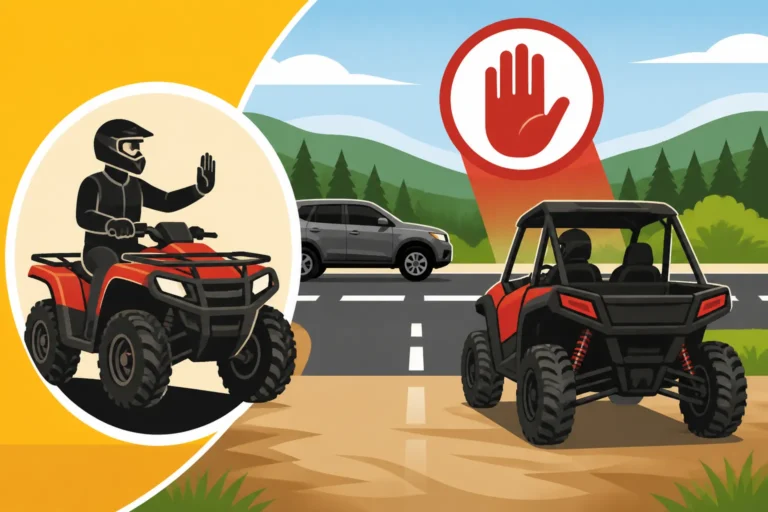
Riding an ATV or UTV on a public road in New Brunswick is generally restricted, much like in many parts of Maine, but there are specific allowances and strict rules for crossing. You cannot simply ride your ORV down a highway to get from one trail section to another, unless it's a designated shared highway section, which will be clearly marked, or you possess a special permit. However, crossing a highway is permitted under very specific conditions.
When crossing a public road:
- You must come to a complete stop before entering the roadway.
- Yield to all oncoming traffic.
- Cross at a 90-degree angle to the road.
- Proceed directly across to the opposite side without travelling along the highway.
- You cannot cross sections of the Trans-Canada Highway or controlled-access highways.
- Riders under 16 years of age are not permitted to cross any public roads.
It's also important to note the "7.5 metre rule," which dictates that ORVs must be operated at least 7.5 metres from the travelled portion of any public highway unless crossing. These rules are strictly enforced, and fines for infractions can be significant. [New Brunswick Rules for Crossing a Highway] provides more details on this.
Yielding and Hand Signals on the Trail
Trail etiquette and safety are paramount in New Brunswick, especially on shared-use trails. Just like on any road, proper signaling and yielding are crucial to prevent accidents. When you encounter another ORV or pedestrian on the trail, it's expected that you will slow down, give them space, and, if necessary, yield the right-of-way. Uphill riders often have the right-of-way, but common courtesy dictates that the machine best able to stop safely should do so.
New Brunswick's Off-Road Vehicle Act also specifies certain hand signals that operators should use, particularly if their machine isn't equipped with turn signals or brake lights, or if visibility is poor. These signals communicate your intentions (stopping, turning, slowing) to other trail users. Familiarizing yourself with these standard signals, even if your machine has lights, is a good practice for everyone's safety. Products like robust mirrors from SuperATV can also significantly improve your situational awareness on busy trails, helping you spot other riders more easily.
What Documents and Gear You Must Carry
Being prepared isn't just about having the right machine; it's about having the right paperwork and safety gear. For a visiting Maine rider, this means making sure you have all the necessary documents easily accessible and that your personal equipment meets New Brunswick's safety standards.
Your Essential Documents Checklist
When you're out riding in New Brunswick, there are several key documents you must have on your person or securely stored on your machine. Think of these as your trail credentials. An officer can request to see any of these at any time, so having them organized and accessible is not just good practice, it's mandatory.
Here’s a quick checklist for Maine riders:
- Your valid Maine driver's licence: This proves you are authorized to operate an ORV.
- Your Maine ORV registration certificate: This shows your machine is legally registered in your home state.
- Proof of valid insurance: Confirming you meet New Brunswick's minimum liability coverage.
- Your New Brunswick Trail Permit: The physical sticker on your machine, and ideally a copy of the receipt.
- Any required safety course certificates: For younger riders, or if applicable based on the rules.
It’s a good idea to keep these documents in a waterproof bag or container, perhaps in a saddlebag or a secure compartment on your machine, to protect them from the elements. [New Brunswick Documents You Must Carry] elaborates on the importance of these papers.
Machine-Specific Safety Gear and Equipment
Beyond your personal helmet, your ORV itself might need certain safety equipment to comply with New Brunswick law. While many modern machines come factory-equipped with essential items, it’s worth double-checking, especially if you have an older model or one you've extensively customized.
Mandatory equipment generally includes:
- Headlights and taillights: Required if operating between sunset and sunrise, or during periods of reduced visibility.
- Brakes: A fully functional braking system.
- Muffler: An exhaust system that is in good working order and meets noise emission standards. Tampering with mufflers to make them excessively loud is illegal.
- Spark arrester: To prevent wildfires, especially crucial in forested areas.
- Rear-view mirror: For better visibility of what's behind you.
Many riders also opt for additional safety gear like a winch, a first-aid kit, a small tool kit, and a tow strap, particularly if venturing into remote areas. For instance, upgrading with heavy-duty skid plates or A-arm guards from SuperATV can offer crucial protection against New Brunswick's rocky and sometimes unforgiving terrain.
Emergency Preparedness for Remote Rides
New Brunswick boasts vast, often remote wilderness areas that offer incredible riding experiences, but they also demand a higher level of preparedness. Cell service can be spotty or non-existent in many parts of the province's interior, so relying solely on your phone for emergencies is a gamble.
Consider carrying a satellite communication device (like a Garmin InReach or a Spot device) for true peace of mind. These devices allow you to send SOS signals and messages even when out of cell range. Beyond communication, pack essentials like extra water, high-energy snacks, a map (physical and/or downloaded offline maps on a GPS device), a compass, a knife, a fire starter, and appropriate clothing layers for changing weather conditions. A basic survival kit might seem like overkill for a day trip, but it can be a lifesaver if you encounter an unexpected breakdown or get turned around on a remote trail. Always let someone know your planned route and estimated return time, especially when venturing into less-travelled regions.
| Document / Item | Required for Maine Riders in NB? | Notes |
|---|---|---|
| Maine Driver's Licence | Yes | Must be valid. |
| Maine ORV Registration | Yes | Must be current. New Brunswick recognizes valid Maine registrations. |
| New Brunswick Trail Permit | Yes (for managed trails) | Day, Week, or Annual permit required for QuadNB trails. Place sticker on machine's left side. |
| Proof of Insurance | Yes | Must meet NB's minimum $200,000 third-party liability coverage. Call your Maine insurer to confirm coverage extends to NB. |
| Approved Helmet | Yes | Required for operator and all passengers. Must meet CSA, DOT (FMVSS 218), or Snell standards. |
| Safety Course Certificate | Yes (for specific ages/licences) | Required for 14-15 year olds with Class 9 licence and their adult escorts. |
| Headlights & Taillights | Yes (dusk/dawn/poor visibility) | Ensure all lights are functional for low-light conditions. |
| Muffler & Spark Arrester | Yes | Must be in good working order and meet noise/fire prevention standards. |
| Rear-view Mirror | Yes | For improved situational awareness on trails. |
Disclaimer
This article is for general informational purposes only and does not constitute professional advice. Laws, prices and regulations vary by location and change over time. Consult a qualified professional for guidance on your specific situation.