New Brunswick Rules for a 14-Year-Old Rider
It's incredibly exciting when a young rider turns 14 and wants to experience the freedom and adventure of ATV or UTV riding in New Brunswick. Many parents and teens feel a mix of anticipation and confusion about what exactly the rules are for this age group, fearing they might unknowingly break a law or compromise safety. This comprehensive guide is here to clear up that confusion, laying out all the specific regulations, requirements, and responsibilities for 14-year-old off-road vehicle operators in our beautiful province.
Understanding the Minimum Age and Machine Rules
For many, the first question is always, "Can my 14-year-old even ride an ATV or UTV?" The answer in New Brunswick is a conditional yes, but it comes with very specific guidelines regarding the operator's age, the machine they're riding, and the critical need for adult supervision. It's not a free-for-all, and understanding these initial restrictions is key to a safe and legal riding experience.
Age-Specific Machine Restrictions
New Brunswick's Off-Road Vehicle Act is pretty clear: a person under the age of 16 cannot operate an off-road vehicle unless they meet certain criteria, and that includes specific rules around engine size for younger riders. For a 14-year-old, the general restrictions on engine size that apply to even younger children (like the 70cc limit for 6-year-olds or 90cc for 12-year-olds) are usually lifted, meaning they can operate most machines that are sized appropriately for them. However, "appropriately sized" is a crucial phrase. It means the machine must fit the rider's physical capabilities, allowing them to comfortably reach and operate all controls, and safely manage the vehicle's weight and power. This isn't just about the law; it's about common sense and safety on the trail. A 14-year-old, even a tall one, might not be ready for the most powerful utility-class side-by-side or a massive sport quad.
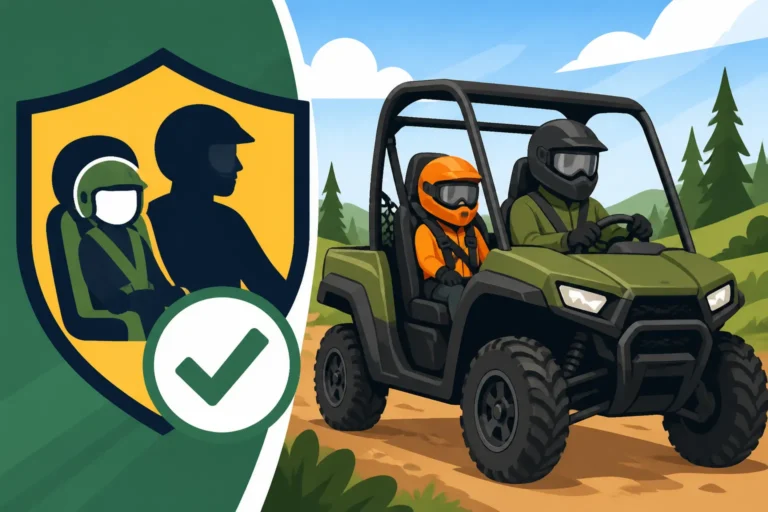
It's important to differentiate between ATVs and UTVs (side-by-sides) here. While a 14-year-old can technically operate either, the passenger rules are different. For a traditional ATV, the law generally dictates that it's a single-rider machine unless specifically designed by the manufacturer for a passenger, and even then, there are age restrictions for passengers. With a UTV, which often has multiple seats, a 14-year-old driver would still be bound by rules about who can be a passenger and under what conditions. Always check the machine's manufacturer specifications and the specific New Brunswick regulations to ensure compliance, especially when considering a machine with a powerful engine that might be beyond a young rider's current skill level. You want to make sure the machine is well-maintained, and perhaps outfitted with reliable safety accessories. Aftermarket parts from companies like SuperATV can often enhance a vehicle's durability and rider protection, making it safer for young operators.
Mandatory Adult Supervision
This is perhaps the most critical rule for any 14-year-old rider in New Brunswick: they cannot operate an off-road vehicle without being accompanied by and under the direct supervision of an adult who is at least 19 years of age. This isn't just about having an adult somewhere in the vicinity; the supervisor must be present and capable of intervening if needed. Think of it as a mentor-student relationship on the trail. The adult supervisor also has responsibilities, not least of which is ensuring the young rider understands and adheres to all rules, operates the machine safely, and wears the appropriate gear. It's a significant commitment for the adult, as they are ultimately responsible for the minor's actions on the trail.
The adult supervising the 14-year-old must also hold a valid off-road vehicle safety training certificate themselves. This ensures that the supervisor is knowledgeable about safe operating practices and the Off-Road Vehicle Act. This isn't just a recommendation; it's a legal requirement designed to ensure that the supervising adult is truly qualified to guide a young rider. So, if you're an adult planning to take your 14-year-old out, make sure your own safety training certificate is up-to-date. Without proper supervision by a qualified adult, a 14-year-old operating an ORV is riding illegally, which could lead to significant penalties for both the young rider and the responsible adult. For more details on adult responsibilities, see [New Brunswick Adults Escorting Young Riders].
Licensing, Safety Training, and Certification for Young Riders
Beyond just age and supervision, New Brunswick has specific requirements for formal training and certification for young riders. This isn't about hindering fun; it's about instilling proper safety habits and ensuring every rider, especially those just starting out, has the knowledge to navigate trails responsibly.
The Class 9 Licence Explained
For 14- and 15-year-old riders in New Brunswick, obtaining a Class 9 (Off-Road Vehicle) licence is a mandatory step. This isn't a full driver's licence like you'd get for a car; it's specific to off-road vehicles. To qualify for a Class 9 licence, a 14-year-old must successfully complete an approved off-road vehicle safety training course. This licence is distinct from a regular motor vehicle driver's licence, emphasizing the unique skills and knowledge required for off-road operation. It serves as official recognition that the young rider has undergone the necessary training and is permitted to operate an ORV under the specified conditions for their age group.
The Class 9 licence acts as proof of your teenager's completed safety training and age eligibility. It's a crucial document that needs to be carried whenever they are operating an off-road vehicle, alongside other required paperwork. This licence signifies that they have learned about safe operating speeds, trail etiquette, environmental considerations, and emergency procedures. For a deep dive into this specific licence, check out [New Brunswick Class 9 Licence for Teens]. It's a significant step for young riders, giving them a formal credential for their riding journey.
Mandatory Safety Course for Young Riders
As mentioned, the cornerstone of obtaining a Class 9 licence is successfully completing an approved off-road vehicle safety training course. This isn't just about passing a test; it's a hands-on and theoretical course designed to equip young riders with the essential skills and knowledge needed for safe operation. These courses cover everything from pre-ride inspections and basic maintenance to proper riding techniques, hazard awareness, and understanding the Off-Road Vehicle Act. For a 14-year-old, this course is invaluable, teaching them to respect the machine, the environment, and other trail users.
The safety course is typically offered by certified instructors across the province. It often includes both classroom instruction and practical riding exercises under controlled conditions. Parents often find these courses incredibly beneficial, as they provide a structured learning environment that might be hard to replicate through informal instruction. The cost of these courses can vary, but there are often rebates or reduced rates for youth through organizations like QuadNB. Completing this course and holding the certificate, which then leads to the Class 9 licence, is non-negotiable for a 14-year-old to legally ride. Failure to complete this course can result in fines under [New Brunswick Penalties for No Safety Course]. More information on what the course entails can be found in [New Brunswick Safety Course for a 14-Year-Old].
Where a 14-Year-Old Can Legally Ride in New Brunswick
Knowing where your 14-year-old can and cannot ride is just as important as knowing how they can ride. New Brunswick has a vast network of trails, but not all areas are accessible to minors, and some places are strictly off-limits to everyone. Navigating these rules ensures your young rider enjoys the trails safely and legally, without inadvertently venturing into prohibited territory.
Permitted Riding Areas
For a 14-year-old rider, the primary legal riding areas are designated off-road vehicle trails, particularly those maintained by organizations like QuadNB, and private property with the owner's explicit permission. New Brunswick boasts thousands of kilometres of managed trails, which are generally safe and well-maintained. These trails are specifically designed for ORV use and are where the vast majority of legal riding takes place. Riding on these trails requires a valid trail permit, which also contributes to their upkeep. Young riders benefit from these designated trails as they are typically mapped, often signed, and away from public road traffic.
Riding on private land is also permissible, provided the 14-year-old has the landowner's direct permission. This is especially common for farm properties or large woodlots. However, even on private land, the supervision and safety equipment rules still apply. It's crucial to understand [New Brunswick Trespass Law for Riders] and always secure explicit, verifiable permission before riding on anyone's private property. Never assume permission or ride on unposted land without confirming; it can lead to serious legal issues and strained relationships with landowners. These designated and permitted areas are where a 14-year-old, with their Class 9 licence and under adult supervision, can truly enjoy the off-road experience.
Prohibited Riding Areas
This is where clarity is paramount: 14-year-old riders (and often all ORV riders, with very limited exceptions) are strictly prohibited from operating off-road vehicles on public highways, streets, and roads in New Brunswick. The Off-Road Vehicle Act makes this very clear. While there might be some specific, ministerially designated sections of public roads that adult ORV operators can use for limited access or to connect trails, these exceptions generally do not apply to underage riders. A 14-year-old cannot legally cross a highway or public road unless they are under direct adult supervision and following specific, strict rules for road crossings, which include coming to a complete stop, yielding to all traffic, and crossing at a 90-degree angle. Even then, [New Brunswick Under-16 Riders Cannot Cross a Road] emphasizes how restricted this activity is for minors.
The rationale behind these restrictions is safety. Public roads are designed for motor vehicles, and off-road vehicles, especially when operated by young, less experienced riders, pose a significant safety risk in such environments. The speed, weight, and traffic patterns of highway travel are simply not compatible with the capabilities and design of most ATVs and UTVs. Violating these rules can lead to serious fines for both the young rider and the supervising adult, not to mention the immense danger involved. Always plan your route to stay exclusively on designated trails or private land, avoiding public roadways entirely. For a comprehensive understanding of crossing rules, refer to [New Brunswick Rules for Crossing a Highway].
Essential Gear, Documents, and Responsibilities for Young Riders
Beyond just where and how a 14-year-old can ride, there's the critical aspect of what they need to wear, what documents they must carry, and their general responsibilities on the trail. This isn't just bureaucracy; it's about protecting the rider, complying with the law, and ensuring a respectful and enjoyable experience for everyone on the trails.
Mandatory Equipment for Young Riders
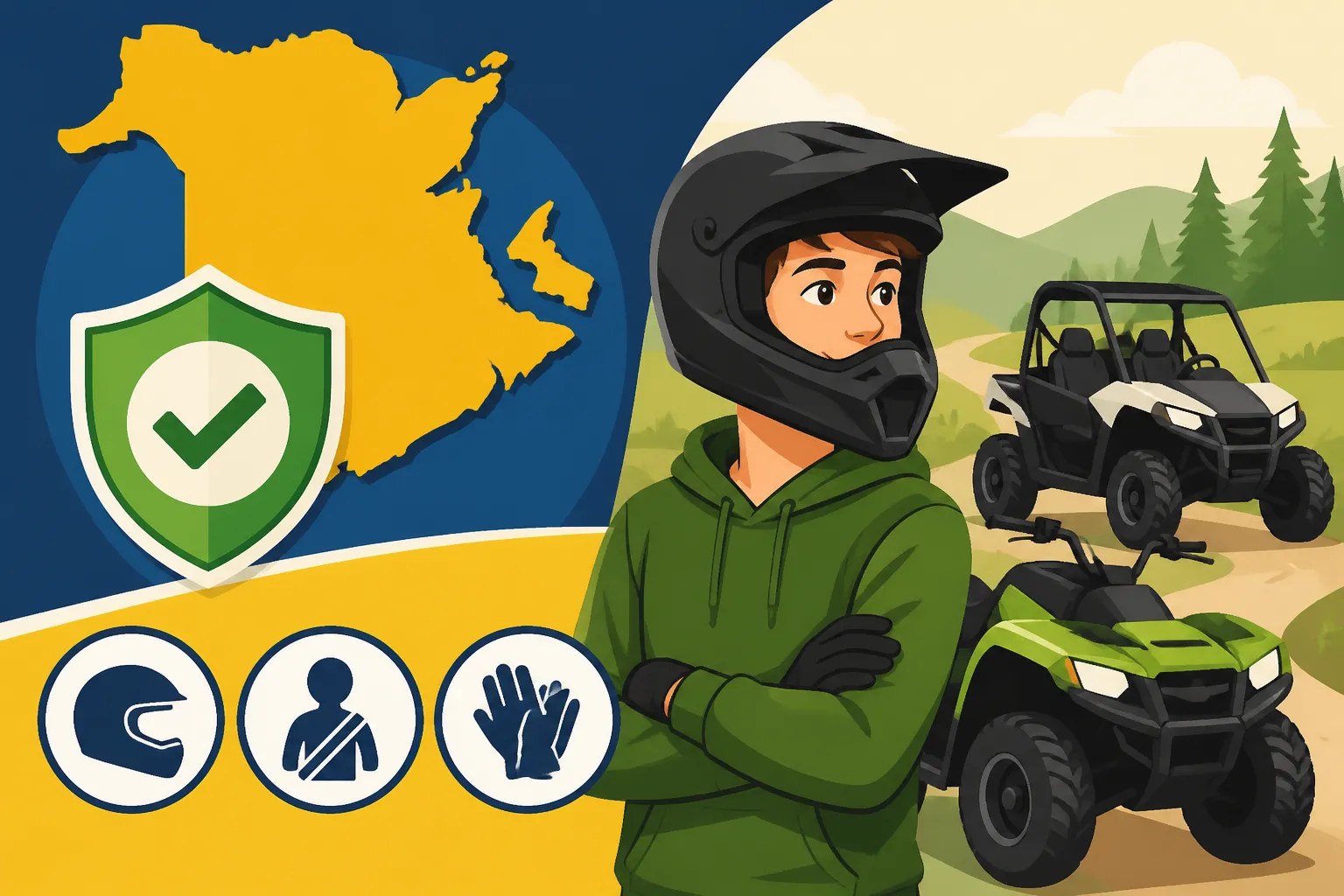
Safety gear is non-negotiable for any off-road vehicle operator in New Brunswick, and this is especially true for 14-year-old riders. The primary piece of safety equipment is a proper helmet. According to New Brunswick law, every occupant of an off-road vehicle must wear a helmet that meets an approved standard (such as CSA D230, Snell, or FMVSS 218). This isn't just any helmet; it needs to be specifically designed for powersports and fit correctly. A poorly fitting helmet offers minimal protection. Beyond the helmet, eye protection (goggles or a face shield) is crucial to protect against dust, debris, and insects. While not strictly mandated by law for all riders, it is highly recommended.
Beyond the head, appropriate clothing is vital. This includes long pants, a long-sleeved shirt or jacket, and sturdy over-the-ankle boots. Gloves are also highly recommended for grip, comfort, and protection against abrasions. This protective gear acts as a crucial barrier between the rider and the environment, minimizing injuries in case of a fall or collision. Investing in quality gear is an investment in your child's safety. Some riders even add aftermarket protective accessories to their machines, such as robust brush guards or rock sliders available from suppliers like SuperATV, to further enhance safety and durability on rugged New Brunswick trails. The importance of a helmet is detailed further in [New Brunswick ATV Helmet Law].
Documents to Carry and Overall Responsibilities
Just like an adult driver, a 14-year-old operating an off-road vehicle in New Brunswick must carry specific documents with them at all times. This includes their Class 9 (Off-Road Vehicle) licence, the vehicle's registration certificate, and proof of valid off-road vehicle insurance. These documents are official proof that the rider and the machine are legally compliant. When an enforcement officer stops them (or their supervising adult), they will ask to see these papers. Failing to produce them can lead to fines and other legal consequences. It's a good idea to keep these documents in a waterproof bag, perhaps in a secure storage compartment on the ORV, to protect them from the elements and ensure they are readily accessible. You can read more about what's required in [Carrying Four Documents at Once].
Beyond carrying documents, 14-year-old riders have responsibilities on the trail. They must operate their machine safely, respecting posted speed limits, trail signage, and the rights of other trail users. This includes yielding to hikers and equestrians, staying on marked trails, and avoiding reckless driving. They must also be mindful of the environment, not littering and avoiding riding in sensitive areas that could be damaged. Their actions reflect not only on themselves but on the entire off-road riding community. The supervising adult also shares these responsibilities, ensuring the young rider understands and adheres to all rules and etiquette. This comprehensive approach to safety, legality, and responsibility ensures a positive and sustainable future for off-road riding in New Brunswick for all ages.
| Requirement/Rule | Description for 14-Year-Old Rider | Key Considerations |
|---|---|---|
| Minimum Age | Can operate an ORV at 14. | Specific rules for younger children (6-13) apply below this age. |
| Machine Sizing | Machine must be sized appropriately for the rider's physical capabilities. | No explicit cc limit, but safety and control are paramount. |
| Supervision | Mandatory direct supervision by an adult (19+) with a valid ORV safety certificate. | Supervisor is legally responsible for the minor's actions. |
| Licence | Must hold a Class 9 (Off-Road Vehicle) Licence. | Not a regular driver's licence; specific to ORVs. |
| Safety Course | Mandatory completion of an approved ORV safety training course. | Prerequisite for Class 9 licence; includes practical and theoretical training. |
| Permitted Areas | Designated ORV trails (e.g., QuadNB network) and private land with permission. | Always get explicit permission for private land; purchase a trail permit for club trails. |
| Prohibited Areas | Public highways, streets, and roads are generally off-limits. | Road crossings are highly restricted for U16 riders; no general road riding. |
| Helmet | Mandatory helmet meeting CSA, Snell, or FMVSS 218 standards. | Must fit correctly; [New Brunswick Helmet Law for Every Occupant]. |
| Other Gear | Eye protection, long pants, long sleeves, over-the-ankle boots, gloves recommended. | Essential for protection against elements and injury. |
| Documents | Class 9 licence, ORV registration, proof of insurance. | Must be carried at all times; [New Brunswick Registration Paperwork Checklist]. |
| Responsibilities | Operate safely, respect rules/etiquette, protect environment. | Failure to comply can result in fines for rider and supervisor. |
Disclaimer
This article is for general informational purposes only and does not constitute professional advice. Laws, prices and regulations vary by location and change over time. Consult a qualified professional for guidance on your specific situation.