Yielding at Every Meeting
It's happened to all of us. You're out enjoying a fantastic ride on your ATV or side-by-side, the sun is shining, the trail is calling, and then suddenly, you're faced with another vehicle or even a group of pedestrians. That split second of "Who goes first?" can be confusing, frustrating, and, if handled poorly, downright dangerous. Whether you’re on a remote woods road, a shared rail bed, or even a designated municipal street, understanding who yields to whom is absolutely crucial for your safety and the safety of everyone else around you. This guide is here to clear up the confusion, lay out the rules, and help you navigate these encounters like a seasoned New Brunswick rider.
Understanding the Lay of the Land: Where You'll Encounter Others
New Brunswick offers an incredible diversity of riding experiences, from vast, interconnected trail systems to designated road sections that link communities. But with that diversity comes the responsibility of understanding how to share these spaces respectfully and safely. Knowing where you might run into other users is the first step in being prepared to yield appropriately.
Shared Roads and Municipal Bylaws: When Cars and Quads Mix
It might feel a bit strange, but there are indeed places in New Brunswick where ATVs and UTVs legally share the pavement, at least for short stretches. Many rural towns and villages have passed bylaws that open certain streets or sections of road to off-road vehicles, often to help riders access services like gas stations, restaurants, or to connect to the larger trail network. However, these aren't free-for-all zones. When you're on these designated roads, you are operating as a motor vehicle, and you must adhere to the rules of the road, including strict yielding guidelines.
Imagine you're cruising down a designated street in a small village, heading for the local diner after a morning ride. Suddenly, a car approaches from the opposite direction, or you come to an intersection. In these moments, your off-road machine is subject to the same traffic laws as any other vehicle. This means if you're turning left, you're typically yielding to oncoming traffic. If you're entering a main road from a side street, you're yielding to traffic on the main road. It's not about being bigger or smaller; it's about the law. Riders often forget that while a section of road might be open to quads, it doesn't mean cars yield to you. In almost all cases, on shared roadways, [New Brunswick Quads Yield to Motor Vehicles]. This also applies to situations where you're operating parallel to a highway, abiding by rules like the [New Brunswick's 7.5 Metre Rule From a Highway], and need to cross or interact with primary traffic. You're the guest on the pavement, and you must respect the hierarchy of traffic flow.
Multi-Use Trails and Rail Beds: Snowmobiles, Walkers, and Cyclists
The QuadNB trail network is truly a marvel, covering thousands of kilometres, but it's important to remember that not all of it is exclusively for ATVs and UTVs. Many sections are multi-use, particularly former rail beds that have been converted into greenways or shared corridors. In the colder months, a lot of these trails are also actively groomed for snowmobiles, leading to situations where [New Brunswick Snowmobile and Quad Sharing] becomes a critical consideration.
Even during the warmer seasons, you'll encounter a variety of users. Hikers enjoying a peaceful stroll, families out for a bike ride, or even horseback riders might be sharing the same path. On these types of trails, while there might not always be explicit legislation dictating who yields to whom in every single scenario, a strong code of trail etiquette prevails. It's about common courtesy, respect for other users, and ensuring everyone can enjoy the outdoors safely. Imagine you're coming around a bend on a wide, flat rail bed trail near Perth-Andover and see a couple of cyclists ahead. While you might be able to easily pass, the courteous and safe action is to slow down, give them a wide berth, and if necessary, yield by stopping or pulling over to the side until they've passed. The onus is generally on the motorized vehicle to be mindful of non-motorized users, given the difference in speed, noise, and potential impact.
Woods Roads, Crown Land, and Private Access Points
Beyond the official trail networks and designated roads, New Brunswick riders often venture onto less formal paths: old logging roads winding through Crown land, private woodlot access roads (with permission, of course), or informal trails connecting properties. These areas can feel remote and wild, making encounters with other people or vehicles feel less expected, but they are just as important when it comes to yielding.
On these less-trafficked routes, you might encounter anything from forestry equipment, hunters in a truck, other recreational riders, or even landowners on their way to a camp. The rules here are often more about common sense and defensive riding than strict legal codes. If you're on a narrow, blind woods road in the Restigouche area and hear the rumble of a logging truck approaching, your immediate reaction should be to slow down, find a safe spot to pull over, and yield the right-of-way. These large, heavy vehicles have limited maneuverability and often dictate the flow of traffic on their working roads. Similarly, if you're on a trail that crosses a private woodlot, even with the owner's permission, and you encounter the owner working on their land, the polite and responsible action is to yield, slow down, and offer a friendly wave. In these less formal settings, maintaining a good reputation for ATV riders is paramount, and respectful yielding is a huge part of that.
The Core Principle of Yielding in New Brunswick
So, we've talked about where you might encounter others. Now, let's dive into the core principles of yielding itself. It's not always about who has the "right" of way on paper, but often about safety, respect, and preventing accidents.
Yielding to Motor Vehicles on Designated Roads
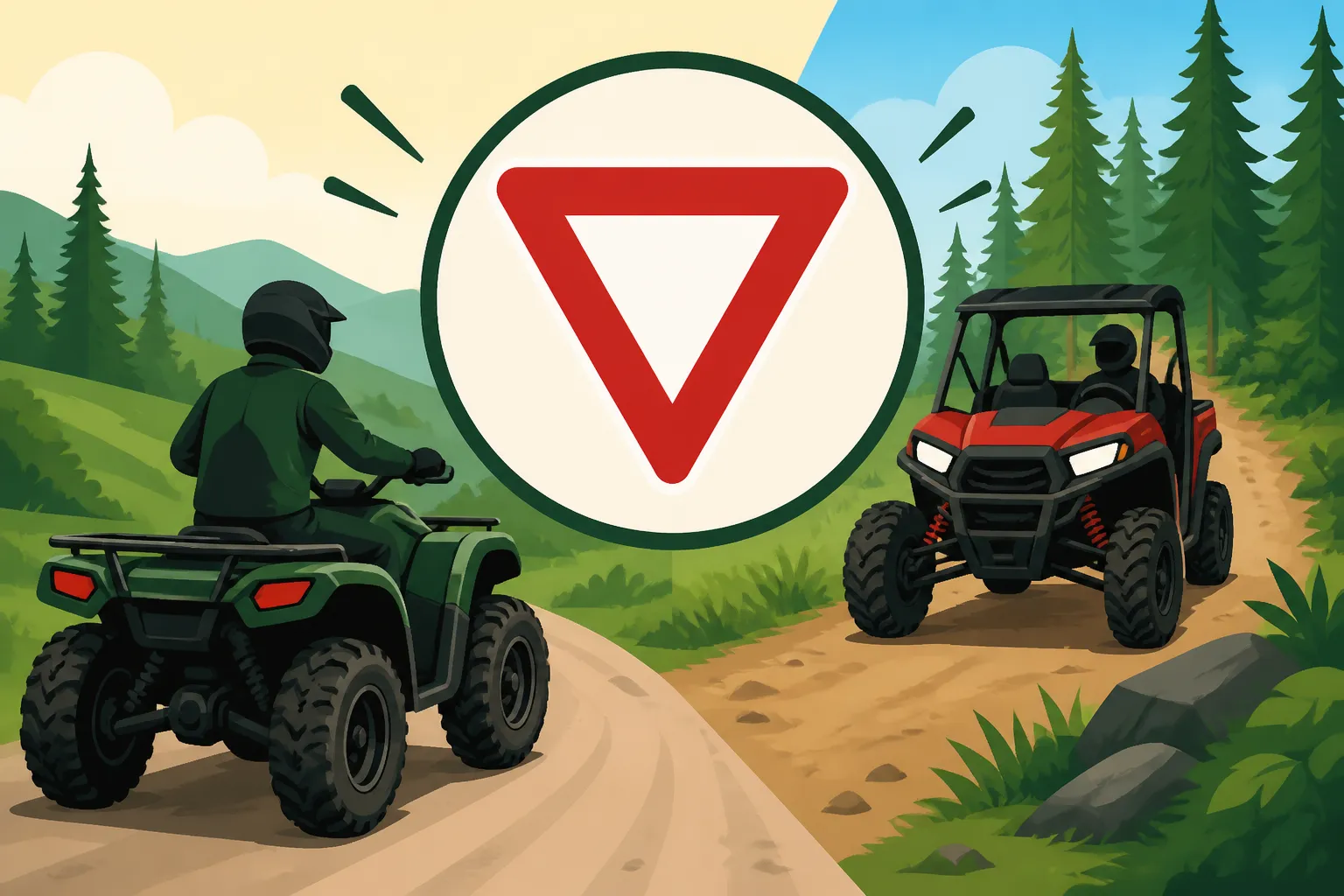
This is the non-negotiable part. When your ATV or UTV is operating on a legally designated road section, a road shoulder, or crossing a public highway, you are subject to the same traffic laws as cars, trucks, and motorcycles. The fundamental rule in New Brunswick, like almost everywhere, is that motorized recreational vehicles yield to conventional motor vehicles when sharing public road spaces. This isn't just a suggestion; it's a legal requirement.
Consider a scenario: you've just come off a trail near Salisbury and are using a short, designated road connector to get to another trail section. As you approach a stop sign or a marked intersection, you must yield to all traffic on the through street. If you're making a left turn, you wait for oncoming traffic to clear. If you're merging onto a road, you wait for a safe gap. Failing to do so can result in serious fines, such as those covered under [New Brunswick's $292.50 Highway Fine] for improper road use or traffic violations. Think of it this way: a car or truck has the expectation of unimpeded flow on a public road, and as an ORV rider, you're entering their domain for a limited purpose. Always assume the larger, faster traffic has the right-of-way, and be prepared to stop completely if necessary. Your machine, while capable off-road, is less visible and less protected than a passenger vehicle, making caution your best friend.
Trail Etiquette and Common Courtesy: Unwritten Rules of the Path
While the road rules are clear-cut, trail encounters often rely more on good old-fashioned common sense and courtesy. The QuadNB Federation, and most responsible riding clubs, strongly advocate for respectful trail sharing. When you're out on the [New Brunswick ATV Trails: The QuadNB Network], you're part of a community.
Here's the general understanding for multi-use trails:
- Yield to Slower Traffic: If you're on your quad and approaching a hiker or a cyclist from behind, slow down, make your presence known respectfully (a gentle tap of the horn, or just the sound of your machine approaching), and be prepared to yield entirely if the trail is narrow. Pass only when it's safe, and give ample space.
- Yield to Non-Motorized Traffic: Pedestrians, cyclists, and especially horseback riders usually have the implicit right-of-way over motorized vehicles on shared trails. Horses can be easily spooked by engine noise or sudden movements. If you encounter horses, pull over, shut off your engine, and wait quietly for them to pass. A friendly wave and a nod go a long way in fostering good relationships between trail user groups.
- Uphill Traffic Often Has Preference (but be smart): On blind hills, the rider going uphill often has less visibility and momentum. While not a strict rule, it's often courteous for downhill traffic to yield or give way. However, always prioritize safety – if yielding on a steep incline puts you in a dangerous position, communicate clearly and find the safest solution for both parties.
- Meeting Other Quads/UTVs: On narrow trails, it's customary for the more maneuverable machine or the one with a clear pull-off to yield. Often, a brief stop and a hand signal can easily resolve who goes where. Even if you've invested in robust underbody protection or heavy-duty A-arms for your UTV from a brand like SuperATV, that doesn't mean you should be less cautious when meeting another rider. It's about mutual respect.
This informal "yielding at every meeting" approach helps prevent conflicts and ensures that everyone, from power-sports enthusiasts to birdwatchers, can enjoy New Brunswick's beautiful outdoors without incident. The goal is to leave every encounter feeling positive.
Specific Scenarios: Blind Corners, Hills, and Water Crossings
Beyond the general principles, there are specific spots on the trail where yielding isn't just polite; it's essential for survival. These are the "danger zones" where visibility is compromised, and the unexpected is just around the corner.
- Blind Corners: Always assume someone is coming around the other side. Approach blind corners slowly, hugging the outside of the turn if possible (to give yourself more reaction time and visibility of oncoming traffic), and be ready to stop. If you hear another machine, slow down immediately.
- Crested Hills: Just like blind corners, the top of a hill can hide oncoming traffic, pedestrians, or even wildlife. Reduce your speed significantly as you approach the crest, and be prepared to yield or stop completely the moment you see anything on the other side. Never race over a hill.
- Water Crossings & Mud Holes: These can be tricky. Not only do they present their own riding challenges, but visibility might be obscured by splashing, and other riders might be stopped or stuck. Approach slowly, assess the situation, and if another rider is already in the crossing or trying to get out, yield to them. Give them space and time to navigate the obstacle safely. Offering assistance, if appropriate, is always a welcome gesture among riders. If you've got a snorkel kit from, say, SuperATV, you might feel invincible in the mud, but other riders might not, so extend courtesy.
- Narrow Bridges and Culverts: Often, these are one-way sections. If you see someone approaching a narrow bridge, the person who arrived first, or who is already committed to crossing, typically has the right-of-way. Wait patiently for your turn.
In all these scenarios, the implicit rule is to slow down, be prepared to stop, and prioritize clear passage for others if there's any doubt.
Practical Tips for Safe Encounters
Knowing the rules is one thing, but actively practicing safe habits on the trail and road is how you prevent problems before they start. Here are some actionable tips to make your encounters smoother and safer.
Maximizing Your Visibility: Be Seen, Be Safe
One of the easiest ways to ensure you don't have an unexpected encounter requiring a last-minute yield is to make sure others see you coming long before you're upon them. This is especially true when sharing roads or busy multi-use trails.
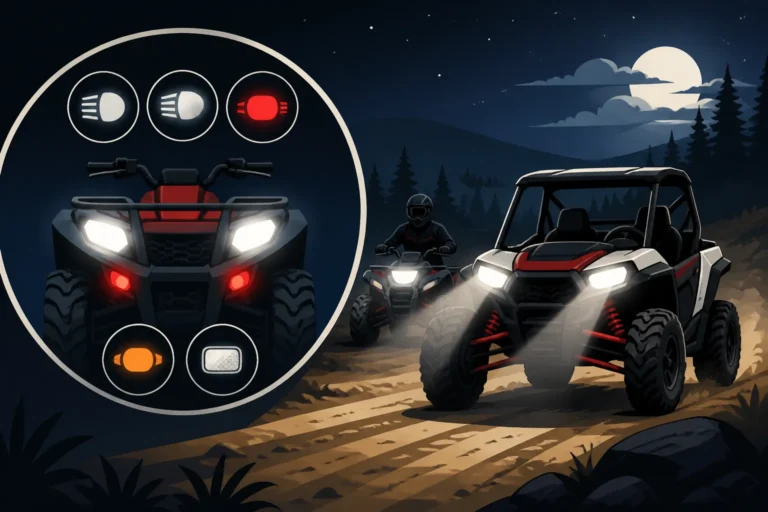
- Lights On: Always ride with your headlights on, even during the day. This simple act drastically increases your visibility to oncoming traffic, whether it's a car, another ATV, or a cyclist. If your machine doesn't have very bright lights, consider upgrading your lighting system. Many aftermarket brands, like SuperATV, offer incredibly bright LED light bars or auxiliary lights that can make a huge difference, especially in dusty conditions or on shaded trails.
- Bright Clothing and Gear: Wear high-visibility clothing – bright colours like neon green, orange, or yellow stand out much more than camouflage or dark tones. A reflective vest can be a cheap and effective addition, particularly if you ride near dawn or dusk. Your helmet should also be a bright colour if possible.
- Flags and Whips: On open terrain or in areas with rolling hills, a safety flag mounted on a whip pole can make your machine visible over rises or obstacles long before the main body of your ATV or UTV comes into view. This is a common practice in many off-road communities and can be a life-saver.
- Keep Your Machine Clean: A mud-caked machine, while looking "tough," can obscure lights and reflective surfaces. Give your quad a quick rinse to ensure all safety features are visible.
Being proactive about your visibility means that often, other users will see you in advance and can adjust their own actions, making the act of yielding a cooperative effort rather than a sudden reaction.
Communicating Your Intent: Hand Signals and Common Sense
Sometimes, a wave is all it takes. Other times, a more deliberate signal is necessary to avoid confusion. Good communication prevents accidents.
- New Brunswick Hand Signals Without Lights: Familiarize yourself with standard hand signals. For example, pointing to indicate how many riders are behind you is a fantastic courtesy on trails. A simple outstretched arm indicating a turn, or a raised hand to signal slowing down or stopping, can be invaluable. These signals are not just for other ORV riders; they are understood by many drivers and pedestrians too.
- Eye Contact and a Nod: When encountering another person, especially non-motorized users, make eye contact and offer a friendly nod or wave. This simple human gesture acknowledges their presence and often diffuses any potential tension. It also clearly communicates that you see them and are aware of the situation.
- Slow Down and Be Predictable: The best communication is often your riding behaviour. When you see others approaching, slow down well in advance. This immediately signals your intent to be cautious and gives both parties more time to react. Avoid sudden swerving or accelerating. Be predictable in your movements. Your machine might be nimble with a quality aftermarket steering rack from a brand like SuperATV, but that doesn't mean you should rely on last-second maneuvers.
- Briefly Tap Your Horn: A polite, brief tap of the horn can alert hikers or cyclists to your presence on a blind corner without startling them too much. It's about awareness, not aggression.
Good communication fosters goodwill on the trails and roads, making yielding a smooth and natural part of your ride.
What to Do When the Other Party Doesn't Yield
Despite all your best efforts to be visible and communicate, there will inevitably be times when another driver, rider, or pedestrian simply doesn't yield to you, even when they should or when it would be courteous. In these moments, your personal safety, and the safety of your passengers, is the absolute priority.
- Assume They Don't See You: This is the golden rule of defensive riding. Always assume other people don't see you, don't hear you, or don't know the rules. This mindset keeps you mentally prepared to react.
- Be Prepared to Take Evasive Action: If someone isn't yielding, do not force the issue. Slow down, stop, or move to a safe shoulder. Your machine is smaller and offers less protection than a car, and even a minor collision can have serious consequences. Give way, even if you feel you technically had the right-of-way. Being "right" won't heal your injuries or fix your damaged machine.
- Maintain Control and Your Temper: It can be frustrating when others are inconsiderate or reckless, but getting angry or engaging in road rage only escalates the danger. Keep your focus on maintaining control of your machine and getting out of the situation safely. A frustrated wave is better than an aggressive one.
- Report Dangerous Behavior (If Applicable): If you witness truly dangerous or reckless behaviour on a shared public road, and you can safely do so, note details like vehicle type, license plate (if visible), and location. You can report this to local law enforcement. For trail issues, contacting the local QuadNB club or the federation might be appropriate, especially if it involves repeated misuse of their managed trails. Remember, responsible riding helps protect access for everyone.
Consequences of Failing to Yield and Related Violations
Ignoring yielding rules isn't just rude; it can have significant legal and community repercussions. Understanding these consequences reinforces why it's so important to be a responsible rider.
Legal Penalties for Road Violations
When operating on designated public roads, failing to yield can lead to a host of legal issues, just like any other motor vehicle infraction.
- Fines and Demerit Points: Depending on the specific circumstances and the section of the Motor Vehicle Act or Off-Road Vehicle Act violated, you could face hefty fines. For example, failing to yield at a stop sign or an intersection on a legally open road can result in a significant ticket. These fines can add up quickly, potentially costing you hundreds of dollars, plus administrative fees and rising insurance premiums. If you are operating under a Class 9 licence as a teen, these violations could impact your ability to get a full driver's license later.
- Accidents and Liability: If a failure to yield leads to an accident, the legal and financial ramifications can be severe. You could be held liable for damages, injuries, and face civil lawsuits. This is where your [New Brunswick Requires Insurance on Trails] becomes crucial, as it typically extends to cover legally designated road use. Without proper insurance, the financial burden could be devastating.
- Suspension of Privileges: Repeated or serious offenses could lead to the suspension of your ORV registration or even your driver's license, depending on the nature of the violation. The penalties for not following road rules are serious because the potential for harm is so high.
| Type of Encounter on Designated Roads | Yield Responsibility (Generally) | Potential Consequence of Failure to Yield |
|---|---|---|
| At an intersection/stop sign | ATV/UTV yields to through traffic | Significant fine, accident liability |
| Merging onto a main road | ATV/UTV yields to main road traffic | Significant fine, accident liability |
| Oncoming traffic on narrow road | Often context-dependent, but assume ATV/UTV yields if space is limited for larger vehicle | Potential minor fine, accident risk |
| Turning left across traffic | ATV/UTV yields to oncoming traffic | Significant fine, accident liability |
Trail Conflicts and Community Impact
While there may not always be specific "failure to yield" fines on the trail (unless it's part of a broader reckless driving charge), the consequences of poor trail etiquette are no less impactful.
- Negative Perception of Riders: When ATV and UTV riders consistently fail to yield to hikers, cyclists, or snowmobilers, it creates a negative image for the entire riding community. This can lead to increased complaints to land managers, local governments, and the media.
- Loss of Access: A persistent pattern of unsafe or disrespectful riding, including issues with yielding, can directly contribute to trail closures, restrictions on ORV access, or even the revocation of certain permits for clubs. Nobody wants to see their favourite trail system become off-limits because a few riders couldn't share. This can be a real concern for organizations like QuadNB, which work tirelessly to maintain [New Brunswick's 10,000 Kilometres of Trail].
- Inter-User Group Hostility: Poor yielding practices can create animosity between different groups of trail users. This isn't good for anyone. We all share a love for the outdoors, and mutual respect is key to peaceful coexistence. For example, if you're frequently riding aggressively on trails that are also leased to snowmobile clubs in winter, it can strain relationships and affect future agreements.
- [New Brunswick Noise Complaints About Quads]: While not directly about yielding, aggressive riding or failing to slow down for other users can be perceived as noisy and disruptive, leading to complaints that can further restrict access.
Ultimately, every time you choose to ride courteously and yield appropriately on the trail, you're not just ensuring your own safety, you're also acting as an ambassador for the entire New Brunswick ATV and UTV community.
Importance of Safety Courses and Knowing the Rules
The best defense against confusion and potential penalties is to be fully informed and well-trained. New Brunswick places a high value on rider education, and for good reason.
- Comprehensive Knowledge: Courses like the [New Brunswick Quad Safety Course Explained] cover far more than just how to operate your machine. They delve into topics like trail etiquette, environmental responsibility, legal requirements, and, yes, proper yielding procedures. Taking such a course, or reviewing its material regularly, is an investment in your safety and the longevity of your riding opportunities.
- Understanding Specific Regulations: While this guide covers general principles, specific local bylaws or trail rules can vary. A safety course will often highlight where to find this information, helping you understand, for example, [New Brunswick Rules for Riding a Village Street] or [New Brunswick Rules for Crossing a Highway] in specific contexts. The more you know, the less likely you are to make a mistake.
- Promoting Responsible Riding: These courses foster a culture of responsible riding. They teach you to anticipate hazards, ride defensively, and always prioritize safety over speed or ego. This is particularly important for young riders; for example, the rules for a [New Brunswick Rules for a 14-Year-Old Rider] are very specific and highlight the need for careful road and trail interaction.
- Peace of Mind: Knowing you've taken the time to understand and practice these rules allows you to ride with greater confidence and enjoyment. You won't have that moment of panic or uncertainty when you encounter another user because you'll already know how to react safely and courteously.
Riding an ATV or UTV in New Brunswick is an incredible experience, offering access to some truly breathtaking scenery. By embracing the principles of yielding, maximizing your visibility, communicating clearly, and continually educating yourself, you contribute to a safer, more enjoyable environment for everyone who shares our beautiful roads and trails.
Disclaimer
This article is for general informational purposes only and does not constitute professional advice. Laws, prices and regulations vary by location and change over time. Consult a qualified professional for guidance on your specific situation.