Riding to a Gas Station Legally
One of the most common dilemmas I hear from fellow ATV and UTV riders in New Brunswick is the anxiety of needing fuel mid-ride, but being unsure if they can legally nip down the road to the nearest gas station. It’s a frustrating situation – you’re out enjoying the trails, your tank is getting low, and the thought of risking a fine just to fill up can put a real damper on your day. This guide is here to untangle the rules, explain when and how you can legally ride your off-road vehicle to a gas station in New Brunswick, and help you avoid unnecessary trouble with the law.
Navigating New Brunswick's Roads for Fuel: The Law Explained
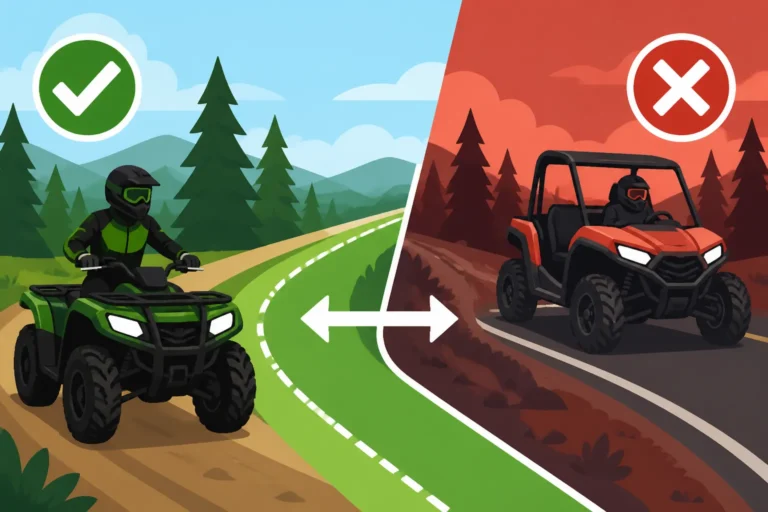
Let's face it, the general rule of thumb in New Brunswick is that off-road vehicles (ORVs) like ATVs and UTVs aren't meant for public roads. This isn't just a suggestion; it's enshrined in the law. But, and this is a big "but" for riders, the provincial government understands that sometimes you just have to use a public road for a short, necessary stretch. One of the most critical exceptions to this rule is accessing services, and a gas station definitely counts as a service!
The key is to understand the specific conditions and limitations that apply to these exceptions. It's not a free pass to cruise down the highway; it's a very narrow allowance designed for practical situations. If you've ever found yourself with a sputtering engine miles from the nearest trail access point, you know just how vital this exception can be. It often feels like a minefield of regulations, but with a bit of knowledge, you can navigate it with confidence. Remember, the core intent of [What New Brunswick's Off-Road Vehicle Act Covers] is safety and responsible riding, and that includes brief, legal road excursions.
The Specifics: When You Can Legally Hit the Pavement
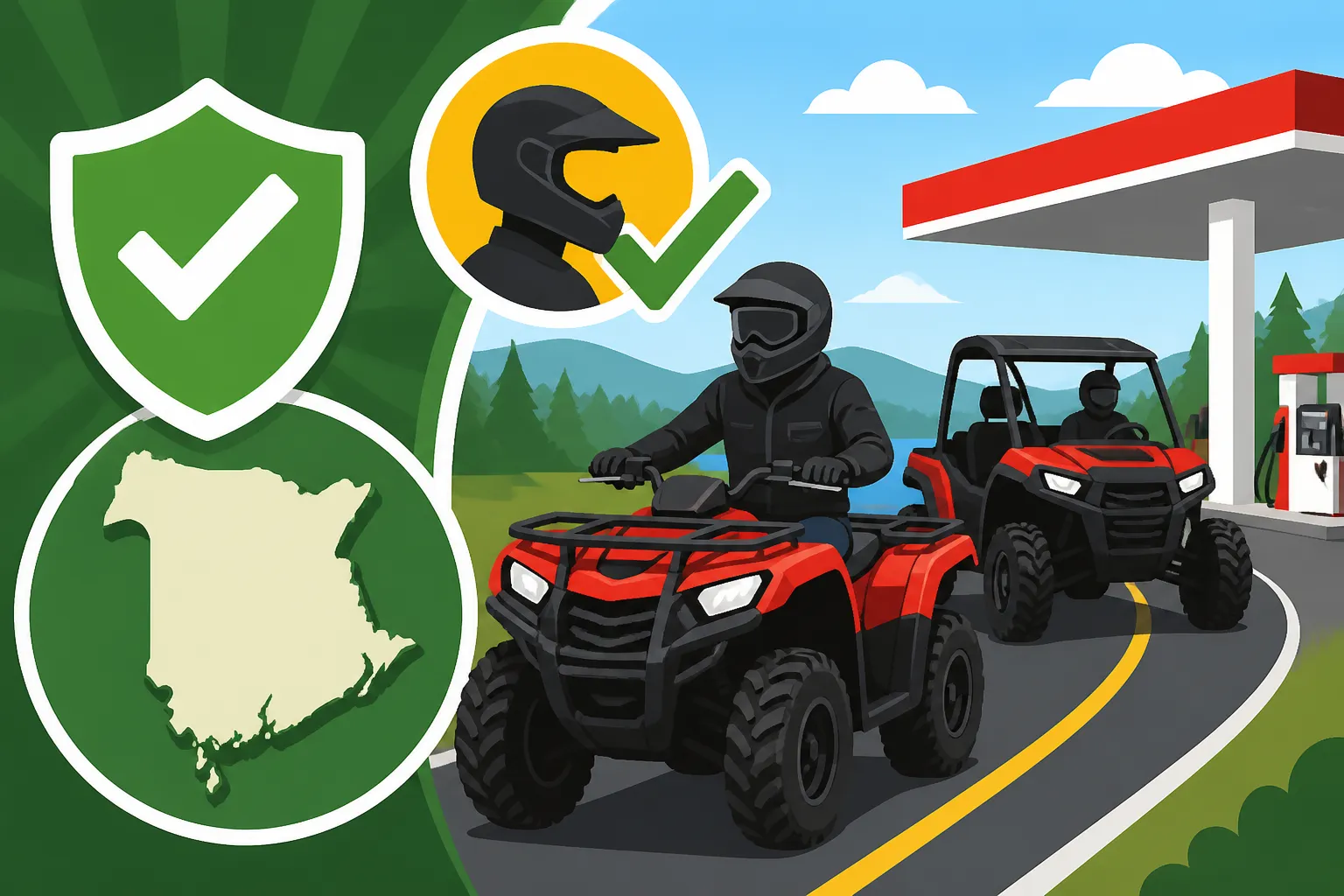
So, when exactly is it okay to leave the dirt and hit the asphalt for fuel? New Brunswick law allows ORV operators to use highways (which includes most public roads, not just major thoroughfares) for the purpose of accessing a service. This explicitly covers things like fuel, repairs, or even emergency medical services. However, there are strict caveats:
- Direct and Shortest Route: You must take the most direct and shortest route possible to the service and back to the trail. No scenic detours, no visiting a friend down the street. It's strictly about getting to your destination and returning to the trail. This isn't an invitation to joyride on public roads.
- No Alternative: This exception is generally understood to apply when there isn't a reasonable alternative route that uses only off-road trails or designated ORV crossings. If you could have stayed on the trail network to get to a gas station, you should have.
- Crossings vs. Travel: It's important to distinguish between simply crossing a highway, which often has its own set of rules, and traveling along a highway to reach a service. While crossing is generally permitted at designated points, traveling along the road to a gas station falls under this "accessing services" exception.
- Local Bylaws: Always remember that individual municipalities or local service districts can have their own bylaws that might further restrict or, in some cases, permit ORV use on certain roads. This means what's okay in one village might not be okay in the next. It’s always smart to check local regulations if you’re unsure, especially if you’re riding in an unfamiliar area.
Imagine you're out on the QuadNB network near Florenceville-Bristol, enjoying the beautiful fall colours. Your fuel gauge starts to drop, and you spot a gas station just off a provincial road a couple of kilometers ahead. If there's no trail spur directly to that station, and no other trail option, taking the shortest road section directly to the pumps and back to the trail is generally considered acceptable under the "accessing services" clause.
What Your Machine and You Need to Be Road-Ready (Legally Speaking)
Okay, so you've identified a legal stretch of road to get your fuel. Great! But before you swing onto the pavement, both your machine and you, the rider, need to meet specific requirements. This isn't just about avoiding a ticket; it's about safety, especially when you're sharing the road with cars, trucks, and other vehicles.
Mandatory Paperwork: Registration, Insurance, and Trail Permits
This is non-negotiable. If you're going to put a wheel on any public road, even for a short trip to a gas station, you absolutely must have all your ducks in a row.
- Registration: Your ATV or UTV needs to be properly registered with Service New Brunswick. This means you have a current registration certificate and a valid plate displayed on your machine. You can find more details on [New Brunswick ORV Registration Explained]. Without registration, you're looking at a hefty fine and potential impoundment.
- Proof of Insurance: Every ORV on a New Brunswick trail network, or on a public road, needs liability insurance. You must carry proof of this insurance. The province has specific requirements, so make sure you're covered. [New Brunswick Requires Insurance on Trails] dives deeper into this. I always recommend keeping a physical copy in a waterproof bag in your storage box, perhaps alongside a sturdy tow strap from SuperATV, just in case.
- Trail Permit: If you're accessing the road from a managed trail network, you'll need a valid trail permit from the New Brunswick All-Terrain Vehicle Federation (QuadNB). Your permit sticker should be affixed correctly to your machine. The fees for these permits can vary, as covered in [New Brunswick Trail Permit Cost in 2026]. Even for a quick hop to the gas station, if you're using the trail system as your primary route, this permit is essential.
Think of it like this: if you were driving your car to the gas station, you wouldn't do it without valid registration and insurance, right? The same principle applies here. An officer stopping you for any reason, even a simple check, will expect to see these documents.
Rider Requirements: Licensing, Age, and Safety Gear
Beyond the machine itself, you, the rider, have responsibilities too.
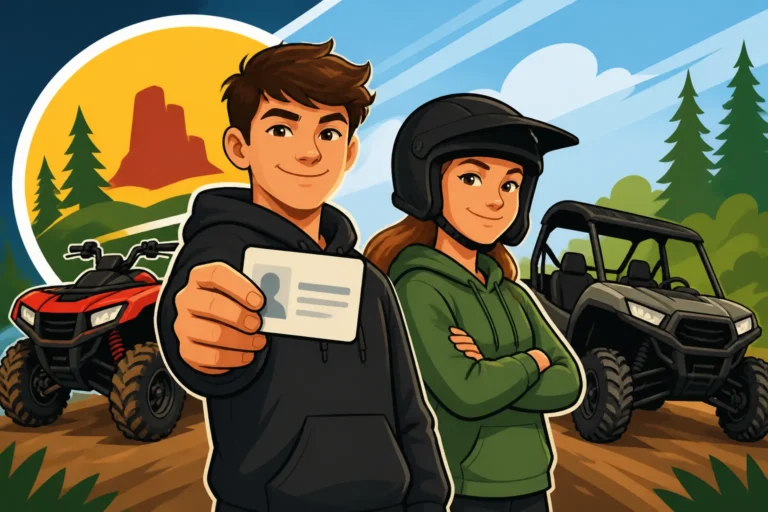
- Licensing: For riders 16 years of age and older, a valid driver's license (any class) is required to operate an ORV on any public road or highway, even for these brief access periods. If you're 14 or 15, you might be eligible for a Class 9 driver's licence, which has specific conditions. [New Brunswick ATV Age Requirements] details these requirements thoroughly.
- Age Restrictions: New Brunswick has clear age restrictions for operating ORVs, particularly when it comes to road crossings or limited road use. Riders under 16 generally cannot operate an ORV on or across a highway, even to access services. This is a critical point that parents and guardians need to be aware of.
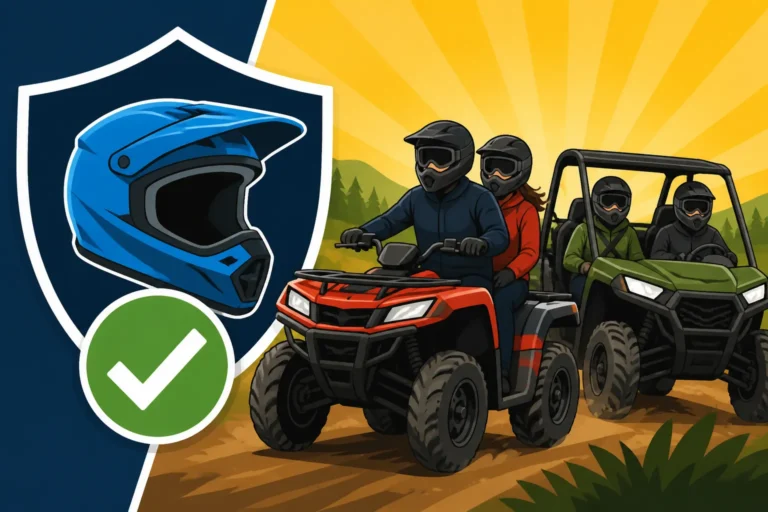
- Helmet: This is absolutely mandatory, no exceptions. Anyone operating or riding as a passenger on an ATV or UTV on a public road (or trail, for that matter) must wear an approved helmet. Make sure your helmet meets one of the recognized safety standards. [New Brunswick ATV Helmet Law] provides all the specifics. This isn't just about the law; it's about protecting yourself.
- Passengers: If you have a passenger, they also need to adhere to helmet rules and age restrictions, and your machine must be designed to safely carry a passenger.
Machine Equipment for Road Use
While ORVs aren't held to the same standards as on-road vehicles, some basic equipment is implicitly or explicitly necessary for safety, especially when briefly joining road traffic.
- Lights: Your machine must have working headlights and taillights. If you're riding anywhere near dusk, dawn, or during adverse weather, these lights are crucial for visibility. [New Brunswick Lighting Requirements at Night] clarifies what's expected. Having bright LED lights, perhaps an upgrade from SuperATV, can make a huge difference in ensuring you're seen by other drivers.
- Brakes: Functioning brakes are a given, but it’s worth emphasizing. You need to be able to stop safely and effectively, especially when encountering unexpected road hazards or traffic.
- Muffler: Your ORV must have an effective exhaust system that limits noise. Loud pipes might be fun on the trail, but they draw unwanted attention and complaints when you're on a public road, even for a short time.
- Mirrors: While not always explicitly mandated for ORVs on these short road sections, having a rearview mirror is a really smart idea. Being aware of traffic behind you is a critical safety measure when sharing the road. SuperATV offers various mirror options that can enhance your situational awareness.
Here's a quick summary of what you absolutely must have in order for that quick run to the gas station to be legal:
| Requirement | Mandatory for Road Use? | Details |
|---|---|---|
| Valid ORV Registration | Yes | Current certificate and plate displayed. |
| Proof of Insurance | Yes | Liability insurance required; carry proof. |
| Valid Trail Permit | Yes | If accessing from a managed trail network. |
| Valid Driver's Licence | Yes (16+) | Any class of driver's licence for ages 16+. Class 9 for 14-15 year olds with specific conditions (cannot travel on highway). |
| Approved Helmet | Yes | Must be worn by operator and any passenger. |
| Functioning Lights | Yes | Headlights and taillights required. |
| Functioning Brakes | Yes | Essential for safety. |
| Age Requirements Met | Yes | Operator must meet age criteria for road travel (generally 16+). |
Strategic Planning and Safe Riding on Public Roads
Even when you're legally allowed to ride your ORV on a small section of road for fuel, it's a completely different environment than the trail. There are specific strategies you can employ to minimize risks and ensure a smooth, uneventful trip to the pump. This isn't just about following the law, but about exercising common sense and defensive riding.
Route Planning and Maximizing Visibility
Preparation is your best friend when it comes to road sections.
- Plan Your Fuel Stops in Advance: Before you even head out for your ride, check your trail map for gas stations located conveniently near the trail network. Knowing where your options are can save you from desperate last-minute decisions. Apps like MapGear, which show QuadNB trails, often indicate services nearby.
- Choose the Shortest, Safest Route: Always opt for the path that gets you to the gas station (and back to the trail) with the least amount of road exposure. Avoid busy intersections, high-speed roads, or areas with poor visibility if possible. Sometimes, even if a slightly longer trail route is available, it might be safer than a sketchy road section.
- Enhance Your Visibility: Your ORV is much smaller than most road vehicles, making it harder to see.
- Wear Bright Gear: Fluorescent or brightly coloured riding gear significantly increases your visibility to other drivers.
- Keep Lights On: Even in broad daylight, keep your headlights and taillights on. Many modern ORVs have always-on lighting, but if yours doesn't, switch them on.
- Consider Reflective Elements: Adding reflective tape to your helmet, machine, or gear, especially if you might be riding near dusk, can be a lifesaver. Products like a SuperATV custom wrap or accessory might not only look good but can integrate reflective elements for safety.
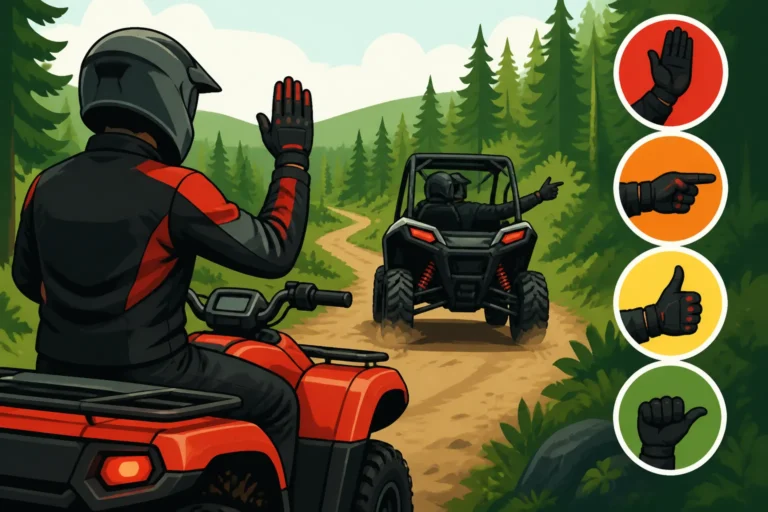
- Be Predictable: Use clear hand signals if your machine doesn't have turn indicators (or even if it does, for added clarity). Ride in a straight line, and avoid sudden movements.
Imagine leaving the trail near Rexton, heading towards the local gas station. Instead of taking the main highway, you might find a less-travelled side road that connects directly. Planning this ahead of time, and making sure you're wearing your high-visibility jacket, can make all the difference.
Adhering to Speed Limits and Road Etiquette
When you're on a public road, even for a brief moment, you are part of the traffic.
- Respect Posted Speed Limits: While your ORV might feel fast on the trail, public road speed limits apply to you. You are expected to adhere to them. Often, ORVs can feel unstable or less responsive at higher speeds on pavement compared to a car, so riding within your machine's and your own comfort zone is critical.
- Stay to the Right: Keep as far to the right side of the lane as safely possible, without riding onto the shoulder or into the ditch. This allows faster traffic to pass you safely.
- Yield to Other Vehicles: Always assume other road users might not see you. Be prepared to yield and give way. This is particularly true at intersections and driveways. Remember that [New Brunswick Quads Yield to Motor Vehicles] is a fundamental principle.
- Avoid Distractions: Just like in a car, avoid any distractions while operating your ORV on a public road. Your full attention needs to be on the road, traffic, and your surroundings.
Riding from a trail section onto a paved road to reach a gas station might mean slowing down significantly. If you're near Bathurst and need to hit a gas station just off a highway, you'll need to match the flow of traffic as best you can, while staying safe and visible, and then slow right down as you approach the service entrance.
Avoiding Common Mistakes That Lead to Trouble
Many riders get into hot water not because they're intentionally breaking the law, but because they misunderstand or push the boundaries of the "accessing services" exception.
- "Just a Little Further" Syndrome: The biggest mistake is extending that "shortest, most direct route" into a scenic tour, a visit to a buddy's house, or a trip to the hardware store. The moment you deviate from accessing the service and returning to the trail, you're likely breaking the law.
- Assuming All Roads Are Equal: Don't assume that because one municipal road is open to ORVs for a short stretch, all roads in that area are. Bylaws vary, and provincial highways have different rules than local roads. Always check.
- Forgetting Your Documents: It’s surprisingly easy to grab your helmet and gloves, but forget to throw your registration, insurance, and trail permit into your bag. A quick trip to the gas station isn't an excuse to be without them. This is why many riders keep a dedicated "document kit" on their machine.
- Riding Without Proper Gear: Skipping your helmet or not ensuring your lights are working because it's "just a short trip" is a dangerous gamble and a guaranteed ticket.
The Cost of Non-Compliance: Penalties for Illegal Road Use
Ignoring the rules, whether through misunderstanding or deliberate choice, can lead to some significant and unpleasant consequences. New Brunswick authorities take ORV safety and adherence to regulations seriously, and the fines for infractions can quickly add up, turning a simple fuel stop into a very expensive lesson.
Fines and Monetary Penalties
If you're caught riding your ATV or UTV illegally on a public road, you can expect a range of fines, depending on the specific violations. These aren't just minor slaps on the wrist; they can be substantial.
- No Registration: Riding an unregistered ORV, even for a short distance to a gas station, can result in a fine, such as the [New Brunswick No-Registration Fine of $172.50].
- No Insurance: Operating without the required liability insurance is a serious offense, often carrying one of the highest fines, like the [New Brunswick Uninsured ATV Fine of $604.50]. This is designed to deter uninsured riding and protect others in case of an accident.
- No Trail Permit: If you're on a road section that requires you to have come from a managed trail without a valid permit, you could face penalties such as the [New Brunswick Penalties for No Trail Permit].
- Riding on Prohibited Roads: Traveling on a highway that isn't a designated ORV route, or exceeding the "shortest, most direct route" for accessing services, can lead to fines related to [New Brunswick Fines for Riding Near a Road]. This includes riding on major provincial highways where ORVs are strictly prohibited.
- Helmet Violations: Operating without an approved helmet will also result in a fine.
- Age/Licensing Violations: If a rider doesn't meet the age or licensing requirements, the fines can be applied to both the rider and, in some cases, the owner or guardian of the machine.
These fines are often "set fines," meaning the officer issues a ticket with a predetermined amount, and you usually have the option to pay it or dispute it in court. However, disputing means taking time off work and potentially incurring court costs if you lose.
Machine Impoundment and Insurance Implications
The financial penalties are just one side of the coin. Other consequences can be even more disruptive.
- Machine Impoundment: In some cases of serious or repeated violations, or if the machine is found to be unregistered or uninsured, law enforcement has the authority to impound your ATV or UTV. Getting your machine back usually involves paying the fines, impoundment fees, and any storage costs, which can quickly become exorbitant. This can turn your quick trip for gas into a logistical nightmare, leaving you stranded.
- Insurance Denial: This is perhaps one of the most significant, yet often overlooked, risks. If you are involved in an accident while illegally operating your ORV on a public road (e.g., without registration, insurance, helmet, or while deviating from the legal route for fuel), your insurance provider may deny your claim. This means you could be personally responsible for all damages to your machine, other vehicles, property, and any medical costs for injuries sustained by yourself or others. What seemed like a shortcut or a minor infraction could lead to financial ruin.
- Criminal Charges: In severe cases, such as impaired riding on a public road, or dangerous operation, you could face criminal charges in addition to provincial fines, with all the associated long-term consequences.
It's clear that the stakes are high. That quick run to the gas station needs to be done by the book, every single time. It's not just about convenience; it's about protecting your wallet, your machine, and your freedom to ride another day.
Disclaimer
This article is for general informational purposes only and does not constitute professional advice. Laws, prices and regulations vary by location and change over time. Consult a qualified professional for guidance on your specific situation.