New Brunswick Rules for Crossing a Road
Navigating New Brunswick's stunning landscape on an ATV or UTV is an incredible experience, but it’s easy to feel a knot in your stomach when the trail suddenly meets a paved road or highway. It's a common concern for riders, whether you’re a seasoned veteran or just getting started, because the rules aren't always clear, and the consequences for getting it wrong can be severe. This comprehensive guide is here to untangle the complexities of crossing roads and highways in New Brunswick, ensuring you can ride confidently and legally.
Understanding the Core Principle: Trails vs. Highways
When you're out enjoying the vast network of trails in New Brunswick, the distinction between a dedicated off-road path and a public road or highway is absolutely paramount. It's not just a matter of different surfaces; it's about entirely different sets of rules, safety protocols, and legal obligations. Misunderstanding this fundamental difference is where many riders inadvertently run into trouble.
The 7.5 Metre Rule and Its Purpose
Perhaps the most critical rule you'll encounter regarding ATVs and roads in New Brunswick is the "7.5 metre rule." This regulation states that an off-road vehicle must stay at least 7.5 metres away from the travelled portion of a highway. This isn't just an arbitrary number; it's a carefully considered distance designed with safety in mind for everyone on the road, including you.
Imagine you're cruising along a beautiful wooded trail, enjoying the fresh air, and suddenly you glimpse pavement through the trees. That's your cue to slow down and begin assessing the situation. The 7.5-metre buffer is there to prevent off-road vehicles from riding alongside traffic, entering the flow of vehicles, or making sudden, unexpected movements that could surprise motorists. It keeps ATVs and UTVs out of the shoulder, out of the ditch that might run parallel to the road, and certainly out of the main travel lanes. This rule acts as a clear line in the sand, preventing what could otherwise be disastrous interactions between fast-moving road traffic and off-road machines. It's all about creating a safe zone and minimizing the risk of collision, protecting not only you and your passengers but also other drivers on the road.
Enforcement of this rule is taken very seriously by law enforcement, and for good reason. Officers are trained to spot machines that are too close to the highway or appear to be travelling parallel to it, rather than just crossing. It's a key indicator of improper operation and a potential hazard. So, when you approach any road, always remember to give that 7.5-metre gap the respect it deserves, ensuring you're only making contact with the road for the absolute shortest distance required to cross.
What Constitutes a "Highway" in New Brunswick
The term "highway" in New Brunswick's Off-Road Vehicle Act is much broader than you might initially think. It doesn't just refer to multi-lane divided highways or paved secondary roads. Legally, a "highway" encompasses almost any public thoroughfare designed for vehicle travel. This includes paved provincial highways, local municipal roads, village streets, and even many gravel roads that are maintained by the province or a local municipality.
Think about it this way: if a regular car, truck, or even a school bus is legally allowed to drive on it, it's almost certainly considered a highway under the Act. This means that even a quiet dirt road that leads to a few cottages could be classified as a highway, especially if it's publicly maintained. The shoulders of these roads, and often the ditches directly adjacent to them, are also considered part of the "highway" for the purposes of this legislation.
The key distinction for riders is understanding that your ATV or UTV is designed for off-road use, and public roads are generally off-limits unless specific exceptions apply. Don't assume that because a road is unpaved or lightly travelled, it's fair game for continuous riding. Always err on the side of caution and assume any public road is a "highway" unless you have clear, explicit information to the contrary, such as specific local bylaws designating sections for ORV use or official signage.
Designated vs. Undesignated Crossings
When you're out on the trails, you'll inevitably encounter situations where the trail network intersects with a public road. These intersections fall into two main categories: designated crossings and undesignated crossings. Understanding the difference is crucial for legal and safe passage.
Designated crossings are typically marked with signage, often indicating a specific spot where ATVs and UTVs are permitted to cross the highway. These signs might include the familiar ATV symbol or a "Trail Crossing" indicator, and they usually direct you to cross as perpendicularly and directly as possible. These designated spots are often chosen because they offer the best sightlines for both riders and motorists, are less busy, or are specifically engineered for safe crossing. They are a clear indication that authorities acknowledge and permit ORV movement across the road at that specific point. Many of these designated crossings are part of the vast QuadNB network, where clubs have worked with the province to ensure safe passage.
On the other hand, an undesignated crossing is any point where a trail meets a public road without specific signage or authorization indicating a crossing is allowed. This is where riders can get into trouble if they're not careful. While the general rule is to avoid riding on highways, the Off-Road Vehicle Act does allow for crossing a highway at an undesignated point, provided you do so in the most direct and safest manner possible, adhering strictly to the 7.5-metre rule before and after the crossing, and yielding to all traffic. However, this is a riskier proposition, as sightlines might be poor, and motorists will be less prepared to see an ORV. It’s always best to seek out designated crossings where possible, but if you must use an undesignated point, absolute vigilance and strict adherence to the law are essential. Always treat an undesignated crossing with the utmost caution, as if you're invisible to oncoming traffic.
The Legal Framework for Road Crossings
The rules governing ATV and UTV use in New Brunswick, particularly concerning road crossings, are not just suggestions; they are enshrined in provincial legislation. Understanding the specific acts and how they apply can prevent legal headaches and ensure you're always riding within the bounds of the law.
The Off-Road Vehicle Act and Road Crossing
The primary piece of legislation governing your ride in New Brunswick is [What New Brunswick's Off-Road Vehicle Act Covers]. This Act is comprehensive, detailing everything from registration and insurance requirements to operational rules, including specific provisions for interacting with public roads. It's the legislative backbone that defines what you can and cannot do on an ATV or UTV in the province.
When it comes to road crossings, the Act is quite clear. It generally prohibits the operation of an off-road vehicle on a highway. This broad prohibition is what gives rise to the 7.5-metre rule we discussed earlier, ensuring that machines are kept separate from regular vehicular traffic. However, the Act also provides for specific exceptions, primarily allowing an ORV to cross a highway where a trail intersects it, under strict conditions. These conditions emphasize safety: crossing must be done by the most direct route and only after yielding to all traffic. The intent is not to allow riders to use highways as part of their trail system, but rather to facilitate the connection of legitimate off-road trails where they are bisected by roads.
It’s important to remember that the spirit of the Act is to keep ORVs off public roads for safety reasons. Any allowance for crossing is a concession, not an invitation for casual road use. Ignorance of these specific sections of the Act is not a defence, and law enforcement officers are well-versed in these regulations. A thorough understanding of this Act is fundamental to responsible and legal ATV or UTV operation in New Brunswick.
Ministerial Designations and Bylaws
While the provincial Off-Road Vehicle Act provides the overarching legal framework, there are specific instances where certain roads or sections of roads can be opened to ORV traffic. This typically happens through two main mechanisms: [New Brunswick Ministerial Designations] and [New Brunswick Municipal Bylaws That Open Roads]. These are important to know about, as they represent the exceptions to the general rule that ORVs stay off highways.
Ministerial designations are decisions made by a provincial minister, usually the Minister of Transportation and Infrastructure, to designate specific sections of highways where off-road vehicles may be operated. These designations are generally rare and are often made for short sections of road that connect two significant trail systems, or to allow access to services like fuel or food in a specific area. When a road segment is ministerially designated, there will typically be clear provincial signage indicating that ORVs are permitted. However, even in these designated areas, specific rules apply, such as reduced speed limits for ORVs and the requirement for machines to meet certain safety standards, like having proper lighting.
Local municipal bylaws are another way roads can be opened up. A municipality (a town, village, or rural community) has the authority to pass bylaws that permit the operation of off-road vehicles on certain local roads within their jurisdiction. These bylaws are usually very specific, designating particular streets or routes, often for the purpose of connecting trails within a community or allowing riders to access local businesses. It's crucial to understand that these bylaws only apply within that specific municipality's boundaries and only to the roads explicitly named in the bylaw. What might be legal in one village could be illegal just across the municipal line. This means you, as the rider, have the responsibility to check local bylaws if you plan to ride on any municipal roads. Many [New Brunswick Towns That Allow Quads] publish these bylaws on their websites or can provide information if you call their municipal office. Never assume a road is open; always verify the current local regulations.
Highway Usage Permits for Special Circumstances
Beyond designated crossings and roads opened by ministerial order or bylaw, there are very specific and rare situations where an individual or organization might need to operate an ATV or UTV on a highway. In these cases, a [New Brunswick Highway Usage Permits] may be required. This is not a casual permit for daily riding; it's issued for specific, often temporary, and justified uses.
Think of it this way: if you're part of a professional surveying crew needing to access a remote site, and the only way to get there is a short stretch of provincial highway that an ORV is the most suitable vehicle for, you might apply for such a permit. Similarly, for a large-scale event, like an organized rally or a specific community parade that involves ATVs, a special permit might be sought to allow temporary highway use. These permits are typically issued by the Department of Transportation and Infrastructure and come with very strict conditions, including specified routes, times of operation, and often requirements for pilot vehicles or specific safety equipment beyond what's usually needed.
The application process for a highway usage permit is thorough, requiring justification for the need, details about the machines, and often a safety plan. This isn't a route for recreational riders looking for an easier way to connect trails; it's for legitimate operational necessities. For the vast majority of recreational ATV and UTV enthusiasts, relying on designated crossings, permitted shared sections, and local bylaws for road interaction is the standard and expected practice. If you find yourself in a situation where you believe a highway usage permit might be necessary, your first step should be to contact the Department of Transportation and Infrastructure to discuss your specific requirements and the application process.
Step-by-Step Procedure for a Safe Road Crossing
Crossing a road, even a quiet one, requires a specific, disciplined approach. It’s not just about obeying the law; it’s about anticipating danger and mitigating risk. Following a consistent procedure every time you encounter a road will dramatically increase your safety and reduce the chances of an incident or a ticket.
Approaching the Roadway Safely
The moments leading up to a road crossing are arguably the most critical. This isn't the time to speed up or gaze at the scenery. Your focus needs to narrow, and your senses must be on high alert. As soon as you spot or hear traffic from a road ahead, or see any indication of an upcoming intersection, you need to initiate your crossing procedure.
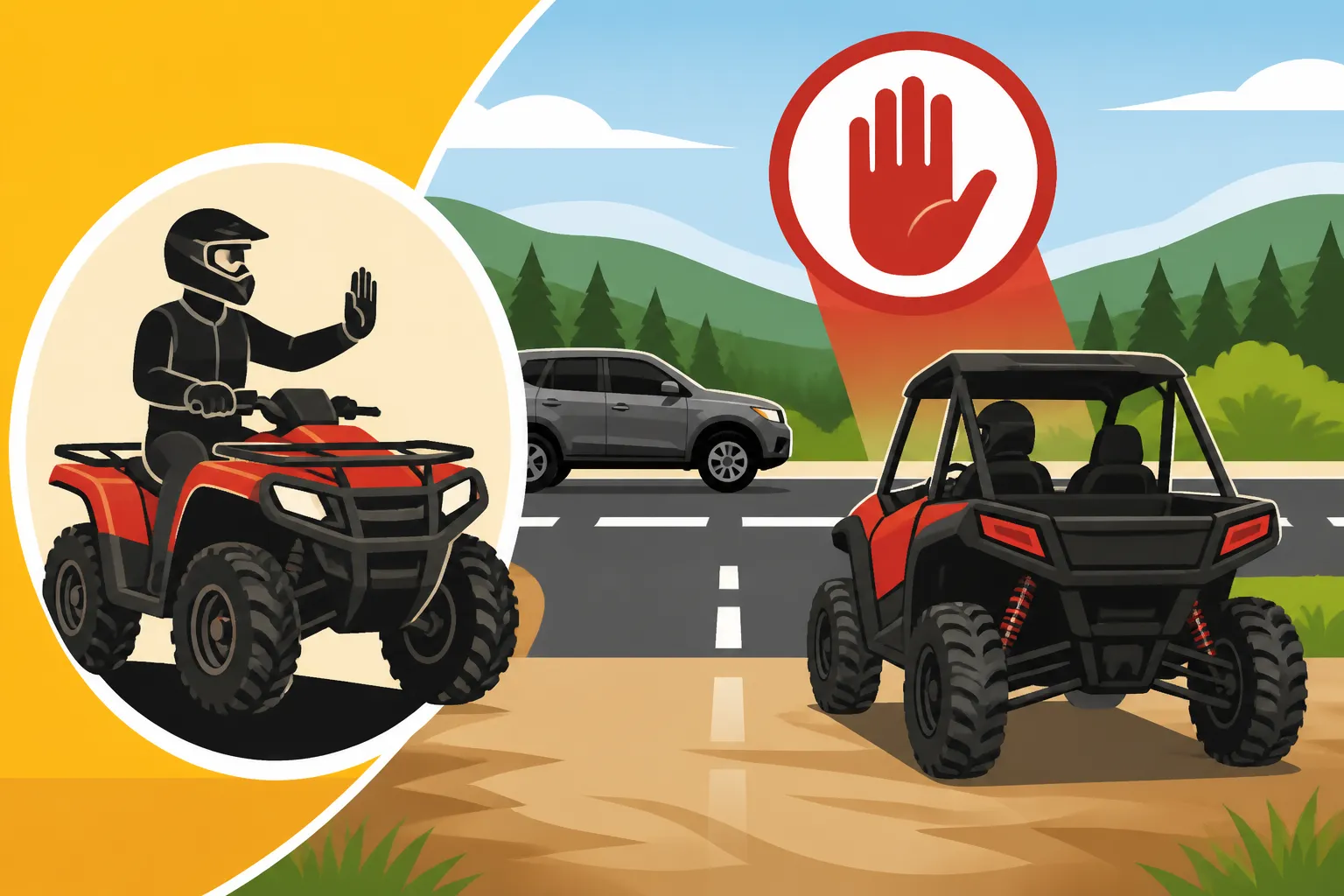
First and foremost, slow down. This isn't a suggestion; it's a command. Reduce your speed significantly, bringing your machine under full control. This allows you more time to react, to stop if necessary, and to properly assess the traffic situation. Next, observe. Look both ways, and then look again. You need to identify if there's any oncoming traffic from either direction that could pose a threat. Don't just glance; actively scan the road for vehicles, including bicycles or pedestrians. Listen carefully as well; sometimes you can hear traffic before you see it, especially in wooded areas. While ATVs and UTVs don't typically have formal turn signals for road use, it's good practice to make an informal hand signal if you're riding with others, indicating your intent to stop or cross. Finally, consider your approach angle. Aim to approach the edge of the road at a point where you have the best possible visibility of oncoming traffic. This might mean pausing slightly before the actual edge of the pavement or gravel to get a clear view, always maintaining that crucial 7.5-metre distance from the travelled portion until you are ready to cross.
Crossing the Road: The Quickest and Most Direct Route
Once you've safely approached the roadway, assessed the traffic, and determined it's clear to proceed, the next step is to execute the crossing itself. The key directive here is to cross the road using the quickest and most direct route possible. This means minimizing the time your ATV or UTV spends on the paved or gravel surface of the highway.
The ideal crossing is one that is perfectly perpendicular to the road, going straight from one side of the trail to the other. You shouldn't be turning onto the road, travelling along it for any distance, or making wide, arcing turns. The intention is to traverse the road as if it were a temporary obstacle in your path, not a part of your route. Accelerate smoothly but briskly across, ensuring you have enough momentum to clear the road safely without being overly aggressive. Your eyes should remain focused on the opposite side of the trail and any potential hazards, while also keeping peripheral awareness of any suddenly appearing traffic. The goal is to get off the public road surface as quickly and safely as possible, minimizing your exposure to highway traffic. Remember, every second you spend on the road is a second of increased risk. This is where a clear approach and a quick, deliberate action make all the difference.
Rejoining the Trail Safely
Successfully crossing the road doesn't mean you can instantly relax and forget about traffic. The moments immediately after you've crossed are still critical for maintaining safety and preventing any last-minute incidents. Just as you approached the road with caution, you need to rejoin the trail on the other side with equal care.
As soon as your wheels are clear of the main travelled portion of the highway, you should check your mirrors or quickly glance behind you to ensure no unexpected traffic has appeared that might be affected by your movements. While your main goal is to get off the road, you still need to be aware of your surroundings, especially if you're part of a larger group that is following you. Avoid any sudden, sharp turns or rapid acceleration that could throw off a rider behind you or inadvertently put you back into the path of an oncoming vehicle if you haven't fully cleared the road allowance. Once you're safely on the trail and have re-established the 7.5-metre distance from the highway, you can then gradually resume your normal trail speed, taking a moment to ensure all riders in your group have crossed safely if you're riding with others. This consistent, disciplined approach from start to finish is the hallmark of a responsible and safe ORV operator in New Brunswick.
Equipment and Rider Requirements for Road Crossings
While proper technique is vital for safe road crossings, your machine and your own readiness play equally important roles. New Brunswick has specific rules regarding the equipment your ATV or UTV must have, as well as who can operate it, especially when interacting with public roads. These aren't just bureaucratic hurdles; they're foundational safety measures.
Essential Machine Equipment for Road Interaction
When you're operating your ATV or UTV, especially when you need to cross a road, your machine needs to be equipped to maximize your visibility and safety. While an ORV isn't a street-legal car, certain features are mandatory or highly recommended for any road interaction.
First, lights are non-negotiable. Your machine must have working headlights and taillights, particularly if there's any chance you'll be riding near dusk, dawn, or in low-light conditions. Brake lights, if your machine is equipped with them, should also be fully functional. These lights ensure that motorists can see you approaching, crossing, and receding from the road, especially at those crucial moments when visibility might be reduced. Many riders, understanding the importance of being seen, choose to upgrade their machines with aftermarket accessories, perhaps from a brand like SuperATV, adding brighter LED lights or additional reflective elements to their machines to boost their presence.
Beyond lights, reflectors are also important. Even if your lights are off during daylight, reflectors can catch a driver's attention. While not always mandated for every part of an ORV, having visible reflectors on the front, rear, and sides can only add to your safety profile. Some riders also consider adding a small, bright orange safety flag, especially on UTVs or machines that might be obscured by terrain, to provide an extra visual cue to drivers. Remember, when crossing a road, you want to be as conspicuous as possible to minimize the risk of being overlooked by a motorist.
Rider Licensing and Age Restrictions at Crossings
It's not just about the machine; it's about the operator. New Brunswick has clear rules about who can operate an ATV or UTV, and these rules are especially critical when interacting with public roads. [New Brunswick's Minimum Age of 16] for independent operation on most trails is a starting point, but specific provisions apply when roads are involved.
For any rider under the age of 16, crossing a public road is strictly prohibited unless specific conditions are met. This means a 14-year-old rider, even with a [New Brunswick Class 9 Licence for Teens] and having completed an approved safety course, cannot independently cross a public road. They must be accompanied by an adult, typically 19 years or older, who also holds a valid driver's license and a safety course certificate, and that adult must actively facilitate the crossing, often by stopping traffic or ensuring the clear path. The onus is on the adult escort to ensure the minor's safety and legal compliance.
For adult riders (16 years or older), a valid driver's license (any class) is required to operate an ATV or UTV on or across a highway. This means that if you're old enough to hold a driver's license, you're expected to possess one when performing these road interactions. These rules are in place to ensure that anyone operating an ORV in situations where they might encounter road traffic has demonstrated a basic level of road awareness and responsibility. Never assume that just because you're off-road most of the time, the rules of the road don't apply when you touch pavement.
Helmets and Other Safety Gear
Safety gear is not optional when riding an ATV or UTV in New Brunswick, and this rule becomes even more critical when you're interacting with public roads. The province has a strict [New Brunswick ATV Helmet Law] that applies to every occupant of an off-road vehicle.
This means that not only the operator but any passenger must wear an approved safety helmet that meets specific standards. These standards typically include CSA D230, DOT FMVSS 218, or Snell M2005 or M2010. Essentially, it needs to be a helmet designed and certified for motor vehicle use, offering substantial head protection. Wearing a helmet isn't just about avoiding a fine; it's about protecting your life and preventing severe injury in the event of an accident. Even a low-speed collision with a car during a road crossing can have devastating consequences if you're not properly protected.
Beyond the helmet, other safety gear is highly recommended. Goggles or a face shield are essential to protect your eyes from dust, debris, or insects, which can be particularly hazardous when quickly scanning traffic during a crossing. Sturdy boots that cover your ankles, gloves, and durable riding apparel (long pants, long-sleeved shirts or jackets) provide crucial protection in case of a fall or collision. While not all of this gear is legally mandated like the helmet, it forms a comprehensive safety system that significantly reduces your risk of injury. Thinking about safety gear is an integral part of preparing for any ride, but it deserves extra consideration when you know you'll be encountering roads.
Common Mistakes and How to Avoid Penalties
It's easy to make mistakes when you're out riding, especially when the line between trail and road can sometimes feel blurry. However, mistakes when crossing roads often come with significant consequences, both in terms of safety and legal penalties. Understanding these common pitfalls can help you avoid costly tickets and dangerous situations.
Lingering, Riding Parallel, or Turning on a Road
These three actions are among the most common and most serious infractions riders commit when interacting with public roads, and they are almost guaranteed to attract the attention of law enforcement.
Lingering on the road means you're taking too much time to cross, perhaps pausing unnecessarily, trying to adjust your gear, or chatting with fellow riders. The law dictates that a crossing must be as direct and quick as possible. Every extra second you spend on the travelled portion of the highway increases your risk of a collision and also gives an officer more time to observe and ticket you. Don't treat the road as a rest stop or a place to regroup.
Riding parallel to the road is another major no-no. This means you're operating your ORV in the ditch, on the shoulder, or alongside the main traffic lanes for any significant distance. Remember the 7.5-metre rule? It's specifically designed to prevent this. Riding parallel suggests you're trying to use the road as an extension of the trail, which is almost always illegal unless it's a very specific, ministerially designated shared section, clearly marked. This is incredibly dangerous, as motorists often don't expect ORVs to be travelling alongside them and might not see you, especially when changing lanes or turning.
Turning onto a road or using a road to make a turn to another trail is strictly prohibited unless on a designated shared road section. Your crossing should be a straight shot, from trail segment to trail segment. If you use the road to pivot, merge into traffic, or make a sweeping turn, you are actively operating your off-road vehicle on a highway, which is illegal and carries significant fines. These actions represent a fundamental misunderstanding of the crossing rules and put you and others at severe risk.
Fines for Illegal Road Use
The penalties for improper road use of an ATV or UTV in New Brunswick are not minor. They are designed to deter dangerous behaviour and reinforce the strict separation between off-road trails and public highways. If you're caught violating the rules, you can expect a substantial financial hit.
For instance, [New Brunswick Fines for Riding Near a Highway] or operating your ORV improperly on a highway can result in significant tickets. A common fine for illegal highway operation, such as riding on the travelled portion of a highway or violating the 7.5-metre rule, can easily be around [New Brunswick's $292.50 Highway Fine]. This isn't a slap on the wrist; it's a serious penalty that will make you think twice about cutting corners or taking risks. And remember, these fines are set amounts, meaning there's often little to no discretion for the issuing officer once the infraction has been observed.
These fines also don't include potential towing and impoundment fees for your machine, which can add hundreds of dollars more to the cost. If your actions contribute to an accident, you could also face civil liability charges, impacting your insurance rates and potentially leading to far greater financial burdens. The takeaway here is clear: the cost of being caught improperly using a highway with your ORV far outweighs any perceived convenience or shortcut. It's simply not worth the risk.
Producing Documents When Stopped
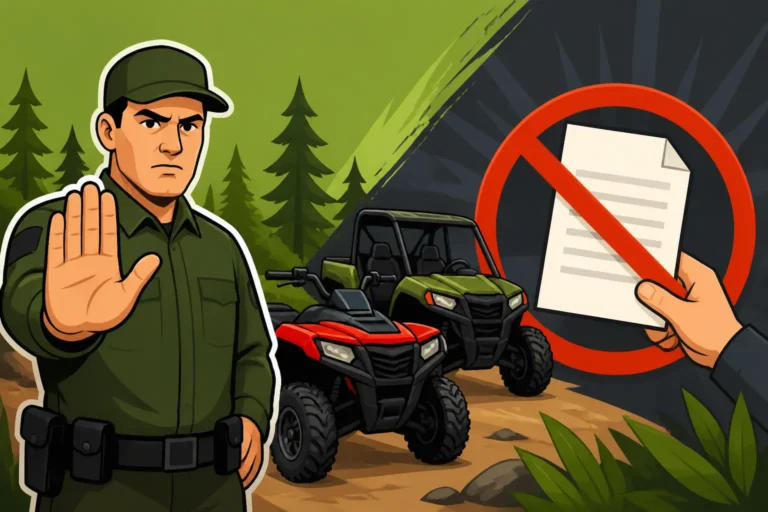
Should you be stopped by a law enforcement officer while operating your ATV or UTV, especially in the vicinity of a road or after a crossing, being prepared to produce your documents is paramount. This is not just a polite request; it's a legal obligation.
Officers patrolling areas where ORVs might interact with roads are specifically looking for compliance with the Off-Road Vehicle Act. They will expect you to provide proof of your legal right to operate the machine. This typically means having [Carrying Four Documents at Once]:
- Your ATV/UTV registration certificate: This proves the machine is registered with Service New Brunswick.
- Proof of insurance: New Brunswick generally requires liability insurance for ORVs operating on designated trails. Even for crossing a road, an officer will want to see that your machine is insured.
- Your driver's license: If you are operating the machine in any capacity on or across a highway, you must possess a valid driver's license.
- Your Off-Road Vehicle Safety Course Certificate: For certain age groups, or if you are riding on designated trails, this certificate is mandatory.
Having these documents readily accessible and in good condition is crucial. Keep them in a waterproof bag or pouch in your saddlebag, glove box, or a secure pocket. Fumbling for papers, or worse, not having them at all, can lead to additional tickets for non-compliance and prolong your interaction with law enforcement. Being organized and prepared shows respect for the law and can often make a roadside stop much smoother.
Navigating Shared Highway Sections and Village Streets
While the general rule is "no ATVs on highways," New Brunswick does have some specific exceptions that riders need to understand. These exceptions are critical for connecting trails, accessing services, and integrating ORV use into certain communities, but they come with their own strict conditions.
Designated Shared Highway Sections
On rare occasions, you might encounter specific sections of provincial highway that have been officially designated as [New Brunswick Shared Highway Sections]. These are special allowances, usually for short distances, that connect major trail systems where no viable off-road alternative exists. You'll know you're on one of these sections because it will be clearly marked with provincial signage explicitly indicating that ORVs are permitted.
When riding on a designated shared section, it's absolutely crucial to remember that you are sharing the road with regular vehicular traffic. This means you must adhere to all traffic laws that apply to other vehicles, including respecting speed limits (which are often reduced for ORVs on these sections), stopping at stop signs, and using hand signals for turns if your machine isn't equipped with indicators. Furthermore, your machine must meet minimum equipment requirements for highway use, such as proper lighting. It's a completely different riding experience than being on a dedicated trail, demanding heightened awareness and defensive driving. Always keep to the far right side of the road, giving ample room to other vehicles, and be prepared for higher speeds and less forgiving surfaces. These shared sections are an important part of the trail network, but they require a higher level of rider responsibility and caution.
Riding Through Villages and Towns with Bylaws
As mentioned earlier, many [New Brunswick Towns That Allow Quads] have taken the initiative to pass specific municipal bylaws that permit ATVs and UTVs on certain streets within their limits. This is often done to allow riders to access gas stations, restaurants, or lodging, or to connect different parts of the trail system that run through the community. This is a fantastic way to support local businesses and enhance the riding experience, but it comes with strict rules.
If you plan to ride through a village or town, your first step must always be to check the local bylaws. Don't assume. What's allowed in Sussex might be strictly prohibited in Hampton. These bylaws will explicitly state which roads are open, what the permitted hours of operation are, and what speed limits apply (which are often significantly lower than standard municipal speed limits for ORVs). You can usually find this information on the town's official website or by calling their municipal office. The QuadNB website and [New Brunswick Bylaw Lookups Before You Ride] can also be valuable resources.
When riding on these designated village streets, you are effectively a road user and must adhere to all traffic laws. This includes obeying all stop signs, yield signs, and traffic lights, and travelling at the posted speed limit (or the lower ORV-specific limit). Be especially mindful of pedestrians, cyclists, and children, and ride courteously. The privilege of riding on these streets can be revoked if riders abuse it, so it's everyone's responsibility to set a good example. Treat these community access points with the utmost respect, as you are a guest in their community.
Rules for Crossing Bridges and Causeways
When your trail route intersects with a bridge or a causeway that is part of a public road system, you need to exercise extreme caution. For the purposes of ORV rules, these structures are almost always considered part of the "highway" they carry, even if they simply connect two sections of off-road trail. This means the strict rules for [New Brunswick Rules for Riding a Bridge] and [New Brunswick Rules for Riding a Causeway] are in full effect.
Just like with any other road crossing, your primary goal is to cross these structures in the most direct and safest manner possible, minimizing your time on them. This means:
- No stopping or lingering: Bridges and causeways often have poor shoulders or no shoulders at all, making them particularly dangerous places for an ORV to stop.
- Maintain the 7.5-metre rule (where applicable): As you approach and depart the structure, ensure you are not riding parallel to the travelled portion of the highway.
- Yield to all traffic: Always assume vehicular traffic has the right-of-way. Bridges and causeways can amplify road noise, making it harder to hear approaching vehicles, and often have reduced sightlines.
- Be aware of other users: Some older or less-travelled bridges might also be used by pedestrians or cyclists. Be courteous and give them ample space.
Weight limits are another consideration, though usually more for very heavy UTVs or specialty machines. While most recreational ATVs and UTVs are well within the weight capacity of public bridges, always be aware of any posted restrictions. In essence, treat a bridge or causeway crossing with even greater vigilance than a typical road intersection, as the confined nature of these structures can heighten the risks involved.
Best Practices for Awareness and Preparedness
Being a responsible ATV or UTV rider in New Brunswick involves more than just knowing the rules; it's about adopting best practices that promote safety and preparedness on every ride, especially when roads are involved. A proactive approach can make all the difference.
Using Trail Maps and Apps to Plan Crossings
In today's connected world, there's no excuse for getting caught off guard by a road crossing. Utilizing modern mapping tools is a fundamental best practice for safe and enjoyable riding. The official QuadNB trail maps and the [New Brunswick Trail Maps and the MapGear App] are invaluable resources for planning your route and identifying potential road interactions.
Before you even leave your trailhead, take the time to study your planned route on a map. Look for any points where your chosen trail intersects with public roads or highways. The QuadNB maps typically clearly mark these crossing points, and the MapGear app, with its GPS capabilities, allows you to see your exact position relative to roads in real-time. By identifying these crossings in advance, you can mentally prepare for them, anticipate traffic, and even scout for alternative routes if a particular crossing looks problematic or busy. This pre-ride planning allows you to ride with confidence, knowing what's coming up and how to navigate it safely, rather than being surprised by an unexpected intersection. Many riders from outside the immediate area find that using these maps and even consulting local clubs for advice on specific crossings can significantly enhance their safety and enjoyment.
Riding with a Group and Communication
Riding with a group adds an extra layer of enjoyment to the ATV and UTV experience, but it also introduces specific considerations for safety, especially around road crossings. Effective communication and group discipline are paramount.
When approaching a road crossing as a group, the lead rider should always be the first to slow down and assess traffic. It's crucial for the lead rider to use clear hand signals to indicate "stopping" or "slow down" to the riders behind them. [New Brunswick Hand Signals Without Lights] are universally understood among riders and ensure everyone in the group is aware of the situation. As each rider crosses, they should ensure the path is clear for the next person in line, without delaying traffic or creating a backlog. It's often helpful to have a "sweeper" or the last rider in the group who can confirm everyone has crossed safely before proceeding.
Maintaining proper spacing within the group is also essential. Riding too close together reduces reaction time and makes it harder for everyone to get a clear view of oncoming traffic. Conversely, being too spread out can make the crossing process long and disjointed. A good practice is to cross one or two machines at a time, depending on traffic, and then regroup safely on the other side. This coordinated effort ensures that the entire group navigates the road crossing efficiently and safely, minimizing the exposure of all riders to road hazards.
Understanding Local Nuances and Asking Questions
New Brunswick is a diverse province with varying local conditions, and what applies to one area might not be exactly the same in another. This is particularly true when it comes to ORV rules and road interactions. While provincial laws are universal, local nuances, such as specific municipal bylaws or informal local customs, can play a significant role.
Never assume that because a certain type of road access or crossing is permitted in one town, it's allowed everywhere else. Always be prepared to adapt to local rules. This is where engaging with the local riding community and resources becomes incredibly helpful. Local ATV clubs are a fantastic source of up-to-date information on trail conditions, specific challenging crossings, and any local bylaws that might affect your ride. They are often the ones who have worked with municipalities to open specific roads for ORV access. [New Brunswick Registration Questions Staff Hear] often include inquiries about local riding rules, so don't hesitate to reach out to Service New Brunswick as well for clarification on provincial regulations or to point you to relevant local authorities.
Asking questions, whether it's through online forums, directly to a club, or at a local Service New Brunswick centre, demonstrates a commitment to responsible riding. It's far better to ask for clarification beforehand than to receive a ticket or, worse, be involved in an accident due to misunderstanding a specific local rule. Embrace the idea that continuous learning and local awareness are key components of being a safe and legal ATV or UTV rider in New Brunswick.
| Action | Do | Don't |
|---|---|---|
| Approach | Slow down, look both ways, signal intent to group (if applicable) | Approach at speed, assume clear path, ignore traffic |
| Positioning | Maintain 7.5 metres from travelled portion until ready to cross | Ride parallel to the road in ditch or shoulder |
| Crossing | Cross perpendicularly, take the shortest, most direct route | Linger, make wide turns, travel any distance along the road |
| Visibility | Ensure headlights/taillights are on (if applicable), use reflectors | Assume motorists see you, ride in low light without proper lighting |
| Documentation | Carry valid registration, insurance, license, and safety certificate | Forget or misplace your essential documents |
| Age/License | Adults (16+) with valid license; minors with adult escort (if allowed) | Under 16 crossing independently; operating without a valid license |
| Safety Gear | Always wear an approved helmet; consider goggles, boots, gloves | Ride without a helmet (all occupants), ignore other protective gear |
| Planning | Use maps/apps to identify crossings, check local bylaws | Rely on assumptions or hearsay about road access |
| Group Ride | Communicate with hand signals, cross in an organized manner | Ride too close, make sudden moves, leave riders behind |
Disclaimer
This article is for general informational purposes only and does not constitute professional advice. Laws, prices and regulations vary by location and change over time. Consult a qualified professional for guidance on your specific situation.