New Brunswick Penalties for No Trail Permit
There's nothing quite like the open trail, the rumble of your ATV or side-by-side, and the feeling of freedom as you explore New Brunswick's incredible backcountry. But that exhilarating experience can come to a screeching halt, and quickly become a very expensive headache, if you haven't taken care of one crucial piece of paperwork: your trail permit. Many riders underestimate the importance of this little sticker, often thinking they can just "chance it" or that enforcement is lax. This comprehensive guide is here to set the record straight, outlining the very real and often surprising penalties for riding without a valid trail permit in New Brunswick, and helping you avoid those costly consequences.
Understanding New Brunswick's Trail Permit Requirement
Before we dive into the nitty-gritty of fines and penalties, it’s essential to understand why New Brunswick has a trail permit system in the first place. It's not just another fee; it's the lifeblood of our extensive off-road vehicle (ORV) network.
Why the Trail Permit Exists
The New Brunswick trail permit system is fundamentally about funding, maintenance, and the sustainable enjoyment of our province's vast wilderness. Imagine thousands of kilometres of trails stretching across diverse terrain – from old rail beds to challenging forest paths. Maintaining this infrastructure, which includes everything from grading and ditching to repairing culverts and bridges, requires significant resources. These funds don't magically appear; they come directly from the sale of trail permits. Every time you purchase a permit, you're directly contributing to the upkeep of the very trails you love to ride. It ensures that the trails are safe, accessible, and enjoyable for everyone, for years to come. Without this pooled effort, our incredible [New Brunswick's 10,000 Kilometres of Trail] simply wouldn't exist in the condition we've come to expect.
Who Needs a Trail Permit?
Here’s where some confusion often creeps in. In New Brunswick, every off-road vehicle (ORV) – whether it’s an ATV, UTV, dirt bike, or snowmobile – needs a valid trail permit to be ridden on the designated organized trail system. This isn't just for visitors; it applies to residents too. There's a common misconception that if you’re "just riding in the woods" or on a logging road, you're exempt. However, if that logging road or woods path is part of the extensive QuadNB network, or any other official trail, then a permit is mandatory.
The primary exemption typically applies to private land. If you own a large tract of land and confine all your riding to that property, and that property is not part of or accessed by the organized trail system, then a trail permit isn't strictly necessary for that specific activity. But the moment even one tire touches a managed trail, you're expected to have that permit. It's crucial to distinguish between riding on your own property, entirely separate from any public or club trail, and riding on trails that are maintained and managed by the provincial federation and its clubs. Many private woodlots have club trails running through them with landowner permission, and if you're on those sections, you need a permit.
Distinguishing Between Groomed and Non-Groomed Permits
New Brunswick offers a couple of options when it comes to trail permits, each with slightly different implications and costs. Understanding the difference is key to ensuring you have the right one for your riding style.
First, there's the Groomed Trail Permit. This is your all-access pass to the entire network, including trails that receive regular grooming, particularly during the winter months for snowmobiling, but also year-round for ATV sections that see heavy use and require more intensive maintenance. This permit signifies a higher level of financial contribution, reflecting the greater cost associated with maintaining these premium trails. If you're planning to ride extensively, explore different regions, or hit the trails during varying seasons, especially winter, this permit is often the best choice. It gives you the flexibility to go almost anywhere within the [New Brunswick ATV Trails: The QuadNB Network].
Then there's the Non-Groomed Trail Permit. This option is generally less expensive and provides access to trails that, as the name suggests, do not receive the same level of intensive grooming or year-round maintenance. These trails might be more rugged, less developed, and offer a different kind of riding experience. While still part of the overall network and requiring maintenance, their upkeep costs are lower. This permit is often chosen by riders who stick to less developed areas, ride primarily in the three seasons (spring, summer, fall), and don't require access to the most manicured trails. It's vital to check [New Brunswick Groomed vs Non-Groomed Permits] to ensure you're getting the right type for your intended riding areas.
Regardless of which permit you choose, the core principle remains: if you're on a designated trail managed by a club or the federation, you need one. Choosing the wrong one might mean you're technically not authorized for certain sections of trail, even if you have a sticker.
The Specifics of "No Trail Permit" Penalties
So, what happens if you decide to take a chance and ride without a permit? The answer isn't a simple wrist-slap. New Brunswick takes its trail system seriously, and the penalties reflect that commitment to funding and maintaining the network.
The Immediate Consequences: Fines and Tickets
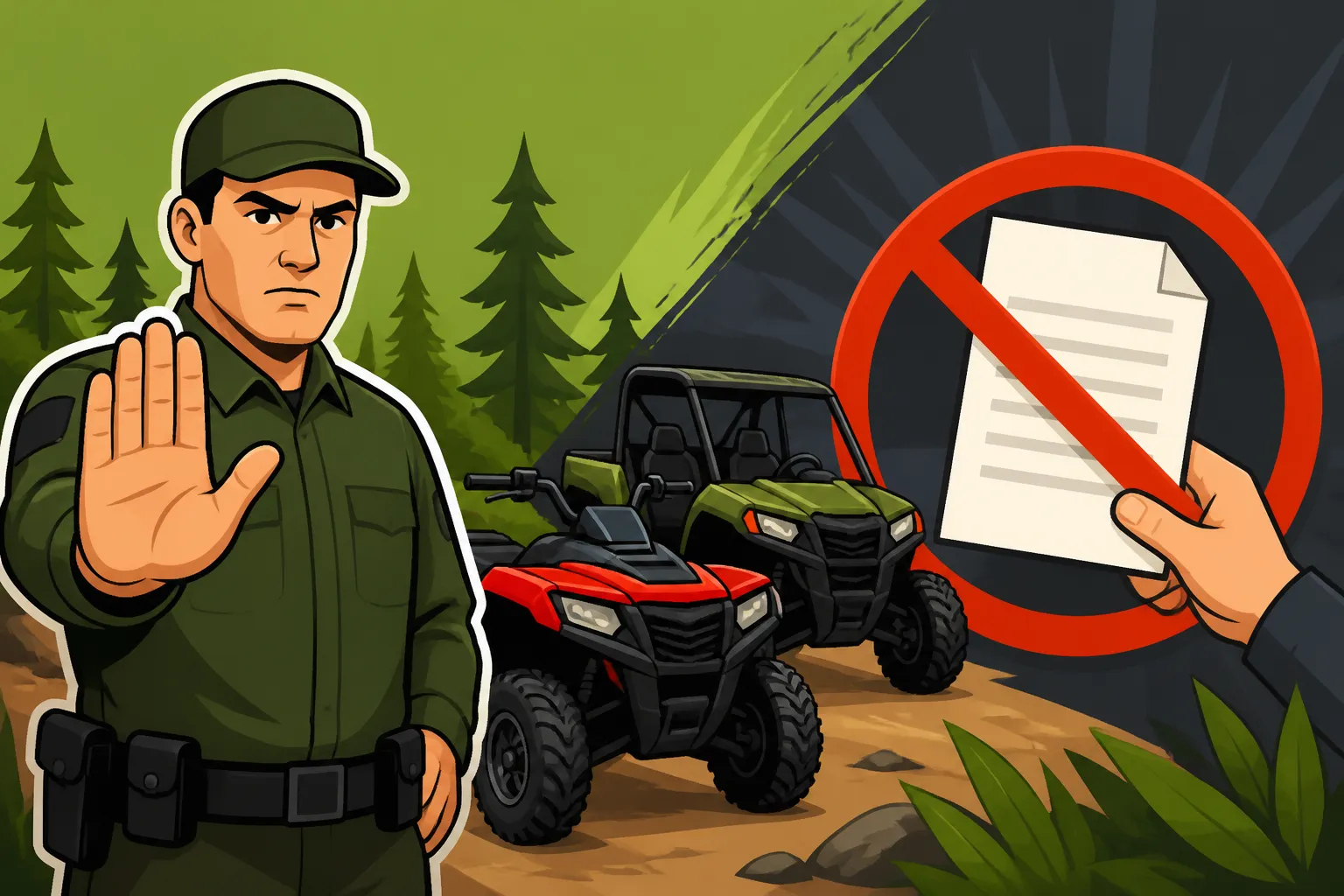
The most immediate and common consequence of riding without a valid trail permit in New Brunswick is a hefty fine. We're talking about a significant hit to your wallet, far exceeding the cost of the annual permit. Currently, the set fine for operating an off-road vehicle without a valid trail permit is substantial. This isn't just a hypothetical number; it's a very real figure that will be presented to you on the spot by an enforcement officer. For example, the [New Brunswick Permit Fines of $340.50] is a figure that makes most riders quickly realize the permit itself is a bargain.
When an officer issues a ticket, it's typically a summary offence ticket, similar to a speeding ticket in a car. You'll receive a physical ticket detailing the infraction, the fine amount, and instructions on how to pay it or dispute it in court. This fine is often accompanied by administrative fees, adding even more to the total cost. It's an instant financial penalty that can put a serious damper on your riding day, not to mention your budget. Imagine planning a weekend ride, only to have a significant portion of your fun money diverted to a preventable fine. It's a frustrating situation that many riders regret finding themselves in.
Beyond the Fine: Other Potential Repercussions
While the fine itself is a major deterrent, the consequences of riding without a permit can extend well beyond the initial ticket. These additional repercussions can be more inconvenient and costly in the long run.
One of the most serious possibilities is the impoundment of your machine. Depending on the circumstances, an officer has the authority to seize your ATV or UTV. This means your pride and joy could be towed away, and you'd be responsible for all towing and storage fees, which can quickly add up to hundreds of dollars. Recovering an impounded machine is not only expensive but also a significant hassle, requiring trips to impound lots and dealing with administrative processes.
Another potential issue is court appearances. While many set fines can be paid without a court date, more serious or repeat offences, or if you choose to dispute the ticket, could lead to a mandatory court appearance. This means taking time off work, possibly hiring legal counsel, and facing a judge. It transforms a simple recreational activity into a legal headache.
Furthermore, riding without a permit can have insurance implications. While your ORV insurance might cover you for liability and damage in general, some policies could have clauses that exclude coverage if you're operating the machine illegally, such as without a required permit on a designated trail. If you were involved in an accident while riding without a permit, your insurance company might deny a claim, leaving you personally responsible for damages, injuries, or legal costs. This is a risk that simply isn't worth taking. Companies like SuperATV offer robust aftermarket parts that can enhance your machine, but no part can protect you from the legal and financial fallout of riding without proper documentation.
Finally, repeated offences could lead to loss of trail privileges or other administrative actions. While not as common for a first offence, a pattern of non-compliance could result in more severe penalties over time, potentially affecting your ability to register or operate an ORV in the future.
Who Can Issue a Ticket?
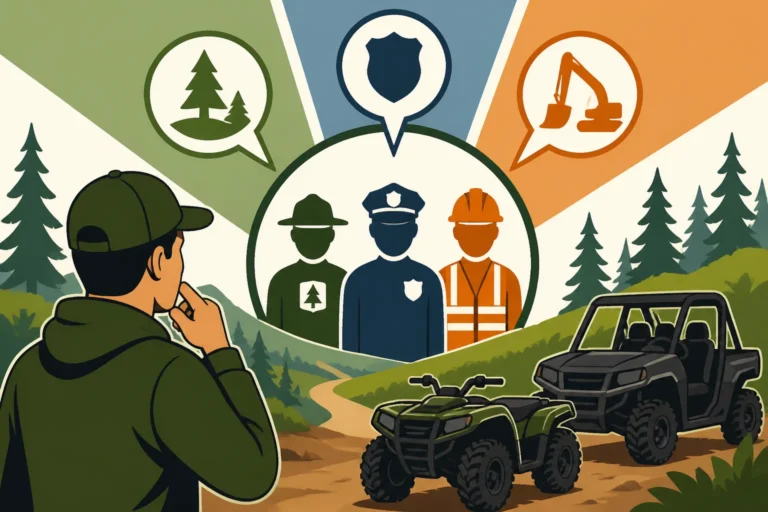
It's important for riders to understand that enforcement of off-road vehicle regulations, including trail permits, falls under the jurisdiction of several different authorities in New Brunswick. This means you could be stopped and ticketed by various officers.
Primarily, New Brunswick Conservation Officers are heavily involved in ORV enforcement. These officers are specialists in natural resource protection and outdoor recreation regulations, and they spend a significant amount of time patrolling trails, often on their own ATVs or snowmobiles. They are well-versed in the Off-Road Vehicle Act and are vigilant about ensuring riders have the necessary permits, registration, and safety gear.
The Royal Canadian Mounted Police (RCMP) also have full authority to enforce ORV laws. While they might not be specifically patrolling trails on ATVs as often as Conservation Officers, they can certainly stop you if they encounter you on a road or trail, especially in rural areas. Their mandate covers all provincial laws, and that includes the ORV Act. Similarly, local municipal police forces in areas where they have jurisdiction can also enforce these regulations. This is particularly relevant if you're riding in or near communities where local bylaws might intersect with provincial ORV rules.
The key takeaway here is that there isn't just one type of officer to look out for. Anyone with law enforcement powers in New Brunswick can stop an ORV rider and demand to see their documents, including their trail permit. They are on the trails, they are on the backroads, and they are ensuring compliance.
The Importance of a Valid Trail Permit
Beyond avoiding penalties, having a valid trail permit is a sign of responsible riding and a direct contribution to the health and longevity of New Brunswick’s incredible ORV network. It's about being part of the solution, not just enjoying the ride.
Contributing to the Trail Network
When you purchase a New Brunswick trail permit, you are directly investing in the future of off-road riding in the province. The fees collected from these permits go into a dedicated fund managed by QuadNB (the New Brunswick All-Terrain Vehicle Federation), which is then distributed to its member clubs. These clubs are the backbone of the trail system, composed of dedicated volunteers who spend countless hours on [New Brunswick Club Trail Maintenance].
This funding is absolutely crucial. It covers the costs of heavy equipment rentals for grading and brushing, materials for bridge and culvert repair, signage to ensure rider safety and navigation, and even insurance for the trail network itself. Without these permit fees, the clubs wouldn't have the resources to keep the trails open, safe, and enjoyable. It's a collective effort, and every permit holder becomes a vital part of that community. Imagine a trail that's been recently cleared of fallen trees, or a newly graded section that makes for a smoother ride – that's your permit dollars at work.
Accessing the QuadNB Network Legally
The trail permit is essentially your membership card to the vast and interconnected [New Brunswick ATV Trails: The QuadNB Network]. This network represents thousands of kilometres of managed trails that crisscross the province, offering diverse riding experiences for all skill levels. Without a valid permit, you are effectively trespassing on a system that is maintained by the efforts and contributions of permit-paying riders.
Accessing this network legally means you're covered by the agreements QuadNB has with various landowners, municipalities, and the province itself. These agreements are often contingent on a managed, funded system, which the permit provides. Trying to ride these trails without a permit not only risks a fine but also undermines the very trust and relationships that allow these trails to exist in the first place. You are benefiting from a well-managed system without contributing to its upkeep, which isn't fair to the thousands of responsible riders who do pay their way.
Reciprocity and Visiting Riders
New Brunswick's trail permit system also benefits from, and contributes to, reciprocity agreements with other jurisdictions. This is a huge advantage for riders who enjoy exploring beyond provincial borders or for those visiting New Brunswick from elsewhere.
For instance, New Brunswick has [New Brunswick Reciprocity With Nova Scotia] and Prince Edward Island. This means that if you hold a valid New Brunswick trail permit, you can often ride on the designated trail systems in Nova Scotia and PEI without needing to purchase an additional permit for those provinces. It’s a fantastic way to broaden your riding horizons without doubling up on fees.
Similarly, New Brunswick has an agreement that allows its permit holders to ride in certain areas of Maine, creating a vast, interconnected network for cross-border adventures. The [New Brunswick and Maine's Combined Network] is a testament to the collaborative spirit of the off-road community. However, it's crucial for riders, especially those from outside New Brunswick, to verify the most current reciprocity agreements. While many agreements exist, they can change. So, if you're a visiting rider, checking ahead ensures your permit from home is still valid here, and vice versa. This system relies on every jurisdiction doing its part, and New Brunswick's permit is key to these beneficial exchanges.
Avoiding the Penalty: Getting Your Trail Permit
The best way to avoid a penalty is simple: get your trail permit. It's a straightforward process designed to be accessible to all riders. There's really no good reason to risk a hefty fine and the inconvenience that comes with it when getting a permit is so easy.
Where to Purchase a Permit
Fortunately, acquiring your New Brunswick trail permit is quite convenient, with several options available to suit your preference.
The most common places to purchase a permit include:
- Service New Brunswick Centres: These provincial government service centres are a reliable one-stop shop for various government services, including ORV permits. You can walk in, fill out the necessary paperwork, and leave with your permit and sticker.
- QuadNB Member Clubs: Many of the local ATV clubs across the province sell permits directly. This is a fantastic option because it allows you to connect directly with the volunteers who maintain the trails in your area. Buying from a club often means your money goes directly to support local efforts, and you might even get some valuable local riding tips.
- Authorized Dealers: Many powersports dealerships throughout New Brunswick are authorized to sell trail permits. When you purchase a new or used ATV or UTV, the dealer can often help you get your registration and permit all at once, streamlining the process.
Each of these avenues makes it easy to comply with the rules. You can call ahead to your nearest Service New Brunswick location or check the QuadNB website to find a local club or dealer that sells permits. The convenience is there, so planning ahead is all it takes.
The Application Process and What You Need
The process for applying for a trail permit is relatively simple. You'll need to provide some basic information about yourself and your off-road vehicle.
Typically, you'll be asked for:
- Your personal identification: Such as a driver's license.
- Proof of ownership for your ORV: This might be your current registration certificate. The permit is tied to the machine, not just the rider, so having the machine's details handy is crucial.
- Machine details: Including the make, model, year, and Vehicle Identification Number (VIN).
- Payment for the permit fee: The cost will vary depending on whether you choose a groomed or non-groomed permit, and potentially other factors like the time of year (though full-year permits are generally the standard).
While the trail permit is separate from your ORV registration, having all your documentation organized, as detailed in our [New Brunswick Registration Paperwork Checklist], will make the permit application process smooth and quick. It’s always a good idea to bring your ORV registration certificate with you when purchasing a permit, just in case. The staff at Service New Brunswick or a dealer can guide you through the form and ensure all information is correct.
Displaying Your Permit Correctly
Getting your permit is only half the battle; displaying it correctly is just as important. An improperly displayed permit is akin to not having one at all in the eyes of an enforcement officer, as it can hinder identification and validation.
The trail permit sticker must be affixed to a highly visible location on your off-road vehicle. Generally, this means on the front left fender of your ATV or side-by-side. The specific location is not just a suggestion; it's often a regulation, ensuring that officers can easily spot and verify your permit without needing to ask you to stop or dismount.
When applying the sticker, make sure the surface is clean and dry for good adhesion. Once applied, ensure it's not obscured by mud, dirt, or other accessories. The date on the sticker, indicating its validity, must be clearly legible. If your sticker becomes damaged, faded, or falls off, you'll need to arrange for a replacement. This is important for both safety and compliance. A quality machine from a brand like SuperATV might be built for rugged trails, but even the best machine needs its permit sticker properly displayed to avoid issues. Always consult the official guidelines for [New Brunswick Permit Placement on a Machine] to guarantee you're in compliance. A quick visual check before each ride should become part of your routine.
Common Misconceptions and What Not to Do
Despite the clear rules, some common misunderstandings and risky attitudes persist among riders regarding trail permits. Addressing these head-on can help prevent unnecessary penalties.
"Just Riding My Own Land" vs. Trail Use
One of the most frequent misconceptions is the idea that if you're riding in the general vicinity of your private property, you don't need a trail permit. This usually stems from confusing "private land" riding with using the organized trail network.
Let's be clear: if your riding activity is strictly confined to land that you own, and that land is not part of, or accessed by, the QuadNB trail system, then a trail permit is not required for that specific riding. You have every right to enjoy your machine on your private property.
However, the moment your wheels touch a trail that is part of the QuadNB network, or a shared woods road that functions as part of the managed system, you are obligated to have a permit. Many private woodlots and rural properties border or even have designated club trails running through them with landowner permission. It is your responsibility as the rider to know where your private land ends and where the managed trail system begins. Officers patrol these areas, and the line between private land and public/club trail is often well-defined, even if it's not always obvious to an unfamiliar rider. Assuming "it's all just woods" or "I'm close to home" is a risky gamble that can easily lead to a ticket.
"I'll Just Chance It" Mentality
The "I'll just chance it" mentality is perhaps the most dangerous and, ultimately, most expensive approach to the trail permit requirement. This mindset assumes that enforcement is rare, or that you'll be able to avoid detection. This is a false and costly assumption.
New Brunswick's Conservation Officers, RCMP, and local police actively patrol the ORV trail network. They use their own ATVs and snowmobiles, conduct checkpoints, and are often very familiar with local riding areas and patterns. They are not just sitting by the side of major roads; they are deep in the trail system, precisely where you'll be riding.
The chances of being caught without a permit are much higher than many riders believe. Enforcement efforts are significant because the trail permit system is so vital to the network's funding. Officers are specifically looking for infractions like unregistered machines, lack of insurance, and, of course, no trail permit. Attempting to evade an officer is never advisable and can lead to far more serious charges than just a permit fine. The temporary thrill of riding without a permit simply isn't worth the stress, the financial hit, and the potential legal complications that come with being caught.
The Cost-Benefit of a Permit vs. a Fine
Let's do a quick comparison to put things into perspective. The cost of an annual trail permit in New Brunswick is a relatively modest investment for year-round access to thousands of kilometres of maintained trails. Compare that to the [New Brunswick Permit Fines of $340.50].
| Item | Estimated Cost (Approx.) | Implications |
|---|---|---|
| Groomed Trail Permit (Annual) | Check current QuadNB rates | Legal access to all managed trails, supports maintenance, contributes to reciprocity. |
| Non-Groomed Trail Permit (Annual) | Check current QuadNB rates | Legal access to non-groomed managed trails, supports maintenance. |
| Fine for No Trail Permit | $340.50 (set fine) | Immediate financial penalty, potential court costs, risk of machine impoundment, insurance issues. |
| Towing & Storage (if impounded) | Varies, potentially $200-$500+ | Additional costs, significant inconvenience, lost riding time. |
| Lost Wages / Legal Fees (if court) | Varies, potentially $100s-$1000s | Major disruption, added stress. |
As you can clearly see from the table, the cost of a fine is not just significantly higher than the permit itself, but it can also balloon with additional fees and consequences if your machine is impounded or you end up in court. The "savings" you might think you're making by skipping the permit are minuscule compared to the potential expense of being caught. It’s not a question of if you'll get caught, but when. Responsible riding always starts with being properly permitted.
Additional Considerations for Responsible Riding
Having a trail permit is a cornerstone of responsible ORV riding in New Brunswick, but it's part of a larger picture of legal and safe operation. To truly enjoy the trails without worry, there are a few more essential elements to keep in mind.
Safety Courses and Certificates
While not always directly tied to the trail permit itself, completing a recognized ORV safety course is a critical component of responsible riding, especially for younger riders. In New Brunswick, there are specific age requirements and licensing rules, and a safety course can be mandatory depending on your age and license status. For instance, young riders aged 14 and 15 require a Class 9 licence and a valid driver training certificate to operate an ORV.
Even for adult riders where it might not be legally mandatory, taking a safety course is highly recommended. These courses teach essential riding techniques, safety protocols, environmental awareness, and trail etiquette that go a long way in preventing accidents and ensuring a positive experience for everyone on the trails. It's an investment in your own safety and the safety of others. Many courses are offered through local clubs and are often subsidized for QuadNB members. Learn more about what's covered in a [New Brunswick Quad Safety Course Explained] and consider signing up. It's not just about compliance; it's about competence.
Insurance Requirements
It’s absolutely crucial to understand that a trail permit covers your access to the trails, but it does not replace your vehicle insurance. In New Brunswick, operating an ORV on public trails requires specific insurance coverage. Just like driving a car, you need liability insurance to protect yourself and others in case of an accident.
[New Brunswick Requires Insurance on Trails], and failing to have it can lead to another substantial fine, separate from the permit fine, and even more severe repercussions if you're involved in a collision. Imagine having an accident without insurance – you could be personally liable for tens or hundreds of thousands of dollars in damages and medical bills. Always ensure your ORV is properly insured before hitting the trails. Your insurance policy should be readily accessible, often carried with your registration certificate. Even the toughest aftermarket parts from a company like SuperATV can’t replace proper insurance coverage if you’re involved in an accident.
Other Documents to Carry
Beyond your trail permit and proof of insurance, there are a couple of other documents that you are legally required to carry whenever you operate your off-road vehicle on the New Brunswick trail system.
These generally include:
- Your ORV registration certificate: This is proof that your machine is legally registered with Service New Brunswick.
- Your driver's licence or equivalent: You must be legally permitted to operate an ORV. This could be a full driver's license for adults or a Class 9 ORV license for younger riders meeting specific criteria.
It's wise to carry these documents in a waterproof bag or container, perhaps in a saddlebag or storage compartment on your machine. An officer can, and will, ask to see all these documents during a stop. Being prepared and having everything readily available demonstrates responsibility and can make the interaction go smoothly. For a full rundown of what you need, refer to [New Brunswick Documents You Must Carry]. Being organized with your paperwork means you can focus on the ride, not on potential legal issues.
Disclaimer
This article is for general informational purposes only and does not constitute professional advice. Laws, prices and regulations vary by location and change over time. Consult a qualified professional for guidance on your specific situation.