Looking Up Your Town’s ATV Bylaw Online
It's a common headache for ATV riders across New Brunswick: you want to explore new trails or perhaps just get from your camp to the nearest gas station, but you're not entirely sure what the rules are in a specific town or rural community. Provincial rules cover a lot, but municipal bylaws can add a whole new layer of complexity, often leaving you scratching your head. This guide will walk you through the process of looking up your town's ATV bylaws online, helping you navigate the local regulations and ride with confidence.
Why Local Bylaws Matter More Than You Think
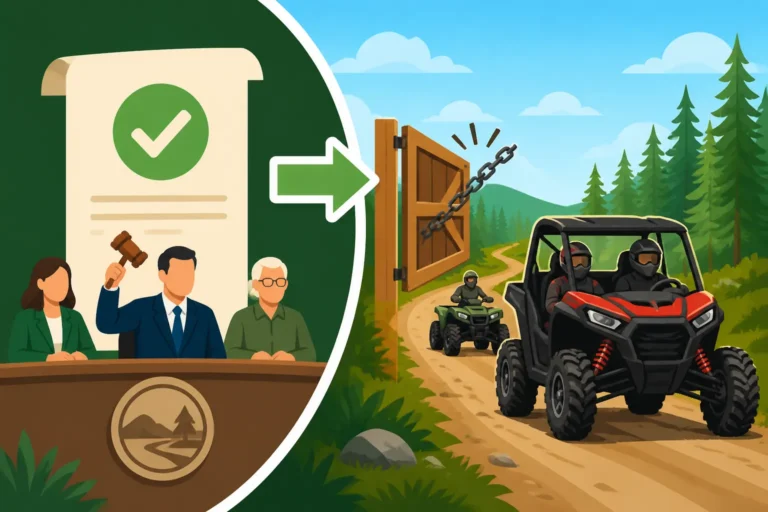
Many riders assume that as long as they follow the province's Off-Road Vehicle Act, they're in the clear. And while the provincial act sets a crucial baseline for things like [New Brunswick ORV Registration Explained] and [New Brunswick Requires Insurance on Trails], it's really just the starting point. Municipalities in New Brunswick have the power to create their own bylaws, which can either open up roads for ATV use or restrict it even further within their boundaries. Ignoring these local rules can lead to unexpected fines, frustration, and even impact your riding privileges.
The Patchwork of Local Rules
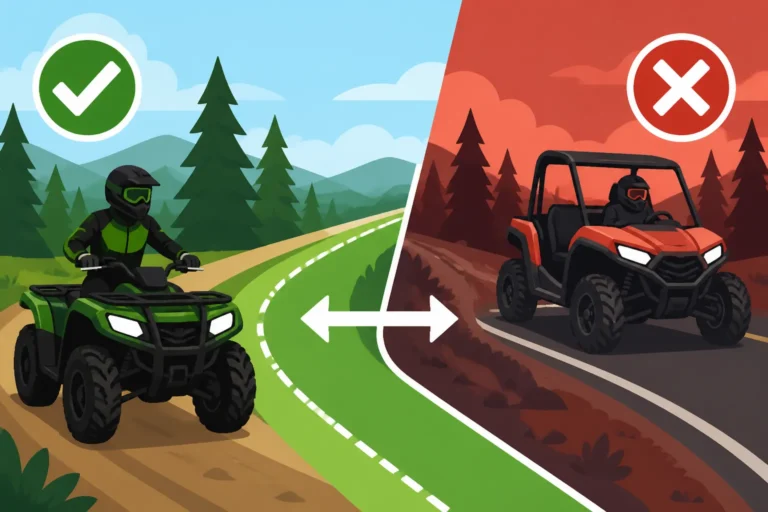
Think of New Brunswick as a quilt of communities, each with its own perspective on ATV use. What's perfectly legal in one village might be strictly prohibited just a few kilometers down the road in another. Some towns, especially those that embrace ATV tourism, might have specific roads or sections of roads designated for off-road vehicle access to local businesses or trailheads. Others, perhaps with different community priorities or concerns about noise and safety, might have very strict prohibitions on any ATV use within their town limits, even on streets that aren't provincial highways. This creates a real "know before you go" situation, and the only way to truly know is to check those local bylaws.
Potential Penalties and Community Impact
Riding where you shouldn't, even unintentionally, can land you with a hefty fine. We've talked about [New Brunswick Fines for Riding Near a Road] and [New Brunswick's $292.50 Highway Fine] before, but a local bylaw violation could carry its own penalties on top of or instead of provincial ones. Beyond the legal ramifications, riding improperly in a community can strain relationships between riders and residents. Local clubs work tirelessly to foster goodwill and advocate for expanded trail access. A few riders ignoring local rules can set back years of positive work, leading to residents pushing for even stricter bans. It's in every rider's best interest to be a good neighbour and respect the local rules.
Where to Start Your Online Bylaw Search
The internet is your best friend when it comes to digging up local regulations. While it might seem daunting at first, most municipalities in New Brunswick have their bylaws accessible online. It just takes a bit of savvy searching.
Navigating Municipal Websites
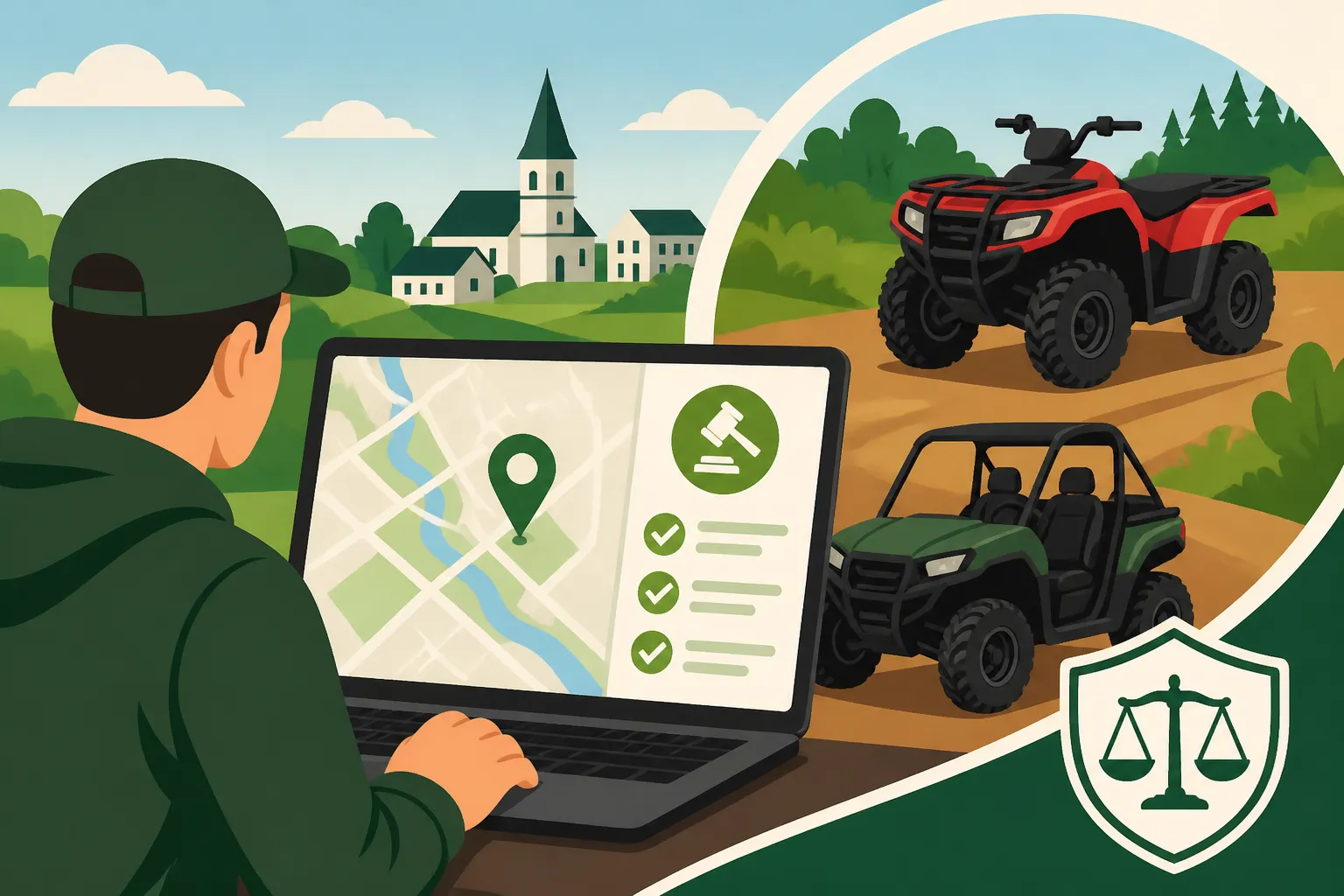
Your first and most reliable stop should always be the official website of the municipality you plan to ride in. Whether it's the City of Fredericton, the Town of Sussex, or the Village of Petitcodiac, simply type "Town of [Name] New Brunswick" into your search engine.
Once you're on their site, look for sections like:
- "Bylaws" or "Ordinances": This is often a direct link from the main menu or in a "Council" or "Government" section.
- "Departments" or "Services": Sometimes bylaws are categorized under a relevant department like "Public Safety," "Community Services," or "Planning."
- Search Bar: Many municipal sites have a search function. Keywords like "ATV," "ORV," "off-road vehicle," "motorized vehicle," or even just "vehicle" can help narrow down the results.
You might find a long list of documents, often in PDF format. Don't be discouraged! You're looking for specific terms, which we'll cover in the next section. Remember, some smaller communities might have their bylaws posted on a regional service commission website if they don't maintain their own extensive municipal site.
Utilizing Provincial Resources for Local Links
While the provincial government doesn't host every municipal bylaw, their websites can sometimes provide links or directories to municipal resources. For example, the Department of Environment and Local Government might have a page listing New Brunswick's local governments, which can serve as a jumping-off point to find individual municipal websites. However, always prioritize going directly to the town's official site for the most current and accurate information. It's like trying to figure out [New Brunswick Registration for a New Resident] – you want to go right to Service New Brunswick for that.
Deciphering What You Find: Key Sections to Look For
Once you've managed to locate a bylaw document, the real work begins. These documents can be dense and full of legal jargon. Here's what to zero in on to find the information relevant to ATV use.
Keywords and Common Bylaw Sections
When sifting through a bylaw document, use the search function (Ctrl+F or Cmd+F on your computer) for keywords. Beyond "ATV" or "ORV," try terms like:
- "Off-road vehicle"
- "Motorized vehicle" (if the bylaw is broad)
- "Highway", "Road", "Street" (to see if access is granted or prohibited)
- "Recreation", "Parks", "Public Lands" (bylaws might restrict use in these areas)
- "Noise" (some bylaws have specific noise restrictions that could impact aftermarket exhausts)
- "Permit" (some municipalities require a local permit in addition to provincial registration and trail permits)
Common sections where you'll find ATV-specific rules include:
- Traffic and Transportation Bylaws: These are the most likely place to find rules about vehicle access on roads.
- Parks and Recreation Bylaws: Often include prohibitions on motorized vehicles in parks or protected areas.
- Nuisance or Noise Bylaws: Can contain clauses affecting when and where ATVs can operate, especially regarding residential areas.
- Specific ORV Bylaws: Some municipalities have dedicated bylaws specifically for off-road vehicles. These are gold mines.
It's also crucial to look for the date of the bylaw and any amendments. Bylaws are not static; they can be updated, repealed, or modified. Always ensure you're looking at the most current version. A bylaw from 1995 might be completely different from one amended in the last few years.
Understanding Common Restrictions and Permissions
Here's a table outlining common elements you might find in a municipal ATV bylaw and what they generally mean for riders:
| Bylaw Element | Typical Meaning for Riders | Example Scenario |
|---|---|---|
| Designated Roads | Specific municipal roads where ATVs are permitted. | Riding on designated streets in Florenceville-Bristol to access a gas station. |
| Prohibited Areas | Areas where ATV use is explicitly forbidden. | No ATVs allowed in town parks or school zones. |
| Time Restrictions | Limits on hours of operation, often for noise control. | No ATV riding within town limits between 10 PM and 7 AM. |
| Speed Limits | Lowered speed limits for ATVs on designated roads. | 20 km/h limit for ATVs on village streets, even if the car limit is 50 km/h. |
| Permit Requirements | A local permit needed in addition to provincial registration. | Fredericton might require a special city permit to ride on specific connector roads. |
| Equipment Rules | Additional requirements for equipment like lights, mirrors. | Mandating turn signals or specific reflective gear, often similar to what SuperATV offers for street-legal conversions. |
| Age Restrictions | May reinforce or add to provincial age rules for road access. | No riders under 16, even if provincial law allows [New Brunswick Rules for a 14-Year-Old Rider] on trails. |
| Insurance Proof | Requirement to carry proof of liability insurance. | Same as provincial [New Brunswick Requires Insurance on Trails], but explicitly stated for town roads. |
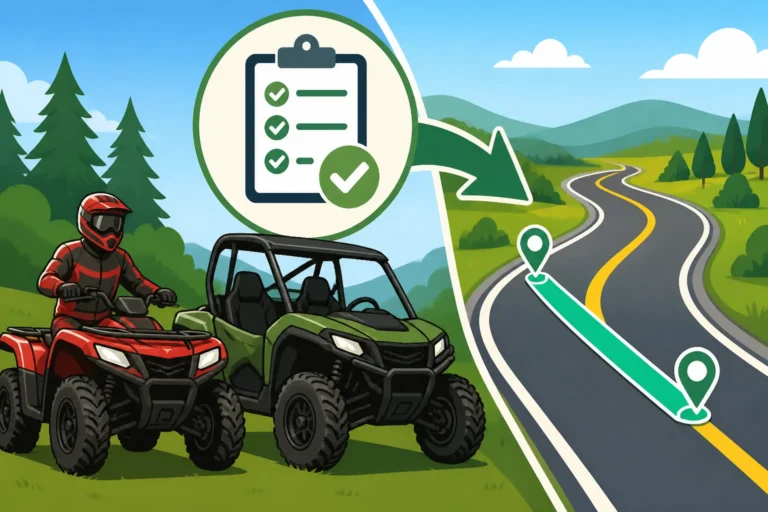
It's really important to differentiate between provincial rules, like the general [New Brunswick ATV Road Rules Explained], and these very specific local rules. They often work in conjunction, not in isolation. So, even if your machine is registered and insured, a local bylaw could still prevent you from riding on a particular street.
When Online Isn't Enough: Reaching Out for Clarification
Sometimes, even after a thorough online search, you might be left with ambiguities. The language in bylaws can be open to interpretation, or perhaps the document you found seems outdated. In these cases, it's always better to seek clarification than to guess.
Contacting Municipal Officials
The most direct route for clarification is to contact the municipal clerk's office or the relevant department (e.g., public works, bylaw enforcement) in the town you're researching. You can often find contact information on the same municipal website where you found the bylaws.
When you call or email, be polite and specific with your questions:
- "I'm planning to ride my ATV in your town. Can you confirm if Bylaw #XXX, Section Y, Paragraph Z, is the most current regulation regarding off-road vehicle use on municipal roads?"
- "Are there any specific roads within the town limits where ATVs are permitted or prohibited for access to trails or services?"
- "Where can I find a map or list of designated ATV routes, if any?"
Asking specific questions about the documents you've already found shows you've done your homework and makes it easier for staff to provide accurate answers. Consider asking for a response in writing, especially if you're dealing with a grey area, just to have that record.
Engaging with Local ATV Clubs and Law Enforcement
Local ATV clubs are invaluable resources. They often work directly with municipalities to establish and maintain trail access, including designated road sections. The volunteers who run these clubs usually have an intimate knowledge of local bylaws and the informal agreements in place. Checking with your local QuadNB club, for instance, might save you a lot of guesswork. They often know precisely which roads are open, which ones are closed, and why. You can find their contact information through the QuadNB website.
Additionally, if a situation remains unclear, a quick, non-emergency call to the local RCMP detachment or municipal police service could provide clarity. Explain your intentions and ask for guidance. Law enforcement officers are the ones who enforce these rules, so they generally have a solid understanding of what's permissible. Just be sure to call their administrative line, not 911, for non-emergency inquiries.
It's this diligence that sets responsible riders apart. Knowing the local rules, whether they allow for street-legal modifications from a company like SuperATV or dictate strictly off-road use, ensures you're riding safely and legally, protecting both yourself and the broader ATV community. It prevents confusion like not knowing the difference between [New Brunswick's 7.5 Metre Rule From a Highway] and a municipal road closure.
Disclaimer
This article is for general informational purposes only and does not constitute professional advice. Laws, prices and regulations vary by location and change over time. Consult a qualified professional for guidance on your specific situation.