New Brunswick Replacement Plates and Decals
Riding through the thick backwoods of the Miramichi or along the rocky ridges of Skedaddle Ridge is absolute freedom, until a snapped alder branch strips off your rear license plate or a high-pressure washer peels your trail decal into unreadable vinyl shreds. Operating a quad, dirt bike, or side-by-side in New Brunswick without clearly displayed identification leaves you wide open to trailside fines and unwanted delays. This comprehensive guide breaks down the exact steps, paperwork, and best practices required to replace lost, stolen, or damaged off-road vehicle plates, trail permits, and registration documents.
Understanding Off-Road Vehicle Licensing and Decal Requirements in New Brunswick
The Anatomy of a New Brunswick ORV Identification Setup
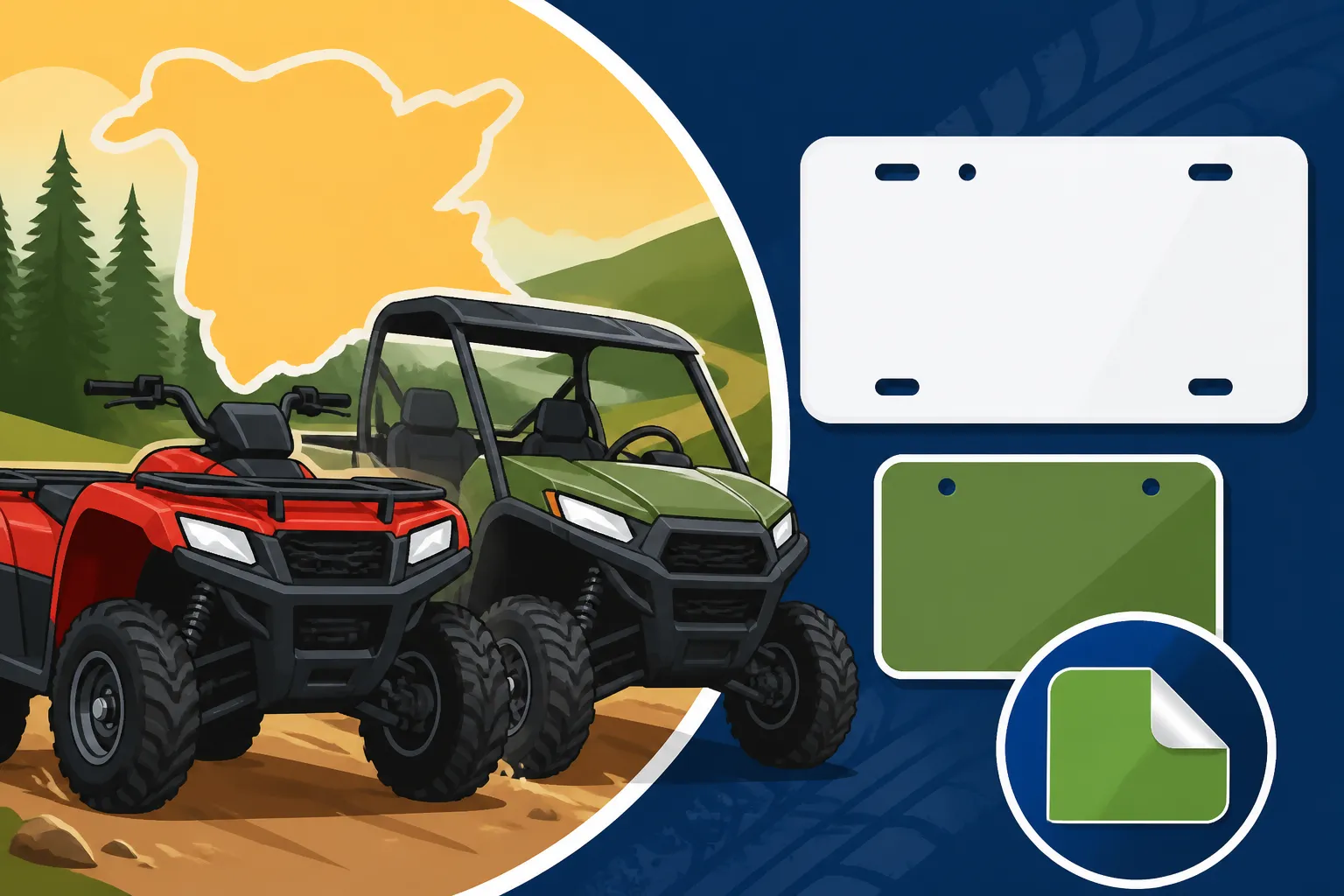
Every legal off-road vehicle operating beyond private property boundaries in New Brunswick relies on a two-part identification framework. The first component is the official metal registration plate issued through the province, which ties the machine’s Vehicle Identification Number (VIN) directly to you as the legal owner. This plate serves as proof of legal registration under provincial motor vehicle legislation and remains attached to the vehicle or owner record throughout its operational lifespan.
The second component is the trail permit decal managed by QuadNB, the federation overseeing managed trail networks across the province. While the metal plate confirms your machine is registered with the government, the adhesive trail decal proves you have paid into the trail infrastructure fund, giving you legal access to thousands of kilometers of managed corridors. Understanding the functional difference between these two items is critical because replacing a government plate involves entirely different channels, counters, and paperwork than replacing a managed trail decal.
Together, these items form a complete compliance profile. Riding on public land, designated road shoulders, or managed club corridors requires both pieces to be fully visible, legible, and structurally sound. When one piece of this puzzle goes missing, you are technically operating an non-compliant machine, which can lead to hassle during routine trail checkpoints.
Why Plates and Decals Get Damaged or Lost on NB Trails
New Brunswick’s backwoods terrain is notoriously hard on powersports hardware. Deep mud pits in the Acadian Peninsula, heavy brush along woods roads, and relentless chassis vibration work together to loosen plate bracket hardware over time. Standard plastic license plate frames often shatter when struck by flying trail debris, gravel, or ice chunks thrown up by knobby tires, leaving your metal plate to drop off somewhere miles back in the woods.
Trail permit decals face a different set of environmental threats. High-grade vinyl decals are designed to withstand weather, but extreme winter temperatures cause plastic fenders to flex while the adhesive becomes brittle. Furthermore, aggressively cleaning mud off your plastic bodywork with a gas-powered pressure washer can lift the edges of the sticker, allowing water and grit to break down the adhesive backing until the decal peels off during your next ride.
Even routine maintenance can ruin these identification markers. Rollovers, brush scrapes, and exhaust heat radiated through rear body panels can distort plastic surfaces, making decals bubble or snap along body seams. Knowing how fragile these items can be under real-world riding conditions helps you recognize when it is time to seek official replacements before an enforcement officer points out the issue for you.
Legal Consequences of Riding Without Visible Identification
Operating an off-road vehicle without a legible plate or valid permit sticker is not merely a cosmetic issue; it is a straightforward traffic and trail violation. Conservation officers with the Department of Natural Resources and Energy Development (DNRED), RCMP officers, and municipal police forces actively patrol trailheads, road crossings, and high-traffic corridors throughout the riding season. If your machine is missing its plate or decal, you are likely to be signaled over for a full document check.
Under provincial law, officers must be able to read your registration plate from a reasonable distance without dismounting their patrol vehicles or searching through mud-covered cargo boxes. If your plate has fallen off or is obscured by mud or custom accessories, you can be issued a set fine for improper display or failing to display registration credentials. You can also review New Brunswick Documents You Must Carry to ensure your physical paperwork matches what is mounted on your frame.
Beyond government enforcement, QuadNB trail wardens monitor managed club corridors to protect paying members’ investments. If your trail decal is missing, torn beyond recognition, or placed on an incorrect part of the frame, wardens have the authority to stop your machine and request proof of purchase. If you cannot produce valid paperwork backing up a missing decal, you may be required to leave the trail system immediately or purchase a new permit on the spot.
How Service New Brunswick Handles Replacement Plates and Registration Documents
Step-by-Step Replacement Process at a Service Centre
Replacing a lost, bent, or ruined metal license plate is a process handled entirely through the province’s retail service outlets. You cannot simply paint your own plate or order a novelty duplicate online; you must obtain an official replacement stamped and issued by the province.
- Locate the nearest physical service branch and confirm their operational hours before traveling, especially if you live in a rural area far from regional hubs.
- Complete the required application form for lost, stolen, or damaged motor vehicle plates at the counter or download it in advance from the official provincial portal.
- Present your current government-issued photo identification along with your existing registration documentation or ownership papers to establish your right to the record.
- Pay the standard administrative transaction fee charged for issuing duplicate hardware and updating your physical vehicle file.
- Receive your replacement metal plate along with an updated vehicle registration certificate reflecting the new plate number linked to your existing VIN.
Once the service agent processes your request, your previous license plate number is permanently marked as replaced or invalidated in the provincial database. If you happen to find your old, lost plate in the woods weeks later, it cannot be legally reattached to the machine; it must be discarded or returned to the counter for proper destruction.
Essential Documents You Must Bring to the Counter
Walking into a service counter without the correct paperwork guarantees a wasted trip and unnecessary frustration. First and foremost, you must show valid photo identification, such as a New Brunswick driver’s license or passport, confirming that your identity matches the registered owner on record. If the machine is registered under two names, ensure you have the necessary consent or that the primary named individual is present.
You must also show proof of active liability insurance matching the machine’s VIN. In New Brunswick, off-road vehicles must carry active insurance coverage when operated off private property, and counter staff will ask to see your current insurance card before issuing replacement plates. If your original paper registration certificate was lost along with the plate, you must state this to the clerk so they can search the provincial registry using your VIN and personal identity details.
Note: When applying for replacements without original paperwork, having a clean bill of sale
or a formal affidavit verified through a platform like LawDepot can streamline processing if
the vehicle’s ownership record needs administrative clarification or updating.
Replacing Lost Papers When Selling or Buying a Machine
Losing your physical registration paper creates a significant roadblock when trying to complete a private sale. A buyer cannot legally register the machine in their name without the seller handing over an signed transfer certificate. If you discover your paperwork is missing right as a buyer arrives with a trailer, you must pause the sale and request duplicate documents from the government first.
If you are wondering What to Do If You Lose Your Registration Certificate, the process is simple: the registered owner must visit a service location, present ID, pay a small administrative duplicate fee, and obtain a fresh printout. Sellers should never attempt to draft a handwritten note on plain paper expecting a service outlet to accept it as an official ownership transfer document without the true certificate present.
For extra legal protection during private transactions involving lost or reconstructed documentation, both parties should complete a formal bill of sale. Utilizing standardized agreement templates from services like LawDepot ensures that purchase prices, VIN declarations, buyer/seller details, and “as-is” transfer terms are clearly recorded. This protects both seller and buyer if issues arise regarding previous registration status or missing plates.
Replacing Damaged or Peeled Trail Permits and Decals
QuadNB Trail Permit Replacement Rules and Procedures
QuadNB manages trail permit allocations through its network of local clubs, authorized powersports dealerships, and designated service counters. Because trail permits are serialized adhesive stickers backed by an official receipt, replacing a damaged or lost permit requires following strict federation rules to prevent permit fraud across the trail network.
If your trail decal was damaged due to a crash, severe weather, or pressure washing, you must salvage whatever remains of the old sticker. QuadNB policies generally require you to present the damaged decal piece showing its serial number, along with your original trail permit receipt, to obtain a low-cost replacement sticker. If the sticker was completely lost along with a plastic body panel or rear fender, you will need to produce your original purchase receipt to verify ownership of the permit number.
If you lose both the sticker and your original purchase receipt, contact the specific local club or retail outlet where you originally bought the pass. Volunteer club executives can often cross-reference their manual sales logs or digital records to verify your purchase, issue a supporting confirmation note, and allow you to complete a Replacing a Peeled Sticker transaction without paying for a full-priced seasonal pass.
Proper Placement of Replacement Decals on Quads and Side-by-Sides
Once you receive your replacement trail decal, installing it correctly is your responsibility. Mounting the sticker in an illegal or hidden location invites constant stops by trail wardens, defeating the purpose of replacing it in the first place. Provincial guidelines and federation rules specify exact zones where trail passes must be affixed to remain clearly visible.
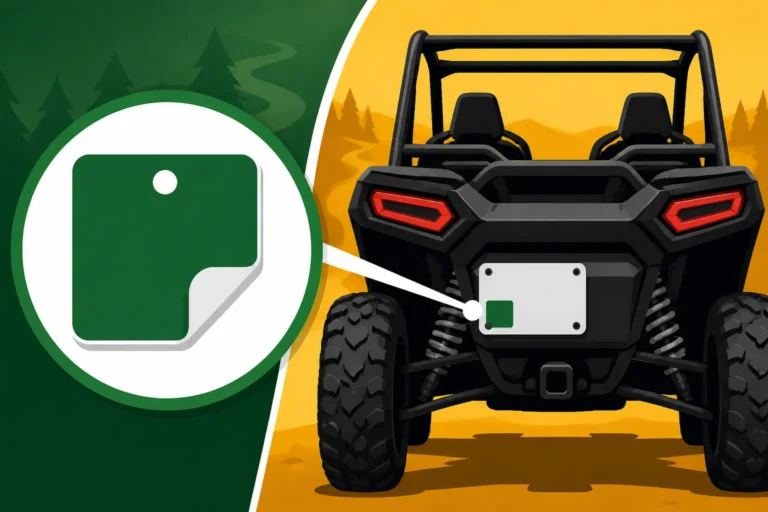
On a standard quad or all-terrain vehicle, the permit decal must be affixed to the front left portion of the machine. Knowing Where the Trail Permit Sticker Mounts on a Quad saves you from making an expensive placement error. It should sit squarely on the front left fender, front left fork tube, or designated plate bracket on the left side, clearly visible to oncoming trail traffic.
Correct Decal Placement Locations:
• Quads / ATVs: Front Left Outer Fender or Left Front Suspension Bodywork
• Side-by-Sides / UTVs: Left Front Pillar (A-Pillar) or Lower Left Driver-Side Windshield Frame
• Dirt Bikes: Left Front Fork Guard or Left Side Frame Tube Ahead of the Engine
On side-by-side vehicles (UTVs), placement rules adapt to the larger cab structure. The decal must be affixed to the left front side of the machine, typically on the lower corner of the driver-side windshield, the driver-side A-pillar, or the front left hood outer edge. Never place the decal on removable doors, rear cargo beds, or helmet visors where it cannot be seen during an oncoming pass.
Handling Multi-Season and Reciprocal Permit Replacements
New Brunswick offers distinct categories of trail permits, including multi-season (four-season) passes, summer-only (three-season) passes, and discounted youth permits. When you apply for a replacement decal, the issued replacement matches the exact category and expiration timeline of your original purchase. You cannot upgrade or alter your permit tier during a simple replacement transaction.
Riders utilizing reciprocal trail agreements—such as visitors riding on cross-border pass arrangements—must pay special attention to local replacement procedures. If a visitor from Nova Scotia or Prince Edward Island loses their home-province trail decal while riding on New Brunswick soil, local QuadNB clubs cannot issue a local replacement decal for an out-of-province pass. The rider must contact their home provincial federation for a duplicate or purchase a temporary New Brunswick day/week permit to continue riding legally.
For resident riders who sell their machine mid-season and purchase a new quad, trail permits are generally transferable to your new vehicle provided you follow QuadNB transfer rules. You must carefully remove the old permit (or show proof of machine sale), present the original permit paperwork at an authorized vendor, pay a small transfer fee, and receive a newly serialized decal for your replacement machine.
Cost Structures, Administrative Fees, and Paperwork Requirements
Comparing Replacement Costs and Processing Timelines
Replacing missing registration hardware or trail credentials involves separate administrative fee structures depending on whether you are dealing with a government office or a trail federation club. Government replacement fees cover the physical manufacturing cost of the metal plate and the administrative labour needed to update state databases.
For exact government costs, you should review current service fee charts or check New Brunswick Plate Replacement Cost guidance before heading to the office. Government counter transactions are processed immediately, meaning you walk out of the building with your new metal plate, updated paper registration, and full legal authority to ride that same day.
Trail permit replacement fees charged by QuadNB are similarly structured to cover physical decal production and database entry. Obtaining a replacement decal at a local dealer or service counter is typically instant, whereas requesting a replacement through a volunteer club executive may take a few days depending on club meeting schedules and record lookups.
License Plate vs. Trail Permit Replacement Breakdown
To help you understand the differences between replacing government credentials versus trail network passes, the following pipe table outlines key operational details:
| Attribute | Government License Plate | QuadNB Trail Permit Decal | Paper Registration Certificate |
|---|---|---|---|
| Issuing Authority | Service New Brunswick (SNB) | QuadNB / Local ATV Clubs | Service New Brunswick (SNB) |
| Physical Form | Metal Stamped Plate | Vinyl Serialized Adhesive Sticker | Paper Document |
| Primary Requirement | Valid Photo ID & Proof of Insurance | Original Purchase Receipt or Damaged Decal | Valid Photo ID & Ownership Proof |
| Replacement Fee Shape | Fixed Government Admin Fee | Fixed Federation Processing Fee | Nominal Document Copy Fee |
| Fulfillment Time | Instant (In-Person Counter) | Instant to 3 Business Days | Instant (In-Person Counter) |
| Primary Function | Public Legal Ownership & Identification | Managed Trail System Access | Legal Proof of Title & Insurance Link |
Documenting Ownership Transfers and Bill of Sale Verification
When an off-road vehicle changes hands privately, administrative complications arise if previous plates were lost or if the registration history is messy. Service agents must verify that the individual requesting replacement credentials is the true legal owner or an authorized buyer. This makes precise documentation mandatory during every step of a private transfer.
If you purchase a machine that lacks physical registration papers or a metal plate, you must insist that the seller clears these issues before money changes hands. If the seller claims they lost the title papers, require them to visit a service location to obtain duplicate papers prior to completing the sale. Alternatively, a fully detailed legal bill of sale drafted using LawDepot can record the transaction details, including seller warranties regarding clear title and lost hardware declarations.
When you bring this documentation to the counter to complete Registering an ATV With Service New Brunswick, the service agent will verify the VIN against provincial records. If liens or stolen vehicle flags appear, processing stops immediately. Having a formal, signed agreement protects your financial investment if a registration attempt reveals underlying legal or titling issues from the previous owner.
Special Replacement Scenarios: Stolen, Inherited, or Out-of-Province Machines
What to Do If Your Plate or Machine Is Stolen
Discovering that your off-road vehicle plate or the entire machine has been stolen is a stressful situation that requires immediate, methodical action. A stolen license plate attached to another machine can lead to hit-and-run liability, illegal trespassing reports, or toll violations billed directly to your name.
- File an official police report immediately with the local RCMP detachment or municipal police force where the theft occurred.
- Record the exact police file incident number provided by the investigating officer.
- Visit a provincial service outlet with your police report reference number to officially flag the plate as stolen in the system.
- Apply for a completely new plate number to be assigned to your vehicle record once cleared.
- Notify your insurance provider and present the police incident report along with your updated registration documentation.
By immediately reporting the theft to law enforcement and updating your government profile, you shield yourself from legal liability if your stolen plate is involved in illegal street riding, property damage, or trail violations elsewhere in the province.
Replacing Documents for Inherited or Vintage Trail Vehicles
Dealing with older machines left behind in barns, inherited from deceased family members, or purchased as vintage restoration projects often means dealing with missing plates and long-lost paperwork. In these situations, standard replacement steps do not apply because the chain of title has been disrupted over time.
For inherited machines, service counters require legal proof of estate authority, such as a copy of the will, court probate documents, or an estate executor statement before reissuing registration certificates or replacement plates. Utilizing formal estate transfer affidavits or settlement releases from services like LawDepot helps satisfy provincial administrative requirements by legally confirming that you are the rightful heir entitled to register the machine.
For vintage trail vehicles that have sat unregistered for decades, provincial records may no longer contain active digital files matching the frame’s serial number. In these circumstances, an agent will conduct a historical record search. You may be required to complete a formal statutory declaration detailing how you acquired the machine, confirming the absence of outstanding liens, and taking full legal responsibility for its ownership history.
Out-of-Province Visitors and Non-Resident Replacement Issues
New Brunswick’s extensive trail network attracts thousands of visiting riders every year from Nova Scotia, Prince Edward Island, Quebec, and Maine. When an out-of-province rider suffers damage to their registration plate or trail decal while exploring local corridors, resolving the issue requires navigating distinct jurisdictional rules.
If an out-of-province rider loses their home state or provincial license plate while riding in New Brunswick, local government service branches cannot issue a New Brunswick plate for a vehicle registered in another jurisdiction. The rider must report the loss to their home registry authority and carry a local police report or temporary home-jurisdiction documentation while completing their trip.
However, if a non-resident purchased a temporary or seasonal QuadNB trail pass upon entering the province and subsequently damaged or lost that decal, they can obtain a replacement decal locally. By visiting an authorized QuadNB retail outlet with their original New Brunswick trail permit purchase receipt, the visitor can secure a duplicate decal and continue their vacation without paying for a brand-new trail permit.
Preventing Identification Loss: Mounting, Maintenance, and Best Practices
Heavy-Duty Plate Mounting and Protective Backings
Relying on standard automotive license plate brackets or cheap plastic frames is a guaranteed way to lose your plate on rough off-road trails. Off-road vehicles require rugged, reinforced mounting setups engineered specifically to handle continuous chassis flex, heavy brush strikes, and high vibration levels.
Recommended Heavy-Duty Mounting Checklist:
• Use 3/16-inch or 1/4-inch marine-grade aluminum backing plates behind the metal plate.
• Secure hardware with stainless steel nylon-insert locknuts (Nyloc) to resist vibration.
• Insert rubber grommets between the frame bracket and plate to absorb trail shock.
• Thread a high-tensile safety zip-tie through a secondary hole as a fail-safe backup tether.
Another effective technique is installing flexible rubber mounting flaps behind the aluminum backer. This allows the entire license plate assembly to pivot out of the way when reversing into deep mud, snowbanks, or heavy underbrush, rather than catching on obstacles and snapping off the frame.
Surface Preparation for Long-Lasting Decal Adhesion
Applying a replacement trail decal onto a dirty, cold, or wax-treated plastic fender virtually guarantees it will peel off after a few rides. Vinyl adhesives require a surgically clean, smooth, and temperature-controlled surface to form a permanent bond with polyolefin plastics commonly used on quad bodywork.
- Wash the mounting zone thoroughly with hot water and dish soap to strip away heavy mud, trail grease, and silicon-based plastic shiners.
- Wipe the area down using a clean microfiber cloth saturated with 70% isopropyl rubbing alcohol to eliminate invisible chemical residues.
- Lightly warm the plastic body panel using a household hair dryer or low-temperature heat gun until the surface feels slightly warm to the touch.
- Peel the backing paper off the replacement decal without touching the exposed adhesive with your bare fingers.
- Apply the decal firmly from one edge to the other, using a plastic squeegee or thumb pressure to force out all trapped air bubbles.
- Allow the adhesive to cure at room temperature (above 15°C) for at least 24 hours before exposing the machine to rain, mud, or cold trail conditions.
Taking ten extra minutes to prepare the surface correctly prevents moisture from seeping under the vinyl edges, ensuring your replacement sticker survives power washings and harsh winter riding for seasons to come.
Carrying Back-Up Documentation Safely on Remote Trails
Having physical plates and decals mounted on your machine is only half the battle; carrying legible, dry physical documentation is equally important during a trailside checkpoint. New Brunswick law requires operators to produce physical papers upon the request of any law enforcement official.
To keep your paperwork intact, invest in a heavy-duty, O-ring sealed waterproof document tube or a heavy zip-top pouch stored inside a zippered saddlebag or under-seat dry box. Never leave your original, unprotected paper registration certificate loose in an unsealed glove box where water, belt dust, and mud can turn it into an unreadable pulp.
Always Keep These Physical Documents Safe in Your Machine’s Waterproof Storage:
1. Official Government Vehicle Registration Certificate
2. Valid Provincial Liability Insurance Card
3. Valid Personal Driver’s License or Government Photo Identification
- QuadNB Trail Permit Purchase Receipt / Paper Companion Pass
To streamline your setup, review New Brunswick Proof of Insurance on the Machine guidelines to ensure your insurance card meets trailside requirements. Keeping digital photo backups saved on your smartphone is an excellent secondary precaution, though an officer may still require you to produce physical paper records during a formal stop.
Navigating Trailside Inspections and Law Enforcement Interactions
What Conservation Officers and RCMP Look for During a Stop
When you see a conservation officer or RCMP officer signaling you to slow down at a trail intersection, understanding what they inspect helps make the encounter smooth and stress-free. Officers approach stopped machines with a clear checklist focused on safety compliance, legal ownership, and environmental protection.
First, the officer will visually inspect your rear metal license plate to ensure it is securely attached, unexpired, clean enough to read, and free of artificial covers or tinting. Next, they will check the front left section of your machine to verify the presence of a valid, correctly placed QuadNB trail permit decal that matches the current riding season.
Once visual checks are complete, the officer will ask you to turn off your engine and present your physical driver’s license, paper vehicle registration certificate, and proof of liability insurance. Staying calm, keeping your hands visible on the handlebars, and having your documents organized in an easily accessible waterproof pouch makes the inspection quick and easy.
Temporary Proof and Receipts While Awaiting Replacements
If you have applied for replacement plates or stickers but are waiting for physical fulfillment, riding your machine can feel risky. Operating on managed trails without hardware visible invites immediate scrutiny, but carrying official temporary paperwork can protect you from receiving a citation.
When you complete a replacement plate application at a government service center, the agent prints a temporary paper registration certificate reflecting the newly assigned plate details. Always carry this document with you when riding. If stopped, present this receipt to the officer immediately, explaining that your physical plate has been ordered and processed through the official provincial system.
Similarly, if you are awaiting a replacement trail decal from QuadNB or your local club, carry your official email confirmation, digital transaction receipt, or manual club sales slip. While a receipt does not strictly replace the legal requirement to display a physical decal, most officers and wardens will exercise reasonable discretion if you can prove you have paid for credentials and are actively awaiting replacement delivery.
Common Registration and Identification Mistakes to Avoid
Many off-road enthusiasts accidentally run into legal trouble simply because they misunderstand identification placement rules or administrative deadlines. Avoiding these common mistakes saves you time, money, and hassle during trail stops.
- Mounting Decals Over Plate Numbers: Never stick a trail permit decal, club sticker, or custom graphic directly onto your metal government license plate, as obstructing official plate text is illegal.
- Tucking Plates Deep Inside Cargo Racks: Avoid mounting your rear plate deep inside cargo boxes, under mudflaps, or behind spare tires where it cannot be seen from behind.
- Using Expired Temporary Papers: Riding on an expired temporary paper slip while delaying the pickup of your permanent plate is treated the same as riding completely unregistered.
- Skipping Official Transfers After Buying: Relying solely on a handwritten note from a seller without completing a formal registration transfer leaves the machine legally tied to the previous owner.
By properly mounting your metal plate, carefully adhering your vinyl trail decal, and keeping your official paperwork dry and accessible, you can spend less time worrying about fines and more time enjoying New Brunswick’s world-class trail system.
Disclaimer
This article is for general informational purposes only and does not constitute professional advice. Laws, prices and regulations vary by location and change over time. Consult a qualified professional for guidance on your specific situation.