Filling Out the Application for Vehicle Registration
Navigating the paperwork for your ATV or side-by-side can often feel like a bigger challenge than tackling the toughest trail, especially when you're just eager to get out and ride. One of the most critical pieces of that puzzle is correctly filling out the Application for Vehicle Registration. This guide will walk you through every step, helping you understand each section and what information you'll need to gather so you can confidently complete the form and get your machine legally registered in New Brunswick.
Understanding the Application for Vehicle Registration Form
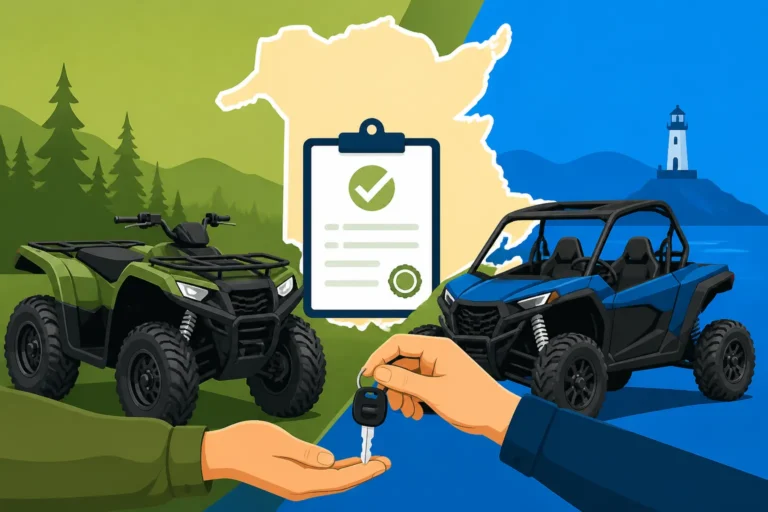
When you buy a new quad, a used side-by-side from a neighbour, or even inherit a dirt bike, the Application for Vehicle Registration form is your official gateway to getting that machine legally recognized in New Brunswick. It’s not just a formality; it's the foundation for your ownership record and your ability to legally operate your off-road vehicle (ORV) on designated trails and property. Many riders get flustered by forms, but once you break it down, it's quite manageable.
What is This Form For?
This specific form is essentially the official record that tells the province: "Hey, this machine now belongs to me, and here are all its details!" It's used for first-time registrations, transferring ownership from a previous owner, and sometimes even for registering an imported machine. Without this application properly filled out and submitted, your shiny new (or new-to-you) ORV is technically unregistered, which can lead to hefty fines if you're caught riding it on a trail. Think of it as the birth certificate for your machine's legal life in New Brunswick. It ensures that the government has a clear paper trail, which is crucial for everything from law enforcement to tracking sales tax.
Every ORV, whether it’s an ATV, UTV, dirt bike, or even a snowmobile, needs to go through this process. It’s not just about getting a license plate; it's about establishing legal ownership and ensuring accountability. This form is a critical piece of the puzzle, whether you're bringing a brand-new machine home from a dealer or buying a seasoned workhorse from a private seller in a rural community.
Where to Find the Form
The most common place to obtain the Application for Vehicle Registration form is directly from Service New Brunswick. You can often pick up a physical copy at any Service New Brunswick centre during their operating hours. Many times, if you purchase from a licensed dealer, they will provide the form to you, often pre-filled with the machine's details, making your job significantly easier. They're usually well-versed in the process and want to make the sale as smooth as possible for you.
For those who prefer to prepare in advance, a printable version of the form might be available on the Service New Brunswick website. While you can fill out the paper form by hand, remember to write legibly to avoid any delays or misinterpretations. Having a digital version means you can sometimes type in your information, which can reduce errors. If you're unsure, a quick call to your local Service New Brunswick centre can confirm their current procedures for obtaining the form and help you understand specific requirements.
Essential Information You'll Need Before You Start
Before you even pick up a pen or start typing, it's wise to gather all the necessary documentation and information. Trying to fill out the form on the fly, with pieces of paper scattered around, is a recipe for frustration and potential errors. Taking a few moments to organize everything beforehand will save you a lot of time and hassle. Think of it as preparing your gear before a big ride; you wouldn't head out without your helmet and boots, right?
Details About the Machine Itself
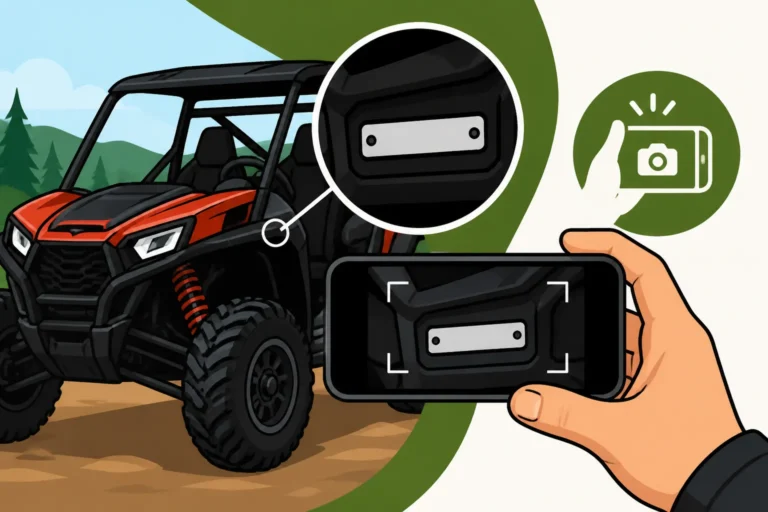
The first set of details concerns the off-road vehicle itself. You'll need the Vehicle Identification Number (VIN), which is a unique 17-character code that identifies your specific machine. This number is usually stamped on the frame, often near the front suspension or under the seat. Make sure you copy it accurately, as one wrong character can cause significant headaches. You'll also need the make (e.g., Polaris, Can-Am), model (e.g., RZR, Outlander), year of manufacture, and the specific type of ORV (ATV, UTV, dirt bike, snowmobile). The engine size in cubic centimetres (cc) is also typically required.
Accuracy here is paramount. A VIN error could mean your registration doesn't match your machine, leading to issues if you're ever stopped by an officer on the trail. Double-check these numbers against your bill of sale or the machine itself. For new machines, this information should be clearly provided by the dealer on the Manufacturer's Statement of Origin (MSO) or bill of sale. For used machines, cross-referencing with the previous owner's registration can also be a good idea.
Your Personal Information
Next, the form will ask for your personal details as the new owner. This includes your full legal name, current mailing address, and contact information. You'll also need to provide your New Brunswick driver's licence number or another form of acceptable identification. If you're a new resident to the province, you'll need to ensure your identification reflects your New Brunswick residency. This is important because the province needs to verify who you are and where you reside to process your application correctly.
It’s crucial that the name on the application matches your government-issued ID exactly. Any discrepancies, even minor ones, can cause delays. If you've recently moved, ensure your address is updated with Service New Brunswick for your other vehicles as well, or be prepared to provide proof of your new address, such as a utility bill. For individuals who are new to the province, understanding [New Brunswick Registration for a New Resident] will be beneficial, as there might be specific steps or documents required to establish your residency and get your ORV on the books.
Proof of Ownership
This is where things can vary slightly depending on how you acquired your ORV. For a new machine purchased from a dealer, you'll typically have a Manufacturer's Statement of Origin (MSO) and a sales invoice or bill of sale. For a private sale, a clearly written and signed bill of sale is absolutely essential. This document proves that you legally purchased the machine from the previous owner. If the machine was inherited, you'll need documents like a will, probate papers, or a death certificate, along with a statement from the executor of the estate transferring ownership.
Without valid proof of ownership, Service New Brunswick cannot complete your registration. They need to confirm that you are the rightful owner to prevent issues like registering stolen property. If you're buying privately, ensure the bill of sale includes the VIN, make, model, year, purchase price, date of sale, and the full names and signatures of both the buyer and seller. Sometimes, people try to cut corners, but a proper bill of sale is non-negotiable for official registration. Understanding [New Brunswick Registration After a Private Sale] and [New Brunswick Registration for an Inherited Machine] can shed more light on these specific scenarios.
Insurance Details
For many ORVs, especially those you plan to ride on the managed trail system, proof of insurance is a mandatory requirement. You'll need to provide details such as your insurance company's name and your policy number on the application form. This isn't just a recommendation; it's a legal obligation in many cases. The province wants to ensure that if an accident occurs, there's a safety net in place.
Before heading to Service New Brunswick, contact your insurance provider to get your ORV insured and have all your policy information readily available. Some popular insurance providers offer specific ORV policies that cover ATVs and side-by-sides. While dirt bikes might have some exemptions for private land use, generally speaking, if you plan on using groomed trails, you'll need coverage. It's best to confirm this requirement with Service New Brunswick or your trail association. You can find more specific details by looking into [New Brunswick Requires Insurance on Trails].
Step-by-Step Walkthrough of the Application Sections
Filling out the form can seem daunting, but by taking it section by section, it becomes a much clearer process. Imagine you're just following a recipe – each ingredient (piece of information) goes into a specific place. Rushing or skipping steps can lead to a messy result, or in this case, a rejected application and another trip back to Service New Brunswick.
Section by Section Guidance
Let’s break down the common sections you'll encounter on the Application for Vehicle Registration form. Typically, it starts with the "Applicant Information," where you'll input your name, address, phone number, and driver's licence number. Be precise and ensure it matches your official identification. Next, you'll find the "Vehicle Information" section, which requires the VIN, make, model, year, and type of ORV. This is where those accurate details about the machine itself come into play. There will likely be a section for "Previous Owner Information" if you're transferring ownership, requiring their name and previous registration number.
A critical part is the "Purchase Details," where you'll list the date of purchase and the price paid. This is often linked to the sales tax calculation, particularly the [New Brunswick HST on an ATV Purchase]. Finally, there’s usually a declaration section where you attest that the information is true and accurate, followed by a signature line. Always read any fine print carefully before signing. A common error is rushing through these sections and either leaving fields blank or providing incorrect information, forcing you to start over or face delays.
Here's a quick overview of key sections and what to look out for:
| Section | Required Information | Common Mistakes to Avoid |
|---|---|---|
| Applicant Info | Full Legal Name, Address, Phone, Driver's Licence # | Mismatched name (e.g., nicknames), outdated address |
| Vehicle Info | VIN, Make, Model, Year, Type, Engine Size (cc) | Incorrect VIN, forgetting engine size |
| Previous Owner Info | Name, Previous Registration # (if applicable) | Leaving blank for private sale, incorrect previous reg # |
| Purchase Details | Date of Purchase, Purchase Price | Omitting date, rounding up/down price |
| Declaration | Signature, Date | Forgetting to sign, not dating the form |
Tackling Specific Scenarios
The beauty (and sometimes the challenge) of the application form is its versatility to handle different acquisition scenarios. If you're registering a brand-new machine from a dealer, much of the vehicle information will likely be pre-filled, and the dealer will provide the MSO. For a private sale, you'll need the seller's information from the bill of sale, and often, their signature is required if they're transferring ownership. If you don't have a formal bill of sale, or it's missing key details, you might face issues. Luckily, there are resources like LawDepot that offer templates for bills of sale, ensuring you have all the necessary legal clauses.
In the case of an inherited machine, you'll mark the "Transfer of Ownership" box but instead of a previous owner's signature, you'll likely provide the executor's documentation. Sometimes, people are simply gifted a machine. In such cases, the "purchase price" might be listed as "gift" or a nominal amount, but a signed letter or bill of gift from the giver is still highly recommended to prove the transfer. Dealing with [New Brunswick Registration Without a Bill of Sale] can be tricky, so always aim for proper documentation, even if it feels informal.
The Importance of Signatures and Dates
Every legal document, and especially one that transfers ownership and registers a vehicle, relies heavily on accurate signatures and dates. Your signature on the application form confirms that all the information you've provided is true and correct to the best of your knowledge. For a transfer of ownership, the previous owner's signature is often required to acknowledge that they are relinquishing their claim to the vehicle. This is particularly crucial for private sales, ensuring a clear handover.
Always make sure both buyer and seller (if applicable) sign in the designated areas and that the date of signing is clearly marked. Sometimes, a witness signature might also be required, so read the form carefully. A missing signature or an undated form can render the application incomplete and lead to it being rejected. Don't underestimate this final, seemingly simple step; it carries significant legal weight and helps prevent disputes down the road.
Calculating Fees and Payment Options
Beyond the form itself, you'll need to be ready to settle up the associated costs. This includes the annual registration fee and any applicable sales tax. Knowing these figures in advance, or at least understanding how they're calculated, can prevent any surprises at the Service New Brunswick counter.
Understanding Registration Fees
The cost to register your ORV in New Brunswick isn't a flat rate for all machines; it varies depending on the type of off-road vehicle you own. For example, the annual registration fee for an ATV is generally different from that of a dirt bike or a snowmobile. This distinction is often due to the differing impacts on trail systems, maintenance costs, and provincial regulations. It's a common point of confusion for new owners, who might assume all ORVs are treated the same.
You'll find that [New Brunswick Charges $41 for an ATV] in annual registration fees, whereas [New Brunswick Charges $16 for a Dirt Bike]. These amounts cover the cost of maintaining the registration system and contribute to the provincial ORV infrastructure. Always confirm the most current fees directly with Service New Brunswick or their official website, as rates can change. The total [New Brunswick ORV Registration Cost] will encompass this fee, and it's essential to factor it into your initial purchase budget.
Sales Tax Considerations
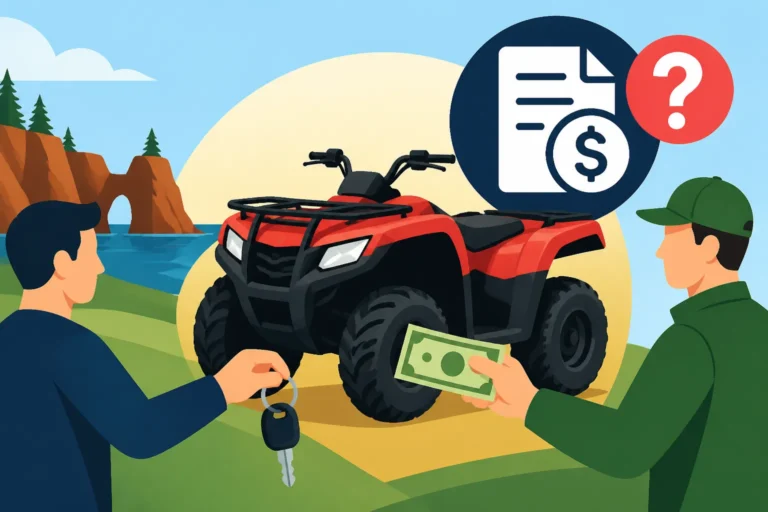
When you purchase an ORV, you'll almost always encounter sales tax, which in New Brunswick is the Harmonized Sales Tax (HST). The way this tax is applied can differ based on whether you bought your machine from a licensed dealer or a private seller. If you buy from a dealer, they will typically collect the HST at the point of sale, and it will be clearly itemized on your invoice. This is straightforward and usually handled as part of the total purchase price.
However, if you're buying from a private seller, the process changes. The HST is generally still applicable, but instead of paying the seller, you will pay the tax directly to Service New Brunswick when you register the vehicle. This is often calculated based on the purchase price listed on your bill of sale. Sometimes, if the declared purchase price seems unusually low, Service New Brunswick may have a minimum valuation to calculate the tax, to ensure fair collection. Understanding [New Brunswick Tax on a Private ATV Sale] is crucial to avoid any unexpected costs when you go to register.
Accepted Payment Methods
When you arrive at a Service New Brunswick centre to submit your application and pay your fees, you'll find they offer several convenient payment options. Typically, you can pay with debit card, credit card (Visa, MasterCard, American Express), or cash. Some centres might also accept cheques, but it's always a good idea to confirm this beforehand if that's your preferred method. They aim to make the process as smooth as possible, so having multiple ways to pay is standard practice.
While you can usually pay in person with various methods, keep in mind that online renewals for existing registrations might have slightly different payment options. For your initial registration, however, in-person payment at the counter is the most common route. Be sure to have your chosen payment method ready to go, and if you're paying with a credit card, ensure it's in your name or you have proper authorization. Having your payment sorted helps streamline the process at Service New Brunswick. You can often find specifics on [New Brunswick Registration Payment Methods] on their official website.
What Happens After You Submit Your Application
You’ve filled out the form, paid the fees, and breathed a sigh of relief. But what comes next? The process isn't quite finished until you have your physical plate and registration certificate in hand. Knowing what to expect in the days and weeks following your visit to Service New Brunswick will help manage your expectations and ensure you're ready to hit the trails legally.
Processing Times and Expectations
Once you submit your completed Application for Vehicle Registration and pay the necessary fees, Service New Brunswick staff will review everything for accuracy and completeness. Generally, if all your paperwork is in order and there are no issues, the processing time for a new registration is usually quite quick. In many cases, you might even receive your temporary registration certificate and the actual license plate right there at the counter. However, this can depend on the specific centre and how busy they are.
Sometimes, if there's a backlog or if certain elements of your application need further verification, it might take a few business days for your official registration certificate to be mailed to you. During peak seasons, such as the spring thaw when everyone is eager to get on the trails, processing might take a little longer. It's always a good idea to ask the Service New Brunswick agent about current [New Brunswick Registration Processing Time] expectations when you submit your application, so you have a realistic idea of when to expect your documents.
Receiving Your Plate and Registration Certificate
The moment you've been waiting for! After your application is processed, you'll receive your official ORV license plate and your New Brunswick Certificate of Registration. The license plate, of course, needs to be securely affixed to the designated area on your ORV. For ATVs, this is usually on the rear, clearly visible. There are specific rules regarding [New Brunswick Plate Placement on a Quad] that you should be aware of to ensure compliance.
Your Certificate of Registration is a vital document. It's your proof of legal ownership and registration, listing your name, the machine's details, and its expiry date (which, for all ORVs, is always December 31st). You must carry this certificate, or a copy of it, with you whenever you're operating your ORV off your own private land. This is a non-negotiable requirement. Ensure you keep it in a safe, dry place on your machine, like a saddlebag or waterproof compartment, alongside your proof of insurance and trail permit. Consult [New Brunswick Documents You Must Carry] for a complete list of what needs to be on hand.
Common Issues and How to Resolve Them
Even with the best intentions, sometimes things go awry. Common issues include missing information on the form, incorrect VINs, discrepancies between the bill of sale and the application, or even issues with proof of ownership. If Service New Brunswick finds an error or needs more information, they will typically contact you. This is why providing accurate contact details on your application is so important.
The best way to resolve these issues is to respond promptly to any requests for clarification or additional documents. If you suspect an issue, don't wait for them to contact you; be proactive. Gather any requested documents and revisit Service New Brunswick with the corrected information. Keeping a copy of your submitted application and all supporting documents can be incredibly helpful if there's a dispute or a question about what you provided. A little preparation and prompt action can prevent minor hiccups from turning into major delays.
Tips for a Smooth Registration Process
Nobody wants to make multiple trips to Service New Brunswick, especially when the trails are calling. A little foresight and organization can make the difference between a smooth, one-and-done registration and a frustrating back-and-forth.
Double-Checking Everything
Before you leave your house, and definitely before you approach the Service New Brunswick counter, take a moment for a final review of your application form and all supporting documents. Read through every field on the Application for Vehicle Registration. Is the VIN correct? Are all names spelled exactly as they appear on official ID? Is the purchase price accurate? Are all necessary signatures present and dated? It’s a simple step, but it’s amazing how often a small oversight, like a missed initial or an incorrect digit, can derail the process.
This "once over" rule applies to all your supporting documents as well. Ensure your bill of sale is legible and complete, and that your insurance card or policy details are current and accessible. Think of it as your [New Brunswick Registration Paperwork Checklist]; running through it systematically will save you from a potential second trip and the associated time and frustration. A minute spent reviewing at home can save you half an hour (or more) at the service centre.
Utilizing Available Resources
You don't have to navigate the registration process entirely on your own. Service New Brunswick's website is a primary resource, offering detailed information on ORV registration requirements, fees, and often downloadable forms. Don't hesitate to give them a call if you have specific questions or unique circumstances; their staff are there to help. Powersports dealers are also fantastic resources, especially for new machines, as they process these applications regularly and can often pre-fill parts of the form for you.
Local ATV clubs and federations, like QuadNB, also often have helpful resources or can direct you to common pitfalls. They're usually very keen to see new riders get properly registered and insured. Sometimes, just chatting with an experienced rider can provide invaluable practical tips that aren't written down in official guides. Lean on these resources to make your journey smoother.
Preparing for a Private Sale
Buying or selling an ORV privately can be a great way to find a good deal or pass on a beloved machine, but it requires careful attention to paperwork. The core document for any private sale is a comprehensive bill of sale. This isn't just a scribble on a napkin; it needs to be a clear, legally sound document that protects both the buyer and the seller. It should explicitly state the VIN, make, model, year, purchase price, date of sale, and the full legal names and addresses of both parties. Both buyer and seller must sign and date it.
To ensure you have all your bases covered, especially when dealing with the transfer of ownership, consider using a reliable bill of sale template. Services like LawDepot offer templates that you can customize, ensuring all the necessary legal clauses are included, providing peace of mind for both parties. Having a proper bill of sale will significantly streamline the registration process for the buyer and prevent any disputes later on for the seller when [Selling a Registered Machine in New Brunswick].
The Importance of Keeping Copies
Finally, once everything is submitted and you've received your plate, do not discard your paperwork! Make physical and digital copies of everything: your completed application, the bill of sale, your proof of insurance, and your Certificate of Registration. Keep digital copies on a cloud service or external hard drive, and store physical copies in a safe place at home, separate from the documents you carry on your machine.
These copies are your best friends if a document gets lost, stolen, or if there's ever a question about your ownership or registration status. Imagine if your original Certificate of Registration gets water damaged on a ride; having a clear copy at home can make getting a replacement much easier. They serve as a vital backup and your personal record, giving you peace of mind that you're always prepared.
Disclaimer
This article is for general informational purposes only and does not constitute professional advice. Laws, prices and regulations vary by location and change over time. Consult a qualified professional for guidance on your specific situation.