Where the Trail Permit Sticker Sits Beside the Plate
It’s a scenario many New Brunswick ATV and UTV riders find themselves in: you've got your new trail permit sticker in hand, eager to hit the trails, but then you pause. Where exactly does this thing go? The last thing you want is a fine or a conversation with an enforcement officer because your sticker isn't where it's supposed to be. This guide will walk you through the precise, official requirements for placing your New Brunswick trail permit sticker right beside your ORV plate, ensuring you ride legally and with peace of mind.
Understanding the Importance of Proper Sticker Placement
Riding an off-road vehicle (ORV) in New Brunswick is an incredible experience, offering access to thousands of kilometres of breathtaking trails. But with that privilege comes the responsibility of adhering to the rules, and one of the most fundamental is proper registration and display of your trail permit sticker. It might seem like a small detail, but getting it wrong can lead to unnecessary complications and frustration.
Why Placement Matters
The location of your trail permit sticker isn't just an arbitrary suggestion; it's a legal requirement designed for clear identification and enforcement. The Off-Road Vehicle Act and its associated regulations dictate precisely where this sticker must be displayed. Think of it like your vehicle's license plate: it needs to be visible and correctly positioned so that law enforcement, trail patrol officers, and even other riders can quickly verify your compliance. If your sticker is obscured, in the wrong spot, or simply not there, it raises questions about whether you've paid your dues to support the trail system.
For instance, imagine you're out on a long ride near the Miramichi, enjoying the scenery, and an officer on patrol approaches. Their first glance often goes straight to your ORV plate and the surrounding area. If your sticker is tucked away under a seat, hidden by mud, or slapped onto an aftermarket accessory, it immediately signals a potential issue. These officers are working to ensure everyone is contributing to the upkeep of the trails, which benefits all of us. Incorrect placement can lead to questions, delays, and potentially a [New Brunswick Trail Permit Fines of $340.50]. It’s about more than just a sticker; it’s about upholding the integrity of the trail system and demonstrating that you're a responsible rider.
Common Mistakes and Misconceptions
It's easy to make assumptions about where to put the sticker. Many riders, especially newcomers or those transferring a machine, might think any visible spot will do. Perhaps they place it on the handlebar plastics, the front fender, or even directly on the license plate itself. These are all common mistakes that can lead to problems. Another misconception is that if you have a current registration certificate, the physical sticker placement is less critical. While carrying your [New Brunswick Documents You Must Carry] is absolutely essential, the sticker itself is the immediate, visual proof of your valid permit.
We've all seen quads with stickers slapped haphazardly in various spots – maybe faded, peeling, or obscured by aftermarket lights. Some riders might even transfer an old sticker to a new machine, not realizing that permits are generally machine-specific. This kind of casual approach, while seemingly harmless, undermines the system. Enforcement officers are trained to spot these discrepancies quickly. They're looking for the official sticker, in good condition, exactly where the regulations specify. Failing to meet these standards doesn't just put you at risk of a fine; it also means your contribution to the trail network isn't clearly visible, which can detract from the overall perception of ORV users' compliance. Getting your [New Brunswick ATV Registration Renewal] ensures you get a fresh sticker, so make sure to put it in the right place from the start.
The Official Guidelines for Sticker Placement
Navigating the rules for ORV stickers can feel a bit like trying to find a hidden trail marker in dense woods. But when it comes to your permit sticker, the guidelines are quite specific and designed for universal clarity. Understanding these instructions is crucial for every rider in New Brunswick, whether you're heading out for a quick spin or planning a multi-day trip on the [New Brunswick ATV Trails: The QuadNB Network].
The "Left Side" Rule Explained
The golden rule for your New Brunswick ORV permit sticker is that it must be placed on the left side of the machine. But what does "left side" truly mean in this context? It refers to the left side of the machine as if you are sitting on it, or facing forward with the machine. For most ATVs and side-by-sides (SxSs), this translates to the left front fender or an equivalent prominent, flat surface on the front left.
The rationale behind this specific placement is simple: visibility. When an enforcement officer or trail warden approaches a machine from the front or side, this position offers the clearest, unobstructed view of the sticker. It’s also often a less cluttered area than the handlebars or central console. Imagine you're on a trail near Fredericton, and an officer is checking machines as they pass. Having the sticker consistently on the left fender allows for quick, efficient verification without requiring riders to stop or point out their sticker. This standardization streamlines the enforcement process and helps keep everyone moving safely. Remember, consistency makes everyone's job easier, and it prevents you from having to explain yourself.
Positioning Relative to Your ORV Plate
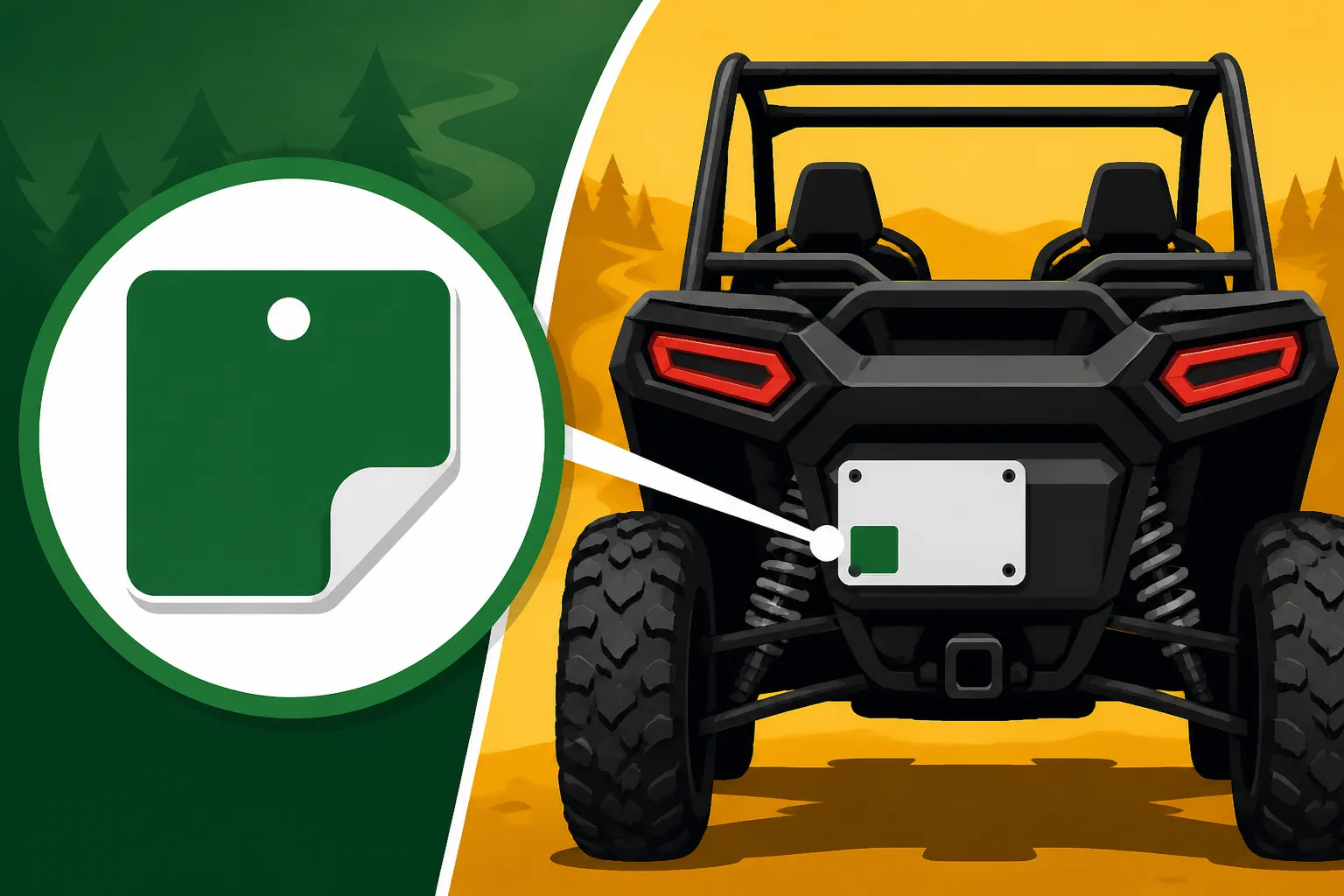
Beyond the "left side" rule, there’s another critical detail: the sticker sits beside the plate. It's not on the plate, not under the plate, but beside it. Specifically, it should be placed in close proximity to your official ORV license plate, which is usually mounted centrally on the front of your machine. This means the sticker needs to be clearly visible, easily read, and not obscured by any part of the plate, fenders, or aftermarket accessories like winches or lights.
Think of it as a pair: your ORV plate identifies your machine, and your permit sticker confirms your right to use the managed trail system. They work together. For many machines, the ideal spot is on the flat surface of the left front fender, just to the side of where your license plate is mounted. This arrangement ensures both critical pieces of identification are immediately apparent. It also means you shouldn't try to get creative with placement; avoid areas that might accumulate mud quickly, get scratched by branches, or be covered by bags or gear. The goal is permanence and unobstructed visibility throughout your ride. When you get a [New Brunswick Replacement Plates and Decals], you'll notice how the new sticker is designed to complement the plate's visibility.
Here's a quick reference table for common sticker placement scenarios:
| Location | Compliance | Explanation |
|---|---|---|
| Left front fender, beside plate | Compliant | Correct: High visibility, standardized location, easy for officers to verify. |
| Directly on the ORV plate | Non-Compliant | Incorrect: Obscures plate details, not "beside" the plate. |
| Handlebar plastics | Non-Compliant | Incorrect: Can be obscured by rider, hands, or accessories; not typically considered the "left side" in the regulated sense. |
| Front rack/storage box | Non-Compliant | Incorrect: Often temporary, can be obscured by gear, not a permanent part of the machine's frame/fender. |
| Rear fender | Non-Compliant | Incorrect: Regulations specify front or front-left for clear identification. |
| Under a seat or in a storage compartment | Non-Compliant | Incorrect: Completely hidden, defeats the purpose of visual identification. |
| Faded, peeling, or heavily scratched | Non-Compliant | Incorrect: Not clearly legible, may be considered invalid. |
Ensuring Compliance and Avoiding Fines
Knowing where to put your sticker is half the battle; ensuring it stays there and remains legible is the other. Nobody wants their day on the trails interrupted by a citation, especially when it's easily avoidable. Taking a few proactive steps can save you a lot of hassle and money.
What Officers Look For
When an enforcement officer, be it from the RCMP, a provincial park warden, or a QuadNB trail patrol volunteer, checks your machine, they're looking for several key indicators. First and foremost, they're looking for the presence of a current, valid trail permit sticker. This sticker serves as immediate, visual proof that you've paid your annual contribution to the trail system, which is vital for its maintenance and operation. They'll quickly scan the left front fender, beside the plate, for that brightly coloured decal.
Beyond just its presence, officers are assessing its condition and visibility. Is it faded? Is it peeling? Is it covered in so much mud from that last puddle near Fundy that it's unreadable? Any of these issues can make your sticker non-compliant, even if you technically have a valid permit. Their job is to ensure that all riders are contributing to the trail network and following the rules. If your sticker isn't easily identifiable, it can lead to further questions about your [New Brunswick ORV Registration Explained] and potentially a fine. They understand that machines get dirty, but a minimum standard of legibility is always expected. It’s not about being nitpicky; it’s about ensuring the system works for everyone.
Practical Tips for Application and Maintenance
Applying your permit sticker correctly the first time and maintaining it afterward is straightforward but requires a bit of care. Before applying, ensure the surface of your left front fender is clean, dry, and free of any dirt, grease, or old adhesive. A quick wipe-down with rubbing alcohol can help create an optimal bonding surface. Peel the backing slowly, apply the sticker smoothly, pressing out any air bubbles from the centre outwards. Taking an extra minute here can prevent unsightly bubbles or premature peeling.
Once applied, think about how to protect it. While stickers are designed to be durable, they're not invincible. Avoid aggressively scrubbing the sticker area when cleaning your machine; a gentle wipe is usually sufficient. If you frequently ride in harsh conditions, consider clear protective film over the sticker, though ensure it doesn't obscure the sticker's details or make it reflective to the point of being hard to read. If your sticker does get damaged, faded beyond recognition, or falls off, you'll need to obtain a replacement. This can typically be done through Service New Brunswick or a QuadNB member club for a small fee, often around the [New Brunswick Sticker Replacement at $11.50]. It's far better to replace a damaged sticker proactively than to risk a fine on the trail. LawDepot can provide resources for ensuring all your ownership documents are in order, which can be useful if you need to prove ownership for a replacement.
Connecting Sticker Placement to Overall Registration and Ownership
The trail permit sticker is more than just a colourful decal; it's a tangible link to a broader system of rules, responsibilities, and benefits that govern ORV use in New Brunswick. Understanding this connection helps riders appreciate why proper placement is so important.
The Sticker as Proof of Valid Permit
Your New Brunswick trail permit sticker is the immediate, visual evidence that you hold a valid trail permit for your off-road vehicle. This permit, typically renewed annually, directly contributes to the maintenance, grooming, and expansion of the vast [New Brunswick's 10,000 Kilometres of Trail] managed by QuadNB and its member clubs. When you purchase a permit, you're not just buying a piece of paper; you're investing in the trail infrastructure that all riders enjoy.
Without a current and properly displayed sticker, even if you have a valid digital record or a paper certificate tucked away, you could be deemed non-compliant on the trail. The physical sticker is designed for quick verification by enforcement personnel, allowing them to confirm at a glance that your machine is authorized to be on the managed trail system. This helps to deter non-payers, ensuring that those who benefit from the trails are also contributing to their upkeep. So, that small sticker on your fender represents a commitment to responsible riding and the continued health of New Brunswick's incredible ORV network. Knowing the [New Brunswick Trail Permit Cost in 2026] is the first step, and displaying it correctly is the next.
Document Checklist for the Trail
While the trail permit sticker is your visible pass to the trails, it's crucial to remember that it's just one piece of the puzzle. New Brunswick regulations require ORV riders to carry several other important documents whenever they are operating their machine on a trail or public land. These documents might be requested by an enforcement officer, and failing to produce them can also lead to fines.
Typically, you should carry:
- Your ORV Registration Certificate: This is the official document proving your machine is registered with Service New Brunswick.
- Proof of Valid Trail Permit: While the sticker is visible proof, carrying the paper permit or a digital copy can be beneficial, especially if your sticker is new or recently replaced.
- Proof of Insurance: [New Brunswick Requires Insurance on Trails] for most ORVs, and you must carry proof of liability insurance with you.
- Your Driver’s License or ORV Operator’s Certificate: Depending on your age and the type of ORV, you'll need the appropriate identification and certification.
It’s a good practice to keep these documents protected from the elements – a waterproof bag or container is ideal. Many riders carry them in a saddlebag, a fanny pack, or a waterproof case attached to the machine. While LawDepot focuses on legal forms, understanding the importance of having all these papers ready is critical. Think of it as your complete trail identification kit. Having all these items readily available, along with your properly placed permit sticker, ensures that your ride is not only enjoyable but also fully compliant with New Brunswick's ORV laws. This comprehensive approach to documentation protects you and supports the entire riding community. [Carrying Four Documents at Once] will become second nature once you make it a habit.
Disclaimer
This article is for general informational purposes only and does not constitute professional advice. Laws, prices and regulations vary by location and change over time. Consult a qualified professional for guidance on your specific situation.