New Brunswick Private Woodlot Permission
Riding a private woodlot can look like an easy way to reach a trail, but a nearby road or familiar track does not automatically mean you have permission to use it. The safest approach is to identify the landowner, ask before riding, and agree on exactly where and when you may go. Here’s how to make that request and avoid confusing landowner permission with trail access or legal requirements.
Permission Is About the Land, Not Just the Track
In New Brunswick, a route through the woods may cross private property even if it looks like a public trail. A worn track, old logging road, open gate, or lack of a “No Trespassing” sign is not a reliable substitute for permission. Land ownership and access arrangements can be unclear on the ground, especially where several lots meet or a route runs near a club trail.
Ask permission before you take an ATV or UTV onto a woodlot you do not own or control. That includes riding through to reach another destination, using a woods road as a shortcut, or exploring a route that appears unused. If you are unsure who owns the land, pause and find out rather than assuming access is allowed. For a closer look at access and trespass concerns, see New Brunswick Trespass Law for Riders.
Permission should come from someone authorized to give it. That may be the owner, a manager, or another person the owner has clearly authorized to make access decisions. A neighbour’s permission does not necessarily cover a different lot, and permission to walk or hunt does not automatically mean permission to operate an ATV or UTV. Ask specifically about the type of machine and activity.
A private woodlot may also contain a marked club trail. That does not mean every road, spur, or open area on the property is part of the trail corridor. Club access is typically tied to an agreed route, and riders should stay on that marked route rather than treating the whole lot as open for riding. The distinction matters on New Brunswick Trails That Cross Private Woodlots and anywhere a club trail passes near private roads or work areas.
Private permission is also different from permission to use Crown land. If you are trying to identify the land status, do not assume that an unmarked or remote area is public. The considerations for public land are different; see Who to Ask Before Riding New Brunswick Crown Land.
What to Agree on Before You Ride
A useful permission conversation is specific. “Can I ride your land sometime?” leaves both sides with different ideas about what is allowed. Explain what you want to do and agree on clear limits before you unload the machine or enter the property.
Cover these points:
- Who may ride: Name the people who have permission. Ask whether guests or family members may come along, and do not pass permission to a larger group without checking.
- Which machines: Say whether you will bring an ATV, UTV, or both. Mention passenger use if it affects the landowner’s decision.
- Where you may go: Identify the approved entrance and route. A paper map, marked map screenshot, or walk-through can prevent confusion about boundaries and spur roads.
- When access is allowed: Agree on suitable days or times, and ask whether permission changes during hunting, logging, fire-risk, or other busy periods.
- What activities are included: Riding through may not include parking, camping, cutting brush, building ramps, carrying firearms, or making repairs. Ask rather than assuming.
- Whether you can return: Clarify whether permission is for one ride or ongoing access. A past invitation is not necessarily a standing arrangement.
- How to handle changes: Ask whom to contact if a gate is locked, a route is blocked, or you notice damage or a hazard.
Written permission can help avoid misunderstandings, especially when access is repeated or several riders are involved. A text or email that records the route, dates, machines, and conditions may be enough to make the agreement clear. Keep the wording simple and respect any limits. Written permission does not expand what the owner agreed to, and it does not replace other requirements that apply to the machine or ride.
A direct request can be brief: explain who you are, what machine you ride, which route you want to use, how many people would come, and when you hope to ride. Ask whether the owner has conditions, such as avoiding a field, staying off a wet section, or contacting them before each visit. If the answer is no, accept it and choose another route.
Permission can also be temporary. A landowner may allow access during one season and close it later for logging, maintenance, fire concerns, or personal use. Check again if circumstances have changed, even if you have ridden there before.
Private Permission Does Not Replace Trail and Machine Requirements
Getting a landowner’s approval answers one question: whether you may use that person’s property under the conditions they set. It does not automatically make every route legal for an ORV, authorize travel on a road, or satisfy the requirements for a designated trail.
If your planned route joins a club trail, check what access and permit rules apply to that trail. Permission for the private section does not substitute for a trail permit where one is required. Likewise, a trail permit does not grant permission to leave the designated corridor and ride elsewhere on the woodlot. If you are unsure whether your trip involves private property or a permitted trail, sort that out before setting off. Do You Need a Trail Permit on Your Own Land? explains why land access and trail-permit questions should not be treated as the same thing.
Other rules can still apply to registration, insurance, riders, and equipment. Private land is not a reason to assume those requirements disappear. The details can depend on the machine and the circumstances, so check what applies before riding. Useful starting points include New Brunswick Registration Before Your First Ride and New Brunswick Insurance Requirements for Riders.
There are narrow situations in which an owner-only private-land exemption may be relevant, but it should not be read as a general pass for invited riders, guests, or people using a route across someone else’s property. Check the scope carefully rather than relying on the word “private.” See New Brunswick Owner-Only Private Land Exemption for that specific issue. Insurance rules can also differ by machine and situation, so do not infer that an exemption from one requirement removes others. The distinction is covered in New Brunswick Insurance Exemption for Dirt Bikes.
If a landowner has approved a route that connects with a marked corridor, keep to the agreed route and follow its signage. Do not ride around a gate, closure, or wet section just because the landowner once gave you general access. For practical reminders about staying within an authorized route, see Staying on a Marked New Brunswick Corridor.
| Situation | What permission covers | What to check separately |
|---|---|---|
| A landowner invites you onto a woodlot | Access within the agreed limits | Machine, rider, registration, insurance, and route rules |
| A club trail crosses private land | Use of the designated trail under applicable conditions | Permit requirements and whether the trail is open |
| You want to use a woods road as a shortcut | Only the access the owner specifically grants | Whether the route crosses other lots or a regulated road |
| You have permission to hunt or walk | The activity and access that were actually approved | Whether ATV or UTV use was also approved |
| You are riding on land you own | Access to your own property | Any rules or requirements that still apply to the machine and ride |
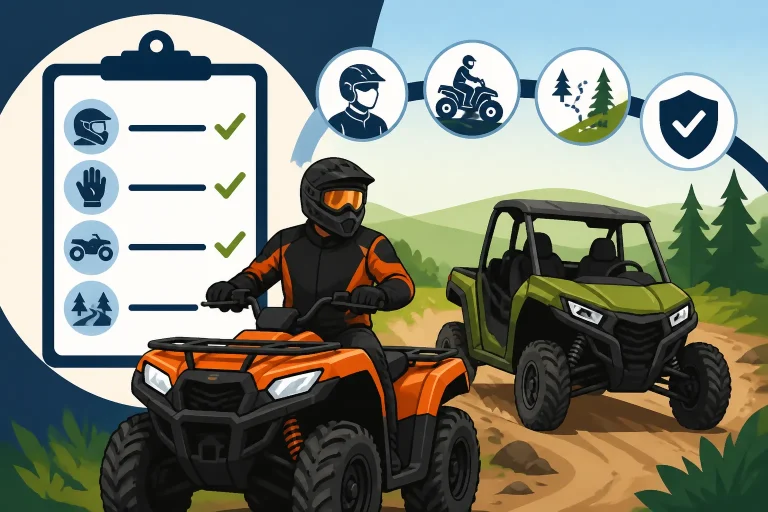
A Practical Checklist for a Woodlot Ride
Before heading out, make sure everyone in the group understands the permission and the route. One person’s conversation with the owner does not help if the rest of the group assumes they can explore freely.
- Confirm the property and contact. Identify whose land you plan to enter and make sure the person granting permission is authorized to do so.
- Describe the ride plainly. State the machine type, number of riders, route, intended date, and whether you plan to return on future rides.
- Agree on boundaries. Ask which roads are allowed, which areas are off limits, and where the property line or approved route lies.
- Check for changing conditions. Confirm that logging, a locked gate, a closure, or other activity has not changed access since permission was given.
- Review the separate requirements. Check trail-permit, registration, insurance, and rider rules that apply to your planned route.
- Brief the group. Share the route and conditions with every rider. Make clear that permission does not extend to unapproved guests or side trails.
- Ride respectfully. Stay on the agreed route, keep noise and speed under control, and leave gates as the owner directs.
- Report a problem. Contact the owner if you find damage, an obstruction, or a safety concern. Do not clear, repair, or alter the property without approval.
Wet ground deserves particular care. A route that seemed harmless in dry weather may rut easily after rain or during a thaw. If the landowner asks you to avoid a section, do not make a detour across another part of the lot. Turning around is better than damaging the property or creating a new track. Trail etiquette matters even when you have permission; New Brunswick Trail Etiquette Locals Expect offers useful habits for sharing routes responsibly.
Respect also means treating permission as revocable. The owner may need to close access, change the route, or stop allowing machines. Do not argue that previous rides guarantee future access. If a gate is closed or the agreed route is blocked, contact the owner and wait for direction rather than finding a way around it.
If permission is denied or you cannot confirm who controls the land, choose an authorized route instead. That may mean using a designated club trail with the required permit or postponing the ride until you have a clear answer. A few minutes spent confirming access can prevent conflict, property damage, and a ride that should not have started.
Disclaimer
This article is for general informational purposes only and does not constitute professional advice. Laws, prices and regulations vary by location and change over time. Consult a qualified professional for guidance on your specific situation.