New Brunswick Helmet Law for Every Occupant
It’s a beautiful day in New Brunswick, and you’re itching to hit the trails on your ATV or UTV. But before you even think about firing up that engine, there’s one critical piece of gear that can’t be overlooked: your helmet. The rules around helmet use in our province can sometimes feel a bit murky, especially when you're riding with passengers, or in a side-by-side that feels more like a small car. The frustration is real when you just want to enjoy the ride without constantly worrying about legalities. This guide is here to cut through the confusion and explain, clearly and empathetically, exactly what New Brunswick’s helmet law requires for every single occupant of your off-road vehicle.
Why Helmets Are Non-Negotiable in New Brunswick
Let's be absolutely honest with ourselves for a moment: off-road riding, while incredibly fun and exhilarating, carries inherent risks. The freedom of the trail, the ability to explore parts of our beautiful province that cars can't reach – it's all part of the allure. But that freedom comes with a responsibility to protect yourself and your loved ones, and that starts, unequivocally, with a helmet.
The Unseen Dangers of Off-Road Riding
When you're out on the trails, especially in the New Brunswick wilderness, you're contending with a dynamic and often unpredictable environment. It's not just about a head-on collision with another machine, which is thankfully rare on managed trails. Think about the unexpected branch that swings out, the loose rock that gets kicked up, or the sudden loss of traction that sends your machine into a roll. Even a seemingly minor tumble can lead to a severe head injury if you're unprotected. Our trails, while well-maintained by clubs, still have their share of roots, rocks, and unexpected terrain changes that can catch even the most experienced rider off guard. The speed at which an incident can occur, and the force involved, means there's simply no time to react once a fall or impact begins. A helmet acts as your first, and often only, line of defence against serious, life-altering trauma.
It's the Law: Not Just a Suggestion
Beyond the vital safety aspect, wearing a helmet isn't just good advice here in New Brunswick; it's a legal requirement. The provincial Off-Road Vehicle Act is crystal clear on this matter, leaving no room for interpretation or personal preference when you're operating an ATV or UTV. This isn't some arbitrary rule designed to annoy you; it's a carefully considered piece of legislation put in place to protect riders from the most common and devastating injuries associated with off-road vehicle incidents. Understanding [What New Brunswick's Off-Road Vehicle Act Covers] really highlights the comprehensive approach the province takes to ensure rider safety. From the moment you pull out of your driveway and onto a trail or road where the Act applies, you are legally bound to wear a proper helmet. There are no exceptions for short distances, low speeds, or perceived "safe" areas, because accidents don't care about your intentions.
Who Needs to Wear a Helmet? Everyone on Board!
This is where some of the biggest misunderstandings often come into play. Many riders assume the helmet law only applies to the person driving, or that certain types of machines offer enough protection to negate the need for headgear. Let's clear this up once and for all.
The Driver's Responsibility
If you're in the driver's seat, whether you're on a powerful sport quad, a utility ATV, or behind the wheel of a side-by-side, a helmet is absolutely mandatory. This isn't just about your own safety, though that's paramount. As the operator, you bear the primary responsibility for the safety of your machine and anyone riding with you. Your actions directly influence the risks involved, and being protected yourself is the first step in ensuring a safe outing. Even if you're just moving your quad from one side of your property to the other, if you're on a public trail or designated road, that helmet needs to be strapped on. It's about setting an example and adhering to the law that governs our shared riding spaces.
Passengers Are Not Exempt
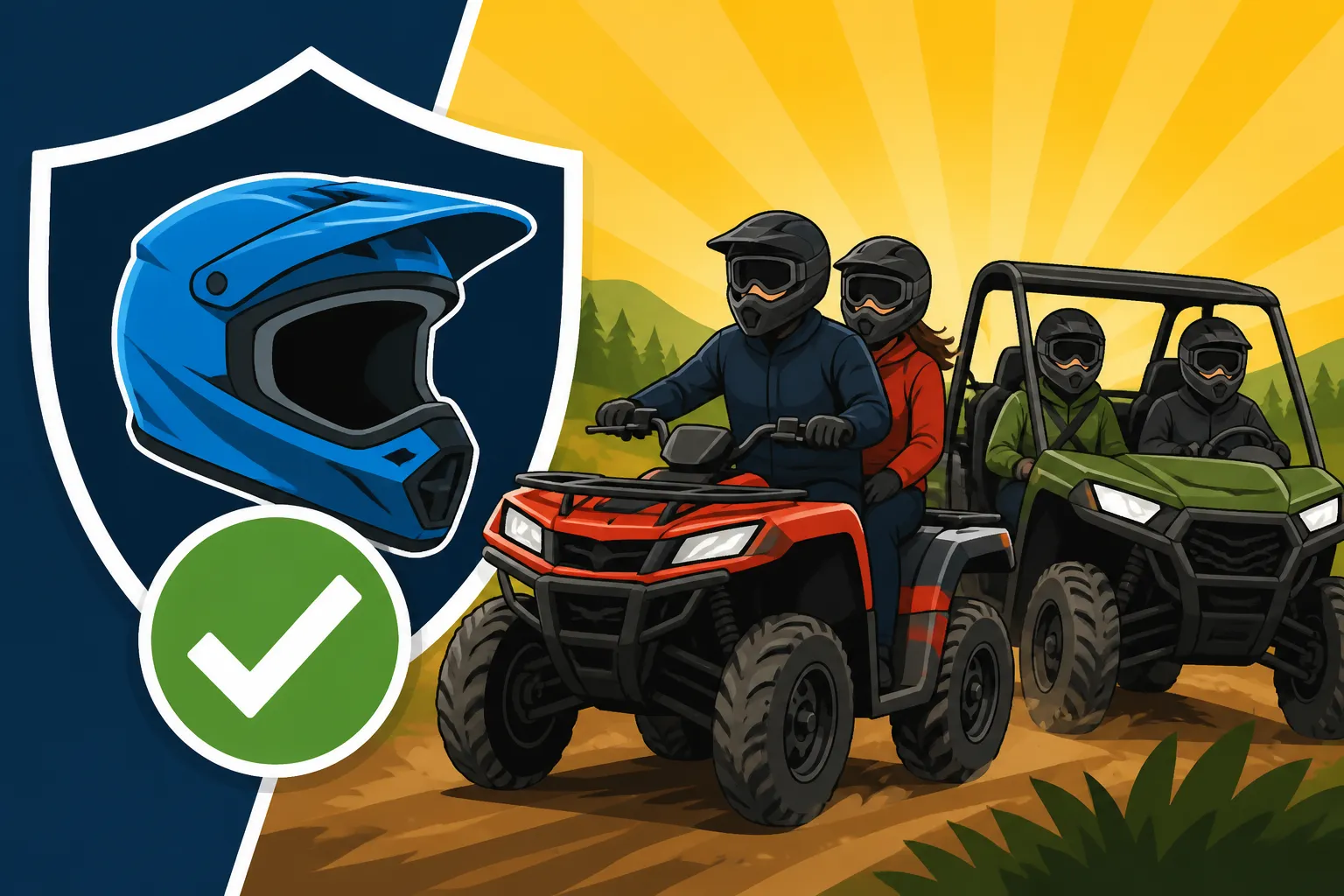
This is a point that often catches people off guard, especially when it comes to children. The New Brunswick helmet law states that every occupant of an off-road vehicle must wear an approved helmet. This means if you have a passenger on a two-up ATV, or if your side-by-side has multiple seats, every single person in those seats needs a helmet. There's no age limit, no weight exemption, and no "they're just riding with me" clause. Children are especially vulnerable in an accident, and their developing skulls require maximum protection. It’s important to familiarize yourself with [New Brunswick Passenger Rules on a Quad] to ensure everyone riding with you is both legal and safe. Often, parents will ensure their child has a helmet but might forget one for themselves, or for an older teen riding along. The law is clear: if you're an occupant, you need a helmet.
Side-by-Sides and Dune Buggies: Yes, Still Helmets!
Here's another big misconception: "My side-by-side has a roll cage and seatbelts, so I don't need a helmet, right?" Wrong. Absolutely, unequivocally wrong. While the roll cage and seatbelts in a side-by-side (UTV) or dune buggy offer significant protection in the event of a rollover or collision, they do not eliminate the need for head protection. These machines often reach higher speeds and are heavier than traditional ATVs, increasing the forces involved in an incident.
The law views side-by-sides as off-road vehicles, and thus, the helmet mandate applies to all occupants. Even if your UTV is decked out with a sturdy roof, a full windshield, and doors – features that certainly enhance comfort and protection from the elements – these additions, while excellent for rider experience (and companies like SuperATV make some fantastic ones!), do not replace the fundamental requirement of a certified helmet. Your head is still exposed to potential impacts from debris, sudden jolts within the cabin, or even contact with the roll cage itself during a violent movement. Treat your side-by-side like any other ORV when it comes to head protection; safety first, always.
What Kind of Helmet is Acceptable in New Brunswick?
It's not enough to simply wear "a helmet." Just like you wouldn't use a bicycle helmet for a motorcycle, there are specific standards that off-road vehicle helmets must meet to be considered legal and genuinely protective in New Brunswick.
Understanding the Safety Standards
New Brunswick's regulations are quite specific about the types of helmets that are legally acceptable for ATV and UTV use. They must conform to certain recognized safety standards, ensuring that they've been rigorously tested for impact absorption and structural integrity. The primary standards you'll typically see referenced include:
- CSA Standard D230: This is the Canadian Standards Association standard for off-road vehicle helmets. It's a widely recognized standard across Canada.
- DOT FMVSS 218: This refers to the U.S. Department of Transportation's Federal Motor Vehicle Safety Standard 218, which is mandatory for all helmets sold for motor vehicle use in the United States. Many helmets designed for ATV/UTV use will meet this standard.
- Snell M2015 or M2020: The Snell Memorial Foundation is a non-profit organization dedicated to helmet safety. Their standards are often considered more stringent than DOT, and a Snell-certified helmet offers excellent protection.
- ANSI Z90.1: The American National Standards Institute also provides safety standards for protective headwear, including those for motorized vehicles.
You should always look for a sticker inside your helmet, usually on the back or under the padding, indicating which of these standards it meets. If it doesn't clearly show one of these certifications, it's not considered a legal or safe helmet for riding in New Brunswick. Familiarizing yourself with [New Brunswick Helmet Standards Accepted] will give you peace of mind that your gear is up to par. Don't cheap out on your brain bucket; it's literally protecting your most important asset.
The Importance of a Proper Fit
Even the highest-rated helmet is useless if it doesn't fit correctly. A helmet that's too loose can shift around during a ride, obstructing your vision, and more critically, it won't stay in place during an impact, compromising its protective ability. Conversely, a helmet that's too tight can be uncomfortable, cause headaches, and reduce your enjoyment of the ride.
When trying on a helmet, it should feel snug around your entire head, with uniform pressure. It shouldn't be painful, but there shouldn't be any significant gaps. If you can push the helmet from side to side or front to back and it slides easily, it's too big. The padding should compress slightly against your cheeks and temples. When you fasten the chin strap, it should be snug enough that you can't roll the helmet forward off your head. A properly fitting helmet is crucial for both comfort on long rides and, most importantly, for maximizing its protective capabilities when you need it most.
Inspecting Your Helmet for Damage
Helmets aren't designed to last forever, and their protective capabilities can degrade over time or after an impact. It's crucial to regularly inspect your helmet for any signs of damage. After any significant impact, even if you don't see visible cracks, the integrity of the inner foam liner might be compromised. This is the part that absorbs the energy of a crash, and if it's compressed, it won't be able to do its job effectively in a subsequent incident.
Look for cracks in the outer shell, frayed or damaged chin straps, or any signs that the inner padding is deteriorating or becoming loose. If your helmet has been dropped onto a hard surface or involved in even a minor tip-over, it's generally recommended to replace it. UV exposure, sweat, and general wear and tear can also break down materials over several years, regardless of impacts. A good rule of thumb is to replace your helmet every five to seven years, or immediately after any crash or hard impact, to ensure you're always riding with maximum protection.
Common Misconceptions and Specific Scenarios
It's easy to think that certain situations might make the helmet rule null and void. We hear it all the time: "I'm just going to the camp," or "It's only on my own land." Let's tackle these common scenarios head-on.
Riding on Private Land
This is probably one of the most persistent myths out there. Many New Brunswick residents believe that if they are operating their ATV or UTV exclusively on their own private property, the provincial Off-Road Vehicle Act doesn't apply, and therefore, they don't need a helmet. While there are some nuances regarding certain ORV rules on private land, particularly for those who qualify under [New Brunswick Owner-Only Private Land Exemption] for registration, the helmet law is generally considered to be in force.
Think about it: the risk of injury on your own property isn't magically less than on a public trail. A rollover, an unexpected obstacle, or a fall can happen anywhere. The spirit of the law, and the fundamental principle of personal safety, strongly advise that you always wear a helmet when operating an ORV, regardless of the land ownership. While direct enforcement might be less likely in your back forty compared to a main trail, why gamble with your brain? It’s simply not worth the risk, and the law aims to protect you even from yourself.
Riding at Low Speeds or for Short Distances
"I'm just going to ride down the road to my neighbour's house," or "I'm only going five kilometres an hour to check the mailbox." These are common justifications, but they don't hold up when it comes to the helmet law. The New Brunswick regulations do not specify a minimum speed or distance for the helmet requirement to kick in. If you are operating an ORV on any public trail, designated road, or any area where the Off-Road Vehicle Act applies, a helmet is required.
Accidents can happen at any speed, and often, it's the unexpectedness of an event, rather than high speed, that causes the most dangerous falls. A seemingly innocuous dip in the driveway, a patch of gravel, or a sudden stop can throw an unprotected rider from their machine. The law is designed to create a consistent safety standard across all operational scenarios, recognizing that risk isn't exclusive to high-speed, long-distance riding. Make wearing your helmet as automatic as putting on your seatbelt in a car.
Riding in a Side-by-Side with a Windshield and Roof
As we touched on earlier, this is a significant area of misunderstanding. Side-by-sides, with their automotive-style controls, seating, and enclosed feel, can give riders a false sense of security, leading them to believe that a helmet isn't necessary. "I've got a roof, a windshield, and doors! Why do I need a helmet?" is a question heard far too often. Even with a full complement of accessories, helmets remain mandatory for all occupants.
While features like a SuperATV full windshield can block wind, rain, and debris from entering the cabin, and a strong roof offers protection from overhead impacts (like branches or a light rollover), they do not prevent your head from potentially impacting internal structures of the machine during a sudden jolt, a sharp turn, or a more serious accident. Nor do they protect against objects entering through the open sides or impacts from unusual angles. The law prioritizes direct head protection, which only a certified helmet can provide. So, deck out your UTV for comfort and utility, but never compromise on the helmet. It's the critical link in your personal safety chain.
Penalties for Non-Compliance: What's at Stake
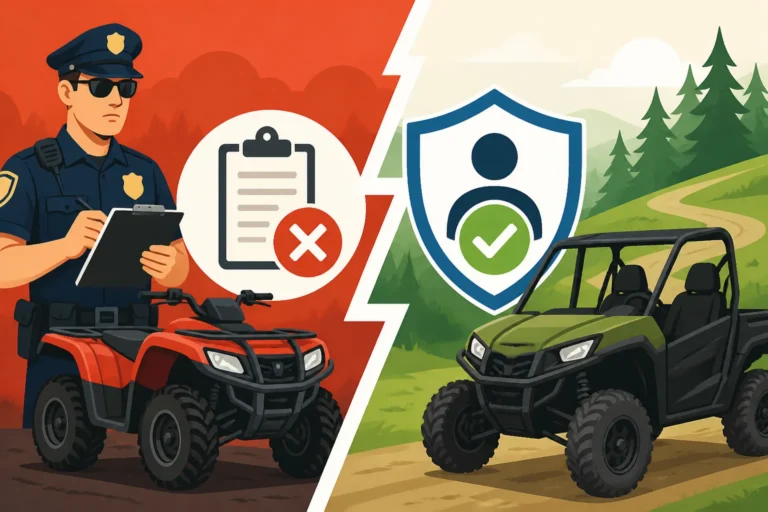
Ignoring the helmet law isn't just a lapse in judgment; it's a legal infraction with tangible consequences. The province takes ORV safety seriously, and enforcement officers are out on the trails to ensure compliance.
The Financial Hit: Fines and Court Costs
If you're caught riding an ATV or UTV without an approved helmet in New Brunswick, you're not just going to get a slap on the wrist. The fines can be substantial, designed to be a significant deterrent. Beyond the initial penalty for the infraction itself, there can also be additional court costs and administrative fees tacked on, further increasing the financial burden. This is a "set fine," meaning there's a predetermined amount that you're expected to pay.
For instance, not wearing an approved helmet can result in [New Brunswick's $172.50 Helmet Fine]. This isn't a figure to scoff at, and it applies per person not wearing a helmet. So, if you're riding with a passenger who also isn't wearing one, that fine could essentially double, or more, depending on the specifics of the situation and the officer's discretion. That money could be better spent on trail permits, maintenance, or even upgrading your riding gear. It's far cheaper to buy a good helmet than to pay the fine for not wearing one.
The Human Cost: Injuries and Legal Ramifications
Beyond the immediate financial penalty, the potential human cost of not wearing a helmet is truly devastating. Head injuries range from concussions, which can have long-lasting effects on cognitive function, to traumatic brain injuries (TBIs) that can result in permanent disability, loss of motor skills, or even death. We've all seen or heard stories of tragic accidents, and often, the severity of the outcome could have been mitigated by proper head protection.
Furthermore, not wearing a helmet can have significant legal and insurance ramifications. If you're involved in an accident and weren't wearing a helmet, your ability to claim damages or receive full insurance benefits might be severely compromised, as you would be deemed to have contributed to your own injuries. This can lead to massive medical bills and long-term care costs that you might have to bear yourself. The simple act of putting on a helmet drastically reduces these risks, both to your health and your financial well-being.
Officer Discretion and Enforcement
New Brunswick conservation officers, RCMP, and even local police forces are authorized to enforce the Off-Road Vehicle Act. They patrol our trails, rural roads, and public access points, and they are specifically looking for compliance with safety regulations, including helmet use. These officers are often seasoned riders themselves and understand the risks involved. They aren't just looking for speeding; they're ensuring everyone is equipped for safety.
While an officer might use discretion in certain minor circumstances, when it comes to a helmet, it's usually a pretty black and white issue. They are tasked with ensuring public safety and enforcing the law, and a visible lack of a helmet is a clear violation. Understanding [Who Enforces Quad Rules on a New Brunswick Trail] shows that there's a concerted effort to keep our trails safe for everyone. Don't expect to get a warning; an officer has every right to issue a citation on the spot. It's a risk not worth taking.
Best Practices for Helmet Use and Maintenance
Now that we understand why helmets are mandatory and the standards they need to meet, let's talk about making helmet-wearing a consistent and comfortable part of your riding routine.
Making Helmet-Wearing a Habit
The easiest way to ensure you and your passengers always wear helmets is to make it a non-negotiable part of your pre-ride ritual. Just like you check your fuel, tires, and oil, putting on your helmet should be second nature. Store helmets in an easily accessible spot, perhaps right by the door where you leave for your ride. Having a designated place for each helmet ensures no one forgets theirs.
For families, lead by example. Children are incredibly observant, and if they see adults consistently putting on their helmets without complaint, they are far more likely to adopt the habit themselves. Make it clear that the ride simply doesn't start until everyone is geared up. This firm but fair approach instills a sense of responsibility and safety in all riders, young and old. Consistency is key to forming a habit that ultimately saves lives.
Caring for Your Helmet
Proper care extends the life of your helmet and ensures it continues to provide optimal protection. Avoid leaving your helmet baking in direct sunlight or in a hot vehicle for extended periods, as UV rays and extreme heat can degrade the materials. When cleaning, use mild soap and water, and avoid harsh chemical cleaners or solvents, which can damage the shell or the inner lining. Many modern helmets have removable, washable liners, which is fantastic for keeping them fresh and free of sweat and odor.
Store your helmet in a cool, dry place, away from direct sunlight and extreme temperatures. Using a helmet bag can help protect it from scratches and dust when not in use. Never drop your helmet, as even seemingly minor impacts can compromise its structural integrity. Treat your helmet with the respect it deserves; it's a vital piece of safety equipment, not just another accessory.
Encouraging Young Riders to Wear Helmets
Getting kids to wear helmets can sometimes feel like a battle, but it's a battle worth winning. Make it fun and empowering. Let them pick out their own helmet (within safety standards, of course) so they have a sense of ownership. Bright colours or cool graphics can make it more appealing. Explain why they need it in terms they can understand – "It protects your super-smart brain!"
For younger children, ensure the helmet is lightweight and comfortable, specifically designed for youth. A poorly fitting or heavy helmet will be quickly rejected. Patience is key. And remember, [New Brunswick Rules for a Child Passenger] highlight the importance of their safety. Turn it into a game: "Helmet on, adventure starts!" By making it a positive experience, you're not just enforcing a rule; you're instilling a lifelong habit of safety.
Essential Gear Beyond the Helmet
While the helmet is paramount, it's just one piece of the safety puzzle. A truly prepared rider will consider other essential gear to enhance comfort, protection, and compliance with other New Brunswick regulations.
Eye Protection and Goggles
Your eyes are incredibly vulnerable to the elements and hazards of the trail. Dust, dirt, flying debris, insects, branches, and even harsh sunlight can impair your vision, leading to dangerous situations. That's why eye protection is just as crucial as your helmet. Most off-road helmets are designed to be worn with goggles, which provide excellent peripheral vision and a tight seal against dust and wind.
Look for goggles with anti-fog properties and UV protection. Clear lenses are great for overcast days or riding in dense woods, while tinted or mirrored lenses are better for bright, sunny conditions. If you wear prescription glasses, look for "OTG" (Over The Glasses) goggles that are designed to fit comfortably over your eyewear. Never ride without proper eye protection; a momentary speck in your eye can lead to a crash.
Appropriate Clothing and Footwear
Your clothing choices directly impact your safety and comfort on the trail. While you might be tempted to wear shorts and a t-shirt on a hot summer day, this leaves too much skin exposed to abrasions, scratches from branches, and sun exposure. Always opt for long pants (durable denim or riding specific pants are best) and long-sleeved shirts, preferably made of moisture-wicking material.
Sturdy, over-the-ankle boots are also a must. They protect your feet and ankles from impacts, provide grip on footpegs, and offer support for rough terrain. Avoid open-toed shoes, sneakers, or flimsy footwear. Gloves are another often-overlooked item; they protect your hands from blisters, impacts, and provide better grip on the handlebars. Think of your clothing as a second layer of skin protection, especially important on longer rides exploring [New Brunswick's 10,000 Kilometres of Trail].
Carrying the Right Documentation
Beyond your personal safety gear, remember that New Brunswick law also requires you to carry specific documents when operating your off-road vehicle. This includes your ORV registration certificate, proof of valid liability insurance, your operator's license, and your trail permit (if you're on a designated trail).
An officer can request these documents at any time on the trail. Not having them can lead to fines, just like not having a helmet. It's a good practice to keep these documents in a waterproof bag or pouch in a secure location on your machine, like a storage box or saddlebag. Familiarize yourself with [New Brunswick Documents You Must Carry] to ensure you're always fully compliant. Being prepared means being safe, and that includes being legally ready for any encounter on the trail.
| Helmet Standard | Key Focus | Legal in New Brunswick? | What to Look For |
|---|---|---|---|
| CSA D230 | Canadian national standard, comprehensive testing | Yes | CSA sticker inside helmet, often on a white or black background. |
| DOT FMVSS 218 | Minimum standard for public road use in the US, widely accepted | Yes | "DOT" certification sticker on the back of the helmet. |
| Snell M2015/M2020 | Rigorous, often exceeding DOT. Voluntary but highly respected. | Yes | Snell sticker inside the helmet, detailing the specific M-standard. |
| ANSI Z90.1 | American National Standards Institute, less common for modern ORV | Yes | ANSI sticker, though less frequently seen on newer ORV helmets. |
Disclaimer
This article is for general informational purposes only and does not constitute professional advice. Laws, prices and regulations vary by location and change over time. Consult a qualified professional for guidance on your specific situation.