Why a Minor Cannot Cross a Road
It’s a common scenario in New Brunswick: you’re out for a ride on the trails, maybe with your kids enjoying their youth ATVs, and you come across a road that needs to be crossed to continue on the network. For adult riders, there are specific rules and sometimes permits involved, but what about the younger enthusiasts? Many parents are understandably confused and frustrated when they learn that their minor child, even with an adult escort, simply cannot legally cross a public road on their off-road vehicle. This guide will clarify the exact reasons behind this rule, rooted deeply in safety and provincial legislation, helping you understand the limitations and ensure everyone in your riding group stays safe and legal.
The Ironclad Rule: Minors and Road Crossings on ORVs
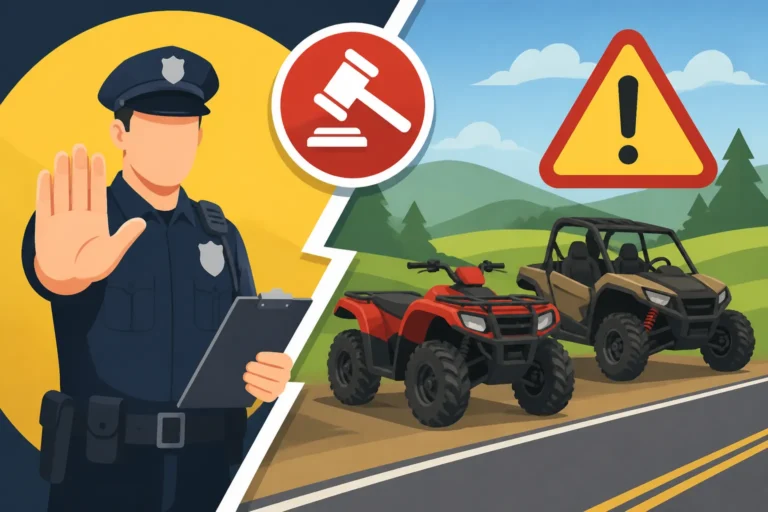
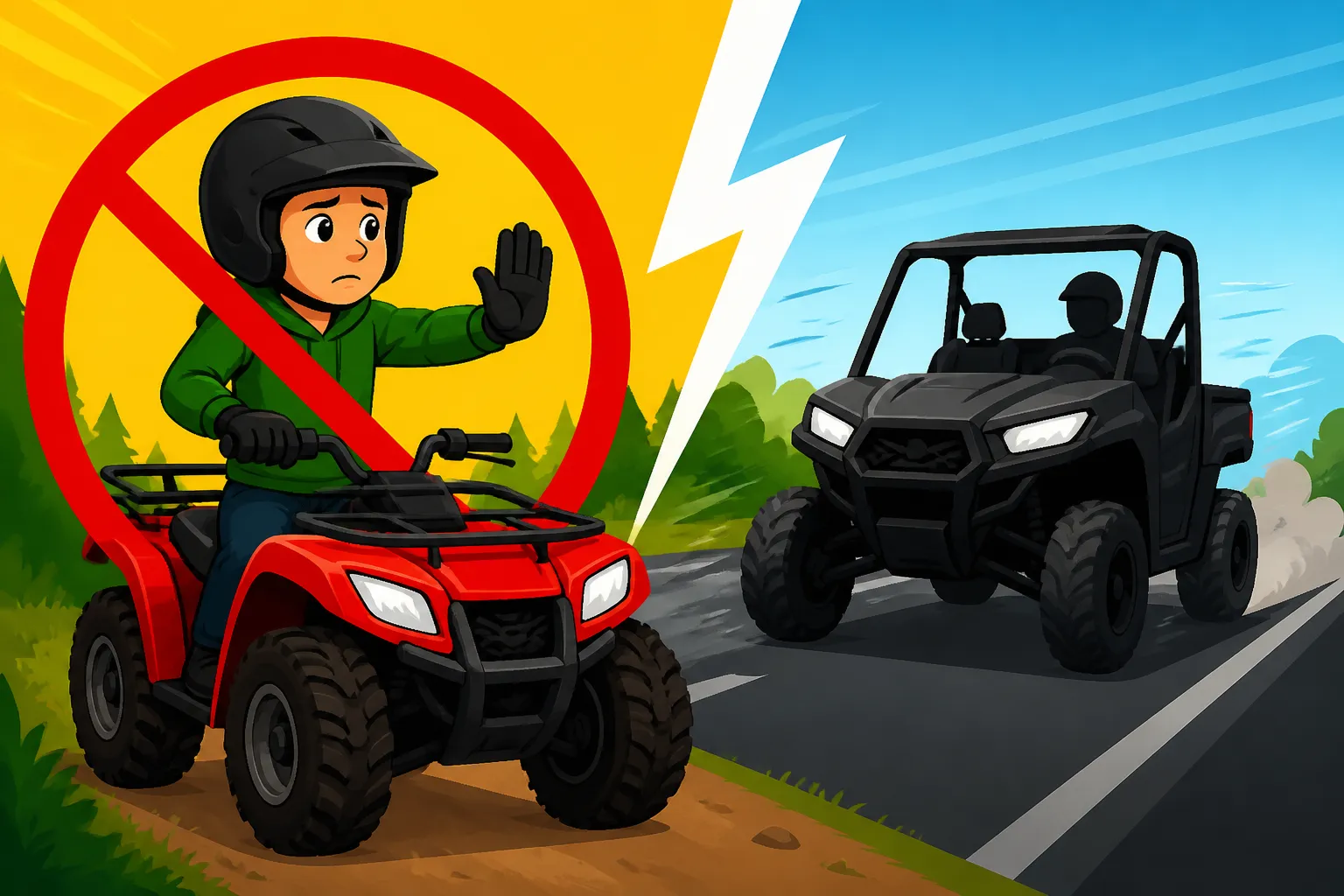
Let's cut right to the chase: in New Brunswick, if you are under the age of 16, you are generally prohibited from operating an off-road vehicle (ORV) on or across any part of a public highway. This isn't just a suggestion; it's a fundamental tenet of the province's off-road vehicle legislation designed to protect young riders and the general public. While it might seem overly restrictive, especially when an adult is present, the law makes no allowances for supervision in this specific instance.
This rule applies universally to all minors, regardless of their experience level, whether they have completed a safety course, or if they possess a learner's permit for a car. The provincial government has drawn a firm line regarding where and how minors can operate ORVs, and public roads represent a boundary they simply cannot cross. The rationale is multifaceted, encompassing factors like traffic complexity, the unique characteristics of ORVs, and the inherent vulnerabilities of younger operators in a high-risk environment. Understanding this rule is paramount for any family planning to enjoy New Brunswick's extensive [New Brunswick ATV Trails: The QuadNB Network].
Defining "Minor" and "Highway" Under NB Law
When we talk about "minors" in the context of New Brunswick's Off-Road Vehicle Act, we are generally referring to anyone under 16 years of age. While there are graduated rules for teenagers, such as [New Brunswick Riders Aged 14 and 15] who can ride under specific conditions, the road crossing prohibition remains consistent for everyone under the age of majority for driving. The law prioritizes the safety of children, acknowledging that even a quick dash across a quiet rural road presents risks that young riders may not be fully equipped to handle.
The term "highway" in this legislation is also broader than many people assume. It doesn't just mean a four-lane freeway. It encompasses almost any public road, street, avenue, parkway, driveway, bridge, viaduct, or other communication that is maintained by the province or a municipality and open to the use of the public for the passage of vehicles. This means that little gravel road connecting two sections of trail that you might think is harmless is still considered a "highway" in the eyes of the law. This expansive definition ensures that the protection afforded to minors applies across a wide range of potential road encounters, leaving little room for interpretation or exceptions.
Why This Specific Restriction?
The provincial government's decision to prohibit minors from crossing roads on ORVs is primarily driven by an abundance of caution and a realistic assessment of risk. Unlike cars, ORVs are not designed for road use; they handle differently, have different braking characteristics, and are far less visible to other traffic. Young operators, regardless of their proficiency on a trail, may lack the critical judgment, experience, and quick reflexes required to safely navigate a potentially high-speed, multi-directional traffic environment.
Consider a scenario where a child is trying to cross a road:
- Limited Visibility: A child on an ATV might be less visible to drivers of cars and trucks, especially if they're on a smaller machine. [New Brunswick Lighting Requirements at Night] are crucial for adults, but even in daylight, an ORV can be missed.
- Traffic Assessment: Accurately judging the speed and distance of oncoming traffic is a complex skill that develops with age and experience. A minor may misjudge a gap or react impulsively.
- Unexpected Events: Road environments are dynamic. A sudden braking vehicle, a turning car, or an unexpected pedestrian can create a chaotic situation that even an experienced adult driver might find challenging, let alone a minor on an ORV.
- Legal and Liability Concerns: The province also has a duty to minimize potential accidents and subsequent legal complexities. Allowing minors onto public roads, even briefly, increases the risk of serious injury or fatality, and places a significant liability burden on all parties involved.
It boils down to the fact that the inherent risks of mixing off-road vehicles with on-road traffic are amplified when the operator is under 16 years old. This rule is a pre-emptive measure to prevent tragedies, reflecting a commitment to safety over convenience.
Navigating the Rules: What Minors CAN Do
While the road crossing restriction for minors is firm, it's important to understand that it doesn't mean minors can't enjoy ATVing in New Brunswick at all. There are very specific provisions in place that allow young riders to participate in the sport, but always with safety and age-appropriateness as the guiding principles.
Permitted Riding Areas for Minors
Minors can operate ORVs in several approved environments, primarily focusing on controlled or designated off-road settings. This includes:
- Designated ORV Trails: Many parts of the extensive [New Brunswick ATV Trails: The QuadNB Network] are suitable for younger riders, provided they meet age and machine requirements.
- Private Land: With the landowner's permission, minors can ride on private property. This often includes family woodlots, fields, or designated riding areas away from public roads.
- Closed Courses: For younger children, often aged 6 to 13, specific [New Brunswick Closed Courses for Ages 6 to 13] are designated. These are controlled environments where risks are minimized and supervision is direct.
The key takeaway is that minors are meant to stay off any public road system. Their riding environment should be one where they are primarily encountering other ORVs, or where vehicle traffic is entirely absent. This helps to create a safer, more predictable experience for them as they develop their riding skills.
Age-Specific Regulations for Young Riders
New Brunswick has a tiered system for young riders, recognizing that a 6-year-old on a small machine has different capabilities and needs than a 15-year-old on a larger quad.
| Age Group | Machine Size Restrictions | Riding Requirements | Road Crossing |
|---|---|---|---|
| 6-11 years | Up to 70cc (2-stroke), 90cc (4-stroke) | Must be supervised by an adult (19+) with a valid driver's licence and safety course. Can only ride on closed courses or private land. The adult must also meet requirements, as discussed in [New Brunswick Adults Escorting Young Riders]. | NOT PERMITTED |
| 12-13 years | Up to 340cc (2-stroke), 600cc (4-stroke) | Must be supervised by an adult (19+) with a valid driver's licence and safety course. Can ride on designated trails, private land, or closed courses. Both the youth and the adult must have completed an approved New Brunswick Quad Safety Course Explained. | NOT PERMITTED |
| 14-15 years | No specific displacement limits (must be appropriately sized for rider) | Must have a Class 9 licence (motorcycle learner's permit) AND a certified [New Brunswick Driver Training Certificates] completion. Must be supervised by an adult (19+) with a valid driver's licence and safety course. Can ride on designated trails, private land. | NOT PERMITTED |
| 16+ years | No specific displacement limits (must be appropriately sized for rider) | With a valid driver's licence (Class 5 or Class 6) or Class 9 (motorcycle learner's with restrictions), and a safety course certificate, they can operate an ORV independently, including crossing roads where permitted by [New Brunswick Rules for Crossing a Road] and local bylaws, and potentially using [New Brunswick Highway Usage Permits]. | PERMITTED (with licence, safety course, and adherence to rules) |
It's crucial for parents and guardians to be fully aware of these distinctions. For instance, a 14-year-old might be able to ride certain trails with the right licence and supervision, but they are still explicitly covered by the [New Brunswick Under-16 Riders Cannot Cross a Road] rule. This comprehensive framework aims to provide opportunities for youth while maintaining strict boundaries around high-risk scenarios like road crossings.
Consequences of Non-Compliance
Ignoring the rules, especially those pertaining to minors and road crossings, carries significant consequences. These aren't just minor infractions; they are serious violations that can result in substantial fines and even legal ramifications. The authorities in New Brunswick, including RCMP and local law enforcement, are vigilant in enforcing ORV regulations to ensure safety on trails and roads.
Financial Penalties and Legal Repercussions
For parents or guardians who permit a minor to violate the road crossing rule, the penalties can be steep. The fines for such infractions are designed to be a strong deterrent. For example, operating an unregistered machine or operating an ORV where prohibited can lead to significant set fines. If a minor is caught operating an ORV on a public highway or crossing one, the adult responsible for their supervision could face penalties, and the machine itself could even be impounded.
Moreover, if an accident were to occur during a prohibited road crossing by a minor, the legal implications would be severe. Insurance coverage might be voided if the ORV was operated outside of legal parameters, leading to immense personal liability for damages and injuries. This adds a critical layer of risk that far outweighs the perceived convenience of allowing a minor to make a quick dash across a road. It’s always better to transport the machine by trailer or truck across any highway rather than risk a fine or, worse, an accident. Remember, law enforcement officers routinely check for compliance with the [New Brunswick Documents You Must Carry] while riding.
Impact on Safety and Future Riding Privileges
Beyond the immediate legal and financial repercussions, allowing a minor to cross a road illegally creates a dangerous precedent. It normalizes risky behaviour and undermines the very safety principles that the laws are designed to uphold. Such actions can lead to serious injuries for the child, other road users, or property damage.
Repeated infractions or involvement in an incident could also affect future riding privileges for both the minor and the supervising adult. While there isn't a direct "points" system for ORV operation like with driver's licences, a history of non-compliance can certainly draw unwanted attention from authorities and potentially influence decisions regarding permits or future enforcement actions. The goal of these rules is always prevention, and by adhering to them, we ensure that the trails remain a safe and enjoyable environment for everyone.
Alternatives to Crossing a Road
So, if a minor cannot legally cross a road on their ORV, what are the practical alternatives? This is where good planning, communication, and a little extra effort come into play to ensure a seamless and legal riding experience for the whole family.
Using a Trailer or Truck to Bridge the Gap
The most straightforward and safest solution when a minor needs to continue riding on the other side of a public road is to simply transport their machine. This means loading the ATV onto a trailer or into the back of a truck, driving it across the road, and unloading it on the other side. While it might add a few minutes to your ride, it completely eliminates the legal and safety risks associated with a minor operating an ORV on a public thoroughfare.
This method also works for longer stretches where an adult might typically use a [New Brunswick Highway Usage Permits] to ride on the shoulder. If you have minors in your group, these highway segments are entirely off-limits for them, meaning transport is the only legal option. Many families get into the habit of scouting their routes in advance, identifying any road crossings or highway segments, and planning these transport logistics into their day. It might feel like a hassle the first time, but it quickly becomes part of the routine for responsible family riding.
Planning Routes to Avoid Road Crossings
Another excellent strategy is to meticulously plan your routes to minimize or entirely avoid road crossings when riding with minors. The [New Brunswick ATV Trail Map Downloads] available from QuadNB are invaluable for this. These maps clearly mark trails, roads, and often indicate where a trail might intersect with a public highway. By studying these maps before you head out, you can choose loops or segments that keep minors entirely on designated trails or private land, sidestepping the need for any road exposure.
Many clubs and local areas develop trail systems with underpasses or bridges specifically designed to keep ORV traffic separated from vehicular traffic. Prioritizing these "closed loop" systems or sections where no road crossing is required is the safest and most enjoyable way to ride with young family members. This proactive approach not only keeps you compliant with the law but significantly enhances the safety of your entire group, allowing everyone to focus on the joy of the ride.
Disclaimer
This article is for general informational purposes only and does not constitute professional advice. Laws, prices and regulations vary by location and change over time. Consult a qualified professional for guidance on your specific situation.