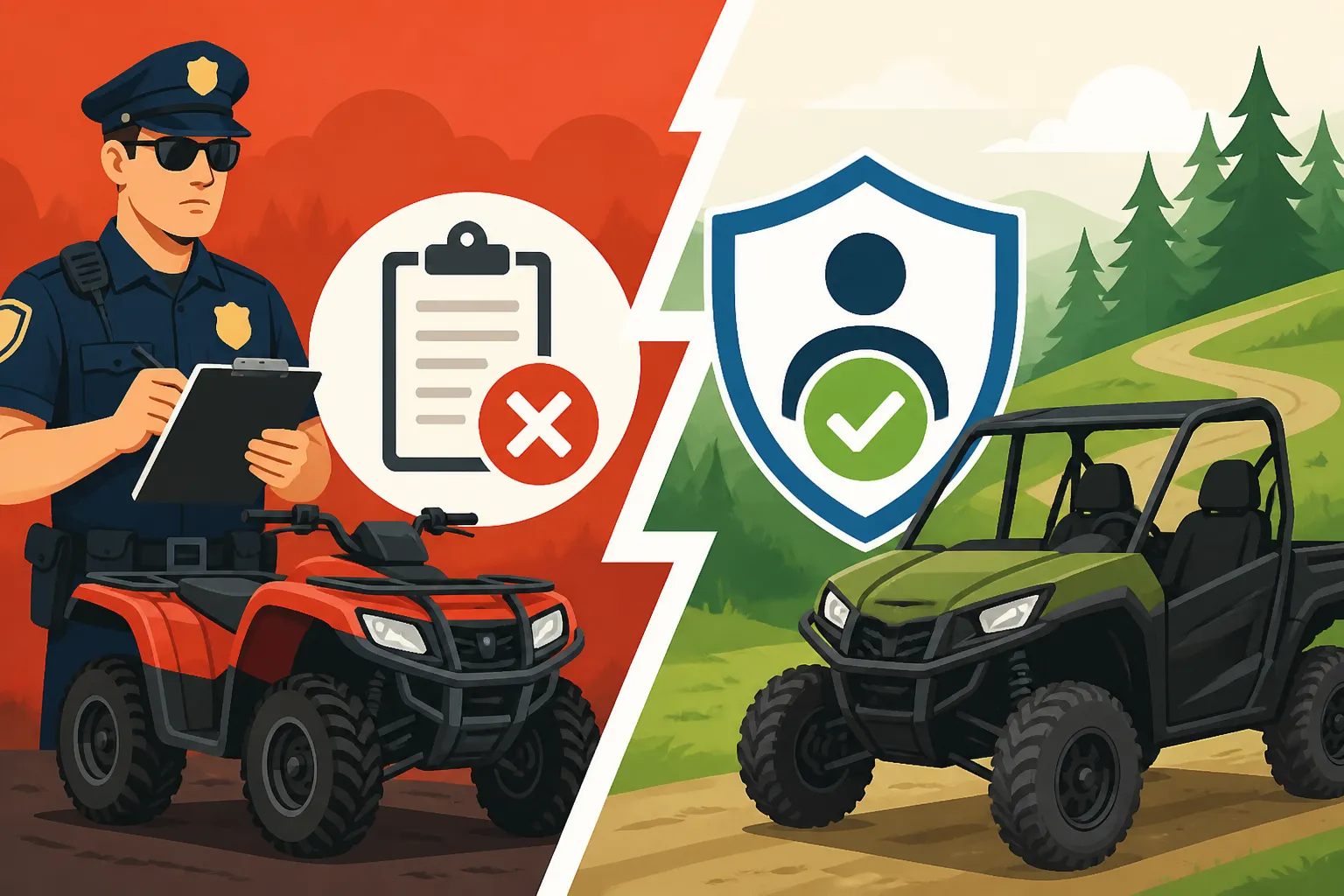
Disputing a Set Fine
It’s a moment no ATV or UTV rider wants to experience: being handed a ticket by an enforcement officer while you're out enjoying the trails or simply trying to get from one place to another. That sinking feeling in your stomach, the sudden halt to your fun, and the frustration of seeing a "set fine" amount that feels entirely unfair or perhaps even incorrect. This guide is here to walk you through exactly what a set fine means in New Brunswick for your off-road vehicle and, more importantly, how you can go about disputing it if you believe you have a valid case. We’ll cover everything from understanding the charge to preparing for your day in court, aiming to demystify a process that often feels overwhelming and stacked against you.
Understanding Your New Brunswick ATV/UTV Set Fine
Getting a ticket for an ATV or UTV infraction in New Brunswick can throw a wrench into anyone's day, especially when you're caught off guard. The term "set fine" might sound official and intimidating, but it’s essentially just a pre-determined penalty for specific offenses.
What is a Set Fine, Anyway?
Think of a set fine as a standardized penalty. When an officer issues you a ticket for an ATV or UTV violation in New Brunswick, they're not usually making up the fine amount on the spot. Instead, they're referring to a schedule of fines for various infractions, established by regulations under the Off-Road Vehicle Act or other relevant statutes. This schedule lists a specific dollar amount for common offenses like [New Brunswick No-Registration Fine of $172.50], [New Brunswick Uninsured ATV Fine of $604.50], or a helmet violation.
The idea behind set fines is to ensure consistency. Everyone who commits the same offense, theoretically, faces the same initial financial penalty. However, just because there's a set fine doesn't mean you can't challenge it. It simply means that if you choose to plead guilty, you'll pay that specified amount without further argument. But if you feel you were wrongly accused, or there were circumstances the officer didn't account for, you have every right to dispute it. It’s important to understand this distinction: a set fine isn't a final judgment, but an offer to resolve the matter by payment. If you don't agree, the next step is often a court appearance where you can present your side.
Common Reasons for Receiving an ATV/UTV Ticket
New Brunswick has specific rules governing where, when, and how you can operate your ATV or UTV. These rules are in place for safety, environmental protection, and to ensure everyone enjoys the outdoors responsibly. Unfortunately, sometimes even well-intentioned riders can find themselves on the wrong side of the law.
Some of the most common reasons riders receive set fines include:
- No Registration or Expired Registration: Every ORV in New Brunswick needs to be properly registered with Service New Brunswick. [New Brunswick Registrations Expire December 31] for all vehicles, so it's easy to forget to renew if you're not riding frequently in the winter months. An officer can easily spot an expired decal or lack of a plate, leading to a fine.
- Lack of Insurance: While some machines, like dirt bikes used exclusively on private land, might have exemptions, most ATVs and UTVs require liability insurance, especially if you're riding on club trails or Crown land. [New Brunswick Requires Insurance on Trails], and failing to carry proof of insurance or having none at all can lead to significant penalties.
- Helmet Violations: New Brunswick's helmet law is pretty clear: if you're riding an ORV, you and any passengers need to wear an approved helmet. [New Brunswick ATV Helmet Law] doesn't mess around. If your helmet doesn't meet the standards (CSA, DOT, Snell, or ANSI), or if you're simply not wearing one, you'll get a ticket.
- Age and Supervision Restrictions: There are strict age requirements for operating ORVs and for carrying passengers. For example, [New Brunswick Rules for a 14-Year-Old Rider] include needing an adult escort and a Class 9 licence. Letting a child ride a machine too powerful for their age, or riding unsupervised when rules require it, can result in fines for the adult owner or supervisor.
- Riding in Prohibited Areas: This is a big one. It's frustrating when you see a tempting path, but riding on private land without permission, on highways (unless specifically designated with a permit), or in protected areas can lead to tickets for [New Brunswick Fines for Riding Near a Road] or trespassing. Many riders, especially those new to an area, might not be aware of local bylaws that prohibit ORVs on certain streets or public lands. Even driving a short distance to a gas station can be problematic if you're on a non-designated road.
- No Trail Permit: If you're using designated club trails, you need a valid trail permit. [New Brunswick Trail Permit Fines] are a real thing, and officers do check. This permit helps fund the maintenance of the trails, so it’s essential to have one.
- Equipment Violations: While less common, sometimes missing headlights or taillights (especially after dark), or having excessively loud aftermarket exhausts that exceed sound limits, can also result in a fine. Ensure your machine, perhaps with quality parts from SuperATV, is always up to snuff for safe and legal operation.
Understanding these common pitfalls is the first step in avoiding them, but if you've already received a fine for one of these reasons, knowing the specifics of the charge helps you build your case for a dispute.
The Immediate Impact of a Ticket
Receiving an ATV/UTV ticket isn't just a piece of paper; it has immediate implications that can cause stress and uncertainty. First and foremost, you're looking at a financial penalty – the set fine itself. For some, this might be a minor inconvenience, but for others, it can be a significant burden, especially if it’s one of the higher fines like those associated with being uninsured.
Beyond the monetary aspect, there's the administrative hassle. You now have a deadline to respond to the ticket, typically within a few weeks. Ignoring it isn't an option, as that usually results in a conviction by default, and potentially additional fees or even the suspension of your ORV registration privileges. This means you have to decide whether to pay the fine, which is essentially pleading guilty, or to dispute it.
Another often overlooked impact is the potential for an increase in your insurance premiums if the infraction is something that insurance providers care about, such as operating an unregistered or uninsured vehicle. While ORV infractions might not always directly impact your driver's license points for your car, they are still a matter of record and can complicate future interactions with authorities or insurance companies. If you're a member of an ORV club, repeated infractions could even affect your membership status. It’s not just about the dollar amount on the ticket; it’s about the ripple effect it can have on your riding experience and reputation within the ORV community.
Deciding Whether to Dispute Your Set Fine
Once you have that ticket in hand, the immediate question is always: "Should I just pay it, or should I fight it?" It's a tough call, and there's no single right answer, as it depends entirely on your specific situation.
When Disputing Makes Sense
Disputing a set fine isn't about getting out of something you clearly did; it's about fairness and ensuring the law is applied correctly. There are several situations where challenging a ticket makes a lot of sense:
- Factual Error on the Ticket: Perhaps the officer wrote down the wrong date, time, or even the wrong section of the law. Maybe they misidentified your machine or noted incorrect details about the location. Small errors, while not always enough to dismiss a ticket, can sometimes be grounds for a dispute, especially if they are significant enough to call the core charge into question. Always double-check every detail on the ticket against what actually happened.
- Mistaken Identity: It happens. Sometimes, an officer might confuse you with another rider, especially in a group. If you can prove you weren't the person operating the machine at the time of the alleged offense, or that you weren't even there, you have a strong case.
- Valid Documentation Was Present but Overlooked: Did you have your registration, insurance, or safety certificate with you, but the officer either didn't ask to see it, or misread it? [Carrying Four Documents at Once] is standard practice, and if you can demonstrate you were compliant, but it was missed, this is a clear reason to dispute. For example, if you presented your valid ORV registration and proof of insurance, but the ticket claims you didn’t have them.
- Extenuating Circumstances: While not always a guaranteed win, sometimes there are circumstances beyond your control that led to the infraction. Maybe you had to briefly enter a prohibited area for an emergency, or you were following specific instructions from an official. These situations are harder to argue but can sometimes lead to a reduced fine or a dismissal, especially if you can provide strong evidence or witness testimony.
- Challenging the Officer's Observation: Perhaps the officer's observation was simply incorrect. Maybe they thought you were speeding when you weren't, or they believed you were operating in a prohibited zone when you were on a legal access road. If you have GPS data, dashcam footage (if you or a riding buddy had one), or strong witness statements to contradict the officer's account, it could be worth pursuing. For machines equipped with advanced accessories from SuperATV, like GPS mounts or communication systems, evidence can sometimes be recorded.
- The Law Was Misapplied: This is less common for riders but can happen. An officer might mistakenly apply a section of the Highway Traffic Act when the Off-Road Vehicle Act is more appropriate, or vice-versa. Understanding [What New Brunswick's Off-Road Vehicle Act Covers] can help you identify if this has occurred.
In essence, if you genuinely believe you did not commit the offense, or there's a clear, verifiable reason why the ticket is invalid, disputing it is your right and often the best course of action.
When It Might Not Be Worth It
As much as we might dislike paying a fine, there are times when disputing a set fine simply isn't the most practical or beneficial path. It’s crucial to weigh the effort and potential costs against the likelihood of success.
- Clear Violation with No Defense: If you know you broke the rule – maybe you genuinely forgot to renew your registration, or you knowingly rode where you shouldn't have – and there are no mitigating factors or errors on the ticket, then fighting it might just prolong the inevitable. You'll spend time and possibly incur court costs only to likely be found guilty. Sometimes, accepting responsibility and paying the [New Brunswick Set Fine] is the most straightforward option.
- Minor Fine Amount: Consider the amount of the fine. If it's a relatively small sum, say for a minor equipment infraction, and you'd have to take a day off work, pay for travel, and potentially court costs, the time and money spent fighting it could easily exceed the fine itself, even if you win. Your time has value, too.
- Lack of Evidence: The burden of proof in court isn't always entirely on the prosecution. You need to present a compelling argument. If you have no witness, no photos, no documentation, and your defense boils down to "I said, they said," it can be very difficult to sway a judge, especially when up against an officer's testimony. Without solid evidence, your chances of success diminish significantly.
- Stress and Time Commitment: Court processes can be slow, intimidating, and stressful. Attending court often means multiple appearances, adjournments, and waiting periods. For many people, the mental toll and the sheer amount of time required to navigate the legal system outweigh the benefits of fighting a minor ticket. If you're not prepared for this commitment, it might be better to resolve the issue directly.
- Unfamiliarity with Legal Procedures: While you don't need to be a lawyer, understanding basic court procedures, how to present evidence, and how to speak to a judge is important. If you're completely unfamiliar and uncomfortable with these aspects, it can be a steep learning curve. While judges are generally understanding, you still need to articulate your case clearly and logically.
Before deciding, carefully read the ticket, reflect on the circumstances, and honestly assess your ability and willingness to see the dispute through. Sometimes, peace of mind and simply moving on are worth more than the potential (but not guaranteed) saving of the fine.
Gathering Your Evidence
If you've decided to dispute your set fine, the single most critical step is gathering strong, tangible evidence to support your claim. Without evidence, your word against an officer's is a tough battle. Here's what you should consider collecting:
- Photographs and Videos: Visual evidence is incredibly powerful.
- The Scene: If the ticket was for riding in a prohibited area, take photos of the area immediately, showing signage (or lack thereof), trail markers, or the general terrain. If it was about being too close to a highway, photos showing the distance (perhaps measured) can be critical.
- Your Machine: If the ticket was for an equipment violation, photograph your machine showing that the equipment was indeed present and functional (e.g., working lights, proper tires). If your machine has aftermarket parts like a SuperATV lift kit or suspension that might have been misinterpreted, photos showing its setup can be helpful.
- The Ticket Itself: While not evidence for your defense, having clear photos of the ticket ensures you have all details correct if the original gets lost or damaged.
- Documents:
- Registration Certificate: You must carry your valid ORV registration certificate. If the ticket alleges no registration, this is your primary defense. [New Brunswick Documents You Must Carry] includes this certificate.
- Proof of Insurance: Likewise, if uninsured operation is the charge, your proof of insurance is vital. Remember, [New Brunswick Requires Insurance on Trails].
- Safety Course Certificate: If the charge relates to age or unsupervised riding, your [New Brunswick Safety Course Certificate] (and your escort's, if applicable) will be necessary.
- Bill of Sale/Ownership Papers: In cases of mistaken identity or if there's a question about who owns the machine, these documents can clarify ownership.
- Trail Permit: If you were fined for not having a permit, your valid QuadNB [New Brunswick Trail Permit] is essential.
- Maps/GPS Data: If the dispute involves where you were riding, official trail maps, or GPS logs from your device (showing your route and speed) can be incredibly useful. Many riders use apps that track their rides; this data can be invaluable.
- Witness Statements: If anyone was with you or observed the incident, get their contact information and a written statement from them as soon as possible. Their account can corroborate your story. Ask them to write down what they saw, heard, and the date/time. A neutral third party's testimony can carry significant weight.
- Officer's Notes (Disclosure): You have a right to request disclosure of the officer's notes about the incident. This can often be done through the court clerk's office. Their notes might contain details that help your case or reveal inconsistencies.
- Personal Notes: Immediately after receiving the ticket, write down everything you remember: the exact time, location, what was said by you and the officer, weather conditions, anything unusual. Details tend to fade, so getting them on paper right away is crucial.
Organize all this evidence meticulously. Keep originals safe and bring copies to court. The more complete and credible your evidence, the stronger your position will be when disputing the fine.
The Step-by-Step Process for Disputing a Set Fine
So, you've made the decision to dispute your fine. Great! Now, let's talk about the practical steps involved in challenging that ticket and presenting your case to the court.
Not Guilty Plea and Court Appearance
The first crucial step after receiving your ticket is to officially inform the court that you intend to dispute the charge. This is done by indicating a "not guilty" plea. On the back or bottom of your ticket, there will be instructions on how to do this. Typically, you'll need to sign a section indicating your plea and then deliver the ticket (or a copy, as specified) to the Provincial Court office within the timeframe indicated on the ticket (usually 15-30 days).
Once your "not guilty" plea is received, the court will then issue you a Notice of Hearing or summons, which will specify the date, time, and location of your court appearance. This isn't a trial yet; it’s usually an initial appearance or a pre-trial conference where you might have the opportunity to speak with the prosecutor. They might offer you a plea bargain, such as a reduced fine or a lesser charge, especially if they see weaknesses in their case or if your evidence is strong.
It's vital to mark this court date on your calendar and make all necessary arrangements to attend. Failure to appear can result in a conviction in your absence, potentially leading to even higher fines, court costs, and a negative mark on your record, all without you having had the chance to present your side. This initial court appearance is your formal entry into the dispute process, so don't miss it. If you need to postpone, contact the court well in advance to understand their adjournment policy.
Preparing for Your Day in Court
Going to court can feel intimidating, but being well-prepared can significantly boost your confidence and your chances of success. Treat this like any other important appointment where thoroughness is key.
- Review Your Evidence: Go over all the documents, photos, videos, and witness statements you've collected. Make sure everything is organized logically. It helps to create a binder or folder with distinct sections for each piece of evidence. Print out multiple copies: one for yourself, one for the prosecutor, and one for the judge. Ensure any photos are clear and perhaps label them for easy reference.
- Understand the Charge: Re-read the specific section of the Off-Road Vehicle Act or relevant statute that you are accused of violating. If you're disputing [New Brunswick Rules for Crossing a Highway], for instance, know the exact wording of that rule. This will help you articulate why you believe you did not commit the offense as described by the law. Don't be afraid to look up the legislation online; government websites often have this readily available.
- Prepare Your Statement: Think about what you want to say to the judge. Outline your argument clearly and concisely. Start with the date and time of the incident, what happened from your perspective, and why you believe the ticket is unfounded, referencing your evidence. Practice explaining your side calmly and respectfully. Avoid emotional language; stick to the facts.
- Anticipate Questions: Consider what questions the prosecutor or judge might ask you or the officer. How would you respond? For example, if you claim a sign was missing, be prepared to explain why it wasn't visible or present. If you're disputing a registration issue, be ready to show proof of when you renewed it.
- Dress Appropriately: While it's not a formal ball, showing respect for the court is important. Dress neatly and conservatively.
- Arrive Early: Give yourself plenty of time to find parking, locate the courtroom, and settle in. Being rushed or late will only add to your stress.
- Be Respectful: Address the judge as "Your Honour" and be polite to everyone in the courtroom, including the officer who issued the ticket. Aggression or disrespect will not help your case. Listen carefully when others speak and wait your turn.
- Bring a Copy of the Ticket: Always have your original ticket or a clear copy with you.
Remember, the goal is to present a logical, factual case supported by evidence. Don't underestimate the power of being calm, organized, and respectful in the courtroom.
Potential Outcomes
After presenting your case, the judge will make a decision. There are several possible outcomes, each with its own implications:
- Dismissal of the Charge: This is the best-case scenario. If the judge is convinced by your arguments and evidence, or if the prosecution fails to prove their case beyond a reasonable doubt (perhaps the officer doesn't show up, which can happen), the charge will be dismissed. This means you don't have to pay the fine, and the incident won't appear as a conviction on your record. This can be a huge relief, especially if the original fine was substantial or if there were other potential consequences like insurance premium hikes. You'll leave the court feeling validated and the effort of disputing will have paid off.
- Fine Reduction: In some cases, the judge might find you technically guilty but recognize mitigating circumstances or a less severe interpretation of the offense. They might reduce the set fine amount. This is often a result of plea bargains offered by the prosecutor if they see some merit in your defense, or if the evidence presented by both sides creates enough ambiguity. While not a full dismissal, a reduced fine is still a win, lessening the financial burden. You will still have a conviction on your record, but at a lower cost.
- Conviction (Fine Upheld): If the judge is not persuaded by your defense and finds that the prosecution has proven the case, you will be convicted, and the original set fine will be upheld. In addition to the fine, you might also be ordered to pay [New Brunswick Court Costs for an ATV Citation]. These costs are generally standardized and cover administrative fees. This is the outcome you hoped to avoid, but it's important to accept the court's decision gracefully. Even if you lose, you at least had your day in court and presented your side.
- Adjournment: Sometimes, the case might be postponed to a later date. This can happen if more information is needed, if the officer is unavailable, or if the court's schedule runs out of time. An adjournment means you'll have to return to court, extending the process.
Regardless of the outcome, it's a learning experience. If you win, it reinforces the importance of knowing your rights and standing up for yourself. If you lose, it provides clarity on the rules and what is expected of you as an ORV rider in New Brunswick.
Navigating the Aftermath and Preventing Future Fines
Whether you successfully disputed your fine or ended up paying it, the experience offers valuable lessons. It’s not just about what happened, but how you move forward.
Learning from the Experience
Every interaction with law enforcement, especially one that leads to a ticket and a court appearance, is an opportunity for growth.
- Review What Happened: Take some time to reflect on the incident. If you were found guilty, try to understand clearly why the judge ruled that way. Was your evidence insufficient? Was your understanding of the law incorrect? If you won, what made your case strong? What worked well in your presentation?
- Identify Knowledge Gaps: Perhaps you weren't fully aware of a specific rule, like [New Brunswick's 7.5 Metre Rule From a Highway], or the nuances of [New Brunswick ATV Age Requirements]. Use this as a chance to educate yourself thoroughly on all aspects of ORV operation in the province. The Off-Road Vehicle Act and its associated regulations are publicly available, and websites like QuadNB offer valuable resources.
- Improve Your Practices: If your ticket was for something like expired registration, implement a system to remind yourself of renewal dates. If it was for missing safety gear, make a checklist before every ride. This proactive approach can prevent future headaches.
- Understand the Enforcement Perspective: While it's easy to feel targeted, officers are simply doing their job to enforce laws designed for safety and order. Understanding their perspective can help you interact more effectively and avoid situations that lead to tickets in the first place. A courteous and cooperative attitude, even if you disagree with the stop, can sometimes make a difference.
This experience, regardless of the outcome, should make you a more informed and responsible ORV operator. It highlights the importance of diligence, preparation, and knowing the rules inside and out.
Ensuring Compliance
Preventing future tickets is always better than disputing them. The best way to do this is to be absolutely meticulous about compliance with New Brunswick's ORV laws.
- Registration and Decals: Always ensure your ORV is properly registered with Service New Brunswick. Keep an eye on the expiration date – remember, [New Brunswick Registrations Expire December 31] for everyone. Make sure your plate and decal are clearly visible and correctly placed, typically on the left side, as per [New Brunswick Permit Stickers on the Left Side]. Carry your physical registration certificate with you on every ride. For a new machine, get it registered promptly, perhaps with the help of your dealership or by consulting [How to Register an ATV in New Brunswick].
- Insurance: Verify your liability insurance is current and meets provincial requirements, especially if you plan on riding club trails or Crown land. Always carry proof of insurance on your machine, perhaps in a waterproof bag in your storage box. [New Brunswick Insurance Requirements for Riders] are clear, so be familiar with them.
- Safety Gear: Make sure every rider and passenger has a helmet that meets the approved standards (CSA, DOT, Snell, ANSI). Check that it fits properly and is securely fastened. Beyond helmets, consider other protective gear like goggles, gloves, sturdy boots, and appropriate clothing.
- Machine Condition: Keep your ATV or UTV in good working order. Ensure lights are functional, brakes are working, and tires are in good condition. If you've modified your machine, ensure any aftermarket parts, whether from SuperATV or another manufacturer, comply with noise regulations and safety standards. An officer checking your machine might also look for things like a working exhaust and proper machine width.
- Know Where You Can Ride: This is arguably the most common cause of tickets. Before heading out, especially to a new area, consult official trail maps, check with local clubs ([New Brunswick ATV Trails: The QuadNB Network]), or review municipal bylaws to understand where ORVs are permitted. Always assume private land is off-limits unless you have explicit permission. Understand the rules for crossing roads ([New Brunswick Rules for Crossing a Road]) and riding on designated road sections ([New Brunswick ATV Road Rules Explained]).
- Trail Permits: If you plan to ride on QuadNB trails, purchase your annual trail permit. This not only keeps you legal but also supports the trail system. You can get them from clubs, dealers, or Service New Brunswick. Understand the difference between groomed and non-groomed permits.
- Driver Training: If you're a younger rider, or supervising one, ensure all required safety courses and licenses are in order. [New Brunswick Safety Course Explained] is a critical component for many riders, especially those under 16.
- Documents on Hand: Get into the habit of always carrying your registration, proof of insurance, driver's license (if required), and safety certificate. A quick check before you head out can save you a lot of trouble.
By consistently adhering to these guidelines, you significantly reduce your risk of receiving another set fine, allowing you to enjoy the vast and beautiful trails of New Brunswick without unnecessary stress.
Understanding Local Bylaws and Trail Rules
New Brunswick's Off-Road Vehicle Act provides a provincial framework, but local municipalities and trail organizations often have additional rules and regulations that riders must be aware of. This layering of rules can sometimes be confusing, but ignorance is rarely accepted as a defense for an infraction.
Municipal Bylaws: Many towns, villages, and even rural areas have specific bylaws concerning ORV operation within their boundaries. These bylaws might designate certain streets as permissible for ORV travel, often with specific speed limits and hours of operation, while prohibiting ORVs entirely on others. Some may have rules about noise levels or times of day when riding is allowed near residential areas. Before riding through or near any populated area, it is your responsibility to check their local bylaws. You can often find this information on the municipality's website or by calling their town office. [New Brunswick Bylaw Lookups Before You Ride] can point you in the right direction. Just because you see other people riding somewhere doesn't mean it's legal.
Trail Organization Rules: If you're riding on trails managed by QuadNB, you're not just subject to provincial law, but also the rules and etiquette established by the federation and its member clubs. These rules might cover things like designated one-way sections, specific speed limits on certain trail segments, or restrictions on vehicle types. They also dictate where your [New Brunswick Trail Permit Placement on a Machine] should be. While these aren't typically enforced with set fines by law enforcement, violating them can lead to loss of trail privileges or club membership. Always check the QuadNB website or the local club's information for specific trail conditions and rules, especially after events like heavy rain or during seasonal closures.
Private Land Permissions: A huge portion of New Brunswick's landscape is privately owned. While many landowners are generous and allow access, you must have explicit permission to ride on private property. Riding without permission is trespassing, which is a serious offense and can result in fines and even your machine being seized. Always seek permission, ideally in writing, if you plan to access private land. Many trails cross a patchwork of Crown land and private woodlots, so knowing your route and having permission for private sections is key.
Here's a quick comparison to help you consider your options:
| Aspect | Disputing the Fine | Paying the Fine |
|---|---|---|
| Reason | Believe you are innocent, have strong evidence of error. | Acknowledge fault, lack strong defense, or fine is minor. |
| Effort Required | High: gathering evidence, court appearances, stress. | Low: mail a cheque or pay online. |
| Cost (Potential) | Legal fees (if hiring lawyer), court costs (if convicted). | Set fine amount, potential insurance increase. |
| Outcome (Best) | Charge dismissed, no fine, no conviction. | Issue resolved quickly, no further court involvement. |
| Outcome (Worst) | Convicted, original fine + court costs, wasted time. | Conviction on record, fine paid, no chance to argue. |
| Impact on Record | Could be dismissed (clean record), or conviction (on record). | Conviction on record. |
| Insurance Impact | Less likely to impact if dismissed. | Possible increase depending on offense severity. |
| Timeframe | Weeks to months (court process). | Immediate resolution (after payment). |
| Emotional Toll | Can be stressful and frustrating. | Quick relief from the immediate problem, but lingering resentment. |
Ultimately, being a responsible ORV rider in New Brunswick means more than just having a registered and insured machine. It means actively seeking out and understanding all the rules that govern where and how you can ride, from provincial laws to the specific bylaws of the villages you pass through, and the guidelines of the clubs that maintain the trails. This proactive approach is your best defense against future set fines.
Disclaimer
This article is for general informational purposes only and does not constitute professional advice. Laws, prices and regulations vary by location and change over time. Consult a qualified professional for guidance on your specific situation.