Where a 6-Year-Old May Ride a Closed Course
Oh, the joy of seeing your little one light up at the thought of riding their own ATV! It's a special kind of excitement, isn't it? But then, the practical questions hit you: "Are they even allowed to ride yet? What are the rules? Where can my energetic 6-year-old actually get on a machine without breaking any laws?" Many parents grapple with these exact concerns, wanting to foster a love for the outdoors and powersports while ensuring their child's safety and staying on the right side of the law. This guide is here to walk you through the specific regulations and best practices in New Brunswick for where a 6-year-old may ride an ATV, focusing on the crucial concept of a "closed course."
Understanding New Brunswick's Rules for Young Riders: The 70cc Limit
It’s completely natural to feel a bit overwhelmed by the various rules and age restrictions when you're introducing your child to the world of ATVs. You've probably heard bits and pieces about age limits, engine sizes, and where machines can or cannot go. For parents with eager young riders aged 6 to 13, New Brunswick's Off-Road Vehicle Act lays out some very specific guidelines, particularly concerning engine displacement and the type of riding environment. This isn't just about fun; it's about building a foundation of safety and respect for the sport from a very young age.
The Legal Framework for Ages 6 to 13
When it comes to kids, New Brunswick's regulations are designed with a careful balance of safety and opportunity in mind. Unlike older riders who might be venturing onto managed trail systems, the rules for children aged 6 to 13 are much more restrictive about where they can operate an ATV. The core principle is keeping them out of harm's way from traffic, complex terrain, and other hazards found on public trails or roads. This means you won't see a 6-year-old legally cruising down a shared trail or crossing a highway. Their riding is confined to very specific, controlled environments. The intent is to allow them to learn the ropes, develop essential skills, and get comfortable with the machine in a safe, monitored setting. It's about nurturing their passion in a protective bubble before they're ready for more open, complex riding experiences.
Defining a "Closed Course" for Your Little Rider
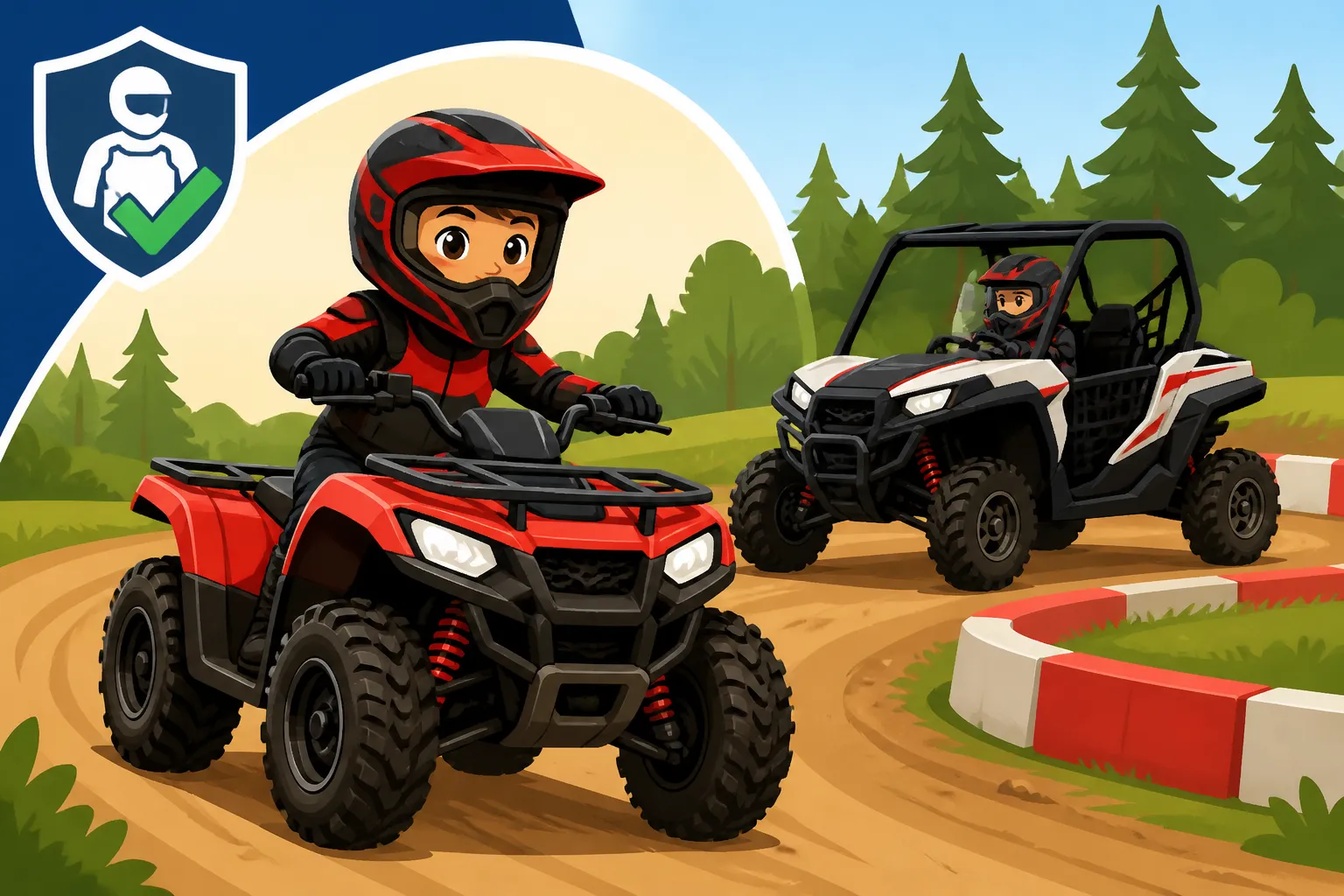
This is the big one for parents of young children. When the New Brunswick Off-Road Vehicle Act refers to where a 6-year-old can ride, it very specifically points to a "closed course." But what does that really mean in practical terms? Think of it as a private, controlled environment that is completely separated from public roads, highways, and even designated public trails. It's a space where the child can ride without any risk of encountering other vehicles, pedestrians, or unexpected obstacles that aren't part of the controlled learning environment.
A closed course is generally on private land, often owned by the parent or a family member, or a dedicated facility specifically designed for youth training or competitive events. Critically, it must be designed and maintained to minimize hazards. This isn't just a random field; it's a designated area where safety is paramount. The boundaries should be clear, and there should be no opportunity for the child to inadvertently stray into unsafe areas. It's a place where you, as the parent or supervisor, have complete control over the riding conditions and the immediate surroundings. It’s where those early lessons in throttle control and steering truly begin.
Why the Engine Size Matters (70cc Cap)
Another absolutely critical piece of the puzzle for young riders is the machine itself. New Brunswick law is very clear on this: a child between the ages of 6 and 13 is permitted to operate an ATV only if it has an engine displacement of 70 cubic centimetres (cc) or less. This is a hard limit, and it's in place for very good reason. A 6-year-old simply doesn't have the strength, coordination, or judgment to safely handle a larger, more powerful machine. A 70cc engine provides enough power for a young rider to experience the thrill of riding, learn control, and build confidence, but it does so at speeds and with acceleration that are manageable for their age and size.
Trying to put a child this young on a machine that exceeds this limit is not only illegal but incredibly dangerous. These smaller machines are typically designed with youth-friendly features, like throttle limiters, remote engine shut-off switches, and lighter frames, making them much safer for beginners. It's not just about the engine; it's about the entire machine being appropriately scaled for a child. When looking for parts or accessories, ensure they are compatible with these smaller models. Companies like SuperATV offer a range of products, but always double-check they're suitable for youth machines and don't inadvertently increase power or speed beyond safe limits for a 6-year-old. For more details on the restrictions for different age groups, you might find [The 70cc Limit on a 6-Year-Old's Machine] a helpful read.
Creating a Safe Riding Environment: What a Closed Course Entails
Once you understand where your 6-year-old can legally ride, the next step is ensuring that "closed course" is truly safe and conducive to learning. It's not just a legal definition; it's a commitment to your child's well-being. This involves everything from the physical layout of the area to the constant presence of a responsible adult. We're talking about more than just keeping them off public roads; we're talking about actively designing an environment that promotes skill-building without unnecessary risks.
Essential Characteristics of a Permissible Closed Course
For your 6-year-old, a "closed course" isn't just any old patch of dirt. It needs specific characteristics to meet the spirit of the law and, more importantly, to ensure maximum safety. First and foremost, the area must be private land. This means it's not a public park, a community field, or any land where the general public has unrestricted access. It needs to be land where you have permission and control.
Secondly, the course should be enclosed or clearly delineated to prevent the child from inadvertently riding off into hazardous areas, such as public roads, bodies of water, or dense, unmanageable terrain. Think about using natural boundaries, temporary fencing, or clear markers to define the riding space. The terrain itself should be relatively flat and free of major obstacles like large rocks, deep ruts, or steep inclines that a young rider on a 70cc machine might struggle with. The idea is to have a predictable, controlled surface where they can focus on basic maneuvers like starting, stopping, turning, and throttle control without being constantly challenged by the environment.
Supervision: The Absolute Non-Negotiable
This point cannot be stressed enough: constant, direct supervision by a responsible adult is mandatory for a 6-year-old operating an ATV on a closed course. This isn't a situation where you can just let them ride while you're tending to other tasks in the yard. The adult supervisor must be actively watching the child, ready to intervene at a moment's notice. This means being within earshot and close enough to reach the child quickly if they get into trouble or need immediate assistance.
The supervisor should understand the capabilities of the child and the machine, and be able to offer clear, simple instructions and encouragement. They should also be prepared to use a remote kill switch if the machine is equipped with one, or quickly reach the machine to shut it off if the child loses control. This level of supervision is paramount, not just for legal compliance, but for instilling safe riding habits from the very beginning. Remember, children at this age are still developing their judgment and fine motor skills, and they need that watchful eye every second they're on the machine. This is a responsibility that often falls to parents or guardians, as discussed in [New Brunswick Parental Attendance Rules] for safety courses, but the principle extends to all riding.
Machine Readiness: Equipping Your Young Rider Safely
Beyond the 70cc engine cap, ensuring the ATV itself is safe and ready for a young rider involves a few more considerations. The machine should be in excellent mechanical condition. This means checking the brakes, tires, steering, and throttle mechanism regularly. A sticky throttle or worn brakes on a child's machine can lead to serious accidents.
Equip the ATV with features that enhance youth safety. Many youth models come standard with a throttle limiter, which allows you to restrict the machine's top speed as your child learns and gains confidence. A remote engine shut-off switch is also a fantastic safety feature, giving the supervisor the ability to instantly kill the engine from a distance if the child gets into trouble. For riders this young, physical fit is also key. Can they comfortably reach the handlebars, brakes, and footpegs? Is their weight appropriate for the machine? A machine that's too big or too small can compromise their control and balance. Look for parts designed specifically for youth ATVs; for instance, some SuperATV accessories are designed for specific models and could enhance safety features or durability, but always verify compatibility for youth machines.
Here's a quick overview of key machine requirements for your 6-year-old's ATV:
| Feature | Requirement | Rationale |
|---|---|---|
| Engine Displacement | 70cc or less | Matches child's strength, coordination, judgment |
| Throttle Limiter | Recommended (often standard on youth models) | Allows gradual increase in speed as skills grow |
| Remote Shut-Off | Highly Recommended (often standard on youth models) | Supervisor can stop machine instantly if needed |
| Physical Fit | Child can comfortably reach controls and sit stably | Ensures proper control and balance |
| Mechanical Condition | Excellent (brakes, tires, steering, throttle) | Prevents mechanical failures leading to accidents |
| Weight Appropriateness | Child's weight suitable for machine size | Maintains stability and ease of handling |
Beyond the Basics: Training, Gear, and Parental Responsibilities
Getting your 6-year-old on a closed course with the right machine and supervision is a fantastic start. But the journey into responsible ATV riding extends beyond these basic requirements. It's about instilling a lifelong respect for safety, understanding the importance of proper gear, and recognizing the ongoing role you play as a parent in their development as a rider. These aspects lay the groundwork for future, more advanced riding opportunities.
The Importance of a Certified Safety Course (Even If Not Mandatory at 6)
While a formal, certified ATV safety course isn't mandatory for a 6-year-old operating on a private closed course, it is still highly, highly recommended. Think of it as investing in their future safety. These courses, often offered by organizations like QuadNB, teach fundamental riding skills, basic machine maintenance, and crucial safety principles in a structured environment. Even if your child is too young for the full course that older teens would take – you can find more about what's involved in [New Brunswick Safety Course for a 14-Year-Old] – there are often specialized programs or modified versions for younger children.
Attending such a course, or even participating in a basic safety orientation, does several things: it teaches your child proper posture, throttle and brake control, turning techniques, and how to assess simple risks. It reinforces the idea that riding is a serious activity that requires skill and respect. For you, the parent, it provides invaluable insights into effective teaching methods and helps you identify potential hazards you might have overlooked. It also ensures consistent messaging about safety, which is far more impactful coming from certified instructors. While it might cost a bit, consider it an investment in preventing accidents down the road. You can usually find information on [New Brunswick Safety Course Costs $160] from the provincial federation or Service New Brunswick.
Essential Safety Gear for Every Ride
This is another area where there are no shortcuts. Every single time your 6-year-old sits on that ATV, even on a perfectly controlled closed course, they must be wearing the proper safety gear. This isn't optional; it's non-negotiable. The core pieces of gear include:
- Helmet: This is arguably the most critical piece of equipment. It must be a properly fitted, DOT or ECE approved helmet. [New Brunswick Helmet Law for Every Occupant] makes this clear for all riders, and it's even more crucial for developing young brains. Make sure it's snug but comfortable, and doesn't obstruct their vision.
- Eye Protection: Goggles or a helmet visor are essential to protect their eyes from dust, debris, and branches.
- Gloves: Protect their hands from blisters, impacts, and scrapes.
- Long-Sleeved Shirt and Long Pants: These provide a basic layer of protection against scrapes, sun, and minor impacts.
- Over-the-Ankle Boots: Sturdy boots protect their feet and ankles and help them maintain a grip on the footpegs.
Many youth ATVs come with basic safety gear, but always check its quality and fit. Just like you'd get specific SuperATV parts for machine upgrades, invest in high-quality, properly sized safety gear that will protect your child. Gear that is too big or too small won't provide adequate protection and can even become a hazard itself.
Navigating the Line Between Fun and Formal Regulations
As your child grows and their skills advance, they'll inevitably want to explore more. They'll see older kids on trails and hear about group rides. This is where your ongoing role as a parent becomes even more important. You need to be prepared to navigate the transition from informal closed-course riding to more structured environments. Keep yourself informed about [New Brunswick ATV Age Requirements] as they evolve for different engine sizes and riding scenarios.
Remember, the rules for a 6-year-old on a closed course are very different from the rules for a 14-year-old on a designated trail. Understand when a youth permit becomes necessary, when formal safety training is required, and what other documents you must carry. By consistently reinforcing safe habits, respecting the legal framework, and gradually introducing them to new challenges within the bounds of the law, you'll ensure your child can enjoy ATV riding safely and responsibly for many years to come. It’s about building a solid foundation, piece by piece, ride by ride.
Disclaimer
This article is for general informational purposes only and does not constitute professional advice. Laws, prices and regulations vary by location and change over time. Consult a qualified professional for guidance on your specific situation.