New Brunswick Alcohol Rules on Trails
New Brunswick riders may wonder whether having a drink on a trail day is allowed, whether passengers are treated differently, and what happens when a machine is parked. The safest answer starts with a clear distinction: drinking and operating are not the same thing, but alcohol rules and trail policies can still affect the whole outing. Here’s how to avoid a risky ride or an unpleasant surprise.
Drinking and operating an ATV or UTV
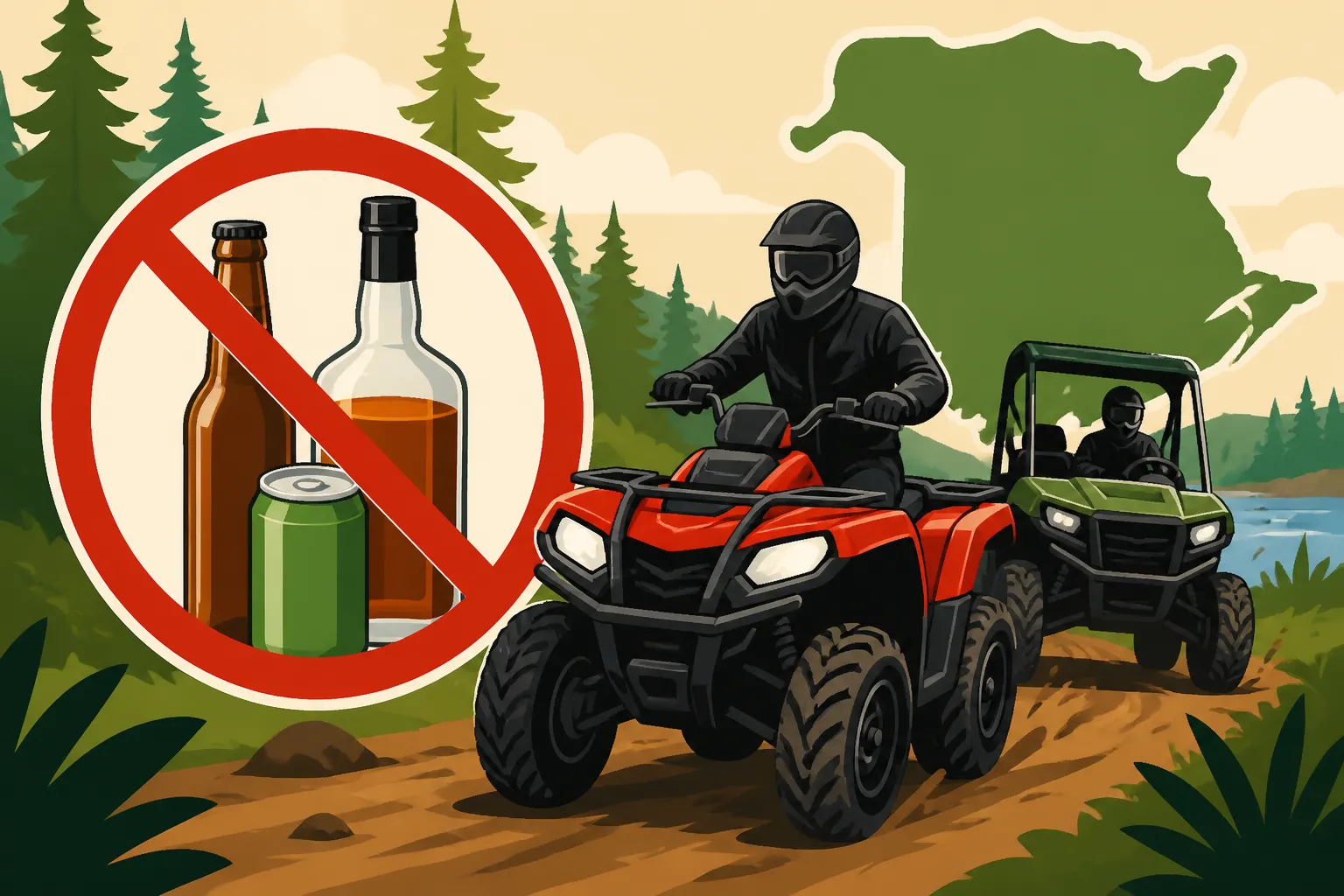
Do not operate an ATV or UTV after drinking. Impaired-driving laws can apply to off-road vehicles, and operating a machine while impaired can bring serious legal consequences. The fact that you are on a club trail, a woods road or private land does not make it safe to ride after drinking or automatically put you beyond the reach of the law.
Alcohol can affect judgment, balance, reaction time and the ability to read changing trail conditions. Those effects matter on a machine that may need to handle ruts, loose gravel, steep ground, other riders or sudden obstacles. A side-by-side’s seat belts and rollover protection do not make impaired operation safe. For more on the legal risks, see New Brunswick Impaired Riding Penalties.
There are two related but distinct questions:
- Are you fit to operate the machine? If you have been drinking, do not ride. A person can be impaired even if they feel capable of driving.
- Can alcohol be carried or consumed where you are? Liquor rules and the policies of a landowner, club, event or facility may restrict possession or consumption, even when no one is operating a machine.
Do not treat the second question as permission to drink before riding. Being below a legal threshold, if one applies to your situation, is not a reliable way to judge whether you are safe to operate. Alcohol can remain in your system after you stop drinking, and its effects vary with the person, the amount consumed, food, fatigue and time.
The practical rule is simple: the person operating the machine should stay sober for the ride. If you plan to drink, finish riding first and arrange a safe way to get back without operating any ATV or UTV.
What about passengers?
A passenger who is not operating the machine is not in the same position as its driver, but that does not mean drinking is automatically permitted. Rules about possessing or consuming liquor in a public place, on private property, or at a particular event may still apply. A club or landowner can also set conditions for access that are stricter than the general legal minimum.
Intoxication can create safety problems for passengers, too. A passenger needs to stay seated, follow the operator’s instructions and use the required safety equipment. Someone who is unsteady or unable to follow directions may put everyone on the machine at risk. Passenger requirements are separate from alcohol rules; review New Brunswick Rules for a Side-by-Side Driver before carrying riders in a UTV.
If a passenger has been drinking, do not let that person take over the controls later in the outing. Swapping drivers does not erase the effects of alcohol or fatigue. If anyone in the group has been drinking, make the plan before the ride so there is no pressure to “just drive a short distance” afterward.
Open liquor, parked machines and trail policies
Drinking while a machine is moving is an obvious safety concern, but the rules can also matter when it is stopped. A machine parked beside a trail, at a trailhead or at a gathering place does not necessarily become a private space where liquor can be consumed without restriction.
Liquor rules can depend on the place, the circumstances and whether the area is public, private or part of an authorized event. The rules for an ATV or UTV may not match every detail of the rules for a passenger vehicle. Avoid assuming that a cooler, an open container or a parked machine is allowed simply because you are off a conventional road.
Trail access is another separate issue. A valid trail permit does not mean a rider can disregard a club’s conditions, an event organizer’s instructions or a property owner’s rules. If you are riding with a club or attending an organized gathering, check its alcohol policy before bringing liquor. If the policy is unclear, contact the organizer rather than guessing. New Brunswick Trail Etiquette Locals Expect can help with the broader expectations of shared trail use.
| Situation | Safer approach |
|---|---|
| You have been drinking and are expected to ride | Do not operate. Arrange a sober operator or a ride home. |
| A passenger wants to drink while travelling | Do not assume it is permitted. Check applicable liquor rules and the trail or event policy. |
| The machine is parked at a trailhead or public area | Parking does not automatically make alcohol possession or consumption lawful. Check the location’s rules. |
| You are attending a club ride or event | Ask the organizer about alcohol restrictions before the day of the event. |
| You drank earlier and feel ready to ride | Do not rely on how you feel. Choose a sober operator or stop riding for the day. |
A trail permit and vehicle registration also do not answer the alcohol question. They establish different things and do not authorize impaired operation or override other rules. Riders should keep their required documents and equipment in order, but paperwork is no substitute for a sober operator. See What an Officer Can Ask to See on a Trail and New Brunswick Equipment a Rider Must Carry for related preparation.
Private property is not a blanket exception
People sometimes assume that a machine can be operated after drinking if it stays on their own land. Do not rely on that assumption. The application of impaired-operation law depends on the circumstances, and private property should not be treated as a guaranteed exception. There may also be risks to family members, workers, visitors or other people using the property.
Private land can have separate rules about liquor, and permission to ride on someone’s property does not necessarily include permission to drink there. If the ride involves more than one property, a connecting trail or a public-access area, the situation can become even less straightforward. The safest choice remains the same: do not operate after drinking, regardless of whose land you are on.
Plan the ride so nobody has to guess
Alcohol-related problems are easier to prevent before a group starts riding. Agree on a sober-riding plan, identify who will operate each machine and decide how everyone will get home if the plan changes. This matters especially on longer rides, where there may be limited cell service, few places to stop and no easy way to arrange a last-minute pickup.
Use a practical plan:
- Choose sober operators in advance. Do not wait until people have started drinking to decide who will drive.
- Keep drinking separate from the ride. If the group plans to drink at a destination, park and arrange transportation that does not require anyone who has been drinking to operate an ATV or UTV.
- Check the location’s rules. Ask the club, property owner or event organizer whether alcohol is restricted at the trailhead, gathering place or event.
- Provide a backup way home. Arrange a sober driver, a safe place to stay or another option before setting out.
- Do not make exceptions for short trips. A quick ride back to camp or across a property is still operating a machine.
- Account for fatigue as well as alcohol. A tired rider may be less able to respond safely, even if they have not been drinking.
For a group outing, the organizer should make the expectations clear before riders arrive. State that operators must remain sober, explain any venue or club restrictions, and make sure the plan does not rely on someone driving after drinking. For larger gatherings, confirm responsibilities and event requirements with the local club; New Brunswick Event Permits for a Ride covers a separate part of organizing a group ride.
It is also worth planning for a change in conditions. A ride may run late, weather may worsen or someone may decide to drink after the machines are parked. Keep the keys secured and make clear that nobody should take the machine out again after drinking. If transportation is uncertain, the group should decide on a safe alternative before anyone starts consuming alcohol.
If an officer or organizer raises an alcohol concern
If an officer stops your group, remain calm, follow lawful directions and avoid arguing beside an active trail. An officer may ask to see required documents or ask questions about the ride. Do not conceal liquor, move a machine to avoid attention or ask another person to ride it away if that person has been drinking. For a useful overview of what may be checked, read Producing Four Documents at Once.
If an organizer or landowner says alcohol is not allowed, treat that as a condition of access. Leave the liquor secured and follow the direction, or end the visit. A disagreement about a venue policy is not a reason to risk losing permission to use the trail or property.
If someone in the group appears impaired and intends to ride, step in if you can do so safely. Do not get on a machine with an impaired operator or encourage them to take “one last short run.” Offer to call a sober person, arrange a place to stay or help keep the keys out of reach. If there is an immediate danger, contact emergency services.
For a rider who has already consumed alcohol, the safest decision is not to estimate whether enough time has passed. Do not operate. A sober ride home, an overnight stay or another safe arrangement is inconvenient; an impaired crash or charge can have much more serious consequences.
The clearest approach to New Brunswick alcohol rules on trails is to keep operating and drinking separate. Stay sober whenever you may need to ride, check the rules for the place or event, and decide on transportation before the outing begins. That protects the rider, passengers and everyone sharing the trail.
Disclaimer
This article is for general informational purposes only and does not constitute professional advice. Laws, prices and regulations vary by location and change over time. Consult a qualified professional for guidance on your specific situation.