What an Officer Can Ask to See on a Trail
There's nothing quite like the freedom of hitting the trails in New Brunswick on your ATV or UTV – the fresh air, the beautiful scenery, and the camaraderie with fellow riders. But let's be real, that feeling can quickly turn to a knot in your stomach if you suddenly see an enforcement officer waving you over. Many riders get that sinking feeling, wondering, "What are they going to ask me for? Am I missing something?" This guide is here to take the mystery out of those trailside stops, explaining exactly what documents and compliance points an officer can ask to see, so you can ride with confidence and peace of mind.
The Authority on the Trail: Who Can Ask and Why?
It's common to see a vehicle with flashing lights on the highway, but encountering an officer deep in the woods or on a remote trail can be a bit more surprising. Understanding who has the authority to stop you and why they do it is the first step to feeling more comfortable and prepared. It’s not about catching you out; it’s about ensuring everyone’s safety and preserving the trail system we all love.
Different Types of Enforcement Officers
You might think only the RCMP or local police have the power to stop you, but on New Brunswick's extensive trail network, several types of officers are on patrol, each with specific mandates.
Firstly, you have your Peace Officers, which include the RCMP and municipal police forces. These are the general law enforcement officers you’re most familiar with, and they have broad powers to enforce all provincial and federal laws, including the Off-Road Vehicle Act. If they stop you, they're looking at everything from your documents to your operating conduct. They’re concerned with public safety across the board, whether you're on a public road, a designated trail, or even crossing a highway section that's been opened to ORVs.
Then there are Conservation Officers from the Department of Natural Resources and Energy Development (DNRED). These officers are specifically focused on natural resource protection, wildlife management, and the enforcement of related acts. While their primary role might seem centered on hunting, fishing, or forestry, ORV use often intersects with these areas. They'll ensure you're not trespassing on sensitive lands, disturbing wildlife, or violating regulations related to natural habitats. Given how many trails traverse Crown land and interact with the natural environment, their presence is vital to responsible riding.
Lastly, you might encounter Designated Enforcement Officers. These individuals, often volunteers from local ATV clubs or designated provincial staff, have been granted specific authority under the Off-Road Vehicle Act to enforce certain aspects of ORV regulations. Their powers are usually more focused on compliance with trail permits, safe operation within the club network, and ensuring machines meet basic safety standards. While they may not have the same broad authority as the RCMP, they are authorized to stop you, request documents, and report violations that could lead to fines. It’s their dedication that helps keep our trails safe and well-maintained, and recognizing their role is crucial for cooperative riding. They’re often the eyes and ears on the ground, connecting directly with the riding community.
Your Rights and Responsibilities During a Stop
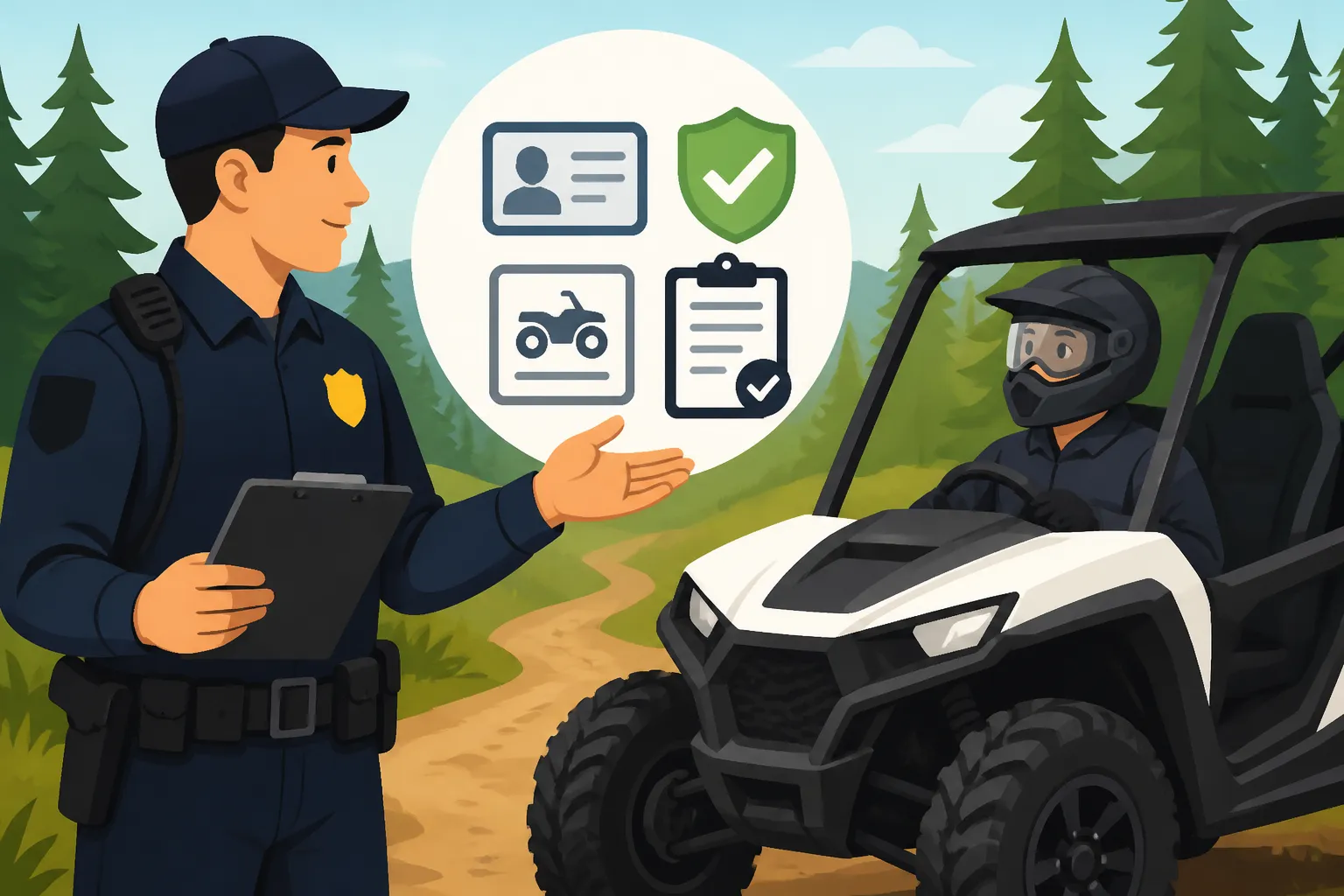
When an officer signals you to stop, whether it's by hand, siren, or lights, the most important thing you can do is comply immediately and safely. Pull your machine over to the side of the trail, turn off the engine, and keep your hands visible. This immediate cooperation sets a positive tone for the interaction. Many riders feel a surge of anxiety, and that's completely normal, but remember, these stops are generally routine.
You have the right to be treated respectfully, and officers are trained to conduct these interactions professionally. In turn, you have a responsibility to be polite and cooperative. Argumentative or evasive behaviour won't do you any favours and can actually escalate a simple check into a more thorough investigation. Officers need to verify that you, your machine, and your riding activity are all in compliance with the law. This means they will expect you to produce documents promptly. Trying to fish through a messy backpack for five minutes while they wait can become frustrating for both parties. Having your papers organized and easily accessible shows preparedness and respect for their time and authority.
Think of it this way: they're not just trying to issue tickets. They're also ensuring that the trails remain safe for everyone, that youth riders are protected, and that our environment isn't damaged. By understanding their role and your responsibilities, you can navigate these stops smoothly and continue enjoying your ride without unnecessary stress.
The Essential Documents You MUST Carry
This is where the rubber meets the road, or rather, where the paperwork meets the trail. Knowing precisely what documents an officer is entitled to ask for is paramount. If you're riding an ORV in New Brunswick, there are a few non-negotiable pieces of paper (or digital copies, in some cases) that you absolutely need to have on your person or within immediate reach on your machine. Getting caught without them can lead to fines and a ruined ride. It's often helpful to keep physical copies in a waterproof bag in your saddlebag or a secure compartment on your machine. For more details on what documents you must carry, check out [Carrying Four Documents at Once].
Proof of Ownership and Registration
First and foremost, an officer will want to see your registration certificate. This little white piece of paper is your proof that your ATV or UTV is legally registered with Service New Brunswick. It shows who the registered owner is, provides details about the machine (like the VIN), and confirms that all the necessary fees have been paid. It's not just a formality; it's how the province keeps track of ORVs and ensures they are operated responsibly. Without it, there’s no official record of your machine, which can lead to serious questions about its legitimacy. An officer needs to confirm that the person operating the machine is either the registered owner or has permission from the owner.
It's absolutely crucial that your registration is current. Remember, all [New Brunswick Registrations Expire December 31] of each year, regardless of when you initially registered. So, if you're riding in January or February, you need to have renewed for the new year. For more information on what this process entails, take a look at [New Brunswick ORV Registration Explained]. If you recently bought a used machine, ensuring the transfer of ownership paperwork is properly completed and submitted to Service New Brunswick is vital. You can find templates for a bill of sale or other legal documents on platforms like LawDepot, which can help ensure you have a clear paper trail for ownership. Having a solid bill of sale is critical, especially when dealing with private sales, to prove you're the rightful owner before the new registration certificate arrives.
Valid Trail Permit and Proof of Insurance
Next up, and equally critical for trail riding, are your valid trail permit sticker and proof of insurance.
The trail permit sticker, issued by QuadNB (the New Brunswick All-Terrain Vehicle Federation), signifies that you have paid your annual dues to support the vast network of trails we enjoy. Without a valid permit, you are effectively riding on a system that you haven't contributed to, and that's not just a courtesy issue – it's an enforceable regulation. The cost of a permit directly funds the maintenance, grooming, and signage that makes our riding experiences so great. For current details on permit costs, you can read [New Brunswick Trail Permit Cost in 2026]. An officer will look for the sticker on the left front fender of your machine.
Equally important is proof of insurance. In New Brunswick, [New Brunswick Requires Insurance on Trails] for most ORVs. This isn't just a suggestion; it's the law. Specifically, you need to have at least $200,000 in third-party liability insurance. This protects you and others in case of an accident where you are at fault, covering damages to property or injuries to other people. Without it, you're not only breaking the law but exposing yourself to immense financial risk. An officer will ask to see your insurance card or certificate. Keep it with your registration, ideally in a waterproof holder on your machine. Riding an uninsured machine can result in a significant fine, as detailed in [New Brunswick Uninsured ATV Fine of $604.50]. While you might use a service like LawDepot for other legal agreements, when it comes to insurance, you'll be dealing directly with a licensed insurance provider.
Your Driver's Licence or Safety Certificate
Finally, the officer will want to know that you are authorized to operate the machine. For adult riders (16 years and older), this means having a valid driver's licence. Whether it's a Class 5 (car), Class 6 (motorcycle), or even a Class 7 (learner's permit) with appropriate supervision, you need to demonstrate that you have the basic competency to operate a motor vehicle. While you might not be on a highway, the skills translate, and the province wants to ensure licensed drivers are in control of these powerful machines. For more on licensing, check out [Do You Need a Licence for an ATV in New Brunswick?].
For younger riders, or those who don't hold a traditional driver's licence, a New Brunswick ORV safety training certificate is often required. Specifically, riders aged 14 and 15 must have a Class 9 ORV licence, which requires completing an approved safety course. [New Brunswick ATV Age Requirements] are strict for a reason: they are designed to protect our youth. An officer will ask for this certificate to ensure the rider has received the necessary training to operate an ORV safely. This isn't just a piece of paper; it represents fundamental knowledge about safe operating procedures, trail etiquette, and emergency preparedness.
Machine and Rider Compliance: Beyond Just Paperwork
Even if all your documents are in perfect order, an officer's check doesn't stop there. They're also looking at the physical machine and how you, as the rider, are operating it. These checks are crucial for ensuring overall safety on the trails and upholding the standards expected of responsible riders in New Brunswick.
Equipment and Machine Condition
Your ATV or UTV needs to meet certain operational and safety standards, and officers are trained to spot non-compliance. First, they'll look for required safety equipment. This includes working headlights, taillights, and brake lights – essential for visibility, especially in low light or dusty conditions, and for signaling other riders. A functioning muffler is also required; loud machines can be a significant source of nuisance complaints from rural residents and other trail users, leading to fines for excessive noise. Your brakes must be in good working order, capable of stopping your machine effectively.
They'll also check for proper plate placement. Your ORV registration plate needs to be securely mounted and clearly visible on the back of your machine. [New Brunswick Plate Placement on a Quad] provides specific guidelines for this. A bent, faded, or missing plate is a red flag. Beyond that, a general visual inspection might cover things like tire condition (are they dangerously worn?), missing mirrors, or any obvious modifications that might make the machine unsafe or non-compliant with provincial regulations. While most inspections are quick, an officer has the authority to conduct a more thorough check if they suspect an issue. It can be frustrating if a minor repair you've been putting off leads to a stop, but these checks are ultimately for everyone's safety on the trail.
Rider Gear and Age Restrictions
Just as important as the machine's condition is the rider's compliance with safety gear and age requirements. New Brunswick has a strict helmet law for every occupant on an ORV. This means the driver and any passengers must wear an approved helmet that meets recognized safety standards like CSA D230, FMVSS 218, or Snell. An officer will verify that your helmet is properly fastened and appears to be in good condition. [New Brunswick ATV Helmet Law] isn't just a rule; it's a lifesaver. Getting a fine for not wearing one, or for wearing an unapproved helmet, is an easily avoidable mistake.
Then there are the age restrictions. As mentioned, there are specific rules about who can ride, at what age, and on what size of machine. An officer will check that the appropriate age for the machine is being followed, particularly for youth riders. For example, a 6-year-old is limited to a 70cc machine on a closed course, while a 14-year-old needs specific licensing and training. [New Brunswick Rules for a 14-Year-Old Rider] are in place to prevent serious injuries. These rules also extend to passenger regulations. Many ATVs are designed for a single rider, and carrying an unauthorized passenger can lead to fines. Side-by-sides, on the other hand, are designed for multiple occupants, but each passenger must have a designated seat and wear a helmet. [New Brunswick Rules for a Child Passenger] highlight the extra precautions needed for our youngest riders. It can be a real headache trying to remember all the specific age and passenger rules, especially if you have a family with varying ages, but neglecting them puts lives at risk. If you have any agreements regarding who can ride your machine, especially if it's a minor or a shared machine, a clear agreement drafted using a service like LawDepot could help clarify responsibilities and permissions.
Rules of the Trail and Safe Operation
Beyond equipment and licensing, officers are observing your actual riding behaviour. Impaired riding is treated with the same severity as impaired driving on a public road, leading to significant penalties including licence suspension and fines under [New Brunswick Impaired Riding Penalties]. Alcohol and ORVs simply don't mix.
Officers also enforce speed limits (where posted) and general rules against trespassing. Riding off-trail or on private property without permission is a serious offence that can damage landowner relations and lead to trail closures. Understanding and adhering to local bylaws, which you can often find by consulting [New Brunswick Bylaw Lookups Before You Ride], is also crucial as they can dictate where and when you can ride in specific municipal areas.
Other operational aspects they might observe include proper yielding to other trail users, using appropriate hand signals when turning or stopping if your machine isn't equipped with turn signals, as outlined in [New Brunswick Hand Signal Requirements], and generally riding in a safe and responsible manner. It's about respecting the trails, other users, and the communities you ride through.
Consequences of Non-Compliance
It's natural to hope for a warning if you're caught without something, but relying on that goodwill is a gamble you don't want to take. The penalties for non-compliance with New Brunswick's ORV regulations can range from substantial fines to more severe consequences, impacting your wallet and your ability to ride. Understanding these potential outcomes isn't meant to scare you, but to underscore the importance of being prepared and compliant.
Common Fines and Penalties
The most immediate consequence of being caught without the required documents or failing to meet safety standards is a fine. These aren't minor slaps on the wrist; they are designed to be deterrents.
For instance, getting caught with no registration for your machine can lead to a fine like the [New Brunswick No-Registration Fine of $172.50]. That's a direct hit to your pocket for something that's easily preventable with an annual renewal. Even more impactful is riding with no insurance. The [New Brunswick Uninsured ATV Fine of $604.50] is a clear indicator of how seriously the province takes liability coverage on trails. Imagine paying that kind of money when a basic insurance policy costs significantly less per year.
And if you're enjoying a club trail without contributing, a no trail permit infraction will set you back with a fine like the [New Brunswick Permit Fines of $340.50]. Again, the permit cost itself is a fraction of this penalty. Beyond these core violations, you can also face fines for things like not wearing an approved helmet, carrying too many passengers, having an improperly equipped machine, or operating a machine outside of age restrictions. Each of these carries its own specific fine, which can quickly add up if an officer finds multiple issues during a stop.
Beyond Fines: Seizure and Legal Action
While fines are common, more severe infractions can lead to more drastic measures. In certain circumstances, an officer has the authority to seize your machine. This usually happens for serious violations such as repeat offences, operating under the influence of alcohol or drugs, or operating a machine that is stolen or has no legitimate registration whatsoever. Having your pride and joy impounded is not only costly, with towing and storage fees, but also incredibly inconvenient and can ruin an entire season of riding.
Serious infractions, especially those involving impaired operation or dangerous driving, can also lead to court appearances and potentially criminal charges. This goes far beyond a simple fine and can result in a criminal record, significant legal fees, and severe restrictions on your driving privileges (both on and off-road). Such legal entanglements can also have a lasting impact on your insurance rates, making future coverage much more expensive, if not impossible to obtain.
This is where having all your ducks in a row for ownership, especially if you bought your machine through a private sale, becomes paramount. If there's any ambiguity about who truly owns the machine, or if a previous owner had issues, it can complicate matters immensely. While services like LawDepot can provide legal document templates to ensure your bill of sale or transfer agreements are ironclad, it's crucial to follow through with official registration at Service New Brunswick to solidify your ownership and avoid potential legal headaches down the road.
Proactive Steps to Stay Compliant
The good news is that avoiding these penalties is entirely within your control. It comes down to consistent, proactive habits.
Firstly, make pre-ride checks a routine. Before every outing, do a quick walk-around of your machine. Check your lights, brakes, muffler, and tire pressure. Ensure your plate is securely attached and visible. This only takes a few minutes and can save you a lot of grief.
Secondly, develop a system for keeping your documents organized. Invest in a small, waterproof pouch or binder that you can dedicate solely to your ORV papers. Keep your registration certificate, insurance card, and safety certificate (if applicable) neatly tucked inside. For quick reference, you can have a copy of your trail permit details, too. This way, when an officer asks, you can quickly and calmly produce everything they need, demonstrating your preparedness. [Carrying Four Documents at Once] emphasizes the importance of having these items readily accessible.
Lastly, make a habit of renewing on time. Put a reminder in your phone or mark your calendar for November each year to deal with your ORV registration and trail permit for the upcoming season. Since [New Brunswick Registrations Expire December 31], getting it done before the New Year means you're good to go for those crisp winter rides or early spring excursions without any last-minute scramble. Stay informed about any changes to regulations by checking the official QuadNB and Service New Brunswick websites. By being diligent, you can ensure every ride is a worry-free adventure.
Disclaimer
This article is for general informational purposes only and does not constitute professional advice. Laws, prices and regulations vary by location and change over time. Consult a qualified professional for guidance on your specific situation.