Gear Sized for a Young Rider
Outfitting a young rider for their ATV or UTV adventures in New Brunswick can feel like a daunting task, filled with questions about what's truly safe, what fits properly, and how to balance protection with comfort. It's a common struggle for parents to navigate the myriad of options available. This comprehensive guide is designed to cut through the confusion, helping you understand exactly what gear your child needs, why proper sizing is critical, and how to choose the best protective equipment to keep them safe and happy on the trails.
Why Proper Gear Sizing for Young Riders is Non-Negotiable
When your child is out on the trails, whether it’s exploring a woodlot or riding a designated path, their safety hinges on the right protective gear. But it’s not just about wearing a helmet; it’s about wearing a helmet that fits. The difference between adequate protection and a false sense of security often comes down to sizing. Trying to make do with hand-me-downs that are too big, or squeezing into gear that’s too small, can compromise everything.
Safety First: Beyond the Helmet
It’s easy to focus solely on the helmet, and rightly so, as it’s the most critical piece of safety equipment. However, other gear plays an equally vital role in protecting your child from scrapes, bumps, and more serious injuries. Gear that is too large can shift during a fall, leaving unprotected areas vulnerable. Imagine a chest protector sliding up around your child's neck, or knee pads twisting to the side when they hit the ground. That extra space means less impact absorption and more potential for injury.
Conversely, gear that is too small can restrict movement, making it harder for a child to react quickly or maintain control of their machine. Boots that pinch, gloves that are too tight, or pants that don't allow for full knee flexion can all contribute to a less safe riding experience. We want our kids to be able to move freely and intuitively, not be fighting against their own clothing. Getting this right is paramount for peace of mind, especially considering the unpredictable nature of off-road riding in places like the dense New Brunswick woods.
Comfort and Control: A Better Riding Experience
Beyond pure safety, properly sized gear dramatically improves your child's comfort and their ability to control their ATV or UTV. If a helmet is constantly slipping, or boots are causing blisters, a child’s focus will be on their discomfort rather than the trail ahead. This distraction can lead to errors, reduced enjoyment, and potentially, accidents. Children, especially younger ones, need to feel secure and unencumbered to truly engage with the riding experience.
Well-fitting gear allows for natural body mechanics, which is essential for steering, braking, and absorbing bumps on rough terrain. It helps prevent fatigue, allowing for longer, more enjoyable rides. When gear fits correctly, it almost disappears, letting the child concentrate on learning and mastering their machine. It also helps manage New Brunswick's often unpredictable weather conditions. Layers fit better under a properly sized jacket, and waterproofing works as intended when it's not stretched or baggy. Ultimately, a comfortable child is a more confident and capable rider, and that’s what we all want for our little adventurers. [Judging Whether a Child Fits the Machine] is a crucial consideration before you even think about hitting the trail.
Essential Gear Checklist for Young ATV/UTV Riders in New Brunswick
Equipping your young rider correctly means understanding the key pieces of gear and what to look for in each. This isn't just a shopping list; it's a breakdown of the protective ecosystem that will keep your child as safe as possible on their machine. From head to toe, every item serves a specific purpose, and getting the right fit is the common thread that runs through them all.
Helmets: The Cornerstone of Protection
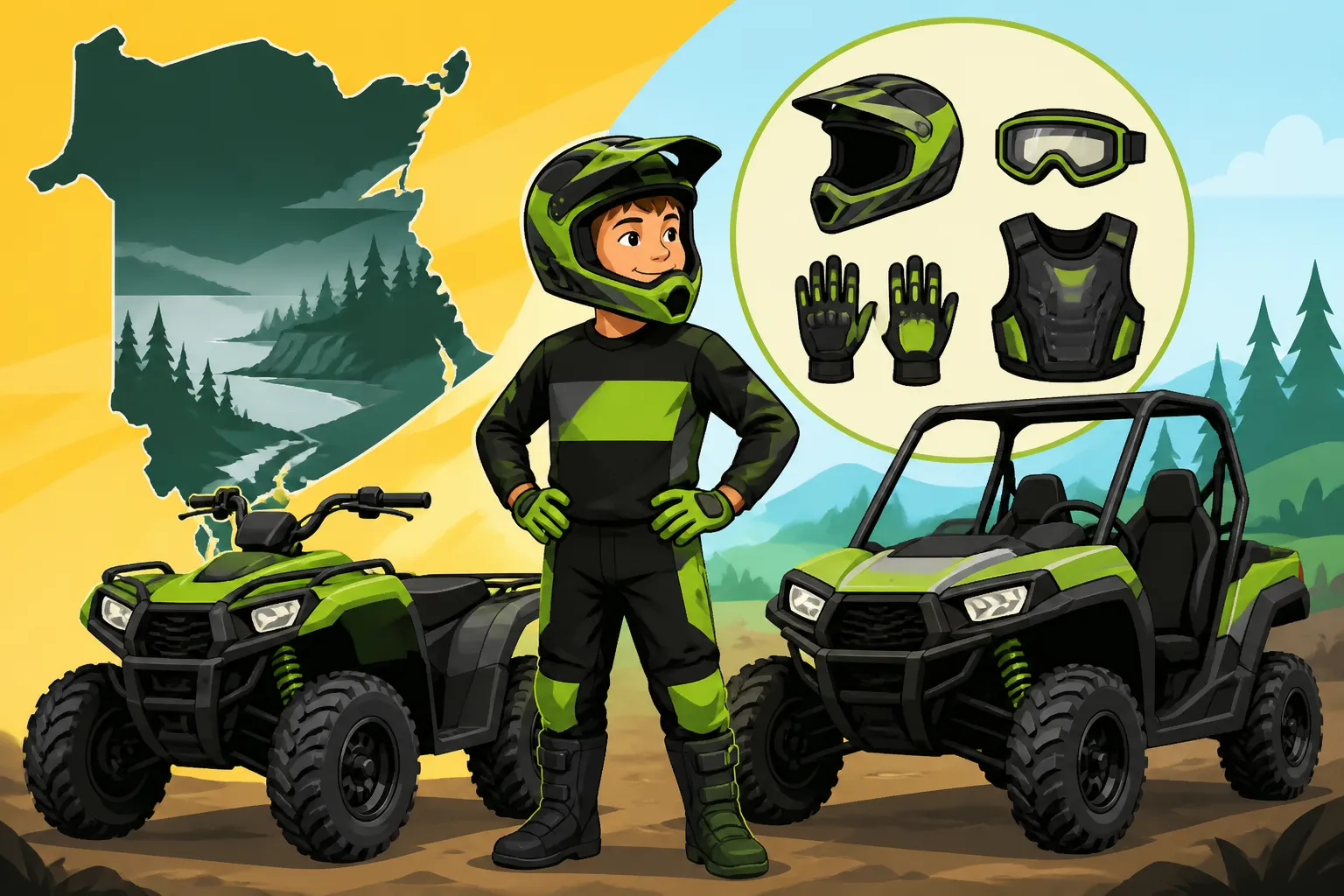
There is simply no piece of gear more critical than a helmet. For young riders in New Brunswick, helmets must meet specific safety standards to be legally compliant and truly protective. Look for helmets that carry certifications like CSA D230, FMVSS 218 (DOT), Snell, or ANSI. These certifications mean the helmet has undergone rigorous testing to ensure it can withstand impacts and protect the developing brain. [New Brunswick Helmet Standards Accepted] will give you more details on this.
When it comes to fit, a helmet should be snug but not uncomfortably tight, with no side-to-side or front-to-back movement when the chin strap is fastened. The eyeport should sit just above the eyebrows, offering a clear field of vision. Many youth helmets are designed to be lighter, which is important for reducing neck strain on smaller frames. Always measure your child's head circumference and refer to the manufacturer's sizing chart. Never buy a helmet that is "too big to grow into," as an ill-fitting helmet offers virtually no protection in a crash. Remember, [New Brunswick ATV Helmet Law] applies to every occupant, regardless of age.
Body Armour and Chest Protectors
While a helmet protects the head, body armour and chest protectors safeguard the torso, shoulders, and sometimes the arms, from impacts, abrasions, and flying debris. For young riders, this can be incredibly important, especially if they are new to riding or prone to pushing their limits. There are different types available, from standalone chest protectors that strap over a jersey to integrated armoured jackets that offer more comprehensive coverage of the chest, back, shoulders, and elbows.
The key to sizing here is ensuring full coverage of the vital organs without restricting movement. The protector should sit comfortably, allowing your child to lean, twist, and reach for controls without feeling hindered. Adjustable straps are a major plus, allowing for a customized fit and some room for growth. While their main focus isn't apparel, exploring brands like SuperATV for sturdy machine accessories might also give you ideas for gear storage solutions that keep your child's kit protected and organized. It's a layer of defense that can prevent painful injuries from falls or collisions with branches on the trail.
Goggles and Eye Protection
Clear vision is paramount for safe riding. Goggles protect your child's eyes from dust, dirt, insects, branches, and harsh sun. Even on a side-by-side with a windshield, dust can swirl, and unexpected debris can still be an issue. When choosing goggles, ensure they fit snugly with the helmet's eyeport, creating a seal around the face to prevent particles from entering.
Look for features like anti-fog coatings, UV protection, and a wide field of vision. Adjustable straps are standard and allow for a secure fit around the helmet. Just like a helmet, goggles should not be too tight, causing discomfort, nor too loose, allowing them to shift or fall off.
Gloves for Grip and Hand Protection
Gloves might seem like a minor detail, but they offer crucial protection and enhance control. They guard against blisters, improve grip on the handlebars (especially in wet or dusty conditions), and protect hands from scrapes and impacts from branches or falls. For young riders, good dexterity is essential for operating throttle and brakes effectively.
Sizing is key: gloves should fit snugly but not restrict finger movement or circulation. Fingers should reach the ends of the glove without being cramped or having too much excess material. Look for durable materials, padded palms for vibration absorption, and reinforced knuckles for impact protection.
Boots: Ankle Support and Foot Protection
Regular sneakers or hiking boots simply don't offer enough protection for ATV or UTV riding. Dedicated riding boots are designed to protect the feet and ankles from impacts, crushing injuries, and heat from the engine or exhaust. They provide crucial ankle support, which can prevent sprains or breaks in the event of a roll-over or a foot getting caught under the machine.
Good riding boots feature a stiff sole for stability on the footpegs, reinforced toe and heel areas, and strong buckles or closures that keep the boot secure. Waterproofing is a huge bonus for New Brunswick's often muddy and wet trails. Ensure the boots fit well with riding socks, providing enough room for toes without being sloppy. They should extend high enough up the calf to protect the shin.
Riding Jerseys and Pants
While not offering the same hard-shell protection as helmets or body armour, riding jerseys and pants are essential for comfort and abrasion resistance. They are typically made from durable, breathable fabrics designed to withstand the rigours of off-road riding. Many riding pants feature integrated padding in key areas like the hips and knees, or pockets for removable knee armour.
Sizing for jerseys should allow for layering underneath and full arm movement without being baggy enough to snag. Pants should fit comfortably around the waist and hips, with enough length to cover boots, and the knee padding (whether integrated or external) should align properly with the knees when riding. While their main focus isn't apparel, exploring brands like SuperATV for sturdy machine accessories might also give you ideas for gear storage solutions that keep your child's kit protected and organized. These pieces help prevent minor cuts, scrapes, and bruises, making the overall riding experience much more pleasant.
Navigating the Sizing Maze: Tips for Parents
One of the biggest headaches for parents when buying gear is the sheer inconsistency of youth sizing. What's a "youth large" in one brand might be a "youth medium" in another, leading to endless frustration and guesswork. It's enough to make you want to throw your hands up! But with a few smart strategies, you can tackle this sizing challenge head-on and ensure your child gets gear that genuinely protects them.
Understanding Youth Sizing Charts and Age Ranges
Forget relying solely on age recommendations; they are, at best, a rough guide. Children grow at such varied rates that an age range is often meaningless. Instead, the golden rule for fitting gear is to take accurate measurements. For helmets, you'll need head circumference. For body armour and jerseys, measure chest, waist, and sometimes back length. Pants require waist and inseam measurements, and gloves need hand length and width. Don't forget shoe size for boots.
Once you have these numbers, always, always consult the specific manufacturer's sizing chart for the brand you are considering. These charts are usually available on the product page or the brand's website. They will give you the most accurate guidance. Be prepared to compare and contrast, as you might find your child is a "medium" helmet in one brand but needs a "large" chest protector from another. It's a bit of work, but it pays off in safety and comfort.
The "Grow Into It" Trap vs. "Too Small" Dangers
It's tempting to buy gear a size or two up, thinking your child will "grow into it," especially with how quickly kids sprout up. However, this is a dangerous trap when it comes to protective equipment. Overly large gear won't stay in place during a fall. A helmet that wobbles offers little protection. A chest protector that slides around can expose vital areas. Pants that are too long can snag on pegs or controls, and boots that are too big make it hard to shift gears or feel the brake. The gear becomes a liability, not an asset.
On the other hand, gear that's too small is equally problematic. It's uncomfortable, restrictive, and can hinder movement and blood circulation. A child crammed into small gear will be distracted, prone to fatigue, and less able to control their machine. Finding the balance is crucial. Aim for a snug fit that allows for full range of motion and comfort. If a child is between sizes, it's often better to go with the slightly smaller size for critical items like helmets, ensuring it's snug, and then plan to replace it sooner rather than later. For items like jerseys or outer layers, a little extra room is more forgiving, but never at the expense of protection. This also ties into [New Brunswick Engine Caps for Young Riders], ensuring the machine itself is appropriate for their size and skill.
Shopping Smart: New vs. Used Gear Considerations
Deciding whether to buy new or used gear is a common dilemma, especially with the cost of outfitting growing kids. Both options have their pros and cons.
New Gear:
- Pros: You get the latest safety technology, a guaranteed perfect fit (assuming you measure correctly), and no hidden damage or wear. Helmets, in particular, have a lifespan and materials degrade over time, so new ensures maximum protection.
- Cons: It's more expensive, and kids outgrow things quickly.
Used Gear:
- Pros: Significant cost savings, which can be a huge relief for parents. It's also a more sustainable option.
- Cons: This is where careful inspection is absolutely critical.
- Helmets: Never buy a used helmet. Even if it looks fine, it could have been involved in an impact that compromised its integrity, or the internal foams could be degraded.
- Body Armour/Pads: Inspect for cracks, tears, or worn-out straps. Ensure all buckles and closures work.
- Boots: Check soles for wear, ensure buckles are functional, and inspect for major rips or structural damage.
- Jerseys/Pants/Gloves: Look for excessive wear, tears, or broken zippers.
When buying new, look for specialized youth gear from reputable dealers, and don't forget to check if accessory providers like SuperATV have unique solutions that complement safety gear. For used gear, online marketplaces can be a treasure trove, but always prioritize safety and thoroughly inspect items before purchase. Sometimes, investing in new, critical items like helmets and saving on less critical items like jerseys is a good compromise.
Beyond the Basics: Seasonal and Situational Gear in New Brunswick
New Brunswick's weather is famously diverse, swinging from warm, humid summers to crisp, cool autumns, and often featuring unexpected rain. Dressing your young rider appropriately for the season and specific conditions isn't just about comfort; it's about maintaining body temperature, visibility, and overall endurance on the trail. Just like [Packing for a Full Day in the Woods], you need to be prepared for anything.
Dressing for New Brunswick's Seasons
- Spring: This is often "mud season" in New Brunswick. Expect cool temperatures, frequent rain, and plenty of mud. Layers are critical. Start with a moisture-wicking base layer, add an insulating mid-layer, and finish with a waterproof and windproof outer shell. Waterproof boots and gloves are non-negotiable. [Rain Gear on the Acadian Coast] will come in handy!
- Summer: While warmer, summer riding in New Brunswick still requires protection. Breathable jerseys and pants help with airflow. Hydration is key, so consider a hydration pack. Dust can be a major issue, making goggles even more vital. Don't forget bug spray! [Bug Spray in Early Summer Up North] is essential for those long trail days. Lightweight, impact-resistant gear is ideal. [New Brunswick Riding in Summer] has its own unique considerations.
- Fall: Autumn in New Brunswick brings stunning colours but also cooler temperatures and increased chances of rain. This season demands versatile layering. Think thermal base layers, a good fleece or insulated jacket, and a waterproof outer shell. Warm, waterproof gloves and boots are essential. As the days shorten, reflective elements on gear can also improve visibility. [New Brunswick Riding in Fall] can be some of the best, but requires smart preparation.
- Winter: While ATVs are often stored in winter, snowmobiles take over the trails. If your family transitions to snowmobiling, remember that snowmobile gear has different insulation and waterproofing requirements than ATV gear due to sustained cold exposure.
Specific Needs: Rain, Cold, and Accessories
Beyond the seasonal basics, there are specific situations and accessories that can enhance your child's riding experience and safety.
- Rain Gear: A lightweight, packable rain suit (jacket and pants) is a smart addition to any trail bag, even on days that start sunny. New Brunswick weather can change quickly. It allows your child to stay dry and comfortable if an unexpected shower rolls through, preventing discomfort and even hypothermia.
- Cold Weather Essentials: For colder weather, thermal layers are a must, and some riders even look into accessories like heated grips – a type of upgrade that SuperATV is known for in the aftermarket world – to keep little hands warm. Balaclavas or neck warmers can prevent cold air from sneaking into helmet openings.
- Hydration: Especially during warmer months or on longer rides, a hydration pack integrated into a backpack or worn separately ensures your child stays hydrated without having to stop.
- Communication Systems: For family rides, helmet-mounted communication systems can allow parents and children to talk easily, enhancing safety and coordination, particularly for younger riders who might need instructions or encouragement.
- First Aid Kit: Always carry a basic first aid kit appropriate for minor cuts, scrapes, and blisters.
- Reflective Gear: For low-light conditions or when riding near roads (where legally permitted), reflective strips or vests can significantly improve your child's visibility to others.
Remember, the goal is to make riding an enjoyable and safe experience for your young adventurer. Equipping them with properly sized, protective gear that suits New Brunswick's diverse conditions is the first and most important step. For more on the rules surrounding young riders, check out [New Brunswick Rules for a 14-Year-Old Rider], [New Brunswick Rules for a 12-Year-Old Rider], and [New Brunswick Rules for a Child Passenger].
| Gear Item | Key Sizing Consideration | Essential Features for Youth Riders |
|---|---|---|
| Helmet | Head circumference, snug fit, no movement when shaken | Lightweight, multi-directional impact protection, good ventilation |
| Chest Protector/Armour | Chest measurement, full range of motion | Adjustable straps, breathable, covers chest, back, shoulders |
| Goggles | Fits helmet opening, snug on face, no pressure points | Anti-fog, UV protection, wide field of vision, tear-off posts |
| Gloves | Hand length/width, allows full dexterity | Padded palms, reinforced knuckles, good grip material, breathable |
| Boots | Shoe size, ankle support, shin protection | Stiff sole, buckle closures, water-resistant, heat shielding |
| Riding Pants | Waist, inseam, knee padding aligns | Durable material, breathable, adjustable waist, knee armour pockets |
Disclaimer
This article is for general informational purposes only and does not constitute professional advice. Laws, prices and regulations vary by location and change over time. Consult a qualified professional for guidance on your specific situation.