Checking Whether a Used Quad Is Stolen
Alright, let's talk about that pit in your stomach when you're looking at a used ATV or side-by-side. You've found what looks like a great deal, the machine seems solid, and you're excited. But then that little voice whispers, "What if it's stolen?" It's a very real and incredibly frustrating concern that can turn a dream purchase into a nightmare. This guide is here to walk you through exactly how to protect yourself, avoid legal headaches, and make sure that shiny new-to-you quad is truly yours.
The Hidden Risk of Buying a Used ATV or UTV
Nobody wants to be caught in the middle of a bad situation, especially when it involves something as exciting and significant as a new off-road vehicle. Yet, the unfortunate reality is that stolen ATVs and UTVs do get resold, often by unscrupulous individuals who prey on unsuspecting buyers. You might think, "Oh, that won't happen to me," but it's easier to fall victim than you might imagine if you're not diligent.
Why a Stolen Machine Becomes Your Problem
If you unknowingly purchase a stolen ATV, you're not just out of luck; you're in a heap of trouble. First and foremost, you'll lose the machine. The police will seize it and return it to its rightful owner. That hard-earned cash you handed over? It's gone. You become the victim twice: once by losing your money, and again by losing the machine you thought you owned. There's also the legal fallout. While you might not face criminal charges if you truly had no idea it was stolen, you could still be entangled in police investigations, have your name associated with a crime, and spend significant time and effort trying to recover your funds from a seller who has likely vanished. Imagine the frustration of having your new toy hauled away and being questioned by officers, all because you weren't given the full story. It's a situation no one deserves to be in.
The All-Too-Common Scenario
Picture this: You find an ad online for a quad, listed at an unbelievably good price. The seller seems a little rushed, maybe insists on meeting in a parking lot rather than their home. They have a basic handwritten bill of sale, or perhaps no bill of sale at all, and just want cash. You're so focused on the deal and the excitement of getting on the trails that you overlook these small red flags. You hand over the money, load the machine, and head home, ready for adventure. A few weeks later, you're riding a local trail, feeling great, when an officer pulls you over. They run the Vehicle Identification Number (VIN), and suddenly your world crumbles. The machine comes up as stolen. You're left standing there, confused and heartbroken, while your new ATV is loaded onto a tow truck. This isn't just a hypothetical nightmare; it happens in New Brunswick, leaving buyers with empty pockets and a mountain of stress.
Your First Line of Defense: The VIN Check
The Vehicle Identification Number, or VIN, is your absolute best friend when it comes to checking the legitimacy of a used ATV or UTV. Think of it as the machine's unique DNA. Every single off-road vehicle, just like a car or truck, has a VIN that can be traced back to its manufacturing and ownership history. Ignoring this crucial detail is like buying a house without looking at the property deed—it's just asking for trouble.
What is a VIN and Where to Find It
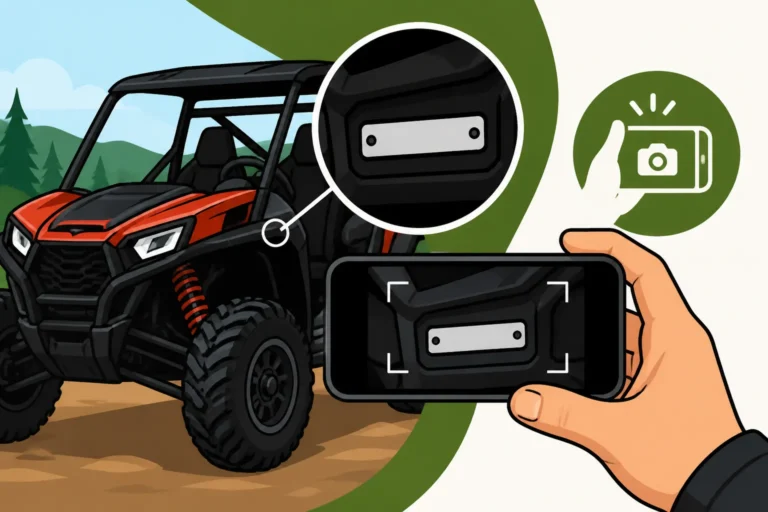
A VIN is a 17-character alphanumeric code that uniquely identifies a specific vehicle. It provides a wealth of information about the machine, including its manufacturer, brand, model year, and factory features. Most importantly for our purposes, it's the number that law enforcement and registration agencies use to track ownership and report stolen vehicles. You need to know [Serial Numbers and Where to Look for Them]. On an ATV or UTV, the VIN is typically stamped into the frame itself, usually on the front right side near the steering stem, or sometimes on the lower frame rail near the footpeg. You might also find it on a sticker or plate affixed to the frame, or sometimes on the engine casing. It's vital to find the actual stamped VIN, not just a sticker, as stickers can be easily removed or replaced by thieves. Take your time during your inspection to locate this number; don't let the seller rush you.
Deciphering the VIN: What to Look For
While you don't need to be a VIN expert to do your checks, understanding a few basics can help. The 17 characters in a VIN each carry specific information. For instance, the first three characters identify the manufacturer, make, and type of vehicle. The ninth digit is a check digit used to verify the VIN's authenticity. What you're primarily looking for is a VIN that appears original, untampered, and matches any paperwork the seller provides. If the seller has an old registration certificate or an original bill of sale, the VIN on those documents should precisely match the VIN stamped on the machine. Any discrepancy, even a single digit, is a massive red flag that demands immediate investigation.
Red Flags for a Compromised VIN
When you inspect the VIN on a used ATV or UTV, look for any signs of tampering. Are there grinding marks around the VIN area? Does it look like a new plate has been riveted over an old one? Are the numbers themselves scratched, obscured, or do they look inconsistent in their stamping? Thieves often try to alter or remove VINs to hide a vehicle's true identity. If the VIN plate looks like it's been poorly reattached, or if the numbers aren't perfectly aligned and cleanly stamped, walk away. A truly legitimate machine will have a clear, original, and unaltered VIN. If the seller can't or won't let you thoroughly inspect the VIN, or if they claim it's "missing" or "damaged," consider it a deal-breaker. It's better to miss out on a good price than to inadvertently purchase a hot machine. Remember to take a clear picture; [Photographing a VIN Before You Buy] can be very helpful for your records.
Official Channels for Verifying a VIN in New Brunswick
Once you have the VIN, it's time to put it to work. There are specific, official channels in New Brunswick that you should use to verify the machine's history and ensure it's not stolen. Don't rely solely on the seller's word, no matter how convincing they might seem. Trust, but always verify.
Checking with Service New Brunswick
Service New Brunswick (SNB) is your go-to for official registration and ownership records. While SNB cannot directly tell you if a vehicle is "stolen" (that's police domain), they can provide you with a vehicle information search, which is incredibly valuable. For a small fee, you can request a [New Brunswick Record Search at $8]. This search will reveal crucial details like the last registered owner, any active liens against the machine (meaning someone else still owes money on it), and sometimes a history of previous registrations.
If the seller isn't the last registered owner, or if there's a lien listed, you have serious questions to ask. A seller who claims to own the machine outright but has a lien on the record is a major red flag. Similarly, if the name on the registration doesn't match the seller's ID, you need a very clear explanation and proof of the transfer of ownership. This search helps you understand the official paper trail of the machine and can indirectly reveal if something is amiss, especially if the machine has never been registered or its history seems patchy. Always request this search before you finalize any purchase.
Contacting the RCMP or Local Police
This is the most direct way to determine if a machine has been reported stolen. You should contact your local RCMP detachment or municipal police force with the VIN. Explain that you are considering purchasing a used ATV/UTV and want to ensure it has not been reported stolen. They have access to national databases of stolen vehicles and can run the VIN for you. This step is absolutely critical and should not be skipped. Most police services are happy to assist prospective buyers in this way, as it helps prevent the further circulation of stolen property. Make sure to call their non-emergency line, not 911. Be prepared to provide them with the full 17-character VIN. Getting a clear "not reported stolen" directly from law enforcement offers immense peace of mind.
Third-Party Online Databases (with caveats)
You might come across various third-party websites or services that offer to run VIN checks for a fee. These can sometimes provide additional information, like accident history or previous registration in other jurisdictions. However, they often rely on commercial databases and may not have real-time access to police stolen vehicle reports. While they can be useful for a broader history, they should never replace a direct check with the police or Service New Brunswick for stolen status and registration history. Some of these services might offer a more comprehensive report for vehicles like cars and trucks, but their depth of information for ATVs and UTVs can sometimes be more limited. Use them as a supplementary tool, if you choose, but always prioritize the official checks.
What to Do If You Suspect a Machine is Stolen
Discovering that a potential purchase might be stolen can be disheartening and even a little scary. It's crucial to know exactly what steps to take to protect yourself and assist law enforcement. Your quick thinking in this situation can make a real difference.
Immediate Steps Before You Buy
If, after running the VIN through Service New Brunswick or with the police, you get an indication that the machine is stolen or that something is seriously wrong with its ownership history, do not proceed with the purchase. It's that simple. Do not try to be a hero, do not confront the seller directly, and do not try to "get a good deal" on a stolen item. Your immediate action should be to discretely inform the police. Provide them with all the details you have: the seller's contact information (if you have it), the location where you met or saw the machine, and of course, the VIN. The police are equipped to handle these situations safely and legally. It's painful to walk away from what seemed like a great machine, but the alternative is far worse.
What If You've Already Purchased It?
This is the truly devastating scenario, and it's where the frustration really hits home. If you've already handed over your money and later discover the machine is stolen, you are in a very difficult position. The first thing you must do is contact the police immediately. Explain the situation: when and where you bought it, who you bought it from (if you have contact info), how much you paid, and any documentation you received. The machine will be seized by the police and returned to its rightful owner. As mentioned earlier, you will likely lose the money you paid.
Your recourse then lies in pursuing the seller for fraud or breach of contract. This can be an uphill battle, especially if the seller used false information or has disappeared. You might need to consult with a lawyer to explore your options for small claims court or other legal action. Keep meticulous records of everything: the advertisement, any communications with the seller, the bill of sale, payment receipts, and police reports. This situation highlights why thorough VIN checks before purchase are not just a good idea, but an absolute necessity. It's a tough lesson to learn, but it underscores the importance of due diligence.
Best Practices for a Safe Used ATV/UTV Purchase
Beyond the VIN check, there are several other best practices you should follow to ensure your used ATV or UTV purchase in New Brunswick goes smoothly and safely. These steps collectively minimize your risk and provide you with a clear path to ownership.
The Importance of a Clear Bill of Sale
A detailed, legally sound bill of sale is your proof of purchase and a critical document for [New Brunswick Registration After a Private Sale]. Without it, [New Brunswick Machines With No Paperwork] can be a nightmare to put on the books, or even just prove you own. A proper bill of sale should include:
- The full names and addresses of both the buyer and the seller.
- The date of the sale.
- The make, model, year, and crucially, the full VIN of the ATV/UTV.
- The agreed-upon purchase price.
- A statement that the seller guarantees they are the rightful owner and that the machine is free of liens or encumbrances.
- Signatures of both parties.
You can find templates for a bill of sale online, or even use resources like LawDepot to help you create a robust, legally sound document. Don't settle for a scribbled note on a napkin. This document protects both you and the seller and is absolutely essential for registering your machine with Service New Brunswick. You'll need it when you go to [Registering With a Bill of Sale From a Neighbour].
Meeting the Seller and Inspecting the Machine
Always arrange to meet the seller in a safe, public location, or at their verifiable address. Avoid isolated areas. When you inspect the machine, take your time. Look beyond the shiny plastic. Check for obvious signs of damage or unusual repairs. Most importantly, carefully inspect the VIN. Make sure it's clear, unaltered, and matches any paperwork. Ask the seller questions: Why are they selling it? How long have they owned it? Where did they ride it? Their answers, or lack thereof, can reveal a lot. Someone trying to unload a stolen machine might be vague, nervous, or pushy. A legitimate seller will usually be open and willing to discuss the machine's history. Don't feel rushed or pressured.
Other Documentation to Request
In addition to a bill of sale, ask the seller for any other relevant documentation they might have. This could include:
- Previous registration certificates: These documents show the chain of ownership and verify the VIN.
- Maintenance records: While not directly related to stolen status, these show a history of care and can help confirm the seller's story about ownership duration.
- Original owner's manual: Another small detail that legitimate sellers often have.
- Proof of insurance: This can also help establish a history of legitimate ownership.
Compile a [New Brunswick Registration Paperwork Checklist] for yourself before you go, so you don't forget anything. A seller who has kept good records is generally a sign of a responsible owner and a legitimate sale. Conversely, a seller who can't provide any paperwork beyond a shaky bill of sale should raise a red flag. Be diligent, ask questions, and never be afraid to walk away if something feels off. Your peace of mind and your hard-earned money are worth it.
Here's a quick overview of the key checks:
| Verification Method | What it Checks for | Who to Contact | Cost | Outcome |
|---|---|---|---|---|
| VIN Inspection | Physical alteration, matching paperwork | Yourself (on the machine) | Free | Identifies potential tampering; matches documents. |
| Service New Brunswick Search | Last registered owner, liens, registration history | Any Service New Brunswick centre | Approximately $8 (for a record search) | Reveals legitimate ownership chain and financial encumbrances. |
| RCMP / Local Police Check | Stolen status | Non-emergency line of local RCMP or police | Free | Confirms if the VIN is flagged as stolen in national databases. |
| Third-Party Online Services | (Optional) Broader history (accidents, etc.) | Various commercial websites (e.g., Carfax for cars) | Varies (often $20-$50+) | Provides supplementary history; do not rely solely for stolen status. |
| Bill of Sale & Paperwork Review | Legal transfer of ownership, seller information | Yourself & Seller | Free (cost of paper/printer) | Secures your legal claim to ownership; verifies seller's identity and machine details. |
Disclaimer
This article is for general informational purposes only and does not constitute professional advice. Laws, prices and regulations vary by location and change over time. Consult a qualified professional for guidance on your specific situation.