Selling to a Buyer in Nova Scotia
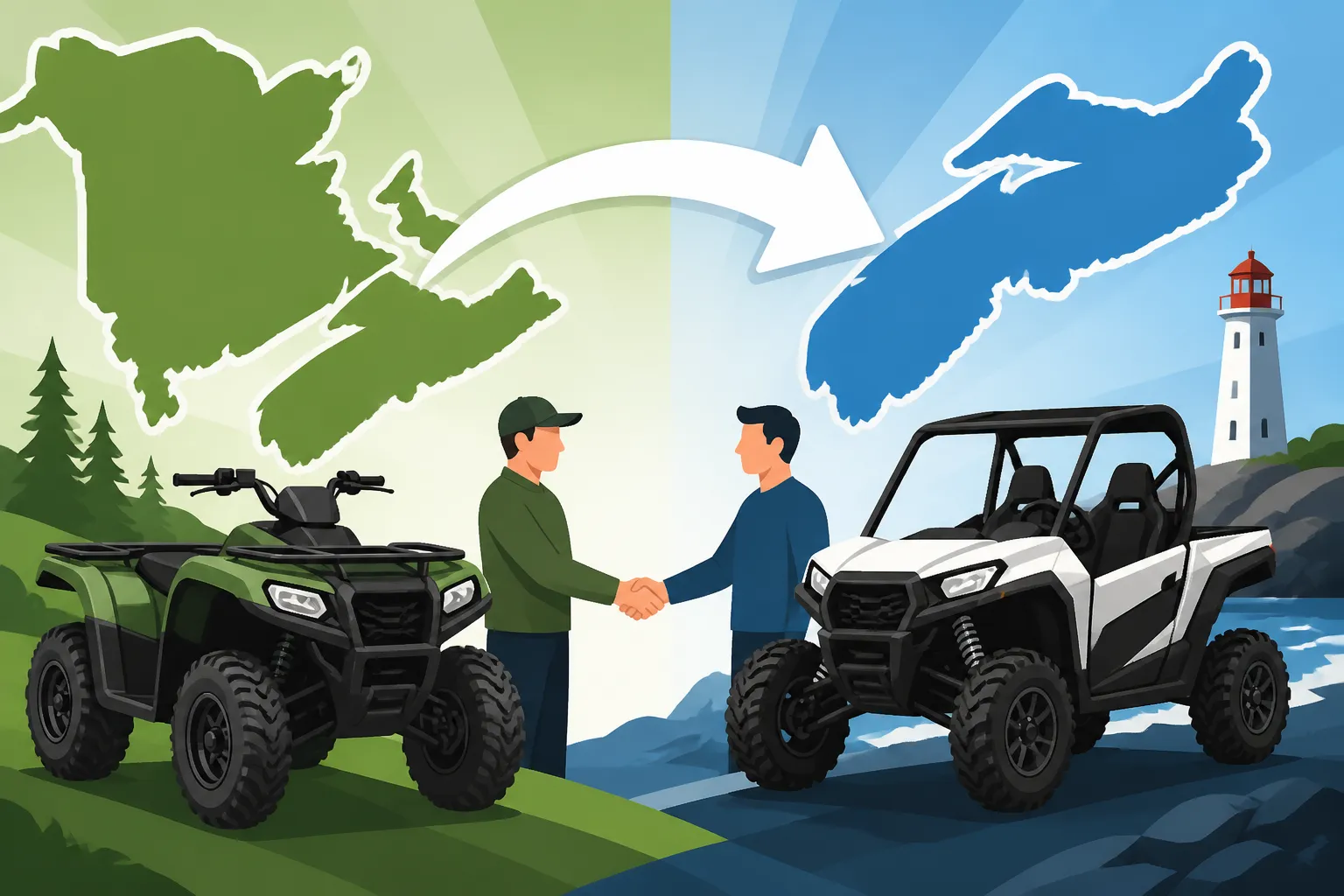
Selling your trusty all-terrain vehicle (ATV) or utility terrain vehicle (UTV) to someone across provincial lines can feel like navigating a dense patch of woods without a map. You’re likely wondering about all the different paperwork, the provincial regulations, and how to make sure everything is above board for both you, the seller in New Brunswick, and your buyer in Nova Scotia. This guide will walk you through the entire process, clarifying the steps you need to take to ensure a smooth, legal, and stress-free transaction.
Understanding the Differences in Provincial Rules for ORV Sales
When you're selling an off-road vehicle (ORV) from New Brunswick to a buyer in Nova Scotia, the biggest hurdle isn't usually finding a buyer or negotiating a price, but understanding how the different provincial regulations will impact the transfer of ownership. It's not as simple as just handing over the keys and a wad of cash. Each province has its own set of rules regarding registration, taxes, and proof of ownership, and failing to adhere to them can lead to headaches for both parties down the line.
For you, as the New Brunswick seller, your primary concern will be ensuring you correctly transfer ownership and remove your name from the machine's registration. You want to avoid any lingering liability or confusion that could arise if the machine is still officially tied to you. This means understanding how to properly sign over your [New Brunswick ORV Registration Explained] and what responsibilities fall on you to cancel your end of the deal.
For the Nova Scotia buyer, they'll be stepping into their province's system, which requires specific documentation for them to legally register and operate the ATV or UTV. They'll need a clear chain of ownership, proof of the sale, and likely a visit to their provincial registry to get their new plates. It's in everyone's best interest for you, the seller, to provide them with all the necessary documents to make their process as straightforward as possible, fostering trust and a clean transaction.
Your Responsibilities as the New Brunswick Seller
As the seller of an ATV or UTV in New Brunswick, your role is absolutely crucial in setting up a successful cross-provincial sale. Your actions ensure a clean break from your ownership and provide the Nova Scotia buyer with everything they need to register the machine in their home province. Think of it as carefully untangling a knot so that the buyer can easily re-tie it on their end.
Preparing Your Machine and Paperwork
Before you even list your ATV for sale, take the time to gather all relevant documents. This includes your current Certificate of Registration. Make sure the information on it is accurate and matches the machine's Vehicle Identification Number (VIN). A clean and organized set of documents instills confidence in a prospective buyer and speeds up the entire process. If you’ve misplaced your registration certificate, it’s wise to get a replacement from Service New Brunswick before proceeding. [What to Do If You Lose Your Registration Certificate]
You should also ensure the physical machine itself is ready. Give it a good wash, address any minor repairs, and be honest about its condition. A potential buyer, especially one traveling from out of province, will appreciate transparency and a well-maintained machine. Remember, you're selling a significant piece of equipment, and presentation matters.
Creating a Robust Bill of Sale
This is arguably the most critical document for both parties. A comprehensive bill of sale protects you, the seller, by clearly stating that the machine is sold "as is" and that ownership has transferred. For the Nova Scotia buyer, it's their fundamental proof of purchase, necessary for them to register the ATV in their province and pay any applicable sales tax.
A good bill of sale should include:
- Your full name and address (as the seller in New Brunswick).
- The buyer's full name and address (in Nova Scotia).
- A detailed description of the ATV/UTV: Make, model, year, colour, and most importantly, the VIN. [Serial Numbers and Where to Look for Them]
- The purchase price.
- The date of sale.
- A clear statement that the machine is sold "as is, where is" with no warranties, express or implied.
- Signatures of both the buyer and seller. It’s always best to have a witness sign as well, though not always required.
You can find templates for a bill of sale online. Resources like LawDepot offer customizable bill of sale templates that can be tailored to include all the necessary details specific to an ATV or UTV sale, ensuring all the legal bases are covered for both the New Brunswick seller and the Nova Scotia buyer. This takes the guesswork out of creating a document from scratch.
Signing Over the Registration and Removing Your Plate
Once the sale is agreed upon and the bill of sale is complete, you'll need to sign over your New Brunswick Certificate of Registration. The back of the certificate usually has a section for transfer of ownership. Fill out your details, the buyer's details, the selling price, and the date. Both you and the buyer should sign this document.
It is your responsibility to remove your New Brunswick registration plate and decal from the ATV. These belong to you and are not transferred with the machine. The buyer will obtain their own Nova Scotia plate and registration. Leaving your plate on could lead to complications later if the buyer doesn't register it promptly.
Notifying Service New Brunswick and Cancelling Insurance
After the sale, it's a good idea to notify Service New Brunswick that you've sold the machine. While the signed-over registration certificate technically handles the transfer, a quick call or visit to confirm the sale can provide extra peace of mind. This ensures your name is officially delinked from that specific VIN in New Brunswick's records.
Don't forget to contact your insurance provider to cancel your ATV's policy. Since you no longer own the machine, you won't need the coverage. This can also save you money on future premiums. Remember, [New Brunswick Requires Insurance on Trails], but that insurance is now the buyer's responsibility in Nova Scotia.
The Nova Scotia Buyer's Journey: What They Need to Do
While your primary focus is on your responsibilities as the seller, understanding what the Nova Scotia buyer needs to do can help you guide them and answer any questions, making the overall transaction smoother. They’re effectively importing a vehicle from another province, and Nova Scotia has its own set of hoops for them to jump through.
Proof of Ownership and Identity
The Nova Scotia buyer will need solid proof that they legally purchased the ATV or UTV from you. This is where your comprehensive bill of sale becomes absolutely indispensable. Without it, they will face significant challenges at their provincial registry office. They’ll also need their own personal identification, such as a driver's license.
Beyond the bill of sale, the signed-over New Brunswick Certificate of Registration acts as a crucial document in showing the chain of title. It proves that you, the New Brunswick resident, were the last registered owner and that you legally transferred it to them.
Registering the ATV in Nova Scotia
Once the Nova Scotia buyer has your machine and all the paperwork, their first step will be to register it with the Nova Scotia Registry of Motor Vehicles or a designated Access Nova Scotia centre. They will need:
- The original, signed bill of sale: This is non-negotiable. A clear and concise document created using a reliable template, like those from LawDepot, will be extremely beneficial here. It leaves no room for doubt about the transaction details.
- The signed-over New Brunswick Certificate of Registration: This shows the previous ownership.
- Proof of their Nova Scotia residency.
- Proof of insurance: Nova Scotia, like New Brunswick, requires ORVs to be insured. The buyer will need to secure their own insurance policy that meets Nova Scotia's requirements before they can register the machine.
- Payment for registration fees and sales tax: The buyer will be responsible for paying provincial sales tax (HST) on the purchase price of the ATV when they register it in Nova Scotia. The amount will be calculated based on the purchase price declared on the bill of sale.
The registration process will result in the buyer receiving their own Nova Scotia Certificate of Registration and a new provincial plate and decal for their ATV. They will then be able to legally operate their machine on designated trails and property in Nova Scotia.
Insurance and Trail Permits
Once registered, the Nova Scotia buyer must ensure they have valid insurance. [New Brunswick Insurance Requirements for Riders] are similar in principle to Nova Scotia's – you need coverage. The buyer will need to acquire an insurance policy that meets Nova Scotia’s minimum requirements for off-road vehicles.
Additionally, if the buyer plans to use the ATV on managed trails, they will likely need to purchase a trail permit from a local Nova Scotia ORV association. This is similar to how [New Brunswick Trail Permits for 2026 and 2027] work, where permits often contribute to trail maintenance and access.
The Critical Paperwork Trail: Making it Seamless
The success of any cross-provincial ORV sale hinges on the paperwork. It’s the thread that connects you, the seller, to the buyer and allows for a legal and unambiguous transfer of ownership. Overlooking any detail can cause significant delays and frustration.
Detailing the Bill of Sale
Let’s really dig into the bill of sale because it’s your best friend in this transaction. It's more than just a receipt; it's a legal contract. Imagine a scenario where a buyer claims the ATV wasn’t as described, or worse, that they never actually bought it. Your detailed bill of sale, especially one crafted with the help of a reputable service like LawDepot, can be your strongest defense. It explicitly states the terms, the condition (as-is), and the full details of the machine.
Here's a deeper look at what to include and why:
- Full Legal Names and Addresses: Don't use nicknames or abbreviations. This clearly identifies the parties involved.
- Vehicle Identification Number (VIN): This is the unique identifier for the machine. Double-check it against the actual ATV and the registration certificate. It's like the ORV's fingerprint.
- Odometer Reading/Hours (if applicable): While not always standard for ATVs, if your machine has an odometer, recording the mileage can prevent future disputes about usage.
- Condition of Sale: The "as is, where is" clause is paramount for a private sale. It means the buyer is accepting the ATV in its current condition with all faults, visible or not. This protects you from post-sale complaints about mechanical issues.
- Lien Disclosure: If there's any lien on the ATV (a loan outstanding), it absolutely must be disclosed and ideally, cleared before sale. If you've financed the ATV, make sure you understand [New Brunswick Registration and Lien Records] and how to get a clear title.
- Signatures and Date: Both parties must sign and date the document. Each party should receive an original copy. It's wise to sign three copies: one for you, one for the buyer, and a third for a witness if one is present.
Transferring the New Brunswick Registration Certificate
Your Certificate of Registration isn't just a piece of paper; it’s proof that you were the legal owner. When you sign it over, you are formally transferring that legal ownership. The Nova Scotia buyer will present this document, along with the bill of sale, to their provincial registry.
Ensure that the section for the seller's signature and the buyer's details is completed legibly. Any errors or illegible handwriting could cause the buyer delays when they try to register the ATV in Nova Scotia. This is another reason why clear, accurate documentation from your end is so important.
Keeping Records and Copies
It cannot be stressed enough: keep copies of everything. Keep a copy of the bill of sale, the signed-over registration certificate, and any communication related to the sale. These records are invaluable if any questions or disputes arise later. You never know when you might need to prove you sold the machine and when that transfer officially took place.
Here’s a quick overview of seller and buyer responsibilities in this cross-provincial sale:
| Responsibility | New Brunswick Seller | Nova Scotia Buyer |
|---|---|---|
| Proof of Ownership | Provide original Certificate of Registration | Obtain original Bill of Sale and signed Registration |
| Bill of Sale | Create, sign, and provide a comprehensive document | Receive and retain the original Bill of Sale |
| Plate & Decal | Remove NB plate and decal | Obtain new NS plate and decal |
| Registration Transfer | Sign over NB Certificate of Registration | Register ATV with Nova Scotia Registry |
| Provincial Notification | Inform Service New Brunswick of the sale | Complete Nova Scotia registration |
| Sales Tax | Not your responsibility to collect | Pay Nova Scotia HST upon registration |
| Insurance | Cancel your NB policy | Obtain new NS insurance policy |
| Trail Permits | Not your responsibility | Purchase NS trail permit (if applicable) |
Navigating Common Pitfalls and Ensuring a Smooth Ride
Even with all the right paperwork, selling a machine across provincial lines can present unique challenges. Being aware of these potential pitfalls can help you avoid them and ensure a truly smooth transaction for both you and your Nova Scotia buyer.
Verification of the Machine and Buyer
Always ensure the VIN on the ATV matches the VIN on your registration certificate and the bill of sale. A discrepancy here can halt the registration process in Nova Scotia immediately. Likewise, if you're concerned about the buyer's legitimacy, consider accepting payment methods that are secure, such as an e-transfer or a bank draft that can be verified with the issuing bank. Avoid personal cheques unless you're willing to wait for them to clear fully before releasing the ATV.
For the buyer's peace of mind, make the ATV available for inspection. If they are traveling from Nova Scotia, they'll want to be sure the machine meets their expectations before committing to the journey and the purchase.
Dealing with Unregistered or Untitled Machines
While your machine should be registered, some sellers might encounter situations where an ATV isn't currently registered, perhaps it's been a [Camp Machine and New Brunswick Paperwork] for years. If your ATV is unregistered, the process becomes more complicated. You might need to register it in your name first, or at least have enough documentation to prove ownership so you can create a valid bill of sale. Selling an unregistered machine adds a layer of complexity for the Nova Scotia buyer, as they'll need an even stronger paper trail to prove ownership. [New Brunswick Penalties for Riding Unregistered] apply if you were operating it, but the bigger issue for a sale is proving legitimate ownership.
Similarly, if there's any doubt about the title, such as a missing VIN or an outstanding lien, resolve it before you sell. A Nova Scotia buyer will be unable to register a machine with a clouded title. Ordering a [What a Record Search Shows Before You Buy Used] from Service New Brunswick for your own machine can be a good proactive step to ensure there are no surprises.
Logistics of the Transfer
Consider how the ATV will get from New Brunswick to Nova Scotia. Will the buyer pick it up? Are you delivering it? If the buyer is picking it up, ensure they have appropriate transportation, such as a trailer, as they won't be able to ride an unregistered (in Nova Scotia) ATV on the road or even directly from your property if it involves any public roadways.
If you decide to meet partway or deliver, factor in your travel time and costs. Always make sure the transaction, including payment and signing of documents, is completed before the machine changes hands.
Reciprocity and Provincial Agreements
While New Brunswick and Nova Scotia are neighbouring provinces with many similarities, their ORV regulations are distinct. There isn't an automatic reciprocity for registration or trail permits between the two provinces in the same way there might be for driver's licenses. The Nova Scotia buyer must follow their provincial rules for registration and permits. This means your New Brunswick registration and trail permit are not valid for them once they take ownership in Nova Scotia.
By meticulously following these steps and preparing all necessary documentation, you can confidently sell your ATV or UTV to a buyer in Nova Scotia, ensuring a transparent, legal, and hassle-free process for everyone involved.
Disclaimer
This article is for general informational purposes only and does not constitute professional advice. Laws, prices and regulations vary by location and change over time. Consult a qualified professional for guidance on your specific situation.