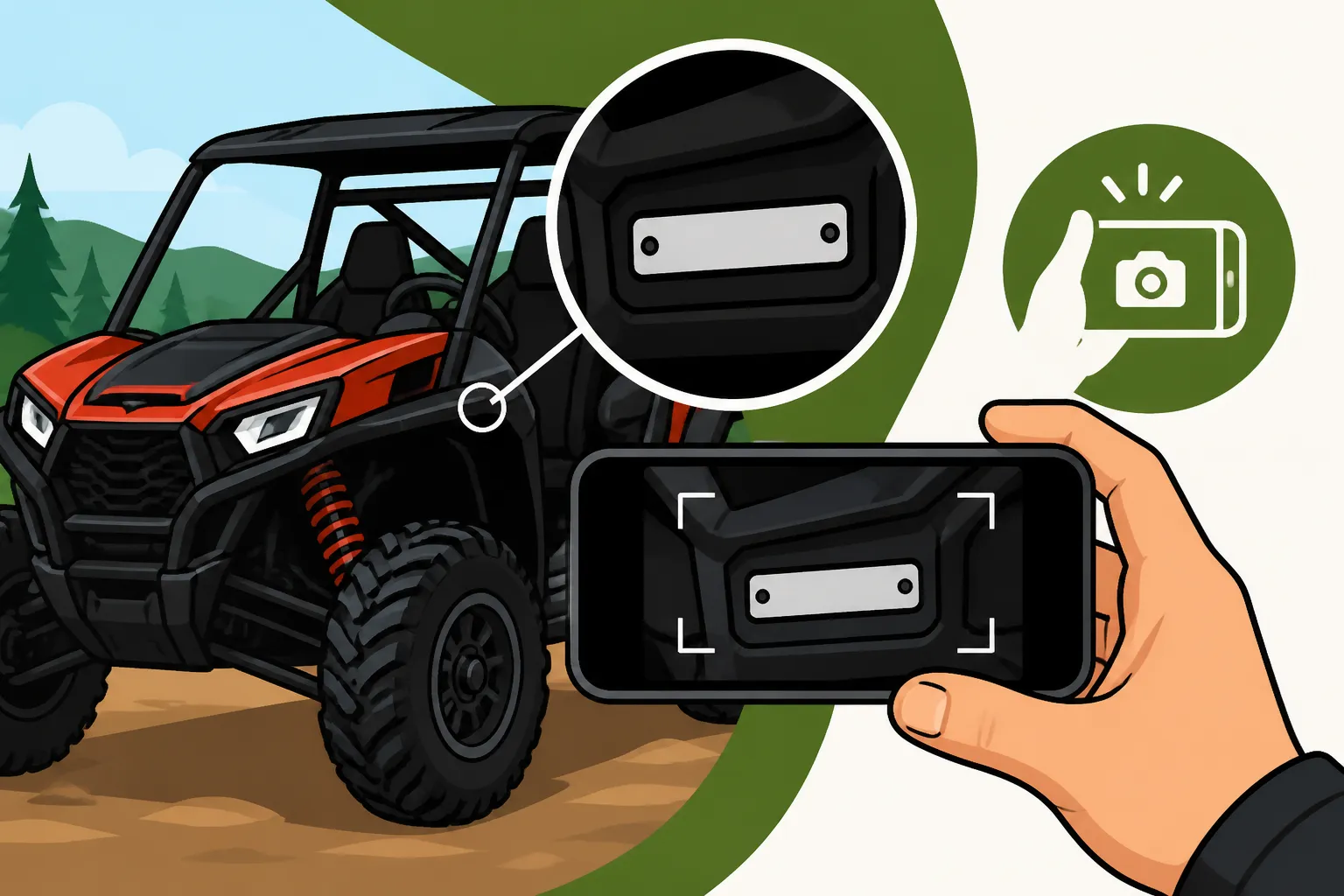
Photographing a VIN Before You Buy
Buying a used ATV or UTV in New Brunswick can feel like a game of chance, with the nagging worry that you might unknowingly purchase a stolen machine or one burdened with hidden issues. It's a valid concern, and many riders have fallen victim to less-than-honest sellers. This guide will walk you through the essential step of photographing the Vehicle Identification Number (VIN) before you hand over any cash, showing you how this simple action can be your strongest defense against future headaches.
Why Photographing the VIN is Your First Line of Defense
When you’re looking at a shiny (or sometimes not-so-shiny) used ATV or UTV, it’s easy to get caught up in the excitement of a potential new ride. However, that crucial moment before you agree to buy is when you need to put your detective hat on. Getting a clear photo of the VIN isn't just a suggestion; it's a non-negotiable step that provides immediate protection and vital information, setting you up for a smooth transaction or alerting you to potential dangers.
Protecting Yourself from Stolen Machines
Imagine the heartbreak: you've saved up, bought a machine, and are enjoying the trails, only to find out later it was reported stolen. This isn't just a hypothetical scenario; it happens. When you photograph the VIN, you're gathering concrete evidence that can be used to check against police databases for stolen vehicles. It’s an immediate, no-cost way to get a critical piece of information that can save you from losing both your money and the machine, not to mention the legal complications that come with possessing stolen property. Having that VIN in hand allows you to perform initial checks, giving you peace of mind or an early warning before you invest too much time or emotion. This proactive approach is far better than reacting to a problem down the line. To really dig into this, you'd want to consult a guide like [Checking Whether a Used Quad Is Stolen].
Verifying the Seller's Ownership
A legitimate seller should have the vehicle's registration papers readily available, and the VIN on those papers must match the VIN on the machine itself. A clear photo of the VIN allows you to cross-reference this information instantly. If the numbers don't align, or if the seller seems hesitant or provides excuses, it's a massive red flag. This verification process helps confirm that the person selling the machine is the legal owner and has the right to transfer title to you. Without this match, you could be buying a machine from someone who isn't the true owner, which means you might never actually gain legal ownership yourself. This step is fundamental to understanding [New Brunswick Transfer of Ownership Explained].
Uncovering Hidden Histories
Beyond just ownership and theft, a VIN can unlock a machine's entire past. Once you have that photo, you can use the VIN to conduct more thorough record searches. This can reveal if the machine has been involved in major accidents, if it has a salvage title, or if there are any outstanding liens against it. Imagine buying a machine that looks great on the surface, only to discover later that a bank or another individual still has a financial claim on it. These hidden histories can turn a good deal into a financial nightmare. Accessing services that provide detailed vehicle history reports (often for a fee) using that VIN can tell you if the odometer has been rolled back, if it's been flood-damaged, or other crucial details that impact its value and safety. This deeper dive gives you leverage in negotiations or helps you walk away from a bad investment entirely. For more on what information is available, look into [New Brunswick Record Search at $8].
Where to Find That Elusive VIN on an ATV or UTV
Finding the VIN isn't always as straightforward as it is on a car or truck, but knowing where to look generally makes the process much quicker. These numbers are deliberately stamped in robust locations to prevent tampering, though sometimes they can be obscured by dirt, rust, or accessories. Always be prepared to do a little searching and perhaps some light cleaning to get a good read.
Common Locations on Quads
For ATVs, or "quads," the VIN is almost universally stamped into the frame. A very common spot is on the front left side of the frame, usually near the foot peg or just behind the front wheel well. Sometimes it's higher up, closer to the handlebars, or even on a cross-member of the frame under the seat. Look for a series of numbers and letters, typically 17 characters long, that are physically indented into the metal. Don't confuse it with engine serial numbers, which are different. There might also be a sticker, often laminated, on a frame tube or under the seat, but the primary VIN is always stamped into the metal itself. Check both sides of the frame, especially the areas that are less likely to be damaged in a typical incident.
Common Locations on Side-by-Sides
Side-by-sides (UTVs) share similar VIN placement tendencies with ATVs, but given their larger size and more enclosed nature, the location can vary slightly. Many UTVs will have the VIN stamped on the frame in the engine compartment, or on the frame rail accessible through the wheel wells. Another common spot is on the frame member supporting the passenger seat or beneath the driver’s seat. Some manufacturers also place a sticker with the VIN on the dash, door jamb, or even inside the glove box, but again, always seek out the stamped number as the authoritative source. If you're looking at a larger utility-style UTV, check near where the bed or cargo area meets the cab. It pays to have a small flashlight and a rag handy to clear away any grime that might be hiding the numbers. Guides like [Does a Side-by-Side Register the Same Way?] might touch on these aspects of machine identification.
Tips for a Clear Photo
Getting a good, clear photo of the VIN is crucial for accurate checks. Poor lighting, shadows, or dirt can make individual characters unreadable, rendering your photo useless. First, use a clean cloth to wipe away any dirt, mud, or grease from the area where the VIN is located. If it's a metal stamping, sometimes rubbing a piece of chalk or a pencil crayon over it can make the numbers stand out against the background, similar to taking a "rubbing." Second, ensure you have ample light. If you're indoors, turn on all available lights or use a flashlight. If outside, avoid direct sunlight that can cause glare, but also avoid deep shadows. Third, take multiple photos from different angles. Get a straight-on shot, one slightly from above, and one slightly from the side. Zoom in to capture the details of each character, and then zoom out to show the VIN in context on the machine. This variety increases your chances of getting at least one perfectly readable image.
What to Do With That VIN Photo After You Take It
Once you have that crisp, clear photo of the VIN, you've got a powerful tool in your hands. But what do you do with it? The steps you take next are just as important as the act of photographing the VIN itself, turning that image into actionable intelligence that protects your investment.
The Initial Check
With the VIN in hand, your first step should be to run a preliminary check. While specific online databases might change, many jurisdictions offer free or low-cost VIN checks through government services or licensed third-party providers. A quick search using the VIN can often reveal basic information about the machine, such as its make, model, and year. This initial check immediately allows you to confirm that the machine you're looking at is indeed what the seller claims it is. If the VIN pulls up information for a completely different make or model, that's an immediate, undeniable red flag. It also gives you a starting point for deeper investigation, confirming the machine's identity before you even consider paperwork. This is a key part of protecting yourself when [Buying From a Private Seller in New Brunswick].
Deeper Investigations and Official Checks
For a truly secure purchase, you'll want to go beyond the initial online query. Service New Brunswick is the provincial authority for vehicle registration, and they can perform a record search using the VIN. This service, often available for a nominal fee, can tell you who the machine is currently registered to, whether there are any liens or encumbrances against it, and sometimes even its history of past registrations in the province. This official check is invaluable. You can compare the name on the registration certificate the seller provides with the name Service New Brunswick has on file. If they don't match, or if a lien is present that the seller didn't disclose, you've just saved yourself a world of potential trouble. The importance of this step cannot be overstated, as it provides verifiable, official information that can make or break your decision. You can learn more about this by researching [New Brunswick Record Search at $8] or [Ordering a Certified Copy From Service New Brunswick].
Documenting Your Purchase with the VIN
Once you've done your due diligence and feel confident about the machine and the seller, the VIN photo continues to play a vital role in documenting your purchase. When you finalize the sale, the VIN should be clearly written on your bill of sale or purchase agreement. This legally links the specific machine to your transaction, making it undeniable that you bought that particular ATV or UTV. Tools like LawDepot can help you create professional, legally sound purchase agreements that include all necessary details, including the VIN, ensuring both buyer and seller are protected. Keep that VIN photo safe, perhaps backed up digitally and printed, alongside your bill of sale, registration certificate, and insurance papers. It's part of your complete ownership record, providing unquestionable proof of the machine's identity should any questions arise in the future, whether it's for registration, insurance, or even if you decide to sell it down the line.
Potential Red Flags and What to Watch For
While photographing the VIN is an empowering step, it's also crucial to know what warning signs to look for. Sometimes, the VIN itself or the seller's reaction to your request can tell you more than any history report ever could. Being vigilant about these red flags can save you from making a costly mistake.
Tampered or Missing VINs
This is perhaps the biggest red flag you can encounter. If the VIN appears scratched, ground down, painted over, or otherwise altered, walk away immediately. It suggests the machine may be stolen, or its identity is being intentionally obscured. Similarly, if the stamped VIN is completely missing from its usual locations on the frame, or if only a sticker is present without a corresponding stamped number, this is extremely suspicious. Genuine machines have clear, permanent VINs. Some criminals attempt to replace VINs with fake ones or simply remove them. If you suspect tampering, do not proceed with the purchase. Report your findings to local authorities, as you might be helping to prevent a crime. This situation is far too risky to ignore, and it's a clear indicator that something is seriously wrong with the machine's history.
Seller Hesitation or Refusal
A transparent and legitimate seller will have no problem providing the VIN, allowing you to photograph it, and showing you the registration papers. In fact, many reputable sellers will offer this information upfront to build trust. If a seller becomes evasive, makes excuses ("I don't know where it is," "I'll get it to you later," "it's too much trouble"), or outright refuses to let you photograph the VIN or inspect the registration, consider it a giant warning sign. This behavior strongly suggests they have something to hide, whether it's a stolen machine, undisclosed liens, or a history of significant damage. Your instinct to proceed should immediately shift to an instinct to retreat. Don't let the allure of a good deal override your common sense here; a seller who won't share basic identifying information is not a trustworthy one. This ties into the broader topic of [New Brunswick Machines With No Paperwork].
Inconsistent Information
Once you've got the VIN photo and, ideally, a look at the registration papers, compare all the information carefully. Does the VIN on the machine match the VIN on the registration? Does the seller's name match the name on the registration certificate? Do the make, model, and year on the registration align with the machine you're looking at? If there are any discrepancies, no matter how minor they seem, ask for immediate clarification. A small typo on a piece of paper might be innocent, but significant differences in the VIN or owner's name are not. If the seller can't provide a satisfactory explanation or gets defensive, you should be very wary. These inconsistencies can indicate fraud, a stolen machine, or a previous illegal transfer, all of which will cause you immense problems down the road. Double-checking these details is a fundamental part of the [New Brunswick Registration Paperwork Checklist].
Here's a quick reference on what to look for and where:
| Item to Check | Location on Machine / Document | What to Compare/Verify | Red Flag if… |
|---|---|---|---|
| VIN | Stamped on Frame | Matches VIN on registration, bill of sale, history report | Missing, altered, unreadable, or doesn't match papers |
| Registration | Seller's Document | Seller's name matches registration holder's name | Name discrepancy, no registration, or expired |
| Machine Details | Visual Inspection / VIN Check | Make, model, year match description and VIN info | Discrepancies between physical machine and records |
| Liens | Service New Brunswick Search | No active liens listed against the VIN | Liens present, not disclosed by seller |
This article is for general informational purposes only and does not constitute professional advice. Laws, prices and regulations vary by location and change over time. Consult a qualified professional for guidance on your specific situation.