Transferring a Registration to a Buyer
Selling your beloved ATV or UTV in New Brunswick can feel like a big undertaking, especially when you're trying to make sure all the paperwork is squared away correctly. Nobody wants to deal with headaches down the road, whether it's an old plate still linked to your name or the buyer struggling to register their new machine. This guide is here to walk you through the entire process of transferring your ORV registration to a buyer, ensuring a smooth and worry-free transaction for everyone involved.
What Happens When You Sell Your ORV? Your Role as the Seller
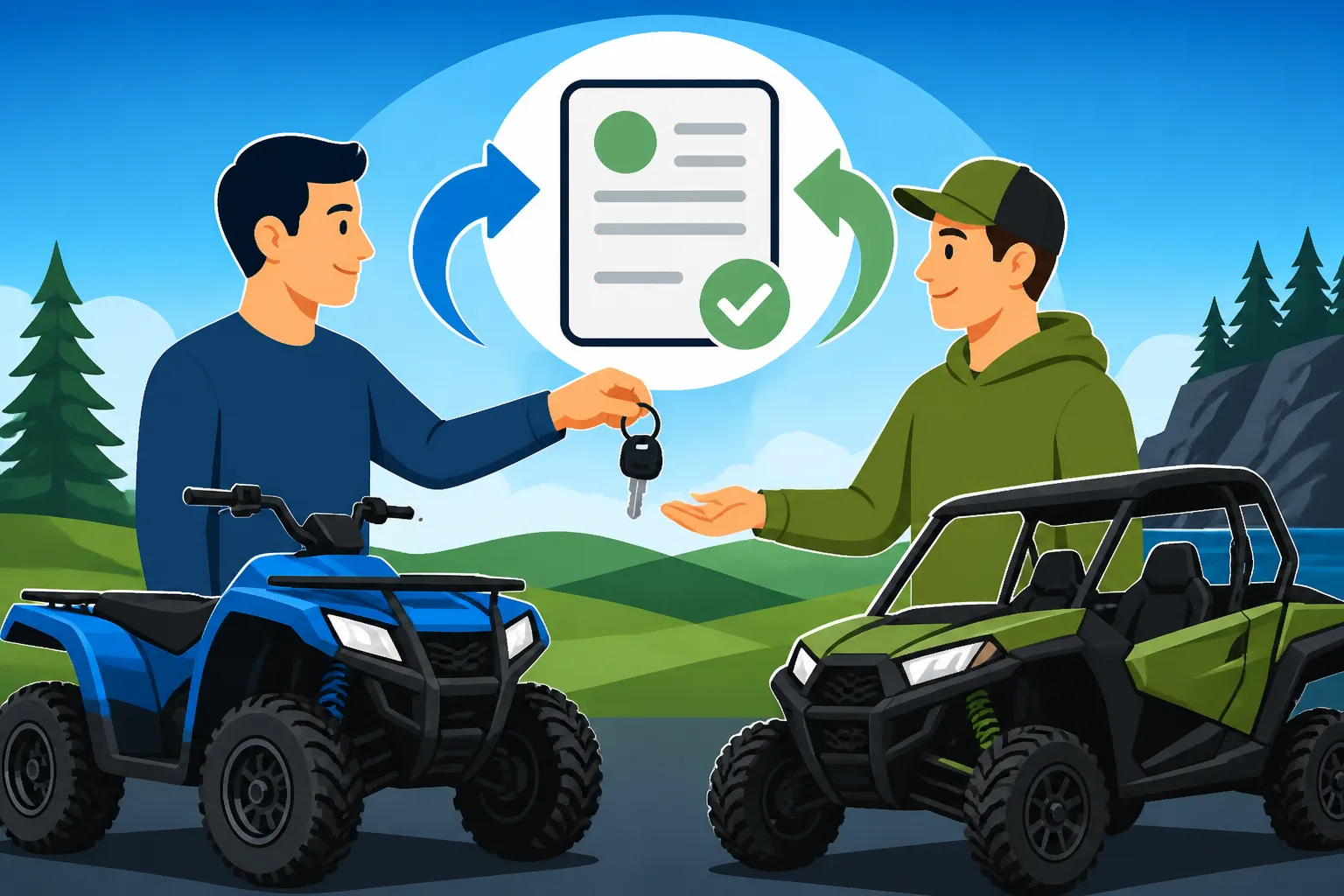
When you decide it’s time for your ATV or UTV to find a new home, you're not just handing over the keys. You're actually initiating a legal process that transfers ownership from you to the buyer. This isn't just about good manners; it's about protecting yourself from any future liabilities related to the machine. Imagine getting a fine for an unregistered machine or an accident involving an ORV you no longer own, simply because the paperwork wasn't handled correctly. It happens, and it's a frustration we all want to avoid.
Your Responsibility as the Seller
As the seller, your primary responsibility is to ensure that you have a clear title to the off-road vehicle and that you provide all the necessary documentation to the buyer. This means proving that you are the legal owner and that there are no outstanding liens or claims against the machine. You'll need to prepare the machine for sale, which often includes a good cleaning and making sure it’s in the condition you've advertised. But beyond that, the legal and administrative steps are paramount. You want to make it as easy as possible for your buyer to register the machine in their name, because a smooth transfer reflects well on you and prevents any back-and-forth later on. Don't forget, once the sale is complete, you'll need to officially cancel your registration with Service New Brunswick to ensure your name is no longer associated with that particular ORV. [Cancelling a Registration After a Sale]
Understanding the Transfer of Ownership Process
The registration certificate itself isn't something that's simply "signed over" and becomes the buyer's registration. Instead, it's proof of your ownership and your current registration. When you sell the machine, you're transferring the ownership, and the buyer will then use your signed-over certificate, along with a bill of sale, to apply for their own new registration. This might sound like a subtle difference, but it's important. Your existing plate and registration sticker are tied to you, the seller. The buyer will receive a brand new plate and sticker from Service New Brunswick once they've completed their end of the process. Think of it less as an update to an existing document and more as closing out your chapter and opening a new one for the buyer.
The Paperwork Trail: Documents You Need to Provide
The key to a successful transfer lies in the documentation. Without the right papers, the buyer will hit roadblocks at Service New Brunswick, and that's exactly what we want to prevent. Having everything in order before you even list your ATV or UTV can save a lot of stress for both parties. It shows you're a responsible seller and builds trust with potential buyers.
Essential Documents for the Sale
When you sell your ATV or UTV, there are a few core documents you must have ready for the buyer. These are the bedrock of the transaction. First and foremost, you'll need your original Registration Certificate. This is the official document from Service New Brunswick that proves you are the registered owner. You'll sign this certificate over to the buyer. Secondly, and equally crucial, is a comprehensive Bill of Sale. This legal document outlines the terms of the sale, including the buyer, seller, machine details, and purchase price. If you have a loan on the machine, you'll also need a Lien Release document proving that the debt has been paid in full and the lienholder no longer has a claim on the ORV. Buyers often want to see a clear chain of ownership, so if you have previous bills of sale from when you acquired the machine, those can also be helpful to share, though not strictly required for the new registration. [New Brunswick Registration Paperwork Checklist]
Creating a Solid Bill of Sale
A simple handwritten note might seem sufficient, but for something as significant as an ATV or UTV sale, a robust bill of sale is your best friend. This document protects both you, the seller, and the buyer. It should clearly state:
- Date of Sale: The exact day the ownership changes hands.
- Seller's Information: Your full name, address, and contact details.
- Buyer's Information: The buyer's full name, address, and contact details.
- Machine Description: This is critical. Include the Year, Make, Model, and most importantly, the Vehicle Identification Number (VIN). Double-check that VIN against the machine itself and the registration certificate to avoid any discrepancies.
- Purchase Price: The agreed-upon selling price of the ORV.
- "As-Is" Clause: Most private sales are "as-is," meaning the buyer accepts the machine in its current condition with no warranties from the seller. This clause should be explicitly stated.
- Signatures: Both the seller and buyer should sign and date the bill of sale. Having a witness sign can add an extra layer of security, though it's not always mandatory.
Using a reputable template can make this process much easier. Many people find resources like LawDepot incredibly helpful for generating customized, legally sound bills of sale tailored to their specific needs. It helps ensure you haven't overlooked any vital information, protecting you from future disputes. You want a document that leaves no room for doubt or confusion about the transaction. A well-crafted bill of sale clarifies that the machine is now the buyer's responsibility, and it formalizes the change of ownership for the buyer's registration process. [New Brunswick Registration After a Private Sale]
The Buyer's Next Steps: What They'll Need to Do
Once you've done your part, handed over the machine, and completed the sale, the ball is firmly in the buyer's court. While it's their responsibility to register the machine, an informed seller can offer invaluable guidance. Knowing what your buyer needs to do can help them have a smooth experience, and frankly, it reflects well on you as a trustworthy individual. Nobody likes to feel abandoned after a big purchase, especially when government paperwork is involved.
Registering Their New Machine
After buying the ATV or UTV from you, the buyer's immediate next step is to head to a Service New Brunswick centre to register the machine in their name. They can't just ride off into the sunset with your old plate, as that would be riding an unregistered ORV. To register, they will need a few key items:
- The Signed-Over Original Registration Certificate: This is the document you, as the seller, provided, showing your ownership and signed by you to indicate the transfer.
- The Bill of Sale: The comprehensive document you both signed, detailing the transaction. This is especially important for proving the purchase price and the VIN.
- Proof of Identity: Usually a valid driver's licence or other government-issued ID.
- Proof of Insurance: In New Brunswick, all ORVs operating on designated trails are required to have liability insurance. The buyer will need to show proof of this insurance when registering. [New Brunswick Requires Insurance on Trails]
Service New Brunswick staff will review these documents, process the ownership change, and issue the buyer a brand new registration certificate, a new plate, and a registration sticker. This sticker must be affixed to the left front fender of the machine.
Tax Implications for the Buyer
This is an area that sometimes causes confusion, especially for first-time private buyers. In New Brunswick, the Harmonized Sales Tax (HST) is generally applied to the sale price of off-road vehicles, even in private sales. When the buyer goes to register the machine at Service New Brunswick, they will typically pay the HST on the purchase price. This is different from buying from a dealer, where the HST is collected at the point of sale. For private sales, Service New Brunswick acts as the collection point for the provincial portion of the tax. The amount of HST will be calculated based on the purchase price declared on the bill of sale. It's a good idea to remind your buyer about this so they aren't caught off guard by an unexpected cost when they go to register. [New Brunswick Tax on a Private ATV Sale]
Common Pitfalls and How to Avoid Them
Even with the best intentions, errors can happen when transferring an ORV registration. These mistakes often lead to frustrations, delays, and sometimes even fines. Being aware of the most common issues can help you proactively avoid them and ensure a truly smooth experience. After all, the goal is a happy buyer and a worry-free sale for you.
The "Handshake Deal" Trap
While a handshake agreement might feel genuine and simple, it's perhaps the riskiest way to conduct an ORV sale. Without a written bill of sale, there's no official record of the transaction. This can lead to numerous problems:
- No Proof of Ownership Transfer: If the buyer never registers the machine, or if something happens to it, there's no formal document to prove you sold it. The machine could still be legally linked to your name, potentially leading to fines or liabilities.
- Disputes Over Condition or Price: If the buyer later claims the machine was misrepresented, or if there's a disagreement about the price, a written bill of sale provides clarity and evidence.
- Difficulty for the Buyer to Register: Service New Brunswick will almost certainly require a formal bill of sale to process the buyer's new registration. A handshake deal leaves the buyer in a tough spot, and they might come back to you scrambling for documentation.
Always insist on a written, signed bill of sale for your protection and the buyer's. Using a service like LawDepot for a professional template takes minutes and provides peace of mind.
Failing to Cancel Your Old Registration
This is a critical step that sellers sometimes overlook. Once your ATV or UTV is sold, your personal registration certificate and the physical plate should no longer be associated with that machine. You need to contact Service New Brunswick to officially cancel your registration and surrender the plate. If you don't, and the buyer doesn't register the machine promptly, or if they somehow cause an incident with your old plate still on the machine (unlikely, but possible if they put it back on), you could still be held accountable. Cancelling your registration officially severs your ties to that specific ORV. It’s a simple phone call or a quick visit to a service centre, but it's incredibly important for your peace of mind. [New Brunswick ORV Registration Explained]
Incomplete or Incorrect Documentation
Another common headache arises from paperwork errors. This could be anything from a VIN scratched down incorrectly on the bill of sale to a missing signature on the registration certificate. When the buyer goes to Service New Brunswick, even a small discrepancy can cause significant delays.
| Document | Common Pitfall | How to Avoid |
|---|---|---|
| Registration Certificate | Forgetting to sign the seller's portion, or signing in the wrong spot. | Clearly read the instructions on the certificate for transfer. If unsure, ask a Service New Brunswick representative. |
| Bill of Sale | Missing the VIN, an incorrect VIN, missing purchase price, or no "as-is" clause. | Double-check the VIN against the machine and registration. Use a comprehensive template (e.g., from LawDepot). Ensure all fields are filled accurately. |
| Lien Release | Not having the official release from a financing company if there was a loan. | Contact your financing company well in advance to ensure the lien is removed and you have the official paperwork to prove it. |
| Identification | Incorrect names or addresses on documents, not matching current ID. | Ensure all names and addresses match government ID for both seller and buyer. |
Taking the time to review all documents carefully before the sale, perhaps even with the buyer present, can prevent these frustrating setbacks. It also demonstrates your commitment to a transparent and legitimate transaction. A little attention to detail here can save a lot of grief later on.
Ensuring a Smooth Transfer for Everyone
The process of transferring an ATV or UTV registration in New Brunswick doesn't have to be a source of stress. By understanding your responsibilities as the seller, preparing all the necessary documents diligently, and even offering a little guidance to your buyer, you can ensure a smooth, legitimate, and hassle-free transaction. Remember, a clear bill of sale, like those available through platforms such as LawDepot, and a properly signed registration certificate are your best allies. Once the sale is complete, always remember to officially cancel your own registration with Service New Brunswick.
Being proactive with your paperwork not only protects you from potential liabilities but also provides a positive experience for the buyer, getting them out on the trails faster. Happy riding to your buyer, and clear sailing for you as you move on to your next adventure! Transferring a Registration to a Buyer
Disclaimer
This article is for general informational purposes only and does not constitute professional advice. Laws, prices and regulations vary by location and change over time. Consult a qualified professional for guidance on your specific situation.