Meeting a Logging Operation on Trail
A logging truck can appear suddenly on a New Brunswick woods road, especially around a bend, over a rise, or in dusty conditions. Giving it space is more than good manners: heavy trucks need room to stop and turn, and their drivers may not see a small ATV or UTV right away. This guide explains how to prepare, pass safely, and respond when you meet logging activity.
Before you ride through a working area
Check the route and look for activity notices
A trail that was open last weekend may be busy with logging equipment today. Before leaving, check for notices from the local trail club or land manager, and pay attention to signs at the trailhead and along the route. A temporary closure or instruction to use a different route takes priority over your planned track.
Digital maps can help you understand where you are and spot possible alternatives, but they may not show a temporary work site or last-minute closure. Riders who use onX Offroad for route planning should still compare their route with current local trail information and signs on the ground. Treat a mapped line as a navigation aid, not proof that a corridor is open or clear.
If your route crosses a woods road, learn how the trail and road meet before you set out. New Brunswick Trails That Cross Private Woodlots can help you think through shared access, while New Brunswick Trail Closures After Rain is a useful reminder that trail conditions and access can change.
Prepare your group and your machine
Agree on what the group will do if someone spots a truck or hears equipment nearby. Decide who will signal the rest of the riders, where the group can pull over, and how you will regroup after the work area. This avoids a common problem: one rider stopping in a blind spot while the others catch up and bunch together behind them.
Keep your group compact enough to communicate, but leave generous space between machines. If the first rider stops, the next rider should have room to react without braking sharply. Make sure lights are working, mirrors are adjusted if your machine has them, and everyone knows how to use the signals fitted to their vehicle. New Brunswick Hand Signal Requirements covers the signals riders may need when travelling together.
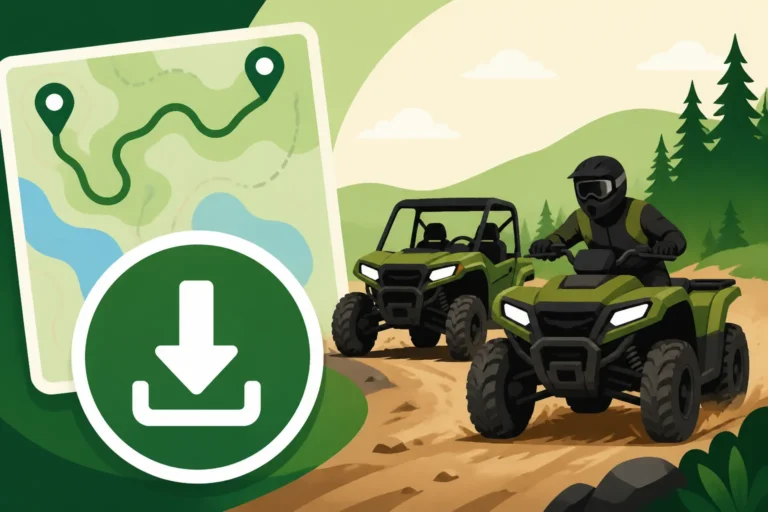
Carry the basics for a remote ride, including a charged phone, water, and a way to navigate if reception drops. onX Offroad may be useful for keeping track of a planned route, but download or save what you need before entering a dead zone. Tell someone where you expect to ride and when you plan to be back, particularly if your route heads into a less-travelled area.
Read the road before entering it
Slow down when you see signs of active work: fresh tire tracks, dust, cut branches, machinery, flagging, a gate, or a worker directing traffic. Listen as well as look. Engines, reversing alarms, saws, and trucks moving behind a stand of trees can signal activity before you can see the equipment.
Approach intersections and bends at a speed that lets you stop within the clear distance ahead. Dust can hide a loaded truck, another rider, or a piece of equipment. If visibility is poor, ease off rather than continuing at your usual trail pace. Keep to the marked corridor and do not create a shortcut around a sign, gate, or work area.
How to meet logging trucks and equipment safely
Stop where the driver can see you
When you spot a logging truck, assume the driver may not have spotted you yet. Slow down early and move to a safe, visible place where you can stop without blocking the travel lane. Avoid stopping just beyond a bend, over a hill, on a bridge, beside a steep drop, or on soft ground that could let your machine slide or tip.
If you are travelling with others, let the group know and keep everyone together in a safe spot. Do not pull around a stopped truck or squeeze between machinery and the edge of the road. The road may be narrower than it looks, and the truck may need extra room to swing wide, reverse, or change direction.
Make eye contact only if it is clearly possible, and do not rely on it as your only cue. A truck cab can have large blind areas, and a small machine may be difficult to pick out amid dust, mirrors, and equipment. Stay where the operator can see you, follow any directions from workers, and wait until the operator has clearly indicated that it is safe to proceed.
Give loaded trucks room to turn, stop, and pass
Logging trucks can be long, heavy, and slow to manoeuvre, particularly when loaded. They may use more of the road than a passenger vehicle during a turn, and their stopping distance can be much longer than yours. Give them a wide berth and never assume there is room to slip past simply because the truck is moving slowly.
If a truck approaches on a narrow section, pull off only where the ground is stable and the machine will not block the road or trail. Stay well clear of the truck’s wheels and any load. Do not park underneath or beside suspended equipment, and do not stand where a shifting load or turning vehicle could reach you. If there is no safe place to yield, stop early and wait for the operator or a worker to guide the next move.
Keep children and inexperienced riders close, but not crowded around your machine. A young rider may be tempted to edge forward to see better; tell them to stay put until the group is ready to move. If you are unsure what a worker’s signal means, stay stopped and ask from a safe distance rather than guessing.
Use extra caution around active loading and work zones
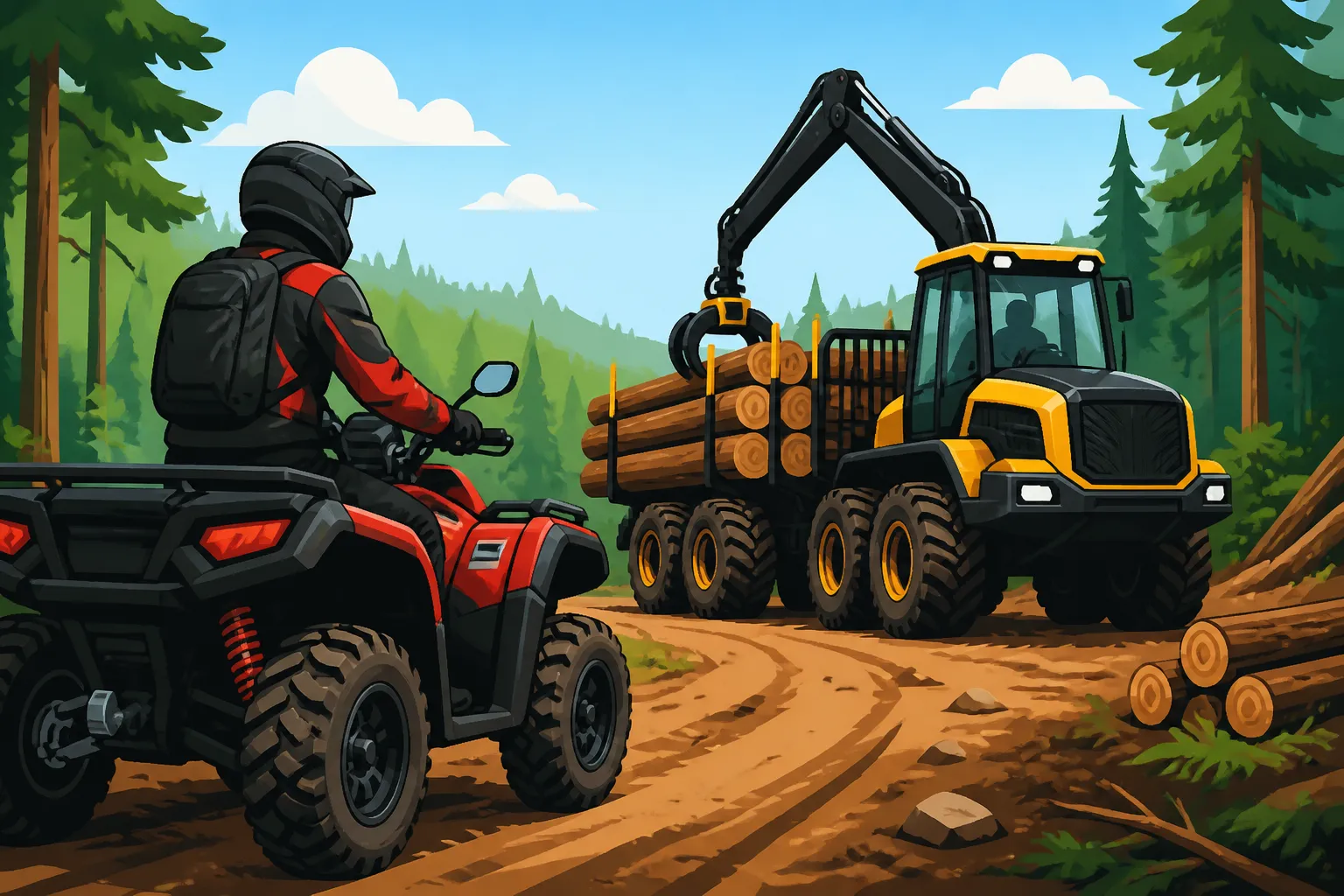
A truck is only one part of a logging operation. You may also encounter loaders, skidders, excavators, pickups, or workers on foot. Equipment can move unexpectedly, and an operator may be focused on a load rather than on trail users. Do not ride behind, alongside, or between machines that are working.
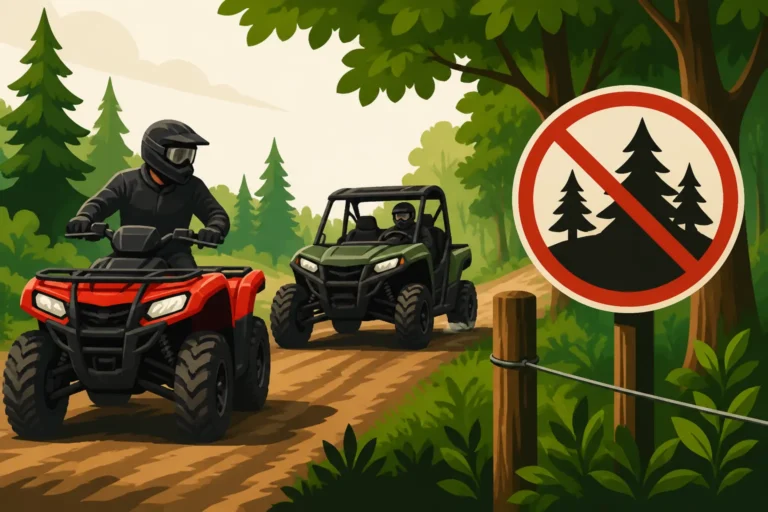
Never enter a marked work zone or go around a barrier because the route looks passable. A blocked road may be closed for reasons you cannot see, such as unstable ground, a suspended load, active cutting, or equipment moving across the corridor. Follow the posted direction or turn around where it is safe. If the official route is temporarily blocked, contact the trail club or relevant land manager for an approved alternative instead of improvising a detour.
Use onX Offroad or another navigation tool to help orient yourself, but do not let the screen distract you while approaching a work area. Stop in a safe place before checking your position. If a mapped route appears to continue through a closure, follow the closure, not the map.
What to do when a route is blocked or conditions change
Turn around carefully instead of forcing a pass
If a truck or piece of equipment blocks the route and there is no safe way through, wait for direction or turn back. Find a wide, level place where the whole group can turn around without entering the work area. Do not make a multi-point turn in the path of approaching traffic, and do not leave the marked trail to get around a barrier.
When turning around, keep track of every rider. One person can guide the group from a safe position while the machines move one at a time. Make sure the last rider knows the new plan and that no one is left waiting near active equipment. If the group is split, stop in a safe visible location and re-establish contact before continuing.
A route change may mean adjusting fuel plans, daylight expectations, or the rest of your day. That is frustrating, especially when you have driven a long way to reach a trail, but a delayed ride is better than entering a work zone without permission or enough room to manoeuvre.
Handle dust, poor visibility, and narrow roads patiently
On a dusty woods road, increase your following distance and lower your speed until you can see clearly. Do not follow a truck closely in the hope that it will lead you through. Dust may conceal a turn, a stopped vehicle, or an uneven shoulder. If the cloud becomes too thick, move to a safe location off the travel line and wait for visibility to improve.
On narrow roads, avoid riding side by side. Keep to the right where appropriate and leave room for larger vehicles, while staying on firm ground rather than sliding into a ditch or soft shoulder. When meeting traffic on a shared route, communicate calmly and give way when safe. Meeting a Logging Operation on Trail is especially relevant when planning rides through active forestry areas, and Passing Safely on a Narrow Cut offers additional context for tight trail sections.
If you need to signal another rider or a vehicle, do so clearly and early. Never wave someone forward unless you are certain the route is clear and you are in a position to judge it. A rider farther back may not see the same hazard you can see.
Common mistakes and a safer ride-day routine
Avoid these risky assumptions
The most dangerous assumption is that a logging truck will hear or see you in time. A helmet, wind, engine noise, dust, and terrain can all reduce awareness. Another common mistake is treating a woods road as though it were a recreational trail with predictable traffic. Work vehicles may enter from side roads, reverse, or cross the route while moving logs.
Do not assume that a small gap between a truck and the roadside is safe to use. The vehicle may need that space to turn, and the shoulder may be unstable. Never approach a load or machine to take a closer look, and do not stop where you force workers to manoeuvre around your group.
Finally, do not treat a GPS track as permission to continue. A route line can remain visible even when access conditions have changed. Check local trail updates, follow signs, and be prepared to turn around. For more on shared roads and work traffic, see Meeting a Logging Operation on Trail and Sharing a Miramichi Road With Logging Trucks.
Follow a simple approach when you spot work
Use this routine whenever you see or hear logging activity:
- Slow down early. Reduce speed before a bend, hill, dusty stretch, or work-area sign.
- Look and listen. Check ahead and to the sides for trucks, equipment, workers, and approaching traffic.
- Alert your group. Signal the riders behind you and prevent the group from bunching up.
- Stop in a visible, stable place. Stay out of the travel lane, blind corners, and equipment’s working area.
- Wait for direction. Follow posted instructions and clear signals from workers or operators.
- Pass only when it is clearly safe. Leave ample room and never squeeze by active machinery.
- Turn back if needed. Do not bypass a closure or make an unofficial route around the work.
Planning apps such as onX Offroad can support navigation and help you keep a planned route in view, but safe decisions still depend on what is happening in front of you. Check the trail before leaving, keep your attention on the road, and treat active logging as a reason to slow down, communicate, and give working vehicles plenty of room.
Disclaimer
This article is for general informational purposes only and does not constitute professional advice. Laws, prices and regulations vary by location and change over time. Consult a qualified professional for guidance on your specific situation.