New Brunswick Trails With Lodging Nearby
A great New Brunswick ATV trip can turn frustrating when your “trail-side” lodging is actually a long drive from the trailhead, or when the route you planned isn’t open to quads. This guide helps you pair riding areas with practical places to stay, check whether access is genuinely convenient, and plan overnight stops without assuming that a nearby trail is automatically rideable.
How to choose lodging near New Brunswick ATV trails
Start with the trail network, not the hotel listing
“Near the trails” can mean very different things in New Brunswick. A campground or motel might be close to a marked QuadNB corridor, but that does not necessarily mean you can ride directly from its driveway, park a trailer there, or use the nearest road to reach the trail. Some routes cross private land, have seasonal closures, or require a legal connection to the trail system.
Before booking, choose the area you want to ride and check an official trail map or ask a local club which routes are open and suitable for your machine. The general overview in [New Brunswick ATV Trails: The QuadNB Network] can help you understand how the organized network works. For route planning, [New Brunswick Trail Maps and the MapGear App] is also a useful topic to review.
An app such as onX Offroad can be helpful as a supplemental planning tool for looking at terrain and saving routes. Treat it as one part of your preparation, not proof that a particular road or path is an authorized ATV trail. Confirm the route against local trail information, and ask the club or lodging operator about access where a route meets a property, road, or private boundary. onX Offroad may help you keep your planned stops organized, but it cannot replace permission or local confirmation.
Decide whether you need ride-out access or a short drive
There are two very different kinds of “trail lodging.” The first is a place where you can legally ride from the property to a marked trail without loading your machine. The second is lodging within driving distance of a trailhead, where you haul your ATV or UTV to the starting point each day.
Ride-out access is convenient, especially for a multi-day trip, but it is worth confirming the exact connection. Ask whether the route is open to your type of machine, whether you need to travel along a public road, and whether the property has permission for guests to use the connecting path. A pin on a map is not enough to answer those questions.
Trailhead lodging can be a better fit if you want predictable access and do not mind trailering each day. It can also make sense for a group with mixed plans: one person might ride, another might explore a town or riverfront, and everyone can meet back at the accommodation in the evening. If you choose this setup, ask about trailer parking, secure machine storage, and space to unload without blocking other guests.
New Brunswick areas to consider for an overnight ride
Miramichi and the surrounding woods
Miramichi is a practical base for riders drawn to forest routes and longer days outside town. The area gives you access to a range of services, which can matter after a full day of riding: fuel, groceries, restaurants, repair help, and different types of overnight accommodation. For riders planning a trip from town, [New Brunswick Miramichi Riding] can help frame the area as a riding destination.
Do not assume that a lodging address in Miramichi provides direct trail access. A property may be convenient for daily trailering but still require you to drive to a trailhead. Ask the operator which access point guests actually use, how long the haul takes under normal conditions, and whether the property can accommodate a truck and trailer. If you’re looking at a camp or cottage outside town, clarify whether the access route is a maintained club trail or simply a nearby woods road.
The Miramichi region also rewards a little extra route planning. Forest roads and trail corridors can look similar on a screen, but they may have different access rules. Check closures and trail conditions before setting out, and leave room in your plan for a slower ride, a reroute, or a stop for fuel. [New Brunswick Trail Conditions Before You Go] is a useful companion when you are deciding whether a planned day is realistic.
Woodstock and the Skedaddle Ridge area
Woodstock is worth considering if your plans include riding in western New Brunswick. The town can work as a services-and-lodging base, while the surrounding region offers opportunities to connect with local riding routes. Riders exploring the area can start with [New Brunswick Riding Around Woodstock] and learn more about [Skedaddle Ridge Trails in New Brunswick].
When comparing lodging, distinguish a town stay from a property positioned for trail access. A motel in town may offer easy meals and a straightforward place to park, but you may still need to trailer to a trailhead. A rural camp might shorten the ride to a trail, but it may have fewer nearby services or limited cell coverage. Neither option is automatically better: it depends on whether you value convenience after the ride or convenience before the ride.
If you are hoping to ride from your accommodation, ask for the trail connection in plain terms. Which marked route do guests use? Is the connection approved for ATVs and side-by-sides? Is it open during your travel dates? Where can you safely unload? Specific answers are more useful than “the trails are right nearby.” A second map view in onX Offroad may help you understand the surrounding terrain, but confirm access with the property and local trail contacts before counting on that route.
Bathurst, the Restigouche, and the Acadian Peninsula
Northern New Brunswick offers several possible bases, but distances between towns and riding areas can shape your daily plans. Bathurst may suit riders seeking town services, while the Restigouche area and Acadian Peninsula can appeal to those building a trip around different landscapes and communities. Explore [New Brunswick Riding Near Bathurst], [New Brunswick Riding in the Restigouche], and [New Brunswick Acadian Peninsula Riding] as you narrow down your route.
For a multi-night trip, avoid assuming you can cover every region from one bed. A route that looks manageable on a province-wide map can become tiring once you account for trail conditions, fuel stops, daylight, and the time needed to move machines between trailheads. Consider choosing one base for several nights or splitting the trip between two lodging areas. That can reduce long trailer transfers and give you more time on the trails.
Lodging types also vary by location. In or near larger communities, you may find more conventional accommodations and restaurants. In rural areas, a campground, cabin, or sporting camp may offer a quieter setting, but check how far it is from groceries, fuel, and the specific trail access you plan to use. Ask about machine washing, outdoor electrical outlets, covered storage, and where wet riding gear can dry overnight.
Compare lodging setups before you book
What to confirm with an operator
A quick phone call can prevent a stressful arrival. Explain what you are bringing: one ATV or UTV, a group of machines, a truck and trailer, or a family with riders and non-riders. Then ask about the practical details that booking pages often leave unclear.
| What to ask | Why it matters |
|---|---|
| Is there legal ATV access from the property to a marked trail? | Nearby does not always mean connected or permitted |
| Which trailhead or route do guests use? | Helps you estimate driving and unloading time |
| Is the access open during my dates? | Seasonal conditions and closures can change plans |
| Can you accommodate my truck and trailer? | Parking can be tight, especially at small properties |
| Is there secure or covered machine storage? | Useful for weather protection and overnight peace of mind |
| Where can we clean machines and dry gear? | Muddy equipment can create problems for guests and hosts |
| Are there fuel and food options nearby? | Important when the day’s route or group schedule changes |
| Is cell service reliable at the property? | Helps with coordination and emergency planning |
If the host cannot confirm trail access, treat the accommodation as a place to stay rather than a ride-out location. That is not necessarily a deal-breaker. You just need to budget time for trailering and make sure you know where to unload.
For larger groups, ask about room configurations, shared spaces, and whether everyone can park together. A group may find that a camp or cottage works better than several separate hotel rooms, while a couple may prefer a simple room close to restaurants. Be clear about machine noise, arrival times, and any rules the property has for washing equipment or storing fuel.
Match the property to your riding style
A campground can be a good fit if you bring your own accommodation setup and want space for a trailer. Confirm whether the site can handle your vehicle combination and whether the campground allows machines to be stored or moved around the property. Do not assume that a campground beside a woods road permits ATV use on that road.
A cabin or lodge may suit a group that wants meals, a common area, or a quieter end to the day. Ask whether the operator serves riders regularly and understands the practical needs of ATV guests. Some places may have a safe spot for trailers and gear; others may have limited parking or restrictions on muddy machines. A friendly conversation before booking is much easier than negotiating these details at check-in.
Hotels and motels can be convenient when you want restaurants and supplies close by. They may be less suited to a large trailer or muddy machines, so confirm parking arrangements rather than relying on the fact that the property is near a main road. For a town-based stay, plan your daily drive to the trailhead and consider whether your group wants to repeat that trip each morning.
Plan the ride and overnight stops as one trip
Build a flexible day-by-day route
Start by deciding how many hours you want to spend riding, not just how many kilometres you hope to cover. Trail surfaces, weather, stops, and group pace can make a route take longer than it appears on a map. A family ride with frequent breaks, for example, may need a shorter day than an experienced group travelling without passengers.
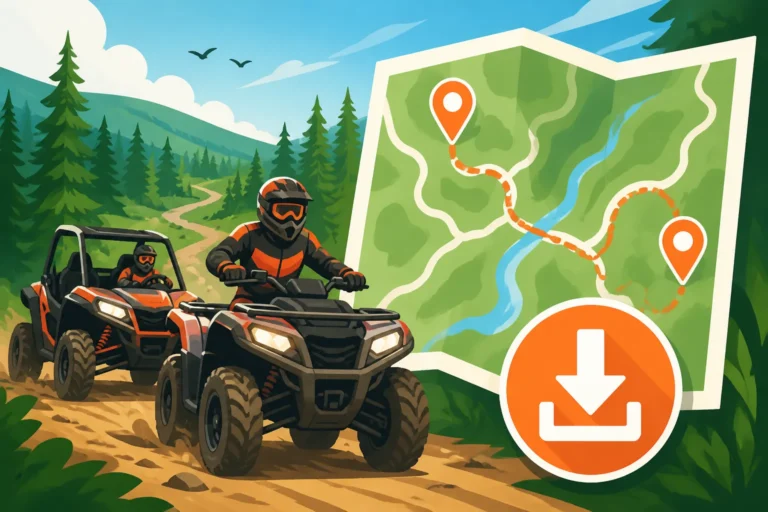
Mark your lodging, confirmed trailheads, fuel options, and potential rest stops before you leave. Use a primary trail map and keep a backup route or offline navigation option where possible. onX Offroad can be one tool for organizing saved points, but confirm the trail itself through local sources and do not follow an unverified line simply because it appears passable. For remote sections, review [New Brunswick Cell Coverage on Remote Trails] and consider how your group will communicate if phones lose service.
Leave room to change plans. A wet section, a temporary closure, or a mechanical issue can make a shorter day the sensible choice. If your lodging is far from the trailhead, factor in the time to load, unload, and return the machines. That time is easy to underestimate when you are planning from home.
Make arrival and departure easier
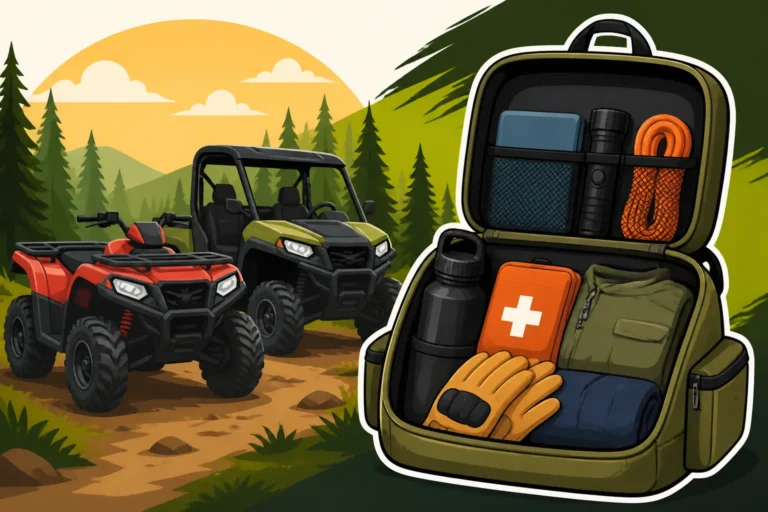
Pack the items that make a trail-based stay more comfortable: tie-downs, basic tools, rain layers, dry clothes, a first-aid kit, and a way to keep muddy gear separate from clean luggage. If the accommodation has no laundry or drying area, bring extra gloves and socks. A small tarp can help keep equipment and gear organized during loading, but ask before spreading it across a property’s parking area.
Before departing, check your machine, fuel, registration, insurance documents, and any required trail permit. The relevant guides include [New Brunswick Documents You Must Carry] and [New Brunswick Registration Before Your First Ride]. Confirm that your plate and permit sticker are in place and that your group understands where the marked trail begins. For a longer trip, send someone at home your general route and lodging details.
The best lodging choice is the one that fits the real shape of your ride: legal access, sensible trailer parking, enough room for your group, and a route you have verified locally. Take time to confirm those details before booking, and a nearby bed can become a genuinely convenient base rather than just an address that happens to sit close to a trail on the map.
Disclaimer
This article is for general informational purposes only and does not constitute professional advice. Laws, prices and regulations vary by location and change over time. Consult a qualified professional for guidance on your specific situation.