Bug Spray in Early Summer Up North
Early-summer ATV rides in northern New Brunswick can turn uncomfortable fast when mosquitoes, blackflies, and ticks find their way through a helmet gap or sleeve. The best defence is a routine, not one heavy application of spray: dress for the woods, use a repellent according to its label, and build in checks during and after the ride. Here’s how to make that practical on the trail.
Why early-summer rides need a bug plan
Expect changing conditions, not one predictable bug season
On a ride near Bathurst, Edmundston, or through the Restigouche, insect activity can shift noticeably between a shaded, damp trail section and an open stretch with a breeze. A still morning in the woods may feel very different from a sunny stop beside a gravel road. Recent rain, shade, standing water, wind, and the time of day can all affect how bothersome insects are.
Mosquitoes and blackflies are often the pests riders notice first because they can make a fuel or map break miserable. Ticks are a different concern: they may be hard to spot, and the discomfort of a bite is not always immediate. That’s why a useful plan covers both exposed skin and clothing, and includes a tick check after the ride.
Don’t assume that an area is bug-free just because the trailhead was comfortable. Insects may become more noticeable once you leave an exposed road and enter a damp, sheltered corridor. If the group stops, choose a spot with some airflow where it’s safe to pull over, rather than lingering in thick brush at the edge of the trail.
Treat gear as part of your protection
Repellent helps, but it works best alongside clothing that limits exposed skin. Lightweight long sleeves, long pants, socks that cover the ankles, and gloves can reduce the amount of skin insects can reach. On an ATV or UTV, clothing also helps protect against dust, brush, and sun, so it’s useful even when bugs are quiet.
Pay attention to the small gaps. A shirt that rides up when you lean forward, loose pant cuffs, or an open collar can leave easy access to skin. Tuck clothing in where practical, and check that cuffs sit comfortably under gloves or over boots without interfering with safe control of the machine. Avoid bulky layers that catch on controls or restrict movement.
A helmet and eye protection are essential riding gear, but they don’t replace insect protection for your neck, wrists, and ankles. A light neck covering can help on buggy stretches, provided it doesn’t interfere with your helmet fit, vision, or breathing. For broader trip preparation, see Packing for a Full Day in the Woods.
Choosing and using bug spray sensibly
Match the product to the job
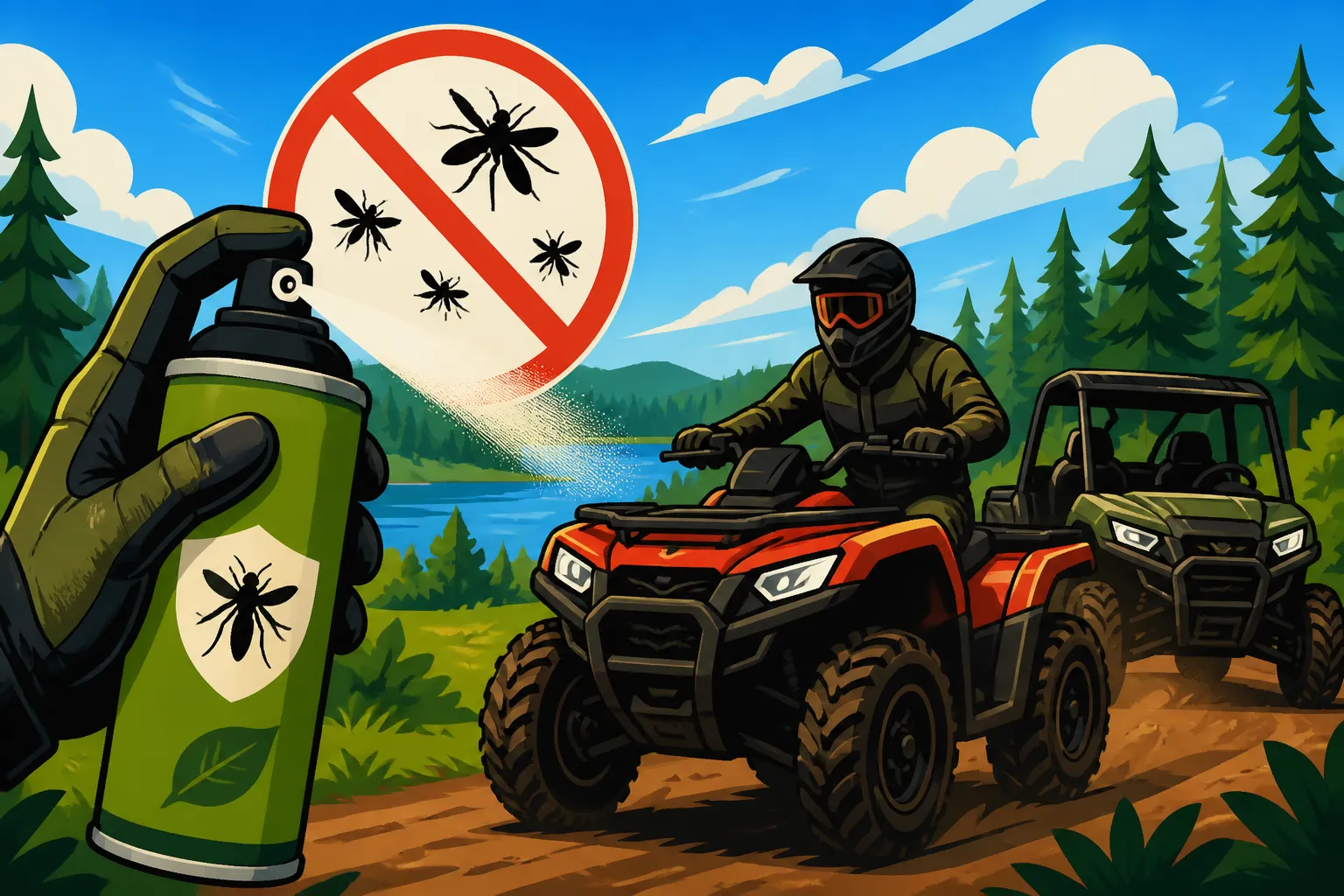
Repellent products are not all used in the same way. Some are designed for application to exposed skin, while others are intended for clothing or gear. Read the product label before you pack it, and follow its directions for where, how, and how often to apply it. If you’re unsure whether a product is appropriate for a child or for a particular use, follow the label and ask a pharmacist or health professional.
| Protection option | What it can help with | Practical reminder |
|---|---|---|
| Skin repellent | Helps reduce bites on exposed skin | Use only as directed on the label and avoid eyes, mouth, and irritated skin |
| Clothing coverage | Keeps more skin covered from insects | Choose comfortable layers that do not interfere with riding |
| Clothing treatment product | May provide additional protection when used as directed | Apply only to the items and in the manner listed on the label |
| Head net | Adds a barrier during buggy stops | Check that it does not block vision or interfere with your helmet |
| Tick check | Helps find ticks after exposure | Check skin and clothing carefully after the ride |
Apply skin products carefully and avoid spraying near your face. Put product on your hands first when the label directs that approach, then apply it around the face without getting it in your eyes or mouth. Keep repellent away from food, drinking water, and machine controls. If you’re riding with children, an adult should manage application and follow the product’s age-related directions.
A common mistake is applying more product than the label calls for, especially after a sweaty ride or a dusty section. Instead, follow the stated reapplication instructions. If you’ve been sweating heavily, check the label to understand whether and when you should reapply, and avoid mixing products unless their directions say that’s appropriate.
Pack it so it is usable on the trail
A repellent left at home or buried under a tool kit is not much help. Store it where you can reach it safely when stopped, and keep the container closed and protected from leaks. A small pouch or a dedicated pocket in a riding pack can keep the product separate from snacks, papers, and electronics.
Before setting out, check that the container is usable and that the label is readable. If you’re riding with a group, don’t assume someone else has brought enough for everyone. A quick gear check at the trailhead can prevent the familiar mid-ride scramble when bugs are biting and nobody can remember whose bag holds the spray.
Build stops around safe pull-off areas. Don’t reach for a container while operating the machine, and don’t apply repellent while moving. If you’re navigating unfamiliar corridors, planning your route beforehand can make it easier to identify sensible places to pause. Riders who use onX Offroad for route planning can check their mapped route before leaving, then choose safe stopping points rather than stopping abruptly in a narrow trail section. Keep a separate backup plan for navigation in case phone reception or battery life becomes an issue.
Protecting yourself from ticks on a woods ride
Make prevention part of getting dressed
Ticks are easy to overlook when you’re focused on riding, unloading, or getting a group moving. Before leaving, choose clothing that makes it easier to notice them, and check that sleeves, pant legs, socks, and boots fit together without unnecessary gaps. If using a clothing treatment product, confirm that it is specifically intended for that use and follow its label carefully. Never assume a product meant for gear is also meant for skin.
Stay on the marked trail where permitted instead of pushing through brush or taking shortcuts around wet or rough ground. This is good trail etiquette as well as a practical way to limit contact with vegetation. If a route crosses wooded edges or tall grass, pay attention to clothing and exposed skin when you stop, and avoid sitting directly in brush.
Do a quick visual check during a longer ride, particularly if someone has been walking around a trailhead, helping with a repair, or stepping off the machine. A partner can check areas that are difficult to see alone. If you’re using onX Offroad to keep track of a ride, you can also note where the group made longer breaks or walked off the corridor, making those moments easier to remember during the after-ride check.
Check thoroughly after the ride
When you get home or back to camp, check your clothing and body rather than relying on the assumption that you would have felt a tick. Look over seams and folds in clothing, then check your skin carefully, including less visible areas. A shower and a change of clothes can make the check easier, but they are not a substitute for looking over your body and gear.
If you find a tick attached, follow established public-health guidance for safe removal and watch for any concerning symptoms afterward. Contact a healthcare professional if you have questions about removal, symptoms, or whether further care is needed. Avoid folk remedies or improvised methods that could make removal harder or irritate the skin.
Make the check routine for everyone in the group, including children who may have spent time playing near the trailhead or camp. A quick, calm reminder works better than making it feel like a punishment: “Check your clothes and skin before we settle in.” For more remote trips, consider how you’ll respond to an injury or health concern before heading out; First Aid on a Remote Woods Loop can help you think through that broader preparation.
Building a comfortable early-summer ride routine
Plan the route and the stops
A good bug strategy starts before the machine leaves the driveway. Check New Brunswick Trail Conditions Before You Go and review the route, expected ride length, fuel plan, and places where the group can stop safely. Trail conditions matter too: a wet, muddy section can tempt riders to leave the corridor, but riding around it can damage the trail and put the group into brush.
For northern routes, it’s worth thinking through where the group will take breaks and whether those spots are exposed or sheltered. A breezy open area may be more comfortable than a still clearing surrounded by vegetation. If you use onX Offroad to review your route, download or save the information you need ahead of time where that feature is available, and don’t rely on cellular reception in remote areas. New Brunswick Cellular Reception Maps is useful background when planning a ride where phone service may be limited.
Match the day’s plan to the least experienced or most vulnerable rider in the group. A child who needs frequent breaks, someone sensitive to bites, or a rider who is uncomfortable in heat may need a different pace and more frequent stops. Carry enough water, clothing, and repellent for the whole outing, and be willing to shorten the route if conditions become unpleasant.
Adjust your approach as the season changes
Early summer is not identical across New Brunswick, and conditions can vary from one ride to another. Keep an eye on how the group feels instead of following a rigid schedule. If a stop becomes miserable, move to a safer, more open location rather than rushing everyone back onto the machines without checking gear and comfort.
When the ride shifts from spring conditions into warmer weather, revisit what you pack. New Brunswick Riding in Spring and New Brunswick Riding in Summer cover seasonal riding considerations, while New Brunswick Riding in the Restigouche and New Brunswick Riding Near Bathurst offer regional context for planning trips in the north. Whatever the destination, check local trail information before departure and respect closures and marked routes.
A few small habits make the biggest difference: cover skin, use products only as directed, stop safely before applying them, and check for ticks afterward. Those steps won’t guarantee a bug-free day, but they can make a long woods ride more comfortable and help keep your attention where it belongs: on the trail, your riding group, and the route ahead.
Disclaimer
This article is for general informational purposes only and does not constitute professional advice. Laws, prices and regulations vary by location and change over time. Consult a qualified professional for guidance on your specific situation.