Rain Gear on the Acadian Coast
Rain on the Acadian Coast can turn a comfortable ATV or UTV ride into a cold, muddy slog if your clothing wets through or traps sweat. This guide explains how to choose rain gear for New Brunswick coastal trails, layer it for changing conditions, protect essentials, and decide what to pack for a short outing or a full day in the woods.
Why rain gear matters on the Acadian Coast
Coastal weather can change your comfort quickly
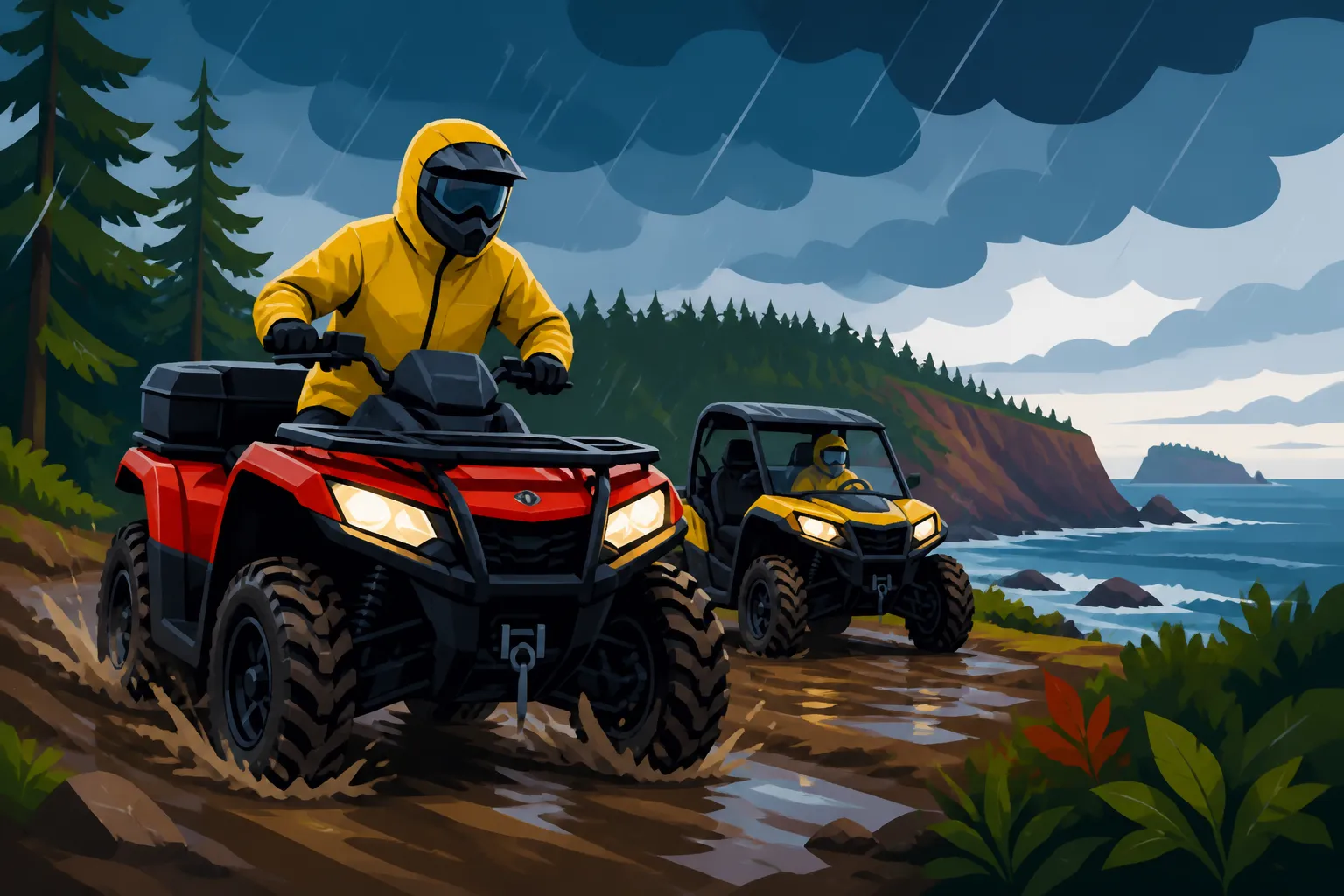
A ride near Caraquet, Shippagan, Tracadie, or the Acadian Peninsula can include exposed stretches, wooded corridors, and damp or muddy sections. Even when the rain looks light, wind and spray from wet trails can make you feel colder than you expected. On an ATV, your hands, legs, and boots may take a steady beating from water and mud. In a UTV, a cab can offer some shelter, but splash, open windows, and wet gear still create problems.
The frustrating part is that a rain jacket can feel fine when you leave and become uncomfortable after an hour. If it leaks at the cuffs or collar, water can soak the layers underneath. If it blocks airflow completely, sweat can leave you damp from the inside. Either way, once your base layer is wet, staying warm becomes harder—especially if you stop, slow down, or ride into a breezy open area.
Plan for the whole outing rather than the forecast at departure. A route that starts close to town may take you farther from shelter than expected, and a brief shower can become a long stretch of wet riding. Check New Brunswick Trail Conditions Before You Go and review New Brunswick Trail Closures After Rain before setting out. Conditions can affect both your comfort and whether a route is appropriate to ride.
Rain changes the riding surface too
Rain gear protects you, but it does not make every trail suitable in wet weather. Soft ground can rut more easily, and skirting around a puddle or muddy section can widen the disturbed area. Stay on the marked corridor and follow any closure or reroute information. If a section looks damaged or unsafe, turning back is often the better choice than trying to force a passage.
Local trail knowledge matters. A route through wooded terrain may feel sheltered, while an exposed stretch can feel much colder once your clothing is wet. Check the route and conditions before leaving, and avoid assuming that a familiar trail will ride the same way after a storm. For more on wet-ground etiquette, see Why Riding Around a Wet Section Makes It Worse.
Choosing rain gear for ATV and UTV riding
Prioritize coverage, fit, and movement
Look for a waterproof outer layer that covers your torso and legs while allowing you to move comfortably. A jacket should stay over your waistband when you lean forward or reach for the handlebars. Sleeves should cover your wrists when your arms are extended, and the hood should not obstruct your helmet or restrict your view. Many riders find a hood awkward under a helmet, so a high collar or a jacket designed to fit around riding gear may be more practical.
Rain pants need enough room to fit over your riding pants without pulling tight at the knees or seat. Check that you can sit, stand on the footrests, and shift your weight without the fabric binding. Reinforced areas can be useful where clothing rubs against the seat, bodywork, or other gear. For UTV passengers, check that the pants are comfortable while seated for longer stretches, not just while standing in a shop.
| Gear | What to look for | Why it helps |
|---|---|---|
| Rain jacket | Secure cuffs, covered front closure, comfortable collar | Reduces water entry around sleeves and chest |
| Rain pants | Full coverage, room to move, durable seat and knee areas | Helps keep legs dry from rain and trail splash |
| Waterproof gloves | A fit that preserves grip and control feel | Keeps hands warmer and more comfortable |
| Waterproof boots or overshoes | Secure fit around the ankle and lower leg | Helps limit water entering from above |
| Dry base layer | Wicking fabric and a packed spare | Gives you a dry option if you get soaked |
| Dry bags | Reliable closures and suitable size | Protects food, electronics, and spare clothing |
A label that says “water resistant” does not necessarily mean the garment is intended for prolonged rain or heavy splash. Read the product details, inspect seams and closures, and consider how the clothing will be used while riding—not just walking. For a long outing, test the gear before relying on it in remote areas.
Match the gear to the machine
On an ATV, your legs and hands are exposed to spray, and clothing can brush against mud-covered parts of the machine. Rain pants that stay in place and gloves that let you maintain a secure grip are especially important. Avoid anything so bulky that it catches on controls or makes it difficult to use the brake, throttle, or switches.
A UTV may offer more protection from direct rain, but don’t assume that a roof or windshield will keep everyone dry. Wind can push water through open sides, and passengers may get spray from tires or wet vegetation. Pack rain layers for each occupant, including children, rather than relying on the driver’s cab area to keep the whole group comfortable. If you are riding with others, New Brunswick Group Ride Planning can help you think through pace, stops, and what everyone should bring.
onX Offroad can be a useful supplemental tool for checking a route and saving navigation information for offline use when that feature and the route data are available. Before relying on it, compare the route with official trail information and any local closure notices. A map app is not a substitute for current access guidance or on-the-ground signs.
Layering for a wet ride
Start with a dry foundation
Wear a base layer that moves moisture away from your skin instead of holding it. Cotton can stay damp and feel cold after you sweat or get wet, so many riders prefer synthetic or wool-blend layers for outdoor activity. Choose a layer that is comfortable beneath your riding clothes and does not bunch at the waist, under the arms, or behind the knees.
Add warmth according to the conditions and how active you expect to be. A thick layer may feel great while you are stopped but become too warm once you are riding. Several adjustable layers are easier to manage than one heavy garment. When you stop for a break, put on an extra layer before you cool down, rather than waiting until you are already shivering.
Keep a complete dry change of essentials in a sealed bag: socks, base layer, and, if space allows, a warm mid-layer. If someone gets soaked, even changing only socks and the layer next to the skin can make the rest of the ride much more bearable. This matters especially on a family outing, when a cold or uncomfortable passenger may need a shorter route back.
Seal the openings where water gets in
Water often finds its way through gaps rather than through the middle of a jacket. Close cuffs over or under gloves according to the design of the gear, and make sure your jacket overlaps your pants when you lean forward. Check the fit around your collar and waist. A loose opening can funnel rain inside during movement.
Boots deserve particular attention. Rain pants should overlap the top of the boot in a way that sheds water outward, not channel it down into the boot. Avoid tucking pant legs inside footwear if that creates a path for rain to run straight down your socks. If you use overshoes, test that they stay secure while you move and do not interfere with the foot controls.
Gloves are a common weak point. Waterproof gloves can help, but very thick gloves may reduce your feel on the controls. Try them while seated on the machine, with your hands in riding position. If you use a separate shell over a thinner glove, check that the combination still allows safe control. Bring a spare pair in a dry bag for long rides or unpredictable conditions.
Packing and planning for a rainy ride
Protect the things that need to stay dry
Use sealed dry bags or waterproof containers for your phone, keys, first-aid supplies, snacks, and spare clothing. A regular backpack may resist a light shower but still soak through during prolonged rain or repeated splash. Keep the most important items inside an inner waterproof bag, even if your pack claims to be water resistant.
Carry a small towel or cloth for wiping your hands, goggles, or a screen. A fogged or muddy visor can become a safety issue, so bring cleaning supplies suited to your eyewear and avoid wiping grit across the lens. If you use a phone for navigation, keep it protected while allowing safe access. onX Offroad may be helpful for saved routes where its mapping coverage supports your trip, but keep a backup plan in case your battery runs low or your device gets wet.
For a longer ride, think beyond clothing. Bring water, food, basic repair items, and a first-aid kit in packaging that can tolerate damp conditions. Consider how your group would handle a delay, a route closure, or a machine problem. Packing for a Full Day in the Woods offers a useful checklist for building a more complete kit.
Check your route and adjust the day
Before you leave, confirm that the trail you intend to ride is open and suitable. Rain can affect trail surfaces, bridges, approaches, and access points differently from one area to another. Use official trail information and local signs as your guide. If an app such as onX Offroad helps you review your planned route, use it as one part of the check rather than your only source.
Choose a route that fits the least experienced or least comfortable rider in your group. A short loop with a straightforward return may be a better choice than a long outing with few easy exit points. Tell someone where you plan to go, carry a charged phone, and avoid pushing on just because the group has already driven to the trailhead.
When conditions deteriorate, reassess. If visibility drops, clothing is leaking, someone is getting cold, or the surface looks fragile, shorten the ride or turn back. That is not a failed outing; it is a sensible decision that protects both the people riding and the trail. For route planning and local riding context, explore New Brunswick Acadian Peninsula Riding and New Brunswick Trail Etiquette Locals Expect.
Make a quick pre-ride gear check
A simple check before loading the machine can prevent the familiar “I thought I packed that” moment at the trailhead:
- Confirm each rider has a waterproof outer layer and suitable footwear.
- Check that gloves fit securely and allow a comfortable grip.
- Put spare clothing and essential items in sealed bags.
- Make sure helmets, goggles, and other riding equipment are ready.
- Review the route, access information, and current trail notices.
- Agree on a turnaround point or a plan for shortening the ride.
If the outing includes a passenger or a child, check their clothing personally rather than assuming they packed what they need. A rain jacket that fits an adult may leave a child’s wrists or lower back exposed when seated. A quick fit check at home is easier than trying to solve the problem in a wet parking area.
Rain gear cannot promise a dry ride, but thoughtful layers, secure coverage, and realistic route planning make wet-weather riding more comfortable. Choose equipment that works with your machine, protect the essentials, and be willing to change plans when the trail or weather calls for it.
Disclaimer
This article is for general informational purposes only and does not constitute professional advice. Laws, prices and regulations vary by location and change over time. Consult a qualified professional for guidance on your specific situation.