New Brunswick Rules for Riding Near a School
Riding your ATV or UTV through New Brunswick offers an incredible sense of freedom and access to our beautiful province's backcountry. However, it's crucial for every rider to understand that this freedom comes with significant responsibilities, especially when you find yourself near populated areas, and most critically, near schools. Failing to adhere to these specific rules can not only lead to hefty fines but also endanger children, disrupt the learning environment, and damage the reputation of the entire off-road community. This guide will walk you through the precise regulations you need to know to ensure your ride is both legal and considerate when you're anywhere near a school zone.
Understanding the Core Restriction: The 7.5 Metre Rule and What It Means for Schools
One of the most fundamental rules governing off-road vehicle (ORV) operation in New Brunswick is the "7.5 Metre Rule." This rule is designed to keep ORVs safely separated from public roads and, by extension, from the sensitive areas that often line them, like schools. It’s not just a suggestion; it's a critical legal requirement that every rider must internalize.
What Exactly is the 7.5 Metre Rule?
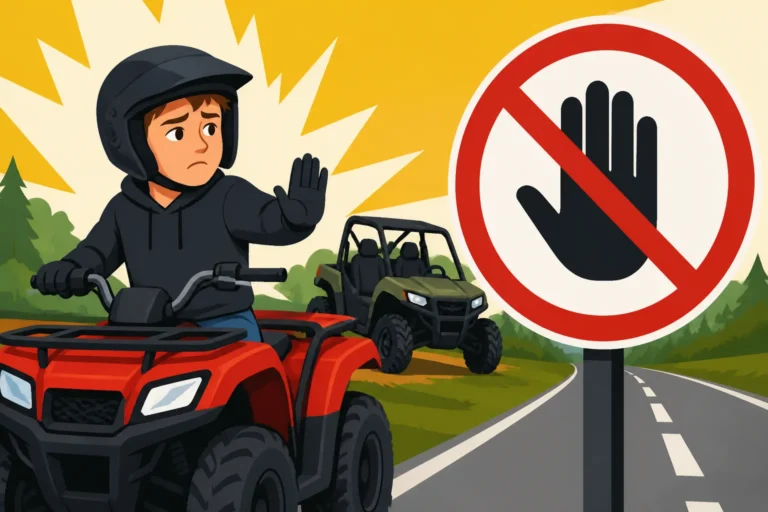
At its heart, the 7.5 Metre Rule states that an off-road vehicle must not be operated within 7.5 metres (approximately 25 feet) of the travelled portion of a highway. Now, let's break down what "travelled portion of a highway" actually means, because it's often misunderstood. It's not just the paved or graveled part where cars drive; it includes the shoulder, the ditch, and even the road allowance that extends beyond the ditch line in many cases. Essentially, if a vehicle could reasonably travel there, it's part of the "travelled portion" for the purpose of this rule. This regulation is put in place for several reasons: to reduce the risk of collisions between fast-moving highway traffic and ORVs, to minimize noise disturbance to roadside properties, and to prevent damage to road infrastructure.
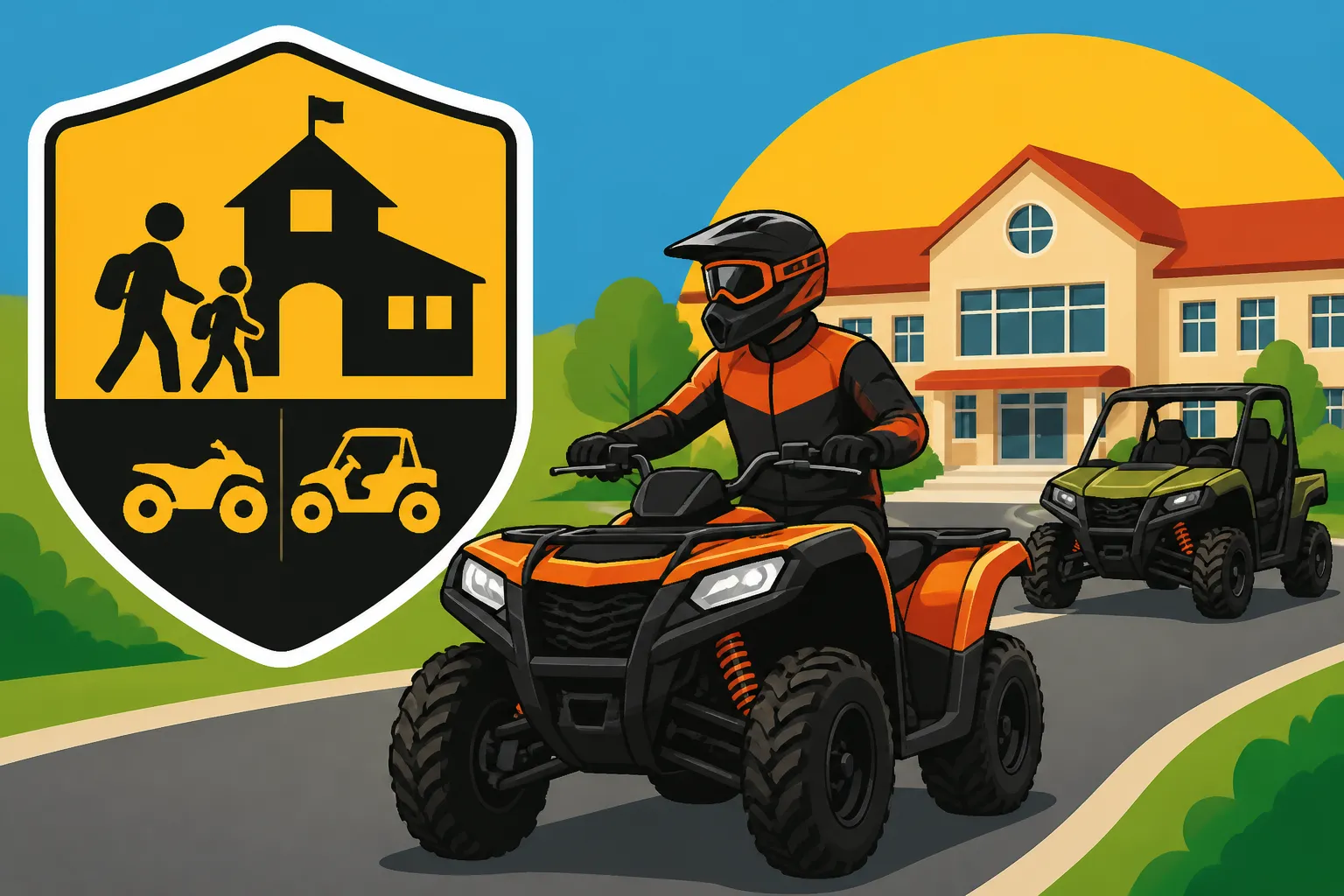
When you think about this rule in the context of schools, its importance becomes even more pronounced. Schools are almost universally located adjacent to public roads, meaning this 7.5-metre buffer zone is almost always in effect around them. You cannot simply ride your quad or side-by-side right up to the school property line if that property abuts a highway or public road. This means keeping a significant distance, and often, it means finding an entirely different route if your intended path brings you too close. Riders often overlook this simple distance, but it's one of the easiest ways to find yourself in trouble with law enforcement, especially in areas where children are present. You can find more details about this crucial distance in our article on [7.5 Metres From the Travelled Portion].
Why Schools Are Especially Sensitive Areas
Schools are unique environments that demand heightened caution from all road users, and especially from ORV operators. The primary concern, of course, is the safety of children. Kids are often unpredictable; they might dart out from behind parked buses, cross the street unexpectedly, or be less aware of their surroundings than adults. An ATV or UTV, even at low speeds, can be a significant hazard if a child suddenly enters its path. The sight and sound of an ORV can also be a distraction, drawing children's attention away from traffic safety rules they might be learning or practicing.
Beyond physical safety, there's the issue of noise and disruption. Schools are places of learning, requiring a relatively quiet environment. The distinct rumble of an ATV or the whine of a UTV engine, even a modified one with an aftermarket exhaust from a brand like SuperATV that's designed for performance, can easily carry across playgrounds and into classrooms, disrupting lessons, exams, and outdoor activities. Excessive dust, particularly on dry days, can also be a nuisance for students and staff, impacting air quality and visibility. Furthermore, the presence of ORVs in or near school zones during pick-up and drop-off times can add to traffic congestion, create confusion for parents and bus drivers, and generally contribute to a chaotic and unsafe atmosphere. Law enforcement and school officials are highly vigilant in these areas, and any ORV activity that violates the 7.5-metre rule or causes a disturbance will almost certainly be met with swift action. Understanding [What New Brunswick's Off-Road Vehicle Act Covers] can help you avoid these pitfalls.
Navigating Public Roads and School Zones Safely and Legally
While the general rule is to keep ORVs off public roads, there are specific circumstances where they might legally operate on certain sections. However, these exceptions are very carefully defined and almost never apply to areas immediately adjacent to schools. Understanding these nuances is key to responsible riding and avoiding fines.
Designated Road Sections and Ministerial Designations
In New Brunswick, certain sections of public roads can be officially designated for ORV use. This designation usually comes through a local bylaw passed by a municipal council or a ministerial designation from the provincial government. These are not blanket permissions; they are typically very specific stretches of road, often connecting trail systems or providing access to services like gas stations in rural areas. However, it's extremely rare—and for good reason—for such designations to be made for roads that directly front schools or pass through dense residential areas with high pedestrian traffic, especially children. The risk factors are simply too high.
If you are riding on a designated road section, you must still adhere to all the rules of the road that apply to motor vehicles, including speed limits, stop signs, and yielding requirements. Furthermore, even on a designated road, the spirit of the 7.5 Metre Rule, which is safety and minimizing disturbance, should always be top of mind when you're anywhere near a school. You can learn more about how these local decisions are made by reading [New Brunswick Municipal Bylaws That Open Roads]. It's crucial to always check local bylaws and signage before assuming a road is open to ORVs. Never assume that just because a road seems quiet, it's fair game for your quad or side-by-side. If your route involves crossing a road near a school, remember to follow specific protocols outlined in [New Brunswick Rules for Crossing a Road] to ensure maximum safety and compliance.
The Role of a Highway Usage Permit
Another mechanism for legal ORV road use is the Highway Usage Permit. These permits are typically issued for very specific, limited purposes, such as allowing an ORV to travel a short distance on a highway to connect to a trail, access a private property, or reach a fuel station. They are not intended as a way to circumvent the general prohibition on riding ORVs on public roads, and certainly not for regular travel through sensitive areas like school zones. Applying for a Highway Usage Permit involves demonstrating a legitimate need for the specific highway segment and adhering to strict conditions.
It is highly improbable that a Highway Usage Permit would be granted for any route that regularly passes through or near a school zone. The potential for conflict with school traffic, noise disturbance, and safety risks to children makes such an application very difficult to justify and even harder to approve. The intent of these permits is to provide practical solutions for connecting otherwise inaccessible trail segments, not to enable ORV use in high-risk areas. If you're looking for ways to navigate challenging terrain away from roads and schools, investing in robust protection and utility components from a brand like SuperATV, such as heavy-duty skid plates or winches, can help you stick to dedicated trails. Always remember that permits are for necessity, not for convenience in sensitive areas. For more details on this, see [New Brunswick Highway Usage Permits].
Consequences of Non-Compliance and Responsible Riding
Ignoring the rules, especially those pertaining to sensitive areas like schools, carries significant penalties and can have lasting negative impacts on the entire ORV community. Responsible riding isn't just about following the law; it's about being a good ambassador for the sport.
Penalties for Riding Too Close to a Highway or School
Violating the 7.5 Metre Rule is not a minor infraction. Officers regularly patrol areas around schools, and they are particularly vigilant during school hours and during student pick-up and drop-off times. If you are caught operating your ORV within the prohibited distance from a public highway near a school, you can expect a substantial fine. For instance, the general fine for riding within 7.5 metres of the travelled portion of a highway is [New Brunswick's $292.50 Highway Fine]. This can be a significant hit to your wallet, and it's a completely avoidable expense if you plan your routes carefully.
Beyond the initial fine, there can be additional consequences. If you are also found to be operating an unregistered machine, without valid insurance, or without the proper safety equipment (like an approved helmet), those infractions will incur their own separate fines, quickly escalating the total cost. You might also be subject to having your machine impounded, and repeated offenses could lead to more severe penalties. It’s not just about the money; it’s about having a clean record and ensuring the safety of everyone in the community. Our guide on [New Brunswick Fines for Riding Near a Highway] provides a more comprehensive look at these penalties.
Community Impact and Responsible Riding Ethics
The impact of irresponsible ORV use, especially near schools, extends far beyond individual fines. When residents, parents, and school officials observe ATVs and UTVs operating unsafely or disruptively near schools, it naturally fosters negative perceptions of all ORV riders. This can lead to increased complaints to local authorities, calls for stricter bylaws, and even the closure of access to trails that were once open. Every time an ORV rider acts irresponsibly, it makes it harder for the vast majority of law-abiding riders to enjoy their sport.
Being a good ambassador means actively planning your rides to avoid sensitive areas like schools, hospitals, and residential neighbourhoods. It means riding quietly, especially when you know you're near homes or other public spaces. It also means showing respect for private property and following all posted signs. Consider using resources like [New Brunswick Trail Maps and the MapGear App] to meticulously plan your routes, ensuring they steer clear of school zones and other areas where your presence might cause concern. By demonstrating a commitment to safety and respect, we can help ensure that ORV riding remains a welcome and enjoyable pastime in New Brunswick for everyone.
To summarize the key points when considering riding near schools:
| Area of Concern | New Brunswick Rule/Guidance | Why It Matters Near Schools |
|---|---|---|
| Proximity to Roads | Adhere to the 7.5 Metre Rule from the travelled portion of a highway. | Schools are almost always on public roads, requiring ORVs to maintain a significant buffer for safety and compliance. |
| Noise & Disturbance | Avoid excessive engine noise and loud operation. | Disrupts the learning environment, affects concentration, and annoys nearby residents and staff. |
| Child Safety | Prioritize safety above all; children can be unpredictable. | High pedestrian traffic during school hours, especially children, significantly increases accident risk and potential for injury. |
| Designated Roads | Very few, if any, designated ORV roads will be near schools. | Municipal bylaws and ministerial designations rarely approve ORV access on roads directly adjacent to schools due to inherent risks. |
| Public Perception | Be a responsible rider and a good ambassador for the sport. | Irresponsible riding near schools tarnishes the image of all ORV enthusiasts and can lead to stricter regulations and trail closures. |
This article is for general informational purposes only and does not constitute professional advice. Laws, prices and regulations vary by location and change over time. Consult a qualified professional for guidance on your specific situation.