New Brunswick Closed Courses for Ages 6 to 13
It’s a natural desire for parents in New Brunswick to want to share the thrill of off-road riding with their children, but the thought of letting little ones loose on an ATV can be daunting and confusing when you're trying to navigate the rules. This comprehensive guide is here to demystify exactly what a "closed course" means for young riders aged 6 to 13, helping you understand the regulations, safety considerations, and best practices for introducing your kids to the world of ATVing in a safe and legal way.
Understanding New Brunswick's Approach to Young Riders and ATVs
For many families, an ATV isn't just a machine; it's a gateway to outdoor adventure, family bonding, and exploring the beautiful New Brunswick landscape. However, the excitement of riding must always be balanced with a strong commitment to safety, especially when it comes to children. New Brunswick has specific regulations in place to protect young riders, recognizing that they need a controlled environment to learn and develop skills before venturing onto public trails.
Why Dedicated Closed Courses Are Crucial for Kids
Think about how a child learns to ride a bicycle. You wouldn't just put them on a two-wheeler and send them into traffic on Route 1. Instead, you'd start them in a safe, flat, controlled area – a driveway, a park, a quiet cul-de-sac. The same philosophy applies to ATVs. A dedicated closed course provides a protective bubble where young riders can grasp the fundamentals without the added pressures and unpredictable variables of shared trails or open roads. This isn't just about fun; it's about building a solid foundation in throttle control, steering, braking, and body positioning. Without this initial, low-stress learning environment, children are far more susceptible to accidents and developing bad habits that could put them at risk later on. It’s truly an investment in their long-term safety and enjoyment of the sport.
Beyond the practical skills, these courses also foster confidence. Imagine a young rider, perhaps eight years old, successfully navigating a gentle turn or smoothly applying the brakes after several attempts. That sense of accomplishment, built in a secure setting, is invaluable. It encourages them to continue learning and pushes them to improve, all while under the watchful eye of an experienced adult. It's where the joy of riding truly begins to blossom, free from the intimidation of more complex terrain or faster, more experienced riders.
Legally speaking, New Brunswick mandates that children in certain age groups can only ride in these specific controlled environments. This isn't an arbitrary rule; it's designed to protect minors from situations they're not yet equipped to handle, both physically and mentally. Ignoring this requirement isn't just risky for your child; it can also lead to significant penalties for the supervising adult. The regulations are there to draw a clear line in the sand, ensuring that the first experiences with an ATV are positive, educational, and, most importantly, safe.
The Legal Framework for Youth Riding in New Brunswick
New Brunswick's Off-Road Vehicle Act is quite clear when it comes to young riders. It delineates specific age groups and the conditions under which they are permitted to operate ATVs. For instance, children under the age of 14 are generally restricted from riding on public trails or designated ORV roads. This is a critical point that often catches parents off guard. While it might seem unfair to keep enthusiastic young riders off the main trail network, these rules are a cornerstone of rider safety and public liability. They acknowledge that younger children lack the judgment, physical strength, and reaction times necessary to safely navigate varied terrain, encounter other vehicles, or respond to unexpected obstacles.
The Act specifies that children aged 6 to 13 may operate an off-road vehicle only on a "closed course." This isn't just a suggestion; it's a legal requirement. This means a supervised area that is closed to public use and traffic, providing a contained space for learning. The strictness of these rules aims to prevent young riders from accidentally straying into hazardous areas or coming into conflict with other trail users who might not anticipate a child operating a machine. It's a protective measure that places the onus on parents and guardians to ensure their children's riding activities comply with the law. For those 14 and 15 years old, there are additional requirements, such as needing a Class 9 licence and adult escort, but for the 6 to 13 age bracket, it's all about the closed course.
Distinguishing between private land and public trails is also paramount. While you might own a large parcel of land, simply riding on your own property doesn't automatically qualify it as a "closed course" in the eyes of the law, especially if it's easily accessible to others or lacks the proper control elements. The spirit of the law requires a controlled environment, meaning measures are taken to ensure the area is exclusively for the young rider's supervised practice. For a deeper dive into the specifics, you can always refer to resources on [New Brunswick ATV Age Requirements] which breaks down the different age groups and their associated rules.
What Exactly Qualifies as a "Closed Course"?
The term "closed course" might sound official and perhaps a little intimidating, but at its heart, it simply refers to a safe, controlled environment where young riders can learn without the dangers of public access. It's about creating a dedicated learning space.
Key Characteristics and Examples
A "closed course" in the New Brunswick context is essentially any area specifically designated and secured for off-road vehicle operation that is not open to the general public or public traffic. Think of it as a private practice track. Key characteristics include:
- No Public Access: The area must be blocked off or clearly marked to prevent unauthorized entry by other vehicles, pedestrians, or animals. This means gates, ropes, or clear signage.
- Controlled Environment: The terrain should be managed, free from unexpected hazards like hidden stumps, deep ruts, or sharp drop-offs that a beginner might not spot. It's about predictability.
- Direct Supervision: An adult (meeting specific criteria, which we'll cover later) must be present and actively supervising the young rider at all times. They aren't just in the vicinity; they are watching, guiding, and intervening as needed.
Examples of what might qualify as a closed course include:
- A section of private farmland or a large backyard that has been specifically prepared and cordoned off for youth riding practice.
- A designated training area at an organized ATV club facility, often used for youth safety courses. These are typically designed with various obstacles and turns to simulate trail conditions in a safe manner. [New Brunswick Clubs and What They Maintain] might offer such facilities.
- An off-season motocross track that has been rented or designated for private, supervised youth ATV practice, provided all public access is strictly prohibited.
What definitely doesn't count as a closed course, despite being private property, includes:
- An open farmer's field where vehicles could easily drive in or out.
- A section of a shared woods road or logging trail, even if it's on private land, if others might be using it for walking, biking, or driving.
- Any part of the established [New Brunswick ATV Trails: The QuadNB Network], which are public access trails and subject to different regulations.
The goal is absolute control over the riding environment, minimizing any variables that could surprise a young, inexperienced operator.
Machine Sizing and Age-Appropriate Power
One of the most critical aspects of safe youth riding, even on a closed course, is ensuring the child is on a machine that is the right size and power level for their age, weight, and skill. Putting a small child on an ATV that's too big or too powerful is an accident waiting to happen, regardless of how safe the riding environment is.
New Brunswick regulations specify engine displacement limits for youth riders. For example, children aged 6 to 11 are generally restricted to ATVs with an engine capacity of 70cc or less. This limit is in place because smaller engines typically offer more manageable power delivery and slower top speeds, allowing young riders to focus on steering and braking without being overwhelmed by acceleration. For children aged 12 to 13, the limit increases slightly, often to 90cc. This gradual increase in power acknowledges a child's developing physical capabilities and judgment as they mature. You can find more details on [The 70cc Limit on a 6-Year-Old's Machine] and [The 90cc Step Up at Age 12].
Beyond just engine size, it's vital to consider how well the child fits the machine. Can they comfortably reach the handlebars? Are their feet firmly planted on the footrests? Can they easily operate the throttle and brakes without overstretching or losing balance? These ergonomic factors are just as important as engine size. Many manufacturers produce youth-specific ATVs designed with adjustable components to better fit a growing child. Investing in a machine that truly fits your child, or modifying one to do so, is paramount for safety. Sometimes, simple adjustments can make a world of difference. Companies like SuperATV offer various aftermarket accessories that can improve ergonomics or add extra protection to youth machines, helping to create a safer and more comfortable ride.
Common mistakes parents make include buying a machine for the child to "grow into" or letting them ride a larger adult ATV with the excuse of "just taking it easy." This is incredibly dangerous. A child who cannot properly reach the controls, or whose weight is insufficient to effectively shift for balance and turns, is at a much higher risk of losing control. Always prioritize a machine that fits your child now, not one they might fit in a few years. Safety should never be compromised for the sake of convenience or cost.
The Essential Role of Adult Supervision and Safety Training
Having a designated closed course and an age-appropriate machine is only half the battle. The other, equally crucial, component is competent adult supervision and ensuring both the child and supervisor have the necessary safety training. These elements are the backbone of responsible youth riding.
Who Can Supervise a Young Rider on a Closed Course?
It’s not enough to simply have an adult "around" while a child is riding. New Brunswick's regulations are quite specific about the role and qualifications of the supervising adult, often referred to as an escort. For children aged 6 to 13 riding on a closed course, the adult supervisor must be 19 years of age or older and possess their own valid off-road vehicle safety training certificate. This isn't just about having an extra set of eyes; it's about having an experienced, trained individual who can recognize potential hazards, provide effective instruction, and intervene quickly if an issue arises. [New Brunswick Adults Escorting Young Riders] explains these requirements in detail.
The importance of active, direct supervision cannot be overstated. This means the adult isn't engrossed in their phone, chatting with friends, or performing other tasks; they are fully focused on the young rider. They should be close enough to communicate instructions clearly, provide immediate assistance, and physically stop the machine if necessary. This might involve walking alongside the child's ATV, or riding a separate machine at a safe distance to observe their technique and offer real-time feedback. The goal is a truly interactive learning experience, where the child feels supported and guided.
Ultimately, parental responsibility and liability rest with the supervising adult. Should an incident occur, even on a closed course, the adult overseeing the activity can be held accountable for neglecting safety protocols or failing to provide adequate supervision. This is why understanding and adhering to all regulations, including those concerning adult qualifications and supervision standards, is paramount. It’s a serious commitment that requires diligence and preparedness.
The Mandatory Youth Safety Course
Before any young rider, regardless of their age (within the 6-15 range), operates an ATV in New Brunswick, they are required to complete an approved off-road vehicle safety training course. This course is a cornerstone of the province's youth safety initiative and is designed to equip young riders with essential knowledge and practical skills. While riding on a closed course is about supervised practice, the safety course provides the theoretical and initial practical instruction that lays the groundwork for safe operation.
The youth safety course covers a range of critical topics tailored for younger minds, including:
- Basic Machine Operation: How to start, stop, accelerate, brake, and turn safely.
- Pre-Ride Checks: Understanding the importance of inspecting the machine before each ride.
- Riding Techniques: Proper body positioning for various terrains, maintaining balance.
- Hazard Awareness: Identifying and avoiding common dangers.
- Responsible Riding: Environmental impact, trail etiquette, and respecting others.
- Gear and Equipment: The necessity of proper safety gear, especially helmets.
These courses are typically offered by certified instructors through QuadNB member clubs and other accredited organizations. While there are costs associated with these courses (e.g., [New Brunswick Safety Course Costs $160]), many programs offer rebates or discounts, particularly for youth. Completing this course not only fulfills a legal requirement but also provides invaluable training that significantly reduces the risk of accidents. Think of it as their driver's education for the off-road world. [New Brunswick Penalties for No Safety Course] can be steep, so ensure compliance. For teens aged 14 and 15, the course is also mandatory for their adult escort, emphasizing [Why Both the Teen and the Escort Need Training].
Setting Up and Utilizing a Safe Closed Course Environment
Whether you're looking to create a space on your own property or tap into community resources, the key is to ensure the "closed course" is truly safe and conducive to learning. It takes a bit of planning, but the peace of mind is well worth the effort.
Creating Your Own Safe Riding Space
If you have access to private land, setting up your own closed course can be a fantastic way to provide consistent learning opportunities for your child. The first step is meticulous planning. Identify an area that is relatively flat or has very gentle, predictable slopes. Avoid areas with sharp turns, deep ditches, or dense tree cover that could obscure visibility. Clear the area of any hidden obstacles like rocks, stumps, or debris that could cause an unexpected loss of control. Remember, a child’s reaction time is slower, and they need a forgiving environment.
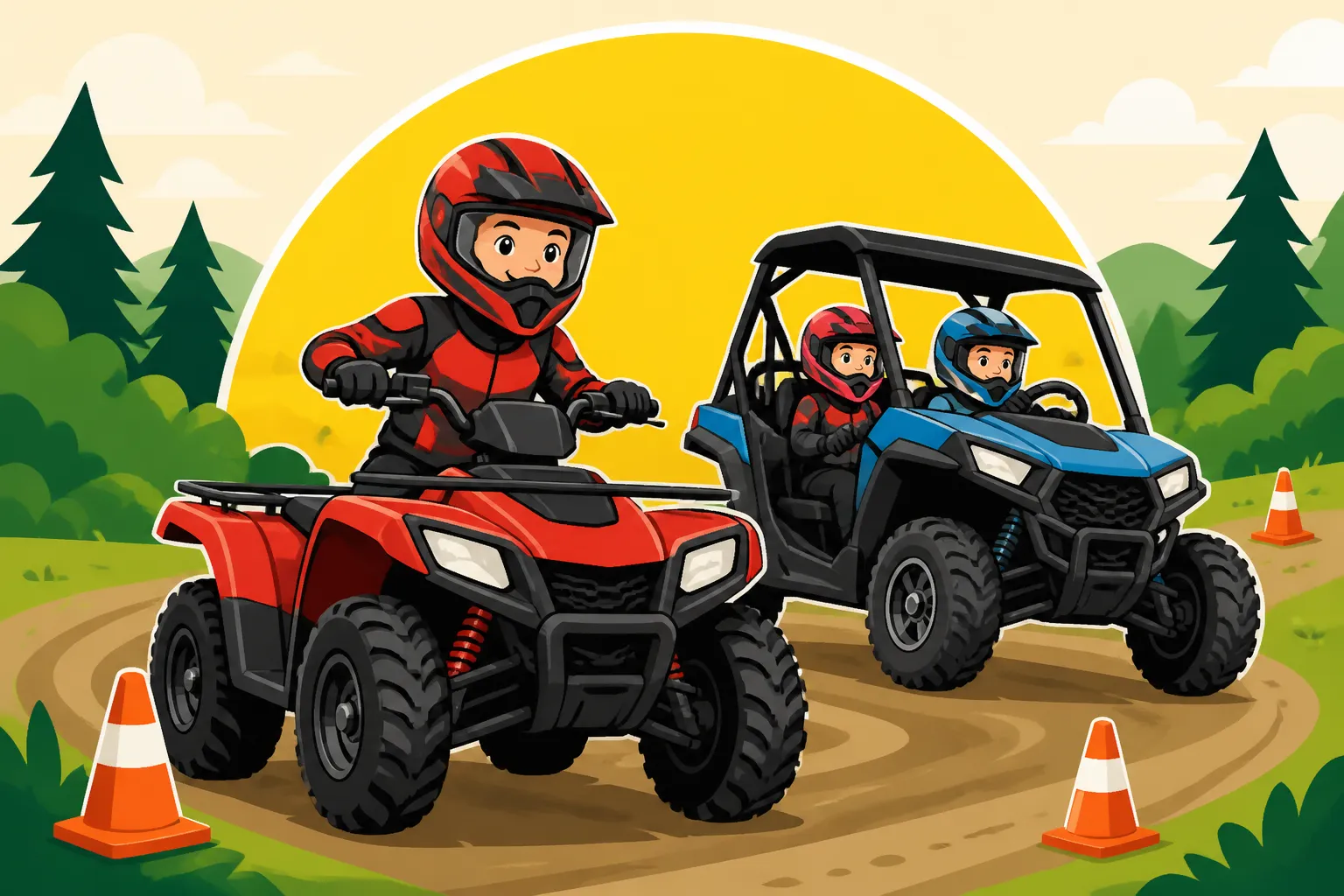
Once the terrain is prepared, define clear boundaries for your course. Use cones, flags, or even painted lines to mark out a simple loop or a figure-eight pattern. These visual cues help young riders understand the path they need to follow and practice steering accuracy. As their skills improve, you can gradually introduce minor challenges, such as small, wide-radius turns or gentle inclines, always ensuring they are within the child's current ability. Always have a clear start and stop point.
Essential safety equipment for your private course includes a well-stocked first-aid kit, a cell phone (even if reception is spotty, it's a must), and potentially a fire extinguisher. Consider having an emergency plan in place: where is the nearest road access? Who can you call for help if needed? Regular maintenance of the course is also vital. After rain, check for new ruts or soft spots. Keep the area free of weeds and new debris. The more controlled and predictable the environment, the safer and more effective the learning experience will be. Even simple additions, like brightly coloured flags or markers, from a company like SuperATV, can enhance visibility and course definition.
Leveraging Club Resources and Designated Areas
Not everyone has the luxury of a large private property to set up a closed course, and that's perfectly okay! New Brunswick boasts a vibrant ATV community, with numerous clubs that often provide resources for youth riders. Many local ATV clubs, often affiliated with QuadNB, maintain designated training facilities or specific areas on their land where youth programs and safety courses are conducted. These facilities are purpose-built with safety in mind, featuring controlled terrain, clear markings, and often, equipment specifically for training.
The benefits of utilizing club resources extend beyond just access to a safe riding space. Club membership can open doors to organized youth events, supervised group rides on closed courses, and direct access to certified instructors. These environments not only provide structured learning but also foster a sense of community among young riders and their families. It's a fantastic way for kids to meet peers who share their interest and for parents to connect with experienced riders who can offer guidance and support. Many clubs are keen to encourage the next generation of riders and actively promote youth engagement. You can inquire with your local club about their youth programs and training opportunities.
Before taking your child to any club-designated area, always confirm their rules and requirements regarding age, machine size, supervision, and safety gear. Each club might have specific protocols in place to ensure everyone's safety. These organizations are generally passionate about promoting responsible riding and are an excellent resource for parents seeking to introduce their children to ATVing safely and legally. They can also often provide information on [New Brunswick Youth Permit Rules] for when your child is ready to transition to trails.
Graduating from the Closed Course: Next Steps for Young Riders
The closed course serves as an invaluable training ground, but eventually, as your child grows in skill and age, they'll want to explore beyond those defined boundaries. Understanding the transition and continued requirements is key to fostering a lifelong passion for responsible off-road riding.
When and How to Transition to Public Trails
The most significant transition for young riders in New Brunswick occurs at age 14. At this point, with the right qualifications, they are legally permitted to ride on designated public off-road vehicle trails. However, this transition is not automatic; it comes with its own set of strict requirements. A 14-year-old rider must possess a valid Class 9 New Brunswick driver's licence (the youth off-road vehicle licence) and must be accompanied and directly supervised by an adult (19 years or older) who also holds a valid off-road vehicle safety training certificate. [What a Class 9 Licence Allows at 14] is a good resource for understanding this specific licence.
This means the safety course completed in their younger years is foundational, but the Class 9 licence and an eligible adult escort are new, mandatory steps. The adult escort plays a continuous critical role, ensuring the young rider adheres to all rules, rides safely, and understands trail etiquette. Even at 14, young riders are still developing their judgment and experience, so the presence of a knowledgeable adult is non-negotiable. It's a gradual step, not a sudden leap, into the broader riding community.
When transitioning to public trails, start with easy, well-maintained paths. Avoid challenging terrain or high-traffic areas initially. Continue to emphasize the importance of situational awareness, respecting other trail users, and environmental responsibility. Riding on public trails also means carrying specific documents, including their safety certificate. An officer on patrol might ask to see it, so make sure they know how to access it. Learn more about [Producing Your Safety Certificate When an Officer Asks]. It’s a moment of pride to see them progress, but safety must always remain the priority.
Continued Skill Development and Responsible Riding
Graduating from the closed course is just the beginning of a rider's journey. Continued skill development is vital for maintaining safety and enhancing enjoyment. Encourage your child to participate in advanced training clinics offered by clubs, or simply dedicate time to practicing more complex maneuvers in a controlled environment as their skills evolve. Just as with any sport, regular practice builds muscle memory, improves reaction times, and refines technique.
Beyond technical skills, fostering a deep appreciation for responsible riding is paramount. This includes understanding the importance of proper machine maintenance, respecting private property (even on club trails, which often cross private land), staying on marked trails, and minimizing environmental impact. Educate them about trail signage, speed limits, and how to interact respectfully with other users, whether they are on ATVs, dirt bikes, or even snowmobiles in shared seasons.
Equipping them with appropriate gear also evolves. While a helmet and eye protection are non-negotiable from day one, as they tackle more varied terrain, consider additional protective equipment. Durable skid plates, reinforced bumpers, or high-quality protective clothing from brands like SuperATV can provide an extra layer of safety and confidence as they explore new challenges. Remember, the goal is to raise not just skilled riders, but responsible stewards of the trails and the off-road community. By laying a strong foundation on a closed course, you're setting them up for a lifetime of safe and enjoyable adventures on the vast New Brunswick trail network.
New Brunswick Youth ATV Riding Guidelines (Ages 6-13, Closed Course)
| Age Group | Machine Size (Engine Displacement) | Riding Location | Supervision Required | Safety Course Required (Child) | Safety Course Required (Supervisor) |
|---|---|---|---|---|---|
| 6-11 Years | 70cc or less | Closed Course ONLY (Private, Controlled) | Adult (19+) with ORV Cert | Yes | Yes |
| 12-13 Years | 90cc or less | Closed Course ONLY (Private, Controlled) | Adult (19+) with ORV Cert | Yes | Yes |
Note: "Closed Course" means an area secured against public access and traffic, dedicated solely to supervised ORV operation. It does not mean any private land.
Disclaimer
This article is for general informational purposes only and does not constitute professional advice. Laws, prices and regulations vary by location and change over time. Consult a qualified professional for guidance on your specific situation.