New Brunswick Rules for a Machine Without Signals
It's a common dilemma for many ATV and UTV owners in New Brunswick: you've got a fantastic machine, perfect for hitting the trails or getting some work done on your property, but it doesn't have factory-installed turn signals. This can lead to a lot of confusion and even frustration, especially when you need to cross a public road or navigate a shared section. This guide will help you understand the specific rules in New Brunswick regarding off-road vehicles (ORVs) that lack integrated signalling lights, outlining how you can still ride legally and, most importantly, safely, whether you're on a designated trail or briefly using a road.
Understanding New Brunswick's Stance on ATV/UTV Signals
When you're out on your quad or side-by-side in New Brunswick, it often feels like you're in a world of your own. The trails stretch out, the woods are calling, and the last thing you're thinking about is whether your machine has turn signals. However, New Brunswick has specific regulations for off-road vehicles, especially concerning their use on or near public highways, and this includes equipment requirements. It's not always as simple as "if it doesn't have them, don't use them." There's nuance, and understanding it is key to avoiding trouble.
The Basic Expectation for ORV Equipment
Generally speaking, an ATV or UTV isn't designed or sold as a road-legal vehicle in the same way a car or motorcycle is. This means many models, particularly older ones or those primarily intended for aggressive trail riding or utility work, often don't come equipped with factory turn signals. They might have headlights, taillights, and brake lights, which are crucial for visibility, especially when riding at dawn, dusk, or night. These basic lights are often mandatory for any ORV operating outside of daylight hours or on certain types of terrain.
However, the absence of turn signals becomes a significant point of consideration when your off-road adventures bring you into contact with the provincial highway network. The expectation from the province is that any vehicle sharing the road with cars, trucks, and other traditional motor vehicles must be able to communicate its intentions clearly. This is where the gap between typical ORV design and road-sharing rules often creates a headache for riders. You might have a perfectly capable machine, but its lack of certain features designed for highway use can limit where and how you can operate it.
Where Machines Without Signals Fit In
So, what happens if your pride and joy doesn't have those blinkers? New Brunswick's Off-Road Vehicle Act acknowledges that not all ORVs are equipped with the same features as highway vehicles. The good news is that the Act provides a clear alternative: hand signals. Yes, just like cyclists or motorcyclists in situations where their signals might be obscured or non-existent, ATV and UTV riders are permitted to use prescribed hand signals to indicate their turns and stops when operating on or crossing sections of public highway where it is allowed.
This provision is incredibly important, as it means you're not automatically excluded from using certain designated road sections or making road crossings just because your machine is signal-less. However, it places the onus squarely on the rider to know these hand signals, to execute them clearly and correctly, and to ensure they are visible to other road users. It also implies that there are times and places where relying solely on hand signals might be less safe or practical, such as in heavy traffic or at high speeds. Understanding the rules for [New Brunswick Hand Signal Requirements] is crucial here.
Why Signals Matter for Safety
It might seem obvious, but it bears repeating: signals are there for safety, pure and simple. Whether they're electronic turn signals on a car or a well-executed hand signal from an ORV rider, their purpose is to communicate your intentions to others around you. On a trail, especially the well-maintained ones supported by clubs like QuadNB, riders often use informal signals or body language to indicate turns or hazards. But on a public road, where speeds are higher and other drivers might not be expecting an ORV, clear and unmistakable communication is absolutely vital.
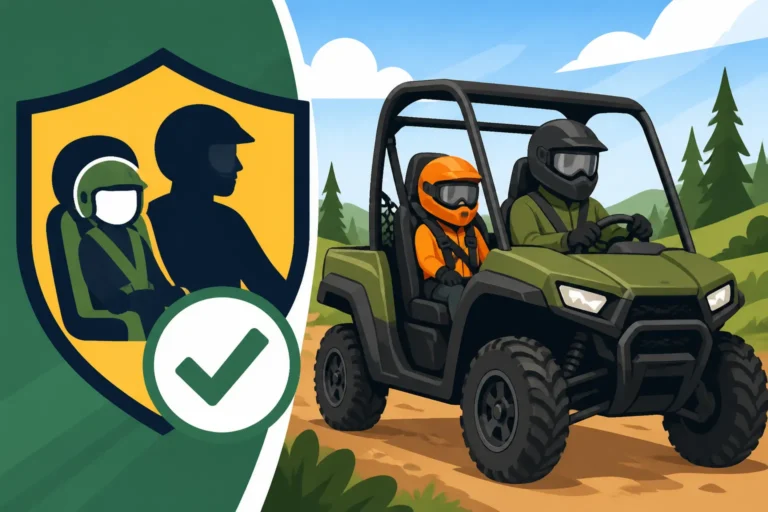
Imagine a situation where you're crossing a road to get to the next section of trail, and a car is approaching from behind. If you simply turn without indicating, that driver has no warning and might not react in time, leading to a dangerous situation. Even when crossing a quiet secondary road, anticipating the unexpected is part of being a responsible rider. The visibility of your signal – whether electronic or manual – directly impacts how safely you can share that space, even for a brief moment. This isn't just about avoiding a ticket; it's about coming home safe at the end of the day. For other important safety considerations, make sure to check out the [New Brunswick ATV Helmet Law].
Navigating Roads and Trails Without Signals
Operating an off-road vehicle in New Brunswick often means a mix of dedicated trails, private land, and sometimes, brief stints on public roads. For machines without factory turn signals, this mixed-use scenario presents a unique set of challenges and responsibilities. The key is to be prepared, know the rules, and always prioritize safety, both for yourself and for other road users. It's about being proactive rather than reactive, ensuring that your intentions are clear, even if your machine isn't equipped with all the bells and whistles of a street-legal vehicle.
The Importance of Hand Signals
Since your machine lacks electronic turn signals, your hands become your primary communication tools when you're interacting with public roads. New Brunswick law specifically permits the use of standard hand signals for turning left, turning right, and stopping. This isn't just a suggestion; it's a mandatory requirement if you want to operate legally on designated road sections or during road crossings. You need to know these signals like the back of your hand, literally.
- Left Turn: Extend your left arm straight out to the side, horizontally.
- Right Turn: Extend your left arm out to the side, then bend it upwards at the elbow, forming a 90-degree angle.
- Stop/Slowing: Extend your left arm out to the side, then bend it downwards at the elbow, forming a 90-degree angle.
When executing these signals, ensure you do so well in advance of your turn or stop. Make the signal clear and sustained, giving other drivers ample time to see it and react. Remember, you're on an ORV, which might be less visible than a car, so over-emphasizing your signals is never a bad idea. Practice them, internalize them, and make them second nature before you ever hit a section of road. This is a critical part of being a responsible rider, especially when considering [New Brunswick ATV Road Rules Explained].
When to Avoid Public Roads Entirely
While hand signals offer a legal workaround for machines without turn signals, there are situations where using public roads, even with proper hand signals, might be less than ideal or even unsafe. Consider the road conditions:
- Heavy Traffic: In busy areas, especially during peak hours, drivers might be distracted, or their view of your hand signal could be obstructed by other vehicles. The risk of an incident increases significantly.
- High Speeds: On roads with higher speed limits, other vehicles approach quickly, leaving less time for them to process your hand signal and react safely.
- Poor Visibility: Fog, heavy rain, snow, or even the glare of the sun can make hand signals difficult to see. Night riding on public roads without electronic signals is particularly risky, even if your machine has headlights and taillights.
- Complex Intersections: Navigating multi-lane roads or complex intersections with multiple turning lanes solely relying on hand signals can be confusing and dangerous for everyone involved.
In such scenarios, it's often far safer, if not explicitly required, to find an alternative route that keeps you off the public highway. This might mean detouring to a designated trail, using a less-travelled side road if permissible, or even loading your machine onto a trailer to bypass a particularly hazardous road section. Your safety is paramount, and sometimes that means making the conservative choice to avoid a risky situation altogether. Always be aware of the rules regarding [New Brunswick Fines for Riding Near a Highway] to avoid unnecessary penalties.
Upgrading Your Machine with Aftermarket Signals
If you frequently find yourself needing to cross or operate briefly on public roads, and relying solely on hand signals feels a bit precarious, consider upgrading your machine with aftermarket turn signals. This can significantly enhance your visibility and communication with other road users. There are many kits available designed specifically for ATVs and UTVs, ranging from basic blinker sets to more comprehensive, street-legal style lighting packages.
These kits often include LED lights, wiring harnesses, and a switch that can be easily mounted on your handlebars or dash. Installing them can be a straightforward DIY project for those with some mechanical aptitude, or you can have it done by a professional. Companies like SuperATV offer a range of universal and model-specific accessories that can help you adapt your machine for safer road interactions. While adding these won't suddenly make your ORV a fully road-legal vehicle (there are other requirements like [New Brunswick Highway Usage Permits] for longer stretches), they certainly improve your ability to indicate turns and enhance your overall safety when sharing space with traditional vehicles. Think of it as an investment in peace of mind.
Potential Consequences and Best Practices
Riding an ATV or UTV in New Brunswick is a fantastic way to enjoy the province's natural beauty and expansive trail network. However, with the privilege of riding comes the responsibility of understanding and adhering to the rules, especially when your machine might not have all the equipment commonly associated with highway use. Ignoring the requirements for signaling can lead to more than just a stern look; it can result in penalties and, more importantly, put you and others at risk. It's vital to be informed and to adopt best practices that ensure both legal compliance and maximum safety on every ride.
Fines and Penalties for Non-Compliance
New Brunswick law enforcement, including the RCMP and local peace officers, actively monitors ORV activity, particularly where it intersects with public roads or in populated areas. If you're caught operating your ATV or UTV on a designated road section or making a crossing without properly indicating your turns or stops, you could face consequences. While specific fines can vary, operating an ORV without proper signaling when required could fall under infractions related to safe operation or equipment violations. An officer might issue a ticket, and these set fines can add up, not to mention the potential impact on your driving record if it's considered a traffic offense.
It's not just about turning without signalling, either. [New Brunswick Equipment Checks by Officers] can cover a range of items, from proper lighting (headlights, taillights, brake lights) to reflective materials. If an officer observes that your machine is not equipped as required for the specific operating conditions, or if you fail to use hand signals where electronic ones are absent, you could find yourself with an unexpected bill. Beyond financial penalties, repeated infractions could lead to more serious consequences, emphasizing why understanding and following these rules is so important.
Documenting Your Safety Measures
Taking proactive steps to ensure safety and compliance can save you a lot of hassle. If you've chosen to add aftermarket turn signals, keep a copy of the installation receipt or even a few photos on your phone as proof of the upgrade, should an officer question your machine's setup. While it's not strictly required, having this documentation can quickly resolve any misunderstandings.
More importantly, always carry your necessary paperwork. This includes your ORV registration certificate, proof of insurance (which is mandatory for trail riding), and your safety course certificate if applicable. While not directly related to signals, having these documents readily available demonstrates you are a responsible rider who understands the rules. An officer will expect to see these, and it makes any interaction much smoother. Remember to review [New Brunswick Documents You Must Carry] to ensure you're always prepared.
The Rider's Responsibility for Awareness
Ultimately, the onus of safe and legal operation rests squarely on the rider. It's your responsibility to know the local bylaws, understand the provincial ORV Act, and be aware of the specific conditions for operating your machine, especially if it lacks certain factory-installed features like turn signals. This means actively checking maps for designated ORV trails and approved road crossings, understanding that not all roads are open to quads, and always being prepared to use hand signals effectively when on shared surfaces.
Furthermore, fostering a culture of safety extends beyond just legal compliance. It means being courteous to other trail users and road drivers, anticipating hazards, and riding within your limits and the limits of your machine. Participating in a [New Brunswick Quad Safety Course] can also greatly enhance your awareness and riding skills, equipping you with the knowledge needed to make informed decisions on the trails and roads. By embracing this responsibility, you contribute to a safer environment for everyone and help ensure the continued enjoyment of off-roading in New Brunswick for years to come.
Disclaimer
This article is for general informational purposes only and does not constitute professional advice. Laws, prices and regulations vary by location and change over time. Consult a qualified professional for guidance on your specific situation.