Transferring a Quad Left to a Family Member
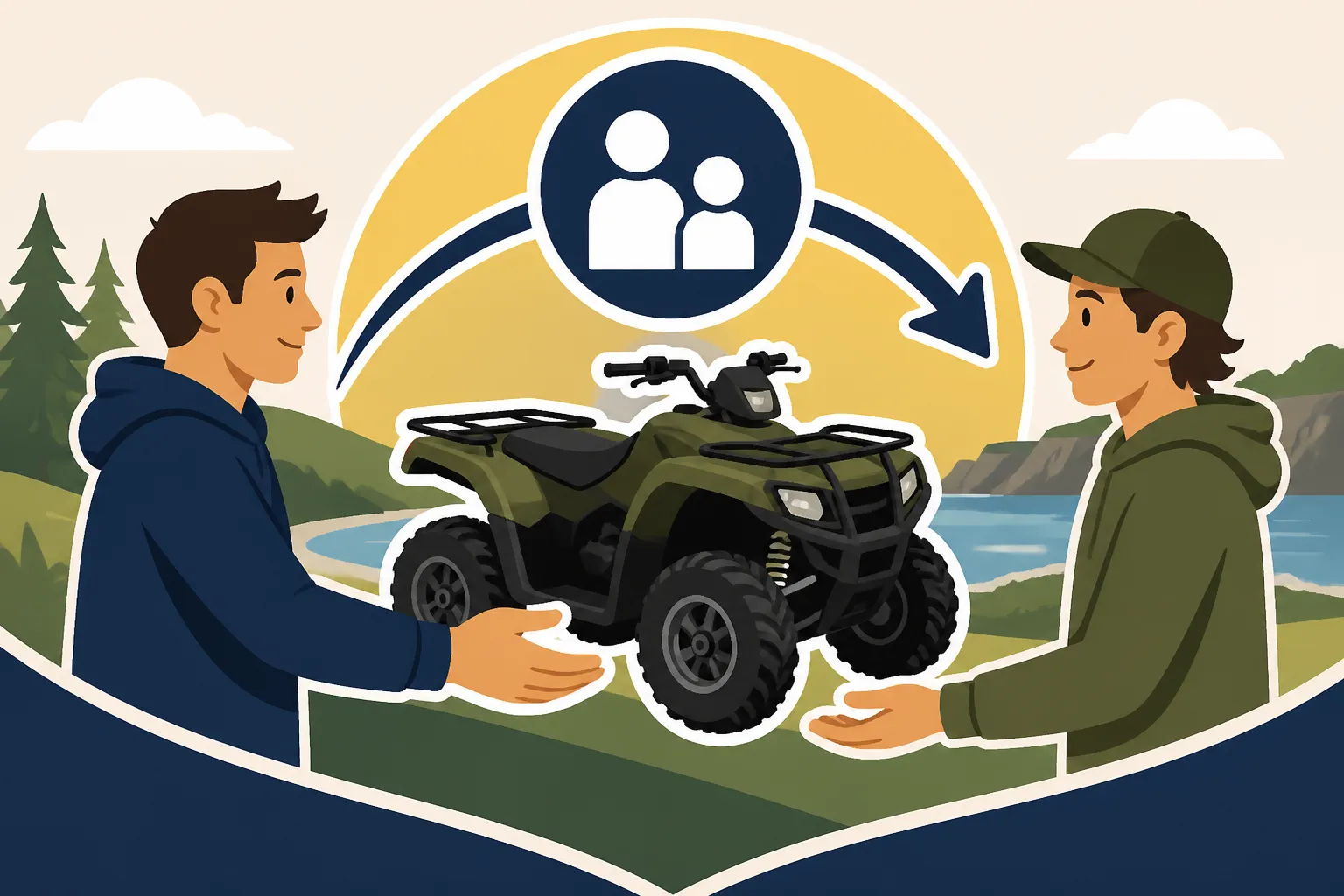
Losing a loved one is an incredibly difficult experience, and the practicalities of settling their estate can feel overwhelming, especially when cherished possessions like an ATV or side-by-side are involved. If you've recently inherited an off-road vehicle in New Brunswick, you're likely grappling with both grief and the very real question of how to legally put that machine in your name. This guide is here to help you navigate the process of transferring ownership for a quad left to a family member, ensuring you understand each step to ride legally and confidently.
When a Loved One's Quad Becomes Yours: Initial Steps and Legalities
When an off-road vehicle (ORV) is passed down through inheritance, it's not just a matter of hopping on and riding. There's a legal and administrative process that needs to be followed to transfer the registration from the deceased owner to the beneficiary. This ensures that the vehicle is properly recorded with the province and that you, as the new owner, can operate it without issue. It's a daunting task when you're already going through a tough time, but breaking it down into manageable steps makes it much clearer.
Understanding the Estate and Will
The first crucial step involves understanding the deceased's estate and whether they left a will. If a will exists, it will likely name an executor (or personal representative) and specify who inherits the ATV. This document is paramount, as it legally dictates the distribution of assets. If there's no will, the situation becomes a bit more complex, as the laws of intestacy in New Brunswick will determine who the legal heirs are. In such cases, a court might appoint an administrator for the estate. The executor or administrator plays a key role in signing off on the transfer paperwork. They are the legal bridge between the deceased owner and you, the inheritor. Without their involvement, or a court order, transferring the vehicle directly can be impossible. It’s also wise to consider if there are any outstanding debts or claims against the estate that might involve the ATV; sometimes, assets might need to be sold to cover these.
Locating the Existing Registration Certificate
One of the most vital pieces of information you'll need is the original New Brunswick ORV registration certificate. This document contains crucial details about the machine, including the Vehicle Identification Number (VIN), year, make, model, and the deceased owner's information. It's often kept with other important papers, perhaps in a safe, a filing cabinet, or even in the ORV's storage compartment. Take some time to carefully search for it. If you can't find the original certificate, don't panic. Service New Brunswick can provide a replacement, but it will require the executor or administrator of the estate to apply for it. This is an additional step that can add a little time and cost to the process, but it's entirely doable. You might also want to perform a [New Brunswick Record Search at $8] to ensure there are no surprises like outstanding liens on the vehicle.
The Importance of a Death Certificate
To prove that the original owner is deceased and that the transfer is legitimate, Service New Brunswick will require a copy of the official death certificate. This document is issued by Vital Statistics and confirms the individual's passing. It's a standard requirement for any asset transfer from a deceased person's estate. The executor or personal representative will typically have access to this document. Keep in mind that a photocopy is usually sufficient, but always confirm if Service New Brunswick requires a certified copy or the original for verification purposes. Having this document readily available will streamline your visit to the service centre.
Gathering Your Documents: What Service New Brunswick Needs
Once you've got a handle on the estate's legal framework and located the death certificate, it’s time to focus on the specific paperwork Service New Brunswick will need from you. This part can feel a bit like a scavenger hunt, but being prepared will save you multiple trips and a lot of frustration. The process for [New Brunswick Registration After the Owner Dies] is distinct, and specific forms are necessary.
The Transfer of Ownership Form
The primary document for transferring ownership of any off-road vehicle in New Brunswick is the Application for Vehicle Registration form. While it’s often used for sales, it’s also adapted for transfers due to inheritance. On this form, you will fill in your details as the new owner and provide the information about the inherited ATV. The key difference in an inheritance situation is that the "seller" portion of the form will be signed by the executor or administrator of the deceased's estate, not the deceased themselves. They are acting on behalf of the estate. They will need to clearly indicate their role and, if applicable, reference the will or letters of administration. Ensure all sections are filled out completely and accurately. Any missing information can cause delays. For complex situations, legal document services like LawDepot can sometimes provide templates or guidance on general legal forms related to estate settlement, though you'll still need the specific Service New Brunswick form for the ORV itself.
Dealing with Missing Paperwork
It's not uncommon for registration certificates to go missing over time, especially if the ORV wasn't actively used in recent years or if the deceased was not particularly organized with their documents. If the original registration certificate cannot be found, the executor or administrator will need to apply for a replacement certificate before the transfer can occur. This is often done by filling out a "Request for Information" form or similar at Service New Brunswick, and there may be a fee involved. Once a replacement certificate is issued, it can then be used to complete the transfer. Another common issue is the absence of a formal bill of sale, which is typically used in private sales. For inherited vehicles, the will or a letter from the executor usually serves as the equivalent proof of transfer from the estate to the beneficiary. This is why having a clear understanding of the estate and the executor's role is so important. If the original owner happened to lose their registration certificate before their passing, you'll need to know [What to Do If You Lose Your Registration Certificate].
Handling Liens and Multiple Owners
Before finalizing any transfer, it's incredibly important to check if there are any liens or encumbrances on the ATV. A lien means that someone else (like a bank or finance company) has a legal claim to the vehicle until a debt is paid off. This information should be on the original registration certificate. If there's a lien, it generally needs to be cleared before the vehicle can be fully transferred into a new owner's name. The executor of the estate should be able to assist with this, as they are responsible for settling the deceased's debts. You can also run a [New Brunswick Record Search at $8] to verify this information. If the ATV was jointly owned by the deceased and another person, the transfer process might differ slightly. In some cases, the surviving joint owner may automatically assume full ownership, while in others, the deceased's portion may still pass through the will. Understanding [New Brunswick Registration With Two Owners] can be complex, and getting clear guidance from Service New Brunswick or a legal professional is wise in such scenarios.
The Actual Transfer Process at Service New Brunswick
Once you have all your ducks in a row – the will (or letters of administration), the death certificate, the original ORV registration (or replacement), and the completed transfer form signed by the executor – you're ready to head to a Service New Brunswick centre. This is where the magic happens, so to speak, and your inherited quad officially becomes yours.
Visiting a Service Centre
While New Brunswick does offer some online and phone services, transferring an ORV after a death usually requires an in-person visit to one of the many Service New Brunswick centres across the province. You'll need to bring all the original documents mentioned above, as staff will need to verify them. Don't forget your own identification as well! The staff are generally very helpful and experienced with these types of transfers, but it never hurts to be overly prepared. Be ready to explain the situation clearly: that you are inheriting the vehicle from a deceased family member and have all the necessary estate documentation. They will guide you through the final steps, including any fees and the issuance of your new registration certificate and plate decal. For a general overview of the process, you might find [Registering an ATV With Service New Brunswick] helpful, though remember the specifics for inheritance will apply.
Potential Fees and New Plates
When you transfer ownership of the ORV, there will be certain fees involved. These typically include a transfer fee, which is a flat rate for processing the change of ownership. Additionally, you will be issued a new registration certificate with your name on it, and likely a new plate decal for the current registration year. The cost of the annual registration itself will be based on the type of ORV (e.g., ATV, dirt bike, side-by-side). For instance, [New Brunswick Charges $41 for an ATV] is the rate, while [New Brunswick Charges $16 for a Dirt Bike]. You'll pay these fees at the service centre. They usually accept various payment methods, but it's always good to have a debit card or credit card handy, or cash just in case. They will also collect any applicable Harmonized Sales Tax (HST) on the declared value of the vehicle, even if it's an inheritance. While you didn't "purchase" it in the traditional sense, the provincial sales tax is often applied to the fair market value in such transfers, unless specifically exempted by law. For more on this, you can check out [New Brunswick HST on an ATV Purchase].
What to Expect After the Transfer
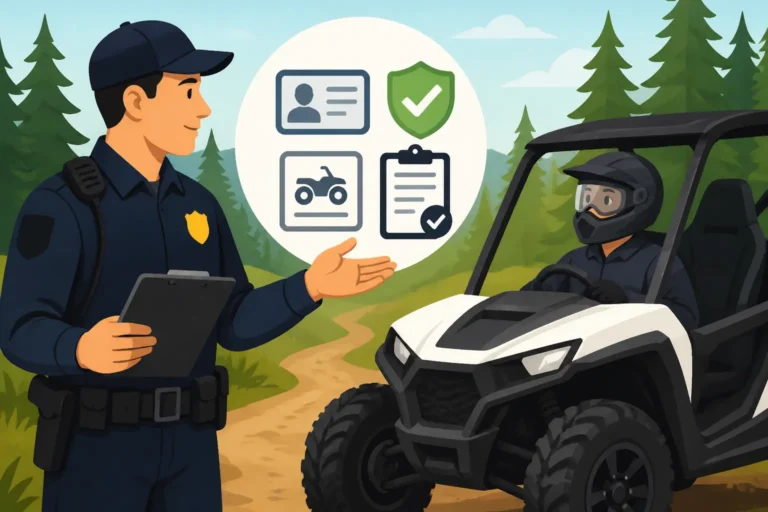
Once the transfer is complete and all fees are paid, Service New Brunswick will issue you a new registration certificate in your name. This is your official proof of ownership and registration. You will also receive a new plate decal to affix to your ORV's license plate. This decal indicates that your registration is current and valid. Remember, [New Brunswick Registrations Expire December 31] each year, so even if you register mid-year, the decal will be valid until the end of that calendar year, and you'll need to renew it before the next one. It's a good idea to keep a copy of your new registration certificate with you whenever you ride, along with proof of insurance. For a complete list, consult [New Brunswick Documents You Must Carry]. The staff can also advise you on [New Brunswick Registration Processing Time] for these types of transfers, but generally, everything is handled on the spot.
Beyond the Paperwork: Insurance, Operation, and Future Considerations
Getting the registration transferred is a huge step, but your responsibilities as a new ORV owner don't end there. There are important considerations regarding insurance, safe operation, and how you might manage the vehicle in the future.
Insuring Your Newly Acquired ORV
Just like with any motor vehicle, having proper insurance for your ATV or UTV is not just a good idea – it's often a legal requirement, especially if you plan to ride on managed trails. [New Brunswick Requires Insurance on Trails]. You'll need to contact an insurance provider to add the inherited ORV to your policy or take out a new one. Provide them with all the vehicle details from your new registration certificate. They will want to know the year, make, model, VIN, and your personal riding history. Don't wait until you're ready to hit the trails; arrange for insurance as soon as the registration is in your name. Riding without adequate insurance could lead to significant fines and penalties, not to mention financial ruin if you're involved in an accident. Always make sure you have [New Brunswick Proof of Insurance on the Machine].
Safety Courses and Operating Rules
Even if you're an experienced rider, inheriting an ORV, especially one that might be new to you, is a good opportunity to review New Brunswick's specific rules and regulations. The province has clear guidelines regarding helmet use, age restrictions, and where you can and cannot ride. For instance, [New Brunswick ATV Helmet Law] mandates helmets for every occupant. If you're a newer rider, or if there are younger family members who might use the machine, consider taking a certified safety course. These courses teach critical skills and help ensure everyone understands the rules of the trail. The [New Brunswick Quad Safety Course Explained] outlines what you'll learn and why it's beneficial. Knowing these rules helps ensure both your safety and your compliance with the law, avoiding fines for violations like riding an unregistered machine or without a trail permit.
Planning for Future Ownership Changes
Once the ORV is legally yours, you might find yourself thinking about its long-term future. Will you keep it for many years? Will you eventually pass it on to another family member, or perhaps sell it? Understanding the options for [Selling a Registered Machine in New Brunswick] or even [Transferring a Registration to a Buyer] can be useful down the road. If you plan to sell it privately, you'll need a formal bill of sale. LawDepot can provide customizable templates for bills of sale and other legal agreements, which can be very helpful for such transactions, ensuring all parties are protected. Thinking ahead about these possibilities, even if they're years away, can help you maintain good records and keep the ORV in excellent condition. Proper maintenance and documentation will always make future transfers smoother.
Remember, this process is a part of honouring your loved one's legacy and ensuring their cherished machine continues to bring joy, responsibly and legally.
Disclaimer
This article is for general informational purposes only and does not constitute professional advice. Laws, prices and regulations vary by location and change over time. Consult a qualified professional for guidance on your specific situation.